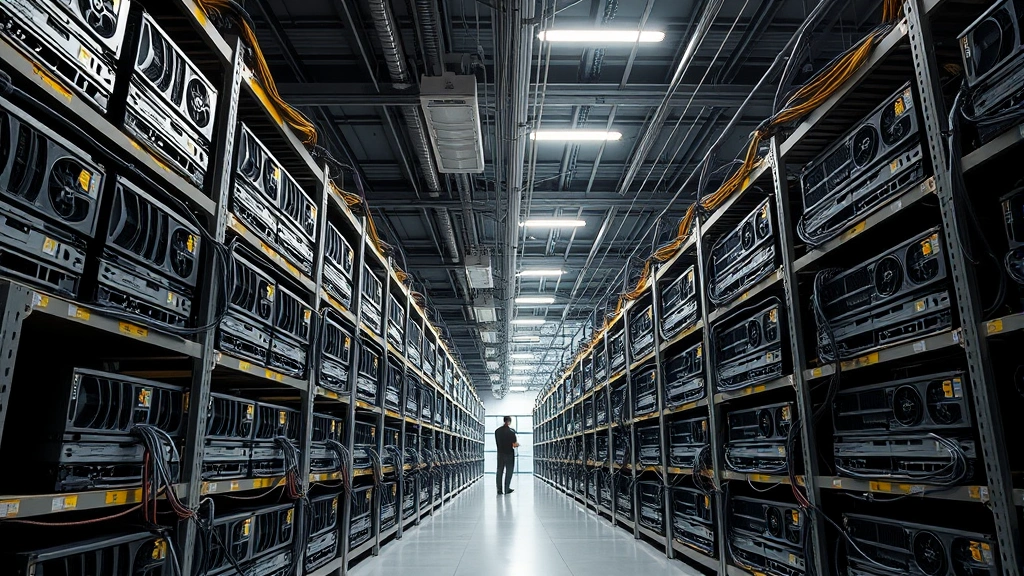
Is Bitcoin Mining Profitable? 2023 Insights
Bitcoin mining has evolved dramatically since the cryptocurrency’s inception in 2009. What once could be accomplished on a personal computer has transformed into an industrial-scale operation requiring specialized hardware, significant capital investment, and access to cheap electricity. As we navigate 2023, miners face a complex landscape shaped by rising energy costs, increased competition, and Bitcoin’s volatile price movements. Understanding whether mining remains profitable requires examining hardware efficiency, operational expenses, and market conditions that directly impact your bottom line.
The profitability question isn’t straightforward because it depends on numerous variables specific to each mining operation. Some miners operating in regions with abundant renewable energy and low electricity rates continue to generate substantial returns, while others struggle to break even. This comprehensive guide explores the real economics of Bitcoin mining, helping you determine whether diving into this space makes financial sense for your situation.

Understanding Bitcoin Mining Economics
Bitcoin mining serves a critical function in the cryptocurrency network: validating transactions and securing the blockchain. Miners compete to solve complex mathematical puzzles, and the first to solve them gets to add a new block to the chain and receive newly minted Bitcoin plus transaction fees as rewards. This process, called proof-of-work, requires computational power measured in hash rates.
The fundamental economics revolve around a simple equation: Revenue minus Expenses equals Profit. Revenue comes from block rewards (currently 6.25 BTC per block following the 2020 halving) plus transaction fees. Expenses include hardware depreciation, electricity, cooling, maintenance, and potentially facility costs. When Bitcoin’s price rises while electricity costs remain stable, mining becomes more profitable. Conversely, price declines or electricity rate increases can quickly turn operations unprofitable.
The 2023 landscape shifted significantly from 2022’s bear market. Bitcoin’s price recovery improved profitability prospects, yet elevated electricity costs in many regions continued challenging miners. Understanding this dynamic requires examining each cost component individually to build an accurate profitability model for your specific circumstances.
Hardware Costs and ASIC Efficiency
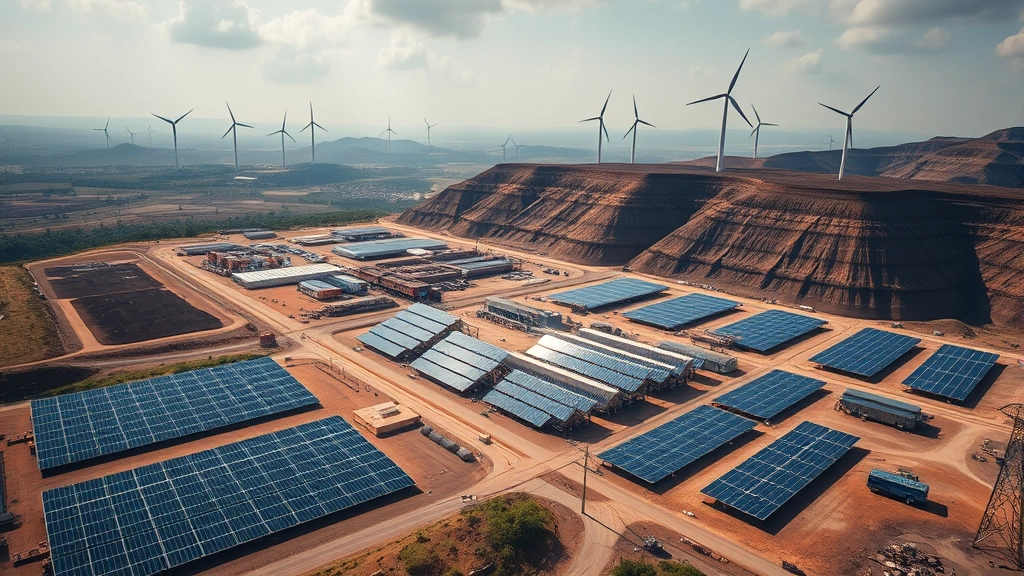
Bitcoin mining requires Application-Specific Integrated Circuit (ASIC) miners—specialized computers designed exclusively for mining. Unlike general-purpose computers, ASICs deliver superior hash rates but cannot be repurposed for other tasks, representing sunk capital investment.
The most efficient 2023 models include:
- Antminer S19 Pro Max: Approximately 140 terahashes per second (TH/s) consuming 3,250 watts
- WhatsMiner M50S: Around 135 TH/s using 3,276 watts
- Antminer S19 XP: Roughly 140 TH/s at 3,010 watts
- Canaan AvalonMiner 1246: Approximately 90 TH/s consuming 3,420 watts
These machines cost between $3,000 and $5,500 per unit, depending on availability and market conditions. Depreciation accelerates rapidly as newer, more efficient models emerge. A miner purchased for $4,500 might retain only 40-50% of that value within 12 months. This hardware depreciation represents a significant ongoing cost that many casual miners underestimate when calculating profitability.
When selecting hardware, focus on efficiency metrics like joules per terahash (J/TH). Lower J/TH ratings mean less electricity consumption per unit of computational work, directly improving profitability. Check our guide on the best Bitcoin miners for detailed current recommendations and performance comparisons.
Electricity: The Primary Operating Expense
Electricity costs dominate Bitcoin mining economics, typically representing 60-80% of total operational expenses. A single high-end ASIC consuming 3,250 watts running 24/7 uses approximately 28.5 megawatt-hours annually. At the U.S. average rate of $0.13 per kilowatt-hour, this translates to roughly $3,700 in annual electricity costs per machine.
However, electricity rates vary dramatically by region:
- Iceland: $0.05-0.08 per kWh (abundant geothermal energy)
- El Salvador: $0.07-0.10 per kWh (volcanic geothermal resources)
- United States: $0.08-0.20 per kWh (varies significantly by state)
- Europe: $0.15-0.35 per kWh (elevated post-2022 energy crisis)
- China: $0.04-0.12 per kWh (regional variation, previously dominant mining location)
This geographic arbitrage explains why large mining operations concentrate in regions with cheap renewable energy. A miner in Iceland with 3,250-watt equipment pays roughly $2,000 annually for electricity, while an identical operation in Germany might pay $9,000. This $7,000 difference can transform a profitable operation into a money-losing venture.
Beyond per-unit rates, consider demand charges. Commercial electricity often includes monthly demand charges based on peak usage. Running dozens of ASICs simultaneously can trigger high demand charges that casual miners don’t anticipate. Additionally, cooling costs increase expenses by 10-20% in many climates, as ASICs generate substantial heat requiring ventilation or air conditioning.
Mining Difficulty and Network Competition
Bitcoin’s difficulty adjustment mechanism automatically recalibrates every 2,016 blocks (approximately two weeks) to maintain a consistent 10-minute average block time. When more miners join the network, difficulty increases, reducing rewards per unit of hash power. When miners exit, difficulty decreases, improving profitability for remaining participants.
In 2023, difficulty reached all-time highs as miners returned following 2022’s capitulation. This increased competition means each ASIC generates fewer satoshis per day than during previous bear markets. A machine producing 0.005 BTC daily during low-difficulty periods might only generate 0.003 BTC daily during high-difficulty phases, assuming identical electricity consumption.
This dynamic creates a profitability trap: as the network becomes more competitive, individual miners need either larger operations, cheaper electricity, or more efficient hardware to maintain profitability. Small operations with average electricity rates face increasing pressure. Monitor difficulty trends and projections when evaluating mining viability. If difficulty is expected to increase 15% over the next month but Bitcoin’s price remains flat, profitability will decline accordingly.
The relationship between difficulty and Bitcoin price ultimately determines mining profitability. Rising prices offset difficulty increases, while price declines combined with rising difficulty create severe headwinds for miners.
2023 Profitability Analysis
Let’s examine a realistic 2023 profitability scenario for a small mining operation in the United States with average electricity costs.
Assumptions:
- Hardware: One Antminer S19 Pro Max ($4,500 purchase price)
- Hash rate: 140 TH/s
- Power consumption: 3,250 watts
- Electricity rate: $0.12 per kWh (U.S. average)
- Bitcoin price: $28,000
- Mining difficulty: 50 trillion (approximate mid-2023 level)
- Operational period: 12 months
Monthly Revenue Calculation:
At 140 TH/s and 50 trillion difficulty, the miner expects approximately 0.0025 BTC monthly. At $28,000 per BTC, this generates $70 in monthly revenue.
Monthly Expenses:
- Electricity: 3.25 kW × 730 hours × $0.12 = $285
- Hardware depreciation: $375 (assuming 50% value retention over 12 months)
- Cooling/ventilation: $30
- Total monthly expenses: $690
Monthly Result: -$620 (Loss)
This scenario reveals the harsh reality for small U.S.-based miners in 2023: operations are unprofitable without either cheaper electricity, higher Bitcoin prices, or lower hardware costs. However, if electricity costs drop to $0.06 per kWh (available in some regions), monthly expenses fall to approximately $405, resulting in a -$335 monthly loss—still unprofitable but closer to breakeven.
Profitability improves dramatically at higher Bitcoin prices. If BTC reaches $40,000, monthly revenue increases to $100, still insufficient to cover expenses. At $60,000 per BTC, monthly revenue reaches $150, reducing losses to approximately $540 monthly. Mining becomes marginally profitable around $80,000+ Bitcoin prices for operations with average U.S. electricity rates.
This analysis demonstrates why choosing the best Bitcoin miners and securing cheap electricity are absolutely critical. Large-scale operations with access to $0.04-0.06 per kWh electricity can remain profitable even at lower Bitcoin prices, while small operations with $0.12+ rates struggle significantly.
Mining Pools vs Solo Mining
Solo mining involves competing independently to find blocks, receiving full rewards when successful. However, the probability of solo mining success depends on hash rate relative to total network hash power. With network hash rate exceeding 500 exahashes per second (EH/s), a single ASIC (140 TH/s) would require approximately 3.5 million years to find one block on average—economically impractical.
Mining pools solve this problem by combining computational power from thousands of miners. Pool members contribute their hash rate to collective block-finding efforts and share rewards based on contributed hash power. Pools typically charge 1-3% fees from rewards.
Major mining pools in 2023 include:
- Foundry USA: Approximately 28% network hash rate
- AntPool: Roughly 16% network hash rate
- Stratum V2 pools: Emerging decentralized options
Pool mining provides consistent, predictable income compared to solo mining’s feast-or-famine rewards. For small operations, joining a reputable pool is essential for viable profitability. Pool mining also reduces variance in earnings, allowing better financial planning.
Tax Implications and Capital Gains
Mining generates tax obligations in most jurisdictions. The IRS and equivalent tax authorities typically treat mined Bitcoin as ordinary income at the fair market value on the date of receipt. This means if you mine 0.0025 BTC valued at $70 when received, you owe income tax on $70 in mining rewards.
Additionally, when you eventually sell mined Bitcoin, you face capital gains taxes on the appreciation between the mining date and sale date. If Bitcoin rises from $28,000 to $35,000 between mining and selling, you owe capital gains tax on the $7,000 appreciation.
Proper tax documentation is essential. Track mining dates, fair market values at receipt, and eventual sale prices. Many miners underestimate tax liability and face substantial bills when filing. Consider consulting a tax professional familiar with cryptocurrency mining to optimize your tax position.
For those serious about mining, understanding how much to invest in Bitcoin and mining requires accounting for tax obligations in your profitability calculations.
Mining profitability also connects to broader investment strategy. Some view mining as a way to invest in cryptocurrency while generating ongoing returns, though this perspective requires careful analysis of opportunity costs. The capital deployed in mining hardware might generate superior returns if invested elsewhere.
For those exploring automated trading approaches, platforms like Bitcoin Pro offer algorithmic trading capabilities that some miners use to optimize their Bitcoin holdings strategy alongside mining operations.
Miners should also stay informed about Bitcoin’s future direction. Our analysis on whether Bitcoin will crash explores price dynamics affecting mining profitability.
FAQ
Is Bitcoin mining still profitable in 2023?
Bitcoin mining profitability in 2023 depends heavily on electricity costs and Bitcoin price. Operations with access to electricity below $0.06 per kWh can remain profitable. Those paying $0.12+ per kWh face significant challenges unless Bitcoin prices exceed $60,000. Most small-scale U.S. miners with average electricity rates struggle to achieve profitability.
What’s the best Bitcoin mining hardware for beginners?
The Antminer S19 Pro Max and WhatsMiner M50S represent current efficiency leaders, though prices exceed $4,000. Before investing, ensure you have access to cheap electricity and realistic profitability expectations. Most experts recommend joining mining pools rather than solo mining for consistent income.
How much electricity does Bitcoin mining consume?
A single high-end ASIC consuming 3,250 watts uses approximately 28.5 megawatt-hours annually. Global Bitcoin mining consumes an estimated 120-150 terawatt-hours yearly, comparable to some small nations’ total electricity consumption.
Can I mine Bitcoin on my personal computer?
Profitably mining Bitcoin on personal computers became impossible years ago. ASICs are 1,000+ times more efficient than general-purpose processors. Any Bitcoin generated on a personal computer would be far outweighed by electricity costs and hardware wear.
What are mining pools and should I join one?
Mining pools combine hash power from thousands of miners to find blocks more frequently, sharing rewards based on contributed power. For any operation smaller than industrial-scale, joining a reputable pool is essential for consistent, predictable income rather than unpredictable solo mining rewards.
How do taxes affect mining profitability?
Mined Bitcoin is taxed as ordinary income at fair market value upon receipt. Subsequent appreciation when sold generates capital gains tax. Many miners underestimate tax obligations, which can significantly reduce net profitability. Proper accounting and professional tax guidance are essential.