
Bitcoin Mining: How Much is Left? Current Insights
Bitcoin’s finite supply of 21 million coins represents one of cryptocurrency’s most fundamental characteristics, distinguishing it from traditional fiat currencies that can be printed endlessly. As of 2024, approximately 19.5 million bitcoins have already been mined, leaving roughly 1.5 million coins remaining to be discovered through the mining process. This scarcity mechanism has profound implications for Bitcoin’s long-term value proposition, mining economics, and the broader cryptocurrency ecosystem.
Understanding how much Bitcoin is left to mine requires examining the technical architecture of Bitcoin’s protocol, the halving schedule that reduces mining rewards, and the economic incentives that drive miners worldwide. The journey toward Bitcoin’s complete issuance is not merely a technical milestone—it represents a fundamental shift in how the network will operate and be secured once all coins have been mined.
Understanding Bitcoin’s Supply Mechanics
Bitcoin’s monetary policy is hardcoded into its protocol through a mechanism that Satoshi Nakamoto embedded in the original software. Unlike central banks that can adjust money supply based on economic conditions, Bitcoin operates with absolute predictability. The network is designed to produce new bitcoins at a predetermined rate, with the total supply mathematically capped at exactly 21 million coins.
The mining process generates new bitcoins through a process called the block subsidy. Every time miners successfully validate a block of transactions and add it to the blockchain, they receive newly created bitcoins as a reward. This subsidy started at 50 BTC per block in 2009 and has decreased systematically through scheduled events known as halvings.
The elegance of Bitcoin’s design lies in its predictability. Miners cannot create more bitcoins than the protocol allows, and no central authority can override this limit. This immutability of supply is a key reason why many investors view Bitcoin as digital gold—a truly scarce asset with no counterparty risk regarding supply inflation.
Current Mining Progress and Statistics
As we enter 2024, the Bitcoin network has successfully mined approximately 19.5 million bitcoins, representing roughly 92.9% of the total 21 million supply. This means approximately 1.5 million bitcoins remain to be mined. The remaining supply will be distributed over the next several decades, with the final bitcoin expected to be mined around the year 2140.
The mining rate is not constant throughout this period. Bitcoin’s protocol adjusts the difficulty of mining approximately every 2,016 blocks (roughly two weeks) to maintain an average block time of 10 minutes. This means new blocks are added to the blockchain at a relatively consistent rate regardless of how much computational power miners dedicate to the network.
Current statistics show that:
- Approximately 144 blocks are mined per day on average
- Each block currently generates 6.25 BTC in block rewards (following the 2020 halving)
- This equates to approximately 900 new bitcoins entering circulation daily
- Annual issuance is roughly 328,500 bitcoins at current rates
These figures will change dramatically at the next halving event, scheduled for April 2024, when the block reward will decrease to 3.125 BTC per block, effectively halving the rate of new bitcoin creation.

The Halving Schedule Explained
Bitcoin’s halving events are perhaps the most critical mechanism determining how much Bitcoin is left to mine at any given time. These events occur approximately every four years, or every 210,000 blocks, and reduce the block subsidy by 50%.
The halving schedule follows this pattern:
- 2009-2012: 50 BTC per block
- 2012-2016: 25 BTC per block
- 2016-2020: 12.5 BTC per block
- 2020-2024: 6.25 BTC per block
- 2024-2028: 3.125 BTC per block (upcoming)
- 2028-2032: 1.5625 BTC per block
This geometric progression continues until the block reward becomes so small that it effectively rounds to zero, which is expected around 2140. After that point, miners will be compensated entirely through transaction fees rather than newly created bitcoins.
Halvings have historically been significant events for the Bitcoin ecosystem. They reduce the supply of newly minted coins, potentially creating upward pressure on price if demand remains constant or increases. This is why many investors monitor halving events closely when considering their Bitcoin forecast strategies and long-term holdings.
Mining Economics in the Current Era
The profitability of Bitcoin mining depends on several interconnected factors: hardware costs, electricity prices, Bitcoin’s market price, and mining difficulty. As fewer bitcoins remain to be mined and block rewards decrease through halvings, mining becomes progressively more dependent on transaction fees as a revenue source.
Currently, most mining revenue comes from block subsidies, but this ratio shifts with each halving. By 2028, when the block reward drops to 1.5625 BTC, transaction fees will need to become more substantial to keep mining operations profitable. This represents a fundamental transition in Bitcoin’s economic model.
Large-scale mining operations have become increasingly sophisticated, utilizing:
- Purpose-built ASIC (Application-Specific Integrated Circuit) hardware
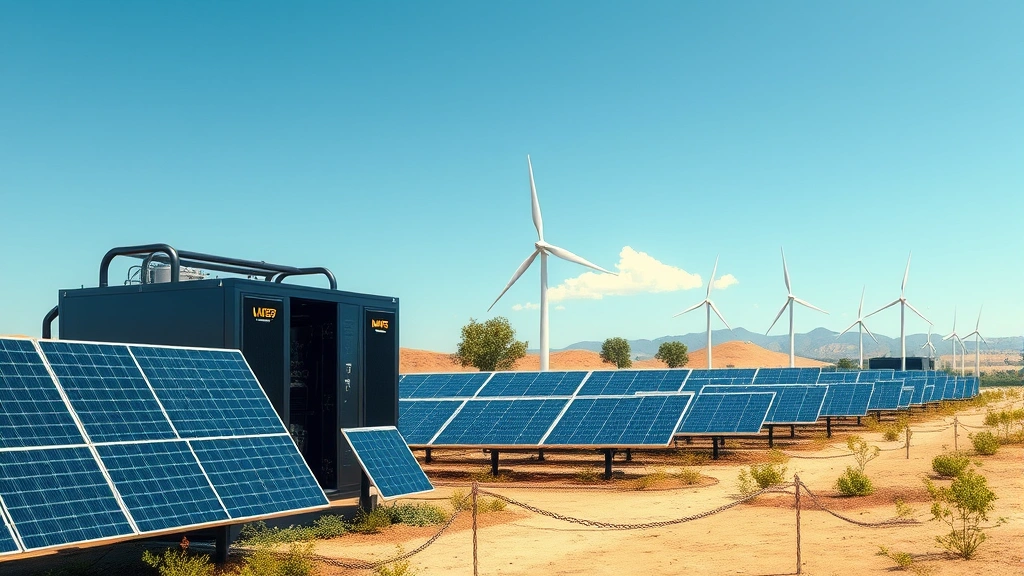
- Strategically located facilities in regions with cheap renewable energy
- Advanced cooling systems to maximize efficiency
- Pool mining arrangements to smooth revenue variability
Smaller miners face increasing challenges as difficulty rises and competition intensifies. However, the decentralized nature of mining pools allows individual miners to participate and share rewards proportionally to their contributed computational power.
When considering Bitcoin’s future, investors often examine both the price prediction metrics and mining fundamentals. A higher Bitcoin price can sustain mining profitability even with lower block rewards, while a declining price could force marginal operations offline.
Timeline to Complete Bitcoin Issuance
The complete issuance of all 21 million bitcoins will take approximately 120 years from Bitcoin’s genesis in 2009, with the final coin expected around 2140. However, this timeline is not perfectly linear due to the halving schedule and the mathematical precision of Bitcoin’s protocol.
Key milestones in Bitcoin’s issuance timeline:
- 2009-2012: 10.5 million BTC mined (50% of supply)
- 2012-2016: 5.25 million BTC mined (25% of supply)
- 2016-2020: 2.625 million BTC mined (12.5% of supply)
- 2020-2024: 1.3125 million BTC mined (6.25% of supply)
- 2024-2028: 656,250 BTC mined (3.125% of supply)
- 2140+: Final satoshis mined (0 BTC subsidy)
Notice the exponential decay: each four-year period produces progressively fewer bitcoins. By the time we reach 2100, the remaining supply to be mined becomes vanishingly small, with most of the final bitcoins coming from transaction fees rather than block subsidies.
This mathematical certainty is fundamental to Bitcoin’s appeal. Unlike fiat currencies subject to political and economic pressures, Bitcoin’s supply trajectory is immutable and transparent. This predictability influences long-term Bitcoin crash scenarios and recovery patterns, as supply constraints provide a technical floor to price declines during certain market cycles.
What Happens After All Bitcoin is Mined
The final bitcoin will be mined in 2140, but this does not mean mining will cease or the network will stop functioning. Instead, Bitcoin will transition to a fee-based security model where miners are compensated entirely through transaction fees rather than newly created bitcoins.
This transition raises important questions about network security. Currently, the combination of block subsidies and transaction fees incentivizes miners to secure the network. Once subsidies disappear, the security model depends entirely on transaction volume and fee levels being sufficient to attract mining participation.
Several scenarios could unfold:
- Higher Transaction Fees: As block subsidies decrease, transaction fees may need to increase to maintain mining profitability and network security
- Reduced Transaction Volume: Bitcoin might become primarily a settlement layer for large transactions, with smaller transactions conducted on layer-2 solutions
- Consolidation: Mining could consolidate further among the most efficient operators, potentially reducing network decentralization
- Technological Adaptation: New mechanisms might emerge to ensure adequate mining incentives without increasing user costs
Long-term Bitcoin investors should understand these dynamics, particularly when developing portfolio diversification strategies. The transition to a fee-based security model represents a fundamental shift in Bitcoin’s economics occurring over the next 115+ years.
Environmental and Sustainability Considerations
Bitcoin mining consumes substantial electrical energy, with estimates suggesting the network uses between 100-150 terawatt-hours annually. This energy consumption has prompted significant debate about Bitcoin’s environmental impact and sustainability.
However, several important nuances deserve consideration:
- Renewable Energy Adoption: Studies indicate 30-50% of Bitcoin mining already uses renewable energy sources, particularly hydroelectric power
- Stranded Energy: Miners increasingly locate near renewable energy sources that would otherwise be wasted, providing economic value to otherwise unusable power
- Energy Efficiency Improvements: ASIC hardware continues improving efficiency, reducing energy per unit of security provided
- Declining Issuance: As block rewards halve, the energy required to produce each new bitcoin increases proportionally, reducing the return on mining investment and potentially limiting growth in absolute energy consumption
As fewer bitcoins remain to be mined, the energy cost per bitcoin produced will rise significantly. This economic pressure will likely accelerate the shift toward renewable energy sources, as they offer the lowest long-term operational costs for mining operations.
For investors interested in cryptocurrency trading strategies, understanding mining dynamics is valuable. Tools like portfolio trackers help monitor mining-related metrics alongside price movements. Additionally, those exploring advanced trading strategies might examine Bitcoin options trading as a way to hedge against mining-related supply shocks or halving events.
FAQ
How many bitcoins are currently in circulation?
Approximately 19.5 million bitcoins have been mined as of 2024, representing about 92.9% of the total 21 million supply. The remaining 1.5 million bitcoins will be mined gradually over the next 116 years.
When will the last bitcoin be mined?
The final bitcoin is expected to be mined around the year 2140. However, due to the mathematical nature of Bitcoin’s halving schedule, the final satoshis (0.00000001 BTC) will be mined even later, effectively making 2140 an approximation rather than an exact date.
Does Bitcoin’s scarcity guarantee its value?
While scarcity is a necessary condition for value, it is not sufficient by itself. Bitcoin’s value derives from its scarcity combined with utility, network effects, and market demand. Scarcity without demand provides no value. However, Bitcoin’s capped supply does provide a technical property that fiat currencies lack: absolute predictability regarding maximum supply.
What happens to miners after all bitcoins are mined?
After all bitcoins are mined, miners will continue securing the network but will be compensated entirely through transaction fees. This transition represents a fundamental shift in Bitcoin’s economic model, potentially requiring higher transaction fees or reduced transaction volume to maintain adequate mining incentives.
How do Bitcoin halvings affect the price?
Historically, Bitcoin halvings have preceded significant price increases, though this is not guaranteed. Halvings reduce the supply of newly created bitcoins, potentially creating upward pressure on price if demand remains constant or increases. However, halvings are well-known events that markets typically price in advance.
Can Bitcoin’s 21 million supply limit be changed?
Technically, the supply limit could theoretically be changed through a consensus-based protocol upgrade requiring the agreement of the vast majority of network participants (miners, nodes, and users). However, changing this fundamental property would likely face enormous resistance and could fragment the network. The immutability of the supply cap is considered one of Bitcoin’s core features.
How does the block reward halving schedule work?
Every 210,000 blocks (approximately four years), the block reward is automatically reduced by 50%. This process continues until the reward becomes negligibly small. The halving schedule is mathematically predetermined and cannot be altered without fundamental changes to Bitcoin’s protocol.
Is Bitcoin mining still profitable?
Bitcoin mining profitability depends on electricity costs, hardware efficiency, and Bitcoin’s price. Large-scale operations in regions with cheap renewable energy remain highly profitable. However, profitability varies significantly based on these factors, and marginal operations may struggle during periods of low prices or high difficulty.


