Is USB Bitcoin Miner Profitable? Expert Insight
USB Bitcoin miners have captured the imagination of cryptocurrency enthusiasts seeking an accessible entry point into blockchain mining. These compact devices promise to turn spare computing power into digital wealth, but the reality is far more nuanced. In this comprehensive analysis, we examine whether USB Bitcoin miners can generate meaningful returns in today’s competitive mining landscape, considering electricity costs, hardware expenses, and network difficulty.
The allure of USB mining stems from its low barrier to entry and minimal setup requirements. Unlike industrial-scale mining operations requiring specialized equipment and substantial capital investment, USB miners can be connected to any computer. However, profitability depends on numerous interconnected factors that extend beyond simply plugging in a device and watching Bitcoin accumulate.
What is a USB Bitcoin Miner
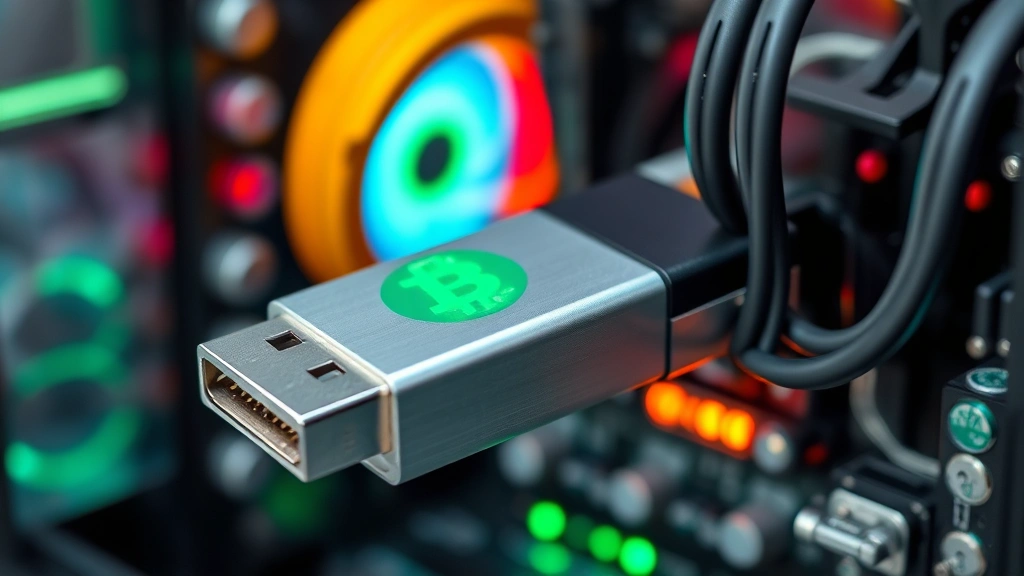
A USB Bitcoin miner is a specialized hardware device that connects to a computer via USB port to perform cryptographic calculations necessary for validating Bitcoin transactions. These devices contain application-specific integrated circuits (ASICs) designed exclusively for Bitcoin mining operations. Unlike general-purpose processors, ASICs are optimized for the SHA-256 algorithm that Bitcoin’s proof-of-work consensus mechanism requires.
The earliest USB miners, such as the Block Erupter, emerged around 2012-2013 when Bitcoin mining was transitioning from GPU-based systems to ASIC-dominated hardware. Modern USB miners like the Antminer U3 or similar devices offer significantly improved hash rates compared to their predecessors, though they remain modest compared to contemporary industrial mining rigs. These devices typically generate between 2-5 gigahashes per second (GH/s), depending on the specific model and manufacturing year.
USB miners operate by receiving work assignments from mining pools or solo mining operations, performing calculations, and submitting solutions to the network. The device itself requires minimal power compared to full-sized ASIC miners, making it attractive for hobbyists curious about mining mechanics without substantial infrastructure investment.

Current Profitability Analysis
Determining whether a USB Bitcoin miner generates profit requires examining real-world scenarios with current network parameters. As of 2025, Bitcoin’s network difficulty has reached unprecedented levels, with the total hash rate exceeding 600 exahashes per second. This immense computational competition means individual USB miners contribute an infinitesimal fraction of network security.
A typical USB miner operating at 3 GH/s would theoretically generate approximately 0.00000001 Bitcoin per day under ideal conditions. At current Bitcoin price predictions, this translates to fractions of a cent daily. Over one year, assuming consistent operation, a USB miner might accumulate 0.0000036 Bitcoin—far below the transaction fees required to withdraw earnings from most mining pools.
Most mining pools implement minimum payout thresholds, typically 0.001 to 0.01 Bitcoin, specifically because smaller amounts make transaction fees economically unjustifiable. A USB miner would require years of continuous operation to reach these thresholds, during which hardware degradation, electricity costs, and cryptocurrency price volatility would almost certainly result in net losses.
The profitability equation becomes even more challenging when considering that network difficulty increases approximately every two weeks as more miners join the Bitcoin network. This adjustment mechanism ensures consistent block production times but simultaneously reduces the earning potential for existing miners. USB miners, with their modest hash rates, face particular pressure from this difficulty escalation.
Hardware and Setup Costs
While USB miners appear inexpensive compared to industrial ASIC systems, actual costs extend beyond the device purchase price. A new USB miner typically costs $50-$300, depending on model and availability. Used devices may be significantly cheaper but come with higher failure risk and reduced operational lifespan.
Additional expenses include:
- USB cables and power supplies: Quality components prevent device damage and ensure stable operation, typically $15-$50
- Computer infrastructure: While miners can connect to existing computers, dedicated systems optimize performance and reduce wear on primary devices, costing $200-$500 for economical setups
- Cooling equipment: Continuous operation generates heat; supplementary cooling extends hardware lifespan, adding $20-$100
- Mining software: Most mining software is free or open-source, but some premium options charge subscription fees
Initial capital requirements typically range from $100-$500 for a minimalist setup. However, this represents sunk costs that must be recovered through mining operations. At current profitability levels, recovering this investment would require years of operation—far exceeding typical hardware lifespans.
The depreciation rate of USB mining hardware is particularly steep. As network difficulty increases and newer ASIC technologies emerge, older USB miners become progressively worthless. A device purchased today might have salvage value approaching zero within 18-24 months, representing a complete loss of capital if mining returns fail to materialize.
Electricity Consumption Economics
Electricity costs represent the primary variable expense in mining operations. While USB miners consume considerably less power than full-sized ASIC systems—typically 2-5 watts compared to 1000+ watts for industrial miners—even this modest consumption accumulates over continuous operation.
Calculating electricity costs requires understanding local power rates. In regions with average electricity costs of $0.12 per kilowatt-hour, a 3-watt USB miner operating continuously costs approximately $3.15 annually in electricity alone. In areas with higher rates ($0.20 per kWh), annual electricity costs reach $5.25. Conversely, in regions with subsidized power ($0.03 per kWh), annual costs drop to $0.79.
However, this analysis overlooks several factors. USB miners rarely operate at rated efficiency; real-world power consumption often exceeds specifications. Additionally, supporting infrastructure—computers running mining software, network equipment, cooling systems—consumes additional electricity not attributed directly to the mining device.
For profitable mining, daily Bitcoin earnings must exceed daily electricity costs. At current network difficulty and Bitcoin price levels, most USB miners generate $0.01-$0.05 daily while consuming $0.01-$0.02 in electricity. This razor-thin margin disappears entirely when accounting for pool fees (typically 1-2%), hardware degradation, and network difficulty increases.
The profitability calculation becomes even more unfavorable during Bitcoin price downturns. If Bitcoin declines 20% from current levels, mining returns plummet by the same percentage while electricity costs remain fixed, quickly transforming marginal profitability into clear losses.
Network Difficulty and Competition
Bitcoin’s difficulty adjustment mechanism ensures that blocks are discovered approximately every ten minutes, regardless of total network hash power. This elegant design protects Bitcoin’s security but creates a competitive environment where individual miners face constant pressure from expanding computational resources.
Network difficulty has increased roughly exponentially since Bitcoin’s inception. In 2012, difficulty was approximately 3 million; by 2024, it exceeded 80 trillion. This staggering increase reflects both hardware improvements and massive capital investment in professional mining operations. Individual USB miners compete against industrial facilities housing thousands of specialized ASIC devices.
The competitive dynamics are fundamentally asymmetrical. Professional mining operations benefit from economies of scale, bulk hardware purchases at discounts, negotiated electricity rates as low as $0.02-$0.04 per kWh, and operational expertise. USB miners, conversely, pay retail hardware prices, standard consumer electricity rates, and lack technical optimization knowledge.
This inequality means that as network difficulty increases—which occurs predictably and inexorably—USB miner profitability deteriorates faster than industrial operations. Professional miners can absorb slight margin reductions; USB miners operating at breakeven suddenly face losses.
Comparing Mining Strategies
Understanding USB mining profitability requires comparing alternative cryptocurrency engagement strategies. Investors with capital to deploy have several options, each with distinct risk-return profiles.
Solo mining versus pool mining represents the first decision. Solo mining means competing independently against the entire Bitcoin network for block rewards. A USB miner would statistically require thousands of years to discover a block solo. Pool mining distributes work across participants, providing regular (though modest) payouts. Pool mining is universally recommended for small-scale operations but charges 1-2% fees.
Comparing USB mining against simply purchasing Bitcoin directly reveals the fundamental inefficiency. An investor could purchase Bitcoin with capital allocated to mining hardware and electricity, holding it as a store of value. This strategy eliminates mining complexity and hardware degradation while maintaining exposure to Bitcoin price appreciation. Given current mining profitability, purchasing Bitcoin directly almost certainly generates superior returns.
Cloud mining services represent another alternative, though these platforms carry significant fraud and counterparty risk. Reputable cloud mining providers charge fees that typically exceed small-scale mining profitability, making them economically inferior to direct Bitcoin ownership.
For investors interested in cryptocurrency exposure, diversifying investment portfolios across multiple assets and strategies provides superior risk-adjusted returns compared to USB mining. Capital gains from cryptocurrency appreciation typically exceed mining returns, particularly for retail investors operating USB miners.
Alternative Investment Approaches
Rather than pursuing USB mining, investors interested in cryptocurrency exposure should consider more efficient strategies aligned with their risk tolerance and investment horizon.
Direct Bitcoin ownership: Purchasing Bitcoin through regulated exchanges provides straightforward exposure to price appreciation. This strategy eliminates technical complexity, hardware management, and electricity cost uncertainty. Bitcoin’s historical volatility means prices may decline, but investors maintain optionality absent in mining operations.
Staking in proof-of-stake blockchains: Ethereum, Solana, and other major blockchains use proof-of-stake consensus mechanisms that reward participants for securing networks without requiring specialized hardware. Staking returns (typically 3-8% annually) often exceed USB mining profitability while requiring minimal technical expertise.
Yield farming and DeFi protocols: Decentralized finance platforms offer variable returns through liquidity provision and lending activities. While these strategies carry smart contract and platform risks, returns often exceed mining yields for comparable capital deployment.
Dollar-cost averaging: Regular small Bitcoin purchases over extended periods reduce market timing risk and build positions systematically. This approach suits investors with modest capital and long-term horizons.
For investors specifically interested in mining mechanics and blockchain technology, USB mining retains educational value despite poor profitability. Learning how mining works, understanding difficulty adjustments, and experiencing hardware management provides valuable knowledge. However, this educational value should not be confused with financial returns.
The opportunity cost of capital represents the final consideration. Money invested in USB mining hardware and electricity could be deployed in commodities, traditional securities, or higher-yielding cryptocurrency strategies. Even conservative investment alternatives typically generate superior risk-adjusted returns compared to contemporary USB mining.
FAQ
Can USB Bitcoin miners still be profitable in 2025?
Profitability is theoretically possible in regions with exceptionally low electricity costs (below $0.03 per kWh) combined with optimized hardware selection and favorable Bitcoin price movements. However, for most users operating from standard residential locations, USB mining generates minimal returns that fail to cover hardware depreciation and opportunity costs. The operational threshold for profitability has risen substantially as network difficulty has increased.
How long does it take for a USB miner to pay for itself?
At current network difficulty and Bitcoin prices, a typical USB miner would require 5-15 years of continuous operation to generate earnings matching its purchase price—assuming zero hardware failures and ignoring electricity costs. When electricity expenses are included, most USB miners never achieve positive returns. Hardware typically fails or becomes obsolete within 2-4 years, well before profitability thresholds are reached.
What’s the difference between USB miners and ASIC miners?
USB miners are smaller, lower-power devices suitable for hobbyists, generating 2-5 GH/s. ASIC miners are industrial-grade systems consuming 1000+ watts and generating terahashes per second. ASIC miners offer superior economics at scale but require significant capital investment and operational expertise. USB miners are more accessible but economically inefficient at current network parameters.
Should I invest in mining or buy Bitcoin directly?
For most retail investors, purchasing Bitcoin directly through regulated exchanges generates superior risk-adjusted returns compared to USB mining. Direct ownership eliminates hardware management, electricity cost uncertainty, and technical complexity. Unless you have access to exceptionally cheap electricity or possess specialized mining expertise, Bitcoin ownership outperforms mining operations.
Are there any hidden costs in USB mining?
Beyond obvious hardware and electricity expenses, hidden costs include pool fees (1-2%), network bandwidth usage, computer wear and tear, cooling requirements, and opportunity costs. Additionally, irregular mining payouts introduce timing and reinvestment complexity. These cumulative factors typically exceed the modest revenue generated by USB miners.
What role does Bitcoin price play in mining profitability?
Bitcoin price directly determines mining returns; a 20% price decline reduces earnings by 20% while fixed electricity costs remain unchanged. This asymmetry means mining profitability is highly sensitive to price volatility. During bear markets, marginal mining operations become unprofitable immediately, though this also reduces network hash rate and difficulty over subsequent adjustment periods.


