Convert USDT to Bitcoin: Step-by-Step Guide
Converting USDT (Tether) to Bitcoin is one of the most common cryptocurrency transactions in today’s digital asset ecosystem. Whether you’re a seasoned trader or a newcomer to crypto, understanding how to efficiently exchange your stablecoin holdings for Bitcoin can help you navigate market opportunities with confidence. This comprehensive guide walks you through every step of the conversion process, from selecting the right platform to executing your trade securely.
USDT remains the most widely adopted stablecoin globally, providing traders with a bridge between fiat currencies and volatile cryptocurrencies like Bitcoin. By converting USDT to Bitcoin, you’re essentially moving from a stable asset to one of the most sought-after digital currencies. The process is straightforward once you understand the mechanics, and this guide ensures you’ll execute it correctly while minimizing fees and risks.
Understanding USDT and Bitcoin Basics
Before converting USDT to Bitcoin, it’s essential to understand what you’re working with. USDT is a stablecoin issued by Tether, designed to maintain a 1:1 peg with the US dollar. This means one USDT should theoretically equal $1 USD. Bitcoin, conversely, is a volatile digital asset whose price fluctuates based on market demand, regulatory news, and macroeconomic factors. Understanding this fundamental difference is crucial for making informed conversion decisions.
USDT operates on multiple blockchain networks including Ethereum, Tron, Polygon, and others. Bitcoin exists exclusively on its own blockchain. When converting between these two assets, you’re essentially trading one for another through a market mechanism. The exchange rate between USDT and Bitcoin varies constantly, determined by real-time market demand on your chosen platform. During periods of Bitcoin sell-off activity, you might find more favorable conversion rates if you’re patient with your timing.
It’s worth noting that the conversion process itself doesn’t involve any blockchain technology in the traditional sense—you’re simply exchanging one asset for another on a centralized or decentralized exchange. Your USDT doesn’t physically transform into Bitcoin; rather, you’re selling USDT and purchasing Bitcoin with the proceeds.
Choosing the Right Exchange Platform
Selecting an appropriate exchange is the most critical step in your conversion journey. The right platform depends on your location, verification status, account balance, and preferred features. Major centralized exchanges like Binance, Coinbase, Kraken, and OKX all support USDT-to-Bitcoin trading with competitive fees and high liquidity.
For US residents, Coinbase and Kraken offer excellent regulatory compliance and user-friendly interfaces. Binance provides the deepest liquidity pools and lowest trading fees, though regulatory restrictions apply in certain jurisdictions. International users might prefer OKX or Huobi for their extensive trading pairs and advanced features.
Decentralized exchanges (DEXs) like Uniswap and 1inch also facilitate USDT-to-Bitcoin swaps, though you’ll need to bridge assets across blockchains and manage your own wallet security. DEXs typically charge higher gas fees but offer greater privacy and self-custody options.
Compare platforms based on these criteria: trading fees (typically 0.1% to 0.5%), withdrawal fees, platform security reputation, customer support quality, and available trading tools. Check CoinDesk for current exchange reviews and security assessments before committing funds.
Creating and Securing Your Account
Once you’ve selected your exchange, creating an account is the next step. Most platforms require email verification and identity confirmation through KYC (Know Your Customer) procedures. This process typically involves submitting government-issued identification and proof of address.
Security should be your paramount concern when setting up your account. Use a unique, complex password containing uppercase letters, numbers, and special characters. Enable two-factor authentication (2FA) immediately—preferably using an authenticator app like Google Authenticator or Authy rather than SMS-based authentication, which is more vulnerable to SIM-swapping attacks.
Consider using a password manager to securely store your credentials. Never share your account details, recovery phrases, or authentication codes with anyone. Legitimate exchange support staff will never request this information. After account creation, take time to explore the platform’s security settings and enable any additional protective features like IP whitelisting or withdrawal address whitelisting.
Depositing USDT to Your Exchange
With your account secured, you can now deposit your USDT holdings. Navigate to the deposit section and select USDT as your asset. The exchange will provide you with a deposit address and specify which blockchain network you should use (Ethereum, Tron, Polygon, etc.).
This is critical: ensure the network matches your USDT location. Sending ERC-20 USDT (Ethereum network) to a Tron address will result in permanent loss of funds. Many exchanges provide multiple deposit addresses for different blockchain networks—verify you’re using the correct one.
If you’re depositing from another exchange or your personal wallet, initiate the transfer and wait for network confirmation. Ethereum deposits typically confirm within 10-30 minutes, while Tron deposits confirm much faster (usually 2-5 minutes). Polygon deposits typically confirm within 5-10 minutes. Don’t proceed with trading until your deposit shows a confirmed balance on your exchange account.
Some exchanges offer deposit bonuses for new users—check current promotions, though be aware of any trading volume requirements attached to these bonuses.
Executing the Conversion Trade
Now comes the actual conversion. Navigate to the spot trading section (not margin or futures trading unless you’re an experienced trader). Search for the USDT/BTC trading pair. This represents the market price at which you can exchange USDT for Bitcoin.
You’ll see two order types: market orders and limit orders. A market order executes immediately at the current market price, providing instant conversion but potentially at a slightly worse price than the current quoted rate. A limit order lets you specify your desired price, executing only when the market reaches that level—useful if you want to wait for better rates.
For most traders, a market order is appropriate when you’re ready to convert immediately. Enter the amount of USDT you wish to convert. The exchange will calculate how much Bitcoin you’ll receive based on current rates. Review the fee structure—typically 0.1% to 0.5% of your trade volume—before confirming.
Click “Buy Bitcoin” or the equivalent button. Your trade executes within seconds. You’ll receive a confirmation with your transaction ID, the exact amount of Bitcoin received, and the effective conversion rate. Your Bitcoin balance updates immediately on the exchange.
If you’re concerned about timing the market, consider dollar-cost averaging—converting a portion of your USDT regularly over several weeks or months rather than converting everything at once. This strategy can help mitigate the risk of converting all your holdings just before a Bitcoin price crash.
Withdrawal and Storage Options
After converting USDT to Bitcoin, you face an important decision: keep your Bitcoin on the exchange or withdraw it to personal custody. Each option has distinct security and convenience tradeoffs.
Leaving Bitcoin on an exchange offers convenience for future trading but exposes you to exchange hacking risks and regulatory seizure possibilities. Exchanges are attractive targets for hackers, and even well-secured platforms have suffered breaches. Historical incidents like the Mt. Gox collapse demonstrate the risks of exchange custody.
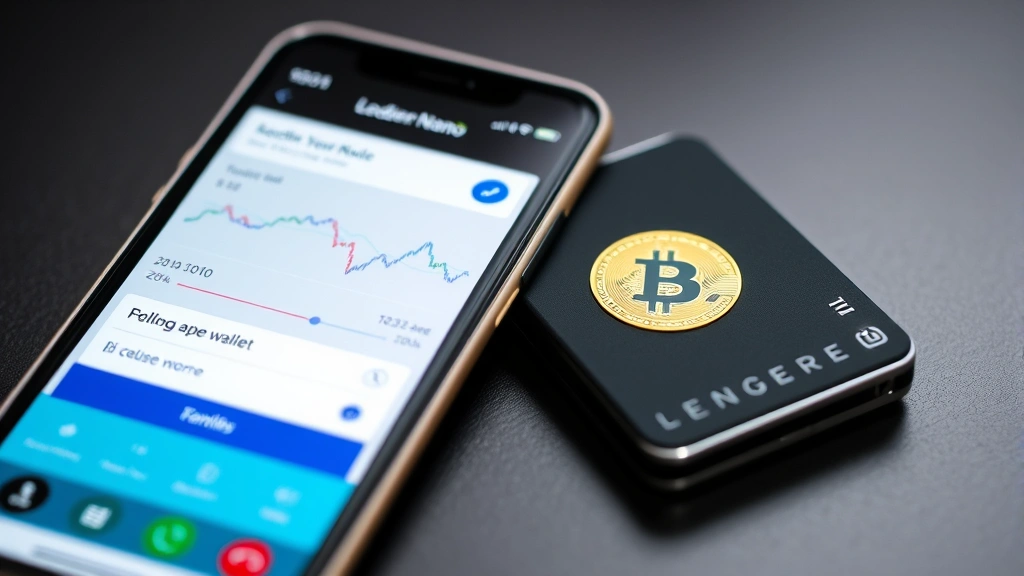
Withdrawing to personal custody via a hardware wallet (Ledger, Trezor) or software wallet (BlueWallet, Electrum) provides maximum security. Hardware wallets are considered the gold standard for long-term Bitcoin storage, keeping your private keys completely offline. This eliminates exchange hacking risks, though you assume responsibility for securing your recovery phrase and managing your own backup procedures.
To withdraw, navigate to your withdrawal section, select Bitcoin, and enter your destination wallet address. The exchange will charge a network fee (typically 0.0005 to 0.005 BTC depending on network congestion). Verify the withdrawal address carefully—Bitcoin transactions are irreversible, and sending to an incorrect address results in permanent loss.
After initiating withdrawal, your Bitcoin will appear in your personal wallet within 10 minutes to several hours depending on network confirmation times. Check a Bitcoin blockchain explorer like Blockchain.com to verify your transaction’s progress using your transaction ID.
Fees and Hidden Costs to Consider
Converting USDT to Bitcoin involves multiple fee layers that can significantly impact your effective conversion rate. Understanding these costs helps you optimize your conversion strategy.
Trading fees are the primary cost, typically ranging from 0.1% to 0.5% of your trade volume depending on the exchange and your VIP tier. On a $10,000 conversion at 0.25% fees, you’d pay $25 in trading costs. Some exchanges offer fee reductions for high-volume traders or users holding their native exchange tokens.
Withdrawal fees vary dramatically by blockchain network. Bitcoin network withdrawal fees fluctuate with network congestion—during peak periods, you might pay $10-30 to withdraw, while during quiet periods, you might pay $1-5. Ethereum-based USDT deposits incur higher gas fees than Tron-based deposits, sometimes $10-50 per transaction.
Spread costs represent the difference between the bid and ask prices on the exchange. When you place a market order, you’re buying at the “ask” (slightly higher) price rather than the “bid” (slightly lower) price. For major trading pairs like USDT/BTC, this spread is typically 0.1-0.3%, but can widen during low-liquidity periods.
Hidden costs also include opportunity costs if you’re waiting for better conversion rates. If Bitcoin’s price rises 2% while you’re deliberating, that’s a real cost in terms of reduced Bitcoin received. Conversely, if prices fall, waiting saved you money.
To minimize fees: use exchanges with competitive fee structures, avoid small transactions (fixed fees become proportionally larger), consolidate deposits to reduce transaction costs, and monitor network congestion to time your withdrawals when fees are lower.
Market Timing and Risk Management
While converting USDT to Bitcoin is relatively straightforward technically, the strategic timing of your conversion significantly impacts your returns. Bitcoin’s volatile nature means the same USDT amount could buy different quantities of Bitcoin depending on when you convert.
Successful conversion timing requires understanding market conditions. Check recent Bitcoin price action, trading volume, and sentiment indicators before converting. During extreme market pessimism—such as when news breaks about Bitcoin price crashes—you may find better conversion rates but face uncertainty about further downside. During optimistic periods, prices may be elevated but momentum could continue upward.
Risk management strategies include: dollar-cost averaging your conversion over multiple transactions, setting price alerts to execute when Bitcoin reaches your target price, maintaining a portion in USDT for dry powder during market dips, and diversifying rather than converting your entire USDT allocation immediately.
Consider your investment timeline. If you’re converting for long-term holdings, short-term price fluctuations matter less. If you’re day trading or swing trading, timing becomes more critical. Review how to diversify your investment portfolio to understand whether Bitcoin should represent your entire cryptocurrency holdings or part of a broader allocation.
Technical analysis can inform your timing decisions. Support and resistance levels, moving averages, and relative strength index (RSI) indicators help identify potential entry points. However, remember that technical analysis isn’t foolproof—even experienced traders sometimes misread market signals.
Regulatory considerations also affect risk management. Stay informed about regulatory developments through SEC announcements and FinCEN guidance, as regulatory news can significantly impact Bitcoin prices and exchange operations.
FAQ
What is the best exchange for converting USDT to Bitcoin?
The best exchange depends on your location and needs. Binance offers the lowest fees and deepest liquidity globally. Coinbase and Kraken provide excellent regulatory compliance for US users. OKX serves international traders well. Compare fees, features, and security before deciding.
How long does USDT to Bitcoin conversion take?
The actual conversion on an exchange is instantaneous—you receive your Bitcoin immediately after executing a market order. However, depositing USDT might take 2-30 minutes depending on blockchain network, and withdrawing Bitcoin might take 10 minutes to several hours depending on network confirmation times.
Can I convert USDT to Bitcoin without KYC verification?
Centralized exchanges require KYC verification for regulatory compliance. Decentralized exchanges don’t require KYC but involve higher fees and technical complexity. Some peer-to-peer platforms offer lower-KYC options but carry higher counterparty risk.
What fees should I expect when converting USDT to Bitcoin?
Expect trading fees (0.1-0.5%), network withdrawal fees ($1-30 depending on congestion), and potential spread costs (0.1-0.3%). Total costs typically range from 0.5% to 1.5% of your conversion amount.
Is it safer to keep Bitcoin on an exchange or in a personal wallet?
Personal wallets, especially hardware wallets, are significantly safer for long-term storage. Exchanges offer convenience but expose you to hacking and regulatory risks. For active trading, exchange custody is acceptable; for long-term holdings, personal custody is recommended.
How do I know which blockchain network to use for USDT deposits?
Check your exchange’s deposit instructions—they specify which networks are supported (Ethereum, Tron, Polygon, etc.). Use the network where your USDT currently resides. Sending to the wrong network results in permanent loss.
Should I convert all my USDT at once or gradually?
Dollar-cost averaging—converting gradually over time—reduces the risk of converting everything just before a price decline. However, it also means you might miss out if prices rise immediately. Your strategy depends on your market outlook and risk tolerance.
What happens if I send Bitcoin to the wrong address?
Bitcoin transactions are irreversible. Sending to an incorrect address results in permanent loss of funds. Always verify addresses carefully and test with small amounts first if you’re unsure.
Can I convert Bitcoin back to USDT easily?
Yes, the process is identical but reversed. Navigate to the BTC/USDT pair, execute a market order to sell Bitcoin for USDT, then withdraw your USDT. The process takes minutes to complete.
Are there tax implications for converting USDT to Bitcoin?
In most jurisdictions, cryptocurrency conversions trigger taxable events. You may owe capital gains tax on the difference between your USDT cost basis and the Bitcoin value at conversion time. Consult a tax professional for your specific situation.


