Is Bitcoin Popular in Amsterdam? Local Insights
Amsterdam, the capital of the Netherlands, has earned a reputation as one of Europe’s most progressive and tech-forward cities. This cosmopolitan hub has become increasingly relevant in the cryptocurrency landscape, with Bitcoin adoption growing steadily among residents, businesses, and institutions. From accepting Bitcoin payments at cafes to hosting major crypto conferences, Amsterdam represents a unique intersection of traditional European finance and cutting-edge digital currency adoption.
The Dutch city’s liberal regulatory environment, combined with its strong tech infrastructure and entrepreneurial spirit, has created favorable conditions for cryptocurrency adoption. Understanding Bitcoin’s popularity in Amsterdam requires examining local merchant adoption, regulatory frameworks, community engagement, and how the city compares to other European crypto hubs. This comprehensive guide explores the current state of Bitcoin in Amsterdam and what it means for both residents and international crypto enthusiasts.
Bitcoin Adoption in Amsterdam: Current State
Bitcoin adoption in Amsterdam has experienced remarkable growth over the past five years, transforming the city into one of Europe’s most crypto-friendly destinations. The adoption rate among Amsterdam residents significantly exceeds the Dutch national average, with surveys indicating that approximately 20-25% of the city’s population owns or has owned cryptocurrency. This figure is considerably higher than many other European capitals, reflecting Amsterdam’s unique position as a technology and innovation center.
The city’s embrace of Bitcoin stems from multiple factors: a highly educated population with strong digital literacy, a culture of entrepreneurship and innovation, and a regulatory framework that neither aggressively opposes nor overly restricts cryptocurrency activities. Local Bitcoin meetups and discussion groups attract hundreds of participants monthly, demonstrating sustained community interest. The Bitcoin Amsterdam community remains active and engaged, regularly organizing events, workshops, and networking opportunities for enthusiasts ranging from complete beginners to seasoned investors.
Institutional interest in cryptocurrency has also grown considerably in Amsterdam. Several blockchain startups have established headquarters in the city, while traditional financial institutions have begun exploring cryptocurrency services. This dual interest from both retail and institutional sectors has created a robust ecosystem that continues to evolve. Many young professionals and tech workers view Bitcoin not merely as a speculative asset but as part of the broader digital transformation affecting finance and technology globally.
Merchant Acceptance and Payment Infrastructure
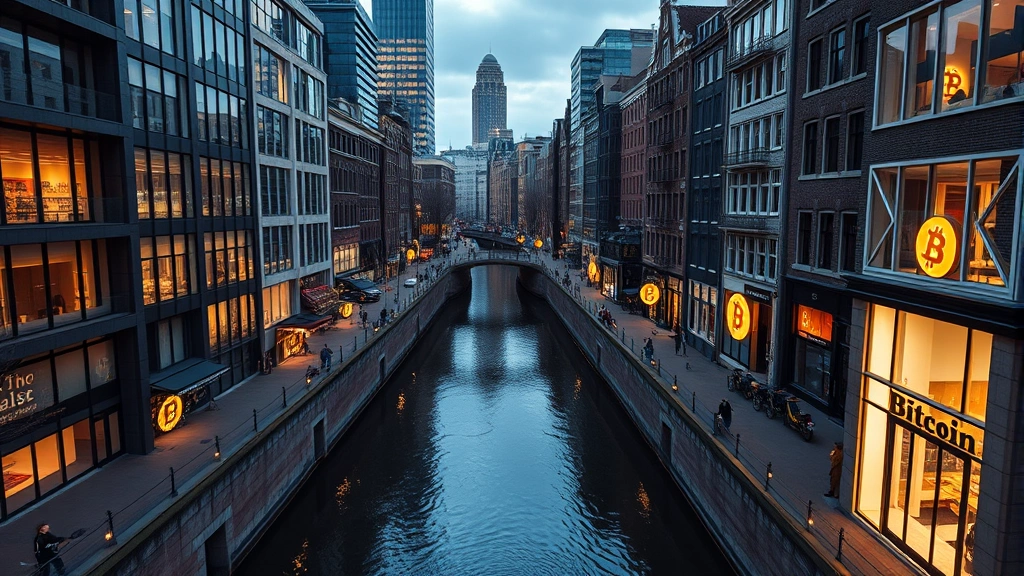
One of the most visible indicators of Bitcoin’s popularity in Amsterdam is the proliferation of merchants accepting cryptocurrency payments. Unlike many cities where Bitcoin acceptance remains limited to niche retailers, Amsterdam features a diverse range of businesses willing to accept Bitcoin and other cryptocurrencies. Coffee shops, restaurants, hotels, bookstores, and even some traditional retail outlets display Bitcoin acceptance logos, making cryptocurrency transactions relatively seamless for residents and visitors.
The payment infrastructure supporting Bitcoin transactions in Amsterdam has matured significantly. Multiple cryptocurrency payment processors operate in the city, facilitating instant conversion between Bitcoin and euros if merchants prefer fiat currency. This technological bridge has removed one of the primary barriers to merchant adoption—the complexity of handling volatile cryptocurrency while maintaining traditional accounting practices. Services like BTCPay Server and similar open-source solutions have enabled small businesses to accept Bitcoin without extensive technical knowledge or significant upfront investment.
Notably, Amsterdam’s famous coffee shops have become symbolic locations for Bitcoin adoption. Several establishments in the city center prominently advertise Bitcoin acceptance, and some have reported that cryptocurrency payments represent a meaningful portion of daily transactions. This visibility has contributed significantly to Bitcoin’s cultural prominence in the city. Additionally, tourist-oriented businesses recognize that accepting Bitcoin attracts international crypto enthusiasts, creating a positive feedback loop that encourages further adoption.
The city’s bike rental services, accommodation providers, and entertainment venues increasingly accept cryptocurrency. This practical adoption across multiple sectors demonstrates that Bitcoin has transcended its status as a purely speculative asset in Amsterdam’s economy. The presence of several cryptocurrency ATMs throughout the city further facilitates conversions between fiat and digital currencies, enhancing accessibility for both newcomers and experienced users.

Regulatory Environment in the Netherlands
The Netherlands maintains one of Europe’s most progressive and clearly defined regulatory frameworks for cryptocurrency activities. The Dutch Financial Authority (AFM) and the Central Bank (DNB) have established comprehensive guidelines that provide clarity while avoiding the restrictive approaches seen in some other jurisdictions. This regulatory clarity has been instrumental in attracting cryptocurrency businesses to Amsterdam and fostering a culture where Bitcoin and other digital assets are treated as legitimate financial instruments.
Dutch regulators have implemented the European Union’s Markets in Crypto-Assets Regulation (MiCA), which creates standardized rules across EU member states. However, the Netherlands’ interpretation and implementation of these rules has been notably balanced, avoiding excessive restrictions while maintaining appropriate consumer protections. This approach has created an environment where cryptocurrency exchanges, wallet providers, and other service providers can operate with reasonable confidence regarding their legal status.
Amsterdam’s position as a global financial hub has influenced regulatory policy. The city hosts major financial institutions and serves as a center for international commerce, creating institutional pressure for sensible cryptocurrency regulation. Policymakers recognize that overly restrictive approaches could drive cryptocurrency activity underground or push businesses to jurisdictions with more favorable conditions. This pragmatic regulatory philosophy has enabled Amsterdam to become a genuine cryptocurrency hub rather than a city where crypto activity exists in legal gray areas.
The Dutch approach to taxation of cryptocurrency holdings and transactions is also relatively transparent. While capital gains on Bitcoin holdings remain subject to taxation, the framework is clearly defined, allowing residents and businesses to calculate their tax obligations with reasonable certainty. This clarity, compared to the ambiguity in some countries, has encouraged legitimate cryptocurrency participation and tax compliance among Amsterdam residents.
Community and Cultural Initiatives
Amsterdam’s Bitcoin community extends far beyond casual investors and merchants. The city hosts numerous educational initiatives, conferences, and networking events that promote cryptocurrency literacy and foster community engagement. The annual Amsterdam Bitcoin Conference attracts speakers and attendees from across Europe and beyond, reinforcing the city’s position as a significant cryptocurrency center. These events provide platforms for discussing technical innovations, regulatory developments, and cryptocurrency’s broader societal implications.
Local educational institutions have begun incorporating blockchain and cryptocurrency into their curricula. Universities and technical colleges in Amsterdam now offer courses covering cryptocurrency fundamentals, blockchain technology, and smart contracts. This academic integration signals a significant cultural shift, positioning Bitcoin and blockchain not as fringe topics but as legitimate fields of study and professional development. Students graduating from these programs represent a new generation of cryptocurrency professionals who understand both the technology and its practical applications.
Bitcoin meetup groups in Amsterdam operate regularly, providing spaces for community members to share knowledge, discuss market developments, and build professional networks. These informal gatherings have contributed significantly to Bitcoin literacy among the general population. Unlike some cities where cryptocurrency knowledge remains concentrated among technical specialists, Amsterdam’s community-driven education efforts have distributed understanding more broadly across diverse demographics.
The city’s cultural institutions have also engaged with cryptocurrency and blockchain themes. Art galleries and museums have hosted exhibitions exploring cryptocurrency’s cultural significance, while media outlets regularly feature stories about Bitcoin and blockchain developments. This cultural integration has normalized cryptocurrency discussions in mainstream discourse, reducing the stigma that persists in many other locations.

How Amsterdam Compares to Other European Cities
Amsterdam’s Bitcoin adoption rate and merchant acceptance exceed those of most European capitals. While cities like Berlin and Zurich have significant cryptocurrency communities, Amsterdam’s combination of regulatory clarity, merchant adoption, and community engagement creates a unique ecosystem. The city rivals major cryptocurrency news sources in terms of coverage of local developments, reflecting sustained media and public interest.
Compared to London, another major European financial center, Amsterdam’s regulatory environment is arguably more crypto-friendly. While London remains important for cryptocurrency finance and institutional services, Amsterdam has cultivated a more grassroots and culturally integrated Bitcoin adoption. Berlin, known for its alternative culture and Bitcoin enthusiasm, shares Amsterdam’s progressive stance, but Amsterdam’s institutional financial sector provides additional legitimacy and infrastructure.
When evaluating Bitcoin price dynamics and market sentiment across European cities, Amsterdam consistently ranks among the most bullish regions. This reflects both the city’s strong community of Bitcoin advocates and the practical experience residents have with cryptocurrency functionality. Unlike cities where Bitcoin remains primarily an investment topic, Amsterdam residents regularly encounter Bitcoin as a payment method, shaping their perspective on its real-world utility.
Amsterdam’s position as a major European transportation hub means that international cryptocurrency enthusiasts frequently visit the city. This tourism dimension has created a positive feedback loop where visiting crypto professionals and investors encounter Bitcoin-friendly infrastructure, contributing to the city’s reputation as a cryptocurrency destination. Many international blockchain conferences and events are held in or near Amsterdam, further cementing its status within the global cryptocurrency ecosystem.
Investment Opportunities and Local Sentiment
The investment sentiment surrounding Bitcoin in Amsterdam remains generally positive, though with appropriate awareness of volatility and risk. Local investors recognize Bitcoin’s role as a potential hedge against currency fluctuations and inflation, particularly relevant for a country in the eurozone. Many Amsterdam residents who have held Bitcoin for several years view it as a successful long-term investment, though newer investors maintain more cautious approaches reflecting recent Bitcoin price drop experiences and broader market volatility.
Professional investment opportunities have expanded significantly. Amsterdam hosts several cryptocurrency investment funds and asset managers catering to both retail and institutional investors. These services provide sophisticated tools for portfolio management, risk assessment, and regulatory compliance. The presence of these professional services has enabled larger capital allocations to Bitcoin from institutional sources, increasing market depth and stability.
Local sentiment regarding Bitcoin’s long-term prospects remains optimistic among community members, though tempered by realistic acknowledgment of risks. Discussions about whether Bitcoin is going to crash occur regularly in Amsterdam’s investment forums and meetups, reflecting healthy skepticism and risk awareness. This balanced perspective—enthusiasm tempered by caution—characterizes the mature investment community that has developed in the city.
The housing and real estate markets have even been influenced by cryptocurrency wealth in Amsterdam. Several neighborhoods have seen increased development activity and investment from cryptocurrency entrepreneurs and early adopters. This phenomenon, while creating some social tension around gentrification, also reflects the genuine economic impact of cryptocurrency adoption in the city.
When considering how much to invest in Bitcoin, Amsterdam’s investment community emphasizes personal risk tolerance, time horizon, and portfolio diversification. Professional advisors in the city help clients develop Bitcoin allocation strategies aligned with their individual circumstances rather than promoting aggressive or reckless investment approaches. This mature, advisory-focused culture distinguishes Amsterdam from cities where cryptocurrency investment remains dominated by speculative trading mentality.
Challenges and Future Outlook
Despite Bitcoin’s significant popularity in Amsterdam, several challenges remain. Environmental concerns regarding Bitcoin mining persist, with some Dutch environmental organizations questioning the sustainability of cryptocurrency activities. The energy consumption associated with proof-of-work systems has become an increasingly important consideration in policy discussions and community debates about Bitcoin’s long-term viability.
Regulatory uncertainty at the European Union level creates some concerns for Amsterdam’s cryptocurrency businesses and investors. While the Netherlands’ approach remains progressive, changes to EU-wide cryptocurrency regulations could impact local operations. Businesses and investors maintain awareness of potential regulatory shifts while continuing to operate within current frameworks.
Fraud and security concerns remain relevant despite growing sophistication in cryptocurrency infrastructure. Amsterdam’s cryptocurrency community actively works to educate users about security best practices, wallet management, and scam prevention. The city’s experience with these challenges has created strong educational resources and support communities for users encountering difficulties or security threats.
The future outlook for Bitcoin in Amsterdam appears positive, with continued growth expected in merchant adoption, institutional participation, and community engagement. Technological developments in Bitcoin options trading and other derivatives markets will likely expand investment opportunities. However, this growth will probably occur alongside increased regulatory scrutiny and maturation of the market. Understanding technical aspects through best indicators to use on Bitcoin charts will remain important for investors seeking to navigate market cycles and make informed decisions.
The number of Bitcoin remaining to be mined—an important consideration for long-term investment strategies—represents another topic of ongoing discussion in Amsterdam’s investment community. Understanding how many Bitcoin are left to mine helps investors contextualize Bitcoin’s scarcity value and long-term economic model within their broader investment theses.
Looking forward, Amsterdam is likely to maintain its position as a leading European cryptocurrency hub. The city’s combination of regulatory clarity, technological infrastructure, educated population, and entrepreneurial culture creates sustainable advantages for cryptocurrency adoption and innovation. As the global cryptocurrency landscape continues evolving, Amsterdam’s role in shaping both technical and policy developments will likely expand.
FAQ
Can you actually use Bitcoin in Amsterdam?
Yes, Bitcoin is widely accepted in Amsterdam. Numerous merchants including restaurants, cafes, hotels, and retail stores accept Bitcoin payments. Multiple cryptocurrency ATMs throughout the city facilitate conversions between fiat currency and Bitcoin, making transactions practical and accessible.
Is Bitcoin legal in the Netherlands?
Bitcoin is legal in the Netherlands. The Dutch regulatory framework treats cryptocurrency as a legitimate asset class and financial instrument. Residents can legally own, trade, and use Bitcoin, though capital gains remain subject to taxation and certain activities require proper licensing.
How many Bitcoin ATMs are in Amsterdam?
Amsterdam has numerous Bitcoin ATMs distributed throughout the city, with the exact number fluctuating as new machines are installed and others are removed. The city maintains one of Europe’s highest concentrations of cryptocurrency ATMs, reflecting strong local demand and merchant adoption.
What is the regulatory approach in the Netherlands toward cryptocurrency?
The Netherlands takes a balanced regulatory approach, implementing EU regulations while avoiding overly restrictive policies. The AFM and DNB provide clear guidelines for cryptocurrency businesses and activities, creating an environment where legitimate cryptocurrency operations can flourish with appropriate oversight.
Are there cryptocurrency exchanges operating in Amsterdam?
Yes, several major cryptocurrency exchanges operate in or maintain significant operations in Amsterdam. The city’s regulatory clarity and financial infrastructure make it an attractive location for exchange businesses serving European markets.
How has Bitcoin adoption in Amsterdam compared to other European cities?
Amsterdam ranks among Europe’s leading cities for Bitcoin adoption, with higher merchant acceptance and community engagement rates than most other European capitals. The city’s combination of regulatory clarity, technological infrastructure, and cultural openness distinguishes it from competitors.


