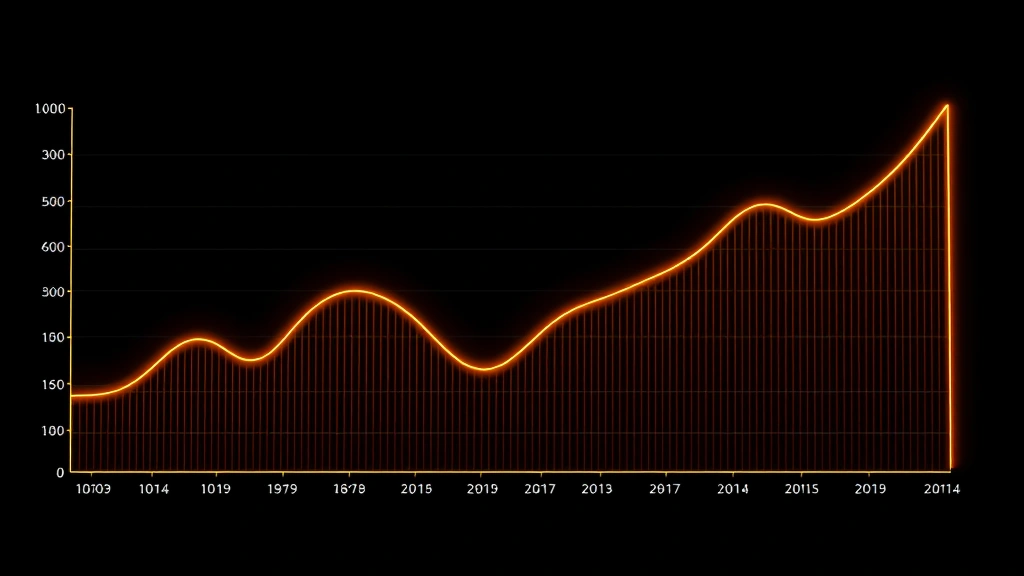
M2 Money Supply vs Bitcoin: Economist’s Insight
The relationship between M2 money supply and Bitcoin has become increasingly central to macroeconomic discussions, particularly as central banks worldwide implement unprecedented monetary policies. M2, which includes cash in circulation plus savings deposits and money market securities, serves as a critical indicator of economic health and inflation risk. Bitcoin, conversely, operates as a decentralized alternative asset with a fixed supply cap of 21 million coins. Understanding how these two systems interact reveals fundamental truths about modern finance, currency devaluation, and the role of digital assets in portfolio diversification.
Economists and financial analysts have long debated whether Bitcoin functions as an inflation hedge comparable to traditional safe-haven assets. As M2 money supply expands at unprecedented rates—particularly following the 2020 pandemic stimulus measures—investors increasingly view Bitcoin as a potential store of value against currency depreciation. This analysis explores the intricate dynamics between monetary expansion and cryptocurrency valuations, examining historical correlations, theoretical frameworks, and practical investment implications for modern portfolios.

Understanding M2 Money Supply and Its Economic Role
M2 money supply represents one of the broadest measures of money within an economy, encompassing physical currency, checking accounts, savings accounts, and money market funds. Central banks, particularly the Federal Reserve in the United States, monitor M2 closely as a gauge of liquidity and inflationary pressure. When M2 expands rapidly, it typically signals increased purchasing power in circulation, which can lead to inflation if not matched by corresponding economic growth.
The Federal Reserve’s balance sheet expansion has been dramatic, especially since 2008. Following the financial crisis and subsequent quantitative easing programs, M2 growth accelerated further during the COVID-19 pandemic. According to data from the Federal Reserve Economic Data (FRED) system, M2 increased by over 40% between early 2020 and early 2022—an unprecedented expansion in peacetime. This monetary injection aimed to stabilize financial markets and support economic activity but raised legitimate concerns about currency devaluation and long-term purchasing power erosion.
Understanding what is market capitalization becomes essential when comparing traditional monetary aggregates with cryptocurrency valuations. Just as economists measure the total value of money in circulation, we must evaluate Bitcoin’s total value relative to broader economic metrics to assess its significance as an alternative asset class.

Bitcoin as a Response to Monetary Expansion
Bitcoin emerged in 2009, precisely during the aftermath of the global financial crisis and the beginning of massive monetary stimulus. Satoshi Nakamoto’s whitepaper explicitly addressed concerns about centralized monetary systems and inflationary policies. The cryptocurrency’s design incorporates a predetermined supply schedule—a feature that directly contrasts with fiat currencies that can be printed without limit.
The fixed supply of 21 million bitcoins creates scarcity by design, a characteristic that advocates argue makes it superior to fiat money during periods of monetary expansion. Unlike M2, which grows at the discretion of central banks, Bitcoin’s inflation rate decreases predictably through halving events that occur approximately every four years. This mathematical certainty appeals to investors concerned about currency debasement and seeks protection against the consequences of unlimited monetary creation.
Bitcoin’s role in investment portfolios has evolved significantly as institutional investors recognize its potential as a hedge against monetary policy risks. The narrative that why is bitcoin going up often connects to broader monetary expansion and currency concerns. When central banks signal dovish policies or increase money supply substantially, Bitcoin frequently experiences price appreciation as investors seek alternative stores of value.
Historical Correlations Between M2 and Bitcoin
Analyzing the relationship between M2 growth and Bitcoin price movements reveals complex dynamics that defy simple linear correlations. During the 2010-2017 period, Bitcoin’s price increases generally coincided with accelerating M2 growth, particularly after the Federal Reserve’s quantitative easing programs. From 2017 to 2020, however, the correlation weakened as Bitcoin developed its own market dynamics driven by adoption, regulatory developments, and technological improvements.
The period from 2020 onwards presents the most compelling evidence for the M2-Bitcoin relationship. As the Federal Reserve deployed unprecedented monetary stimulus, Bitcoin’s price surged from approximately $10,000 in March 2020 to nearly $70,000 by November 2021. Simultaneously, M2 money supply expanded by over $4 trillion, the largest increase in U.S. history. This temporal alignment strengthened the case for Bitcoin as an inflation hedge, though economists debate whether correlation implies causation or merely reflects coincidental timing.
Importantly, Bitcoin’s price volatility far exceeds M2 growth rates, suggesting that other factors significantly influence cryptocurrency valuations. Bitcoin funding rates and market leverage cycles can amplify price movements independent of macroeconomic factors. This distinction highlights that while monetary expansion may provide a supportive environment for Bitcoin appreciation, numerous microeconomic factors determine specific price levels and market cycles.
External research from CoinDesk, a leading cryptocurrency news platform, has published extensive analyses examining these correlations. Additionally, Federal Reserve official data provides transparent M2 statistics for independent verification and analysis.
Inflation Dynamics and Digital Assets
The relationship between monetary expansion and inflation represents the theoretical foundation for Bitcoin’s appeal as an inflation hedge. Traditional inflation occurs when the money supply grows faster than the economy’s productive capacity, reducing each unit of currency’s purchasing power. Investors historically turned to commodities like gold or real assets like real estate to preserve wealth during inflationary periods.
Bitcoin proponents argue that the cryptocurrency offers superior inflation protection compared to gold or fiat bonds. Gold mining continues to add new supply, though at a relatively controlled rate. Bitcoin’s supply remains mathematically fixed, creating absolute scarcity that cannot be altered by any authority or technological advance. This immutability appeals to investors concerned about long-term purchasing power preservation in a world of perpetual monetary expansion.
However, inflation protection requires a critical distinction: the asset must maintain or increase purchasing power as general price levels rise. Bitcoin’s extreme volatility complicates this analysis. While Bitcoin may appreciate in fiat currency terms during inflationary periods, its value in real terms—purchasing power—can fluctuate dramatically based on market sentiment and adoption dynamics rather than inflation rates alone.
Understanding will bitcoin crash becomes relevant when evaluating inflation hedging effectiveness. A true inflation hedge should decline less severely during market downturns than nominal assets, a characteristic Bitcoin has not consistently demonstrated. Its role in inflation protection remains theoretical and contingent on continued adoption and institutional acceptance.
Portfolio Implications and Risk Management
For investors constructing diversified portfolios, understanding the M2-Bitcoin relationship informs allocation decisions. Traditional portfolio theory suggests that assets with low or negative correlations to existing holdings provide diversification benefits. Bitcoin’s correlation with equity markets and bonds has varied significantly across different time periods, making it a complex diversification tool.
The bitcoin dca (dollar-cost averaging) strategy addresses Bitcoin’s volatility by spreading purchases across time periods, reducing the impact of price fluctuations. This approach suits investors who believe in long-term Bitcoin appreciation driven by monetary expansion and adoption trends but wish to mitigate short-term volatility risks.
Institutional investors increasingly allocate small percentages of portfolios to Bitcoin, typically 1-5%, viewing it as a hedge against tail risks in monetary policy or currency stability. These allocations reflect the belief that Bitcoin’s characteristics—fixed supply, decentralized governance, and technological innovation—provide value during periods of monetary stress or currency depreciation.
Risk management requires recognizing that Bitcoin remains a speculative asset with significant downside risk. While M2 expansion may create a supportive environment for Bitcoin appreciation, market cycles, regulatory developments, and technological challenges can trigger sharp price declines. Investors should size positions according to risk tolerance and ensure that Bitcoin allocations do not compromise overall portfolio stability.
Future Outlook: Monetary Policy and Cryptocurrency
The future relationship between M2 money supply and Bitcoin depends on several interconnected factors. If central banks continue implementing expansionary monetary policies and maintaining low interest rates, Bitcoin’s appeal as a monetary alternative may strengthen. Conversely, if inflation prompts monetary tightening and rising real interest rates, Bitcoin’s opportunity cost increases, potentially pressuring prices.
Central bank digital currencies (CBDCs) represent an emerging wildcard in this dynamic. Should major economies implement CBDCs, they could either complement or compete with Bitcoin depending on design characteristics and adoption patterns. A CBDC that preserves currency stability and prevents excessive monetary expansion might reduce Bitcoin’s appeal. Alternatively, CBDCs that replicate traditional monetary expansion patterns could enhance Bitcoin’s relative attractiveness.
Regulatory developments will significantly influence Bitcoin’s role in the broader financial system. Increased institutional adoption through spot Bitcoin ETFs and regulatory clarity could cement Bitcoin’s position as a legitimate portfolio component, strengthening its correlation with macroeconomic factors like M2 growth. Conversely, restrictive regulations could limit adoption and reduce Bitcoin’s systemic importance.
The maturation of cryptocurrency markets and infrastructure continues improving Bitcoin’s functionality as a store of value and medium of exchange. As liquidity increases and volatility potentially decreases with scale, Bitcoin may increasingly fulfill its intended role as an alternative to fiat currencies during periods of monetary stress. This evolution would strengthen the theoretical relationship between M2 expansion and Bitcoin valuation.
Research from Blockchain.com provides comprehensive on-chain data and metrics for analyzing Bitcoin’s adoption and usage patterns. Additionally, Investopedia offers accessible explanations of macroeconomic concepts and their relationship to cryptocurrency markets.
FAQ
What exactly is M2 money supply?
M2 money supply includes all physical currency in circulation plus checking accounts, savings deposits, and money market securities. It represents a broader measure of money than M1 (physical currency and checking accounts) and serves as a key indicator of economic liquidity and inflation risk. Central banks monitor M2 closely to assess monetary policy effectiveness and potential inflationary pressures.
Does Bitcoin actually hedge against inflation?
Bitcoin’s inflation-hedging properties remain debated among economists. While Bitcoin’s fixed supply theoretically protects against currency devaluation from excessive monetary expansion, its extreme price volatility can offset inflation protection benefits. Bitcoin functions more effectively as a hedge against catastrophic currency failure than gradual inflation, making it a specialized rather than universal inflation protection tool.
How does Bitcoin’s supply differ from fiat currency?
Bitcoin has a mathematically fixed maximum supply of 21 million coins, with new coins created at a predictable, declining rate until this cap is reached. Fiat currencies like the U.S. dollar have no inherent supply limit—central banks can create new money as policy determines. This fundamental difference makes Bitcoin attractive to investors concerned about currency debasement from unlimited monetary expansion.
Should I allocate a portion of my portfolio to Bitcoin?
Bitcoin allocation decisions depend on individual risk tolerance, investment timeline, and portfolio composition. Some financial advisors recommend small allocations (1-5%) as a hedge against monetary and currency risks. However, Bitcoin’s volatility and speculative nature make it unsuitable for conservative investors or those unable to tolerate significant short-term losses. Consult a qualified financial advisor regarding appropriate allocation levels for your specific situation.
What factors influence Bitcoin price besides monetary expansion?
Bitcoin prices respond to numerous factors including regulatory developments, technological improvements, institutional adoption, market sentiment, macroeconomic conditions, and competition from alternative cryptocurrencies. While monetary expansion provides a supportive environment, it does not determine Bitcoin prices in isolation. Market cycles, halving events, and geopolitical factors significantly influence valuations independent of M2 growth rates.
Are there risks to considering Bitcoin as a monetary hedge?
Yes, significant risks include regulatory uncertainty, technological vulnerabilities, exchange risks, market manipulation, and the possibility that Bitcoin fails to gain widespread adoption. Additionally, Bitcoin’s correlation with traditional assets changes across market cycles, reducing its reliability as a consistent hedge. Investors should thoroughly understand these risks before allocating capital to Bitcoin.


