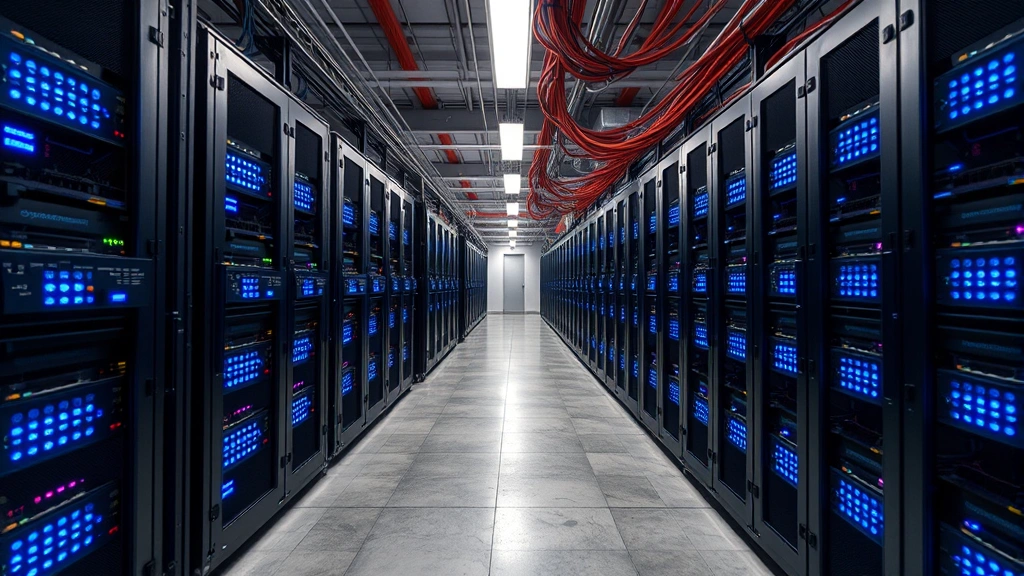
How to Start a Bitcoin Farm: Beginner’s Guide
Bitcoin mining has evolved from a hobbyist activity into a sophisticated industrial operation, yet opportunities still exist for beginners willing to learn the fundamentals. Starting a bitcoin farm requires understanding the technical infrastructure, financial investment, and operational challenges that define modern cryptocurrency mining. Whether you’re considering solo mining or joining a mining pool, this comprehensive guide will walk you through every essential step to launch your mining operation successfully.
The cryptocurrency landscape continues to shift, and mining remains one of the most direct ways to acquire Bitcoin without purchasing it outright. However, the journey from concept to profitability demands careful planning, realistic expectations, and a solid understanding of how blockchain networks function. This guide addresses the critical decisions, technical requirements, and financial considerations that separate successful mining operations from costly failures.
Understanding Bitcoin Mining Fundamentals
Bitcoin mining serves as the backbone of the network’s security and transaction validation system. Miners compete to solve complex mathematical puzzles, and the first to solve the puzzle gets to add a new block to the blockchain and receive a block reward plus transaction fees. This process, called Proof of Work, requires substantial computational power and energy consumption.
The mining difficulty adjusts every 2,016 blocks (approximately two weeks) based on the total network hash rate. As more miners join the network, difficulty increases, making it harder to find valid blocks. Understanding this dynamic is crucial because it directly impacts your mining profitability. When you’re considering starting a bitcoin farm, you need to account for how difficulty changes might affect your returns over time.
The current block reward is 6.25 BTC per block (after the 2020 halving), and this reward halves approximately every four years. This scheduled reduction means that timing your mining operation around halving events can significantly impact long-term profitability. understanding why Bitcoin prices fluctuate helps miners anticipate market cycles and plan accordingly.
Mining pools distribute rewards among participants based on contributed hash power, making mining more accessible for beginners. Solo mining requires finding entire blocks independently, which statistically takes much longer for individual operators but offers higher per-block rewards when successful.
Evaluating Hardware Options for Your Farm
Selecting appropriate mining hardware represents your most critical investment decision. Modern Bitcoin mining relies almost exclusively on Application-Specific Integrated Circuits (ASICs)—specialized computers designed solely for mining. Unlike graphics processing units (GPUs) used in earlier mining eras, ASICs offer dramatically superior hash rates and energy efficiency.
Leading ASIC manufacturers include Bitmain (Antminer series), MicroBT (Whatsminer), Canaan (Avalon), and Innosilicon. Current-generation models like the Antminer S21 Pro and Whatsminer M63 deliver hash rates exceeding 20 terahashes per second (TH/s) while consuming 3,000-3,500 watts. Older models remain viable but consume more electricity per unit of hash power, reducing profitability margins.
When evaluating hardware, consider the hash rate (computing power), power consumption (measured in watts), and efficiency ratio (joules per terahash). A machine producing 100 TH/s while consuming 3,000 watts is more efficient than one producing 80 TH/s at the same wattage. Efficiency directly translates to profitability, especially in competitive mining environments.
Purchase decisions require balancing upfront costs against expected operational lifespan. ASICs typically remain profitable for 3-5 years depending on electricity costs and Bitcoin prices. Buying used equipment can reduce initial investment but may sacrifice remaining lifespan. Budget $5,000-$15,000 per machine for new-generation ASICs, with electricity costs becoming your largest ongoing expense.
Calculating Profitability and ROI
Profitability calculations determine whether your bitcoin farm represents a sound investment. The fundamental equation involves comparing mining revenue against electricity costs and equipment depreciation. Mining calculators available from CoinDesk and blockchain analysis platforms provide baseline estimates, but real-world results vary based on local electricity rates, hardware efficiency, and network conditions.
Your monthly mining revenue depends on several variables: hash rate, network difficulty, Bitcoin price, and block reward. A single Antminer S21 Pro (140 TH/s) generates approximately 0.0015-0.002 BTC monthly under current conditions (figures vary daily). At $45,000 per Bitcoin, this yields roughly $67.50-$90 in monthly revenue. With power consumption of 3,500 watts running 24/7, monthly electricity costs at $0.10/kWh total approximately $252, resulting in negative cash flow.
However, cryptocurrency price movements significantly impact profitability. A 100% price increase doubles mining revenue while costs remain constant. This asymmetry explains why many miners view their operations as long-term Bitcoin accumulation strategies rather than immediate profit generators.
Break-even analysis requires calculating months to recover initial investment. A $10,000 ASIC with $200 monthly negative cash flow technically never breaks even with current parameters. However, if electricity costs drop to $0.05/kWh or Bitcoin appreciates to $90,000, the same hardware becomes profitable. Conservative miners assume 5-year depreciation periods and require electricity costs below $0.08/kWh for profitability.
Setting Up Your Mining Operation
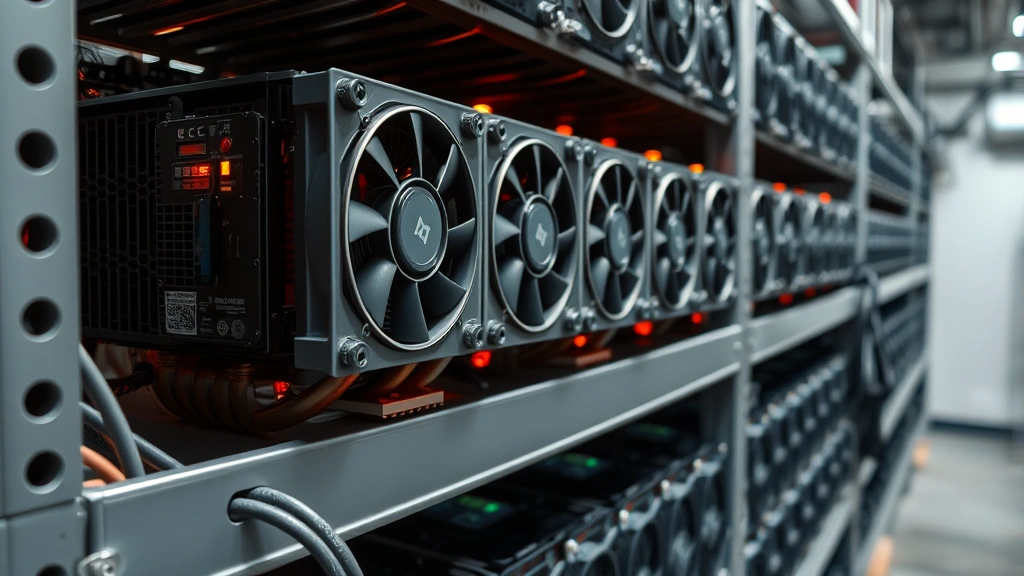
Physical infrastructure forms the foundation of successful mining farms. You’ll need adequate space (10-20 square feet per machine), reliable power supply, cooling systems, and internet connectivity. Mining hardware generates substantial heat—a single ASIC produces 3,000+ watts of thermal energy—requiring robust ventilation or air conditioning.
Electrical considerations are paramount. Most residential circuits provide 15-20 amps at 120 volts (1,800-2,400 watts). Mining ASICs require 220/240-volt circuits with 15-20 amp capacity per machine. Upgrading residential electrical service to accommodate multiple miners typically costs $1,000-$5,000 and may require professional electricians. Commercial facilities offer superior infrastructure but entail higher rental costs.
Internet connectivity must be stable and reliable. Mining software maintains constant communication with mining pools and the blockchain network. A typical miner requires only 1-2 Mbps bandwidth, making standard broadband adequate. However, redundant connections or mobile backup prevent downtime from connectivity failures.
Hardware setup involves connecting ASICs to power supplies, configuring network settings, and installing mining software. Most modern ASICs include web interfaces for configuration. You’ll need to create an account with your chosen mining pool, configure your wallet address, and adjust settings for optimal performance. Initial configuration typically requires 1-2 hours per machine.
Joining Mining Pools vs Solo Mining
Mining pools aggregate hash power from thousands of miners, distributing block rewards proportionally. This approach provides consistent, predictable income compared to solo mining’s all-or-nothing outcomes. Major pools like Foundry USA, AntPool, and Stratum V2 offer transparent fee structures (typically 0-2% of rewards) and reliable infrastructure.
Pool mining advantages include steady income streams, lower variance, and simplified operations. A 10 TH/s miner in a pool generates predictable daily rewards regardless of network luck. Solo mining with identical hash power might discover zero blocks monthly or occasionally find multiple blocks, creating unpredictable cash flow unsuitable for businesses.
Solo mining appeals primarily to operators with significant hash power (100+ TH/s) who can statistically expect regular block discoveries. The advantage lies in keeping 100% of block rewards and transaction fees rather than paying pool fees. However, variance remains extremely high for smaller operations. A miner with 0.001% of network hash power expects one block every 100,000 blocks, or roughly every 2 years.
Pool selection criteria include fee structure, payout frequency, geographic server locations, and transparency. Decentralized pools like Stratum V2 offer superior censorship resistance compared to traditional pool operators. understanding market dynamics helps miners time pool switches when conditions shift.
Managing Electricity Costs Effectively
Electricity represents 70-80% of mining operational costs, making cost management absolutely critical. Regional electricity prices vary dramatically—from $0.03/kWh in Iceland and El Salvador to $0.20+/kWh in developed urban areas. This 6-7x variation determines whether mining is profitable or prohibitively expensive.
Strategies for reducing electricity costs include relocating to regions with abundant renewable energy, negotiating wholesale rates through commercial agreements, and operating during off-peak hours when available. Some regions offer time-of-use pricing that rewards mining during low-demand periods. Hydroelectric-rich areas like parts of Canada, Central America, and Scandinavia attract major mining operations specifically for low-cost power.
Hardware efficiency improvements compound over time. Upgrading from 5-year-old ASICs consuming 0.15 joules/terahash to modern equipment at 0.025 joules/terahash reduces electricity consumption by 85% for equivalent hash power. This upgrade might increase upfront costs but dramatically improves long-term profitability and environmental impact.
Immersion cooling and advanced ventilation systems reduce cooling costs in large operations. Immersion cooling submerges hardware in non-conductive fluid, improving heat transfer efficiency by 30-40% compared to air cooling. This technology becomes cost-effective only at scale (100+ machines) but significantly reduces operational expenses.
Monitoring and optimization tools help identify underperforming hardware. Temperature sensors, power monitoring devices, and mining software analytics reveal efficiency losses from thermal throttling, hardware degradation, or configuration errors. Regular maintenance—cleaning dust filters, replacing degraded components—preserves efficiency throughout equipment lifespan.
Legal and Tax Considerations
Mining operations face varying regulatory treatments across jurisdictions. Some countries actively encourage mining through tax incentives and renewable energy programs, while others impose restrictions or ban mining entirely. Understanding your local legal framework is essential before significant investment.
Tax obligations typically include reporting mining income as business revenue and paying applicable income taxes. In most jurisdictions, cryptocurrency taxation follows standard business principles, with mining rewards taxed at fair market value on receipt. Capital gains taxes apply when you eventually sell accumulated Bitcoin.
Business structure selection affects tax efficiency. Operating as a sole proprietor, LLC, S-corporation, or traditional corporation carries different tax implications. Consulting with cryptocurrency-experienced accountants helps optimize tax positions and ensure compliance. Many jurisdictions allow deductions for equipment depreciation, electricity costs, facility rental, and equipment maintenance.
Regulatory compliance extends beyond taxation. Some regions require mining licenses or permits, particularly for commercial-scale operations. Environmental regulations may apply in certain jurisdictions, especially regarding energy consumption. Zoning laws might restrict mining activities in residential areas. Research local requirements thoroughly before establishing your operation.
Regulatory agencies increasingly scrutinize mining operations, particularly regarding energy sources and environmental impact. Demonstrating use of renewable energy strengthens regulatory positions and improves public perception. Documentation of equipment, electricity consumption, and Bitcoin holdings becomes important for tax authorities and potential regulatory inquiries.
Scaling Your Bitcoin Farm
Successful small-scale mining often leads to expansion ambitions. Scaling from 1-2 machines to industrial-scale operations requires addressing infrastructure, capital, and management challenges. Strategic expansion focuses on improving operational efficiency and reducing per-unit costs.
Facility upgrades become necessary at scale. Dedicated mining facilities with three-phase electrical service, industrial cooling systems, and security infrastructure support 100+ machines efficiently. Purpose-built facilities cost $50,000-$500,000 depending on size and location but provide superior operational capabilities compared to residential setups.
Capital requirements for scaling increase substantially. A 100-machine operation requires $1-1.5 million in equipment investment plus facility costs, creating barriers that necessitate external financing or partnerships. Some miners pursue venture capital, equipment leasing, or hosting arrangements with established mining companies.
Operational complexity increases with scale. Managing multiple machines, monitoring performance, coordinating maintenance, and handling accounting requires dedicated personnel or sophisticated software systems. Many scaled operations employ full-time technicians and implement enterprise-grade monitoring infrastructure.
Partnerships and strategic positioning become relevant at scale. Collaborating with renewable energy providers, negotiating power purchase agreements, or establishing relationships with equipment manufacturers provides competitive advantages. Industry connections facilitate access to new equipment, favorable pricing, and operational insights.

FAQ
Is Bitcoin mining still profitable in 2024?
Profitability depends heavily on electricity costs and Bitcoin prices. Operations with electricity costs below $0.06/kWh using modern ASICs can remain profitable. However, residential mining with grid electricity at $0.12+/kWh typically results in losses. Profitability improves significantly if Bitcoin prices appreciate substantially from current levels.
How much initial investment do I need to start mining?
Minimum viable operations require $5,000-$15,000 for a single ASIC machine plus facility upgrades ($1,000-$5,000 for electrical work). Small-scale multi-machine operations require $20,000-$50,000 total investment. Commercial-scale operations exceed $1 million in capital requirements.
Can I mine Bitcoin with my gaming computer?
Modern Bitcoin mining exclusively uses ASICs, making GPU mining uneconomical. Your gaming computer cannot effectively compete with specialized mining hardware. However, alternative cryptocurrencies like Monero remain mineable on GPUs, though profitability is similarly marginal.
What’s the difference between mining pools and solo mining?
Mining pools distribute rewards among participants based on contributed hash power, providing steady predictable income with small fees. Solo mining keeps 100% of rewards but requires finding entire blocks independently, creating highly variable income with long dry spells for small operations.
How do I choose between different ASIC models?
Compare hash rate, power consumption, efficiency ratio (joules/terahash), upfront cost, and expected lifespan. Current-generation models offer superior efficiency but command higher prices. Used equipment costs less but may have reduced remaining lifespan. Calculate break-even points based on your electricity costs.
What are the main ongoing costs beyond electricity?
Primary costs include equipment depreciation (typically 20% annually), replacement parts and repairs, facility maintenance, internet service, and pool fees (0-2% of rewards). Minor costs include software subscriptions and occasional equipment upgrades. Electricity typically comprises 70-80% of total operational costs.
How do I handle Bitcoin mining taxes?
Report mining rewards as business income at fair market value on receipt date. Deduct all operational expenses including electricity, equipment depreciation, facility costs, and maintenance. Consult with cryptocurrency-experienced accountants to optimize tax positions and ensure compliance with local regulations.
Should I mine or buy Bitcoin directly?
Buying Bitcoin directly offers simplicity and lower capital requirements compared to mining. Mining appeals to investors with low-cost electricity access, technical expertise, and capital for equipment. Diversifying between mining and direct purchases balances risk and operational complexity.


