Bitcoin Depot Stock: Investment Insights and Market Analysis
Bitcoin Depot Inc. (BTDP) represents a unique investment opportunity within the cryptocurrency infrastructure sector. As a leading Bitcoin ATM operator and digital asset services provider, the company operates at the intersection of traditional finance and cryptocurrency adoption. Understanding Bitcoin Depot stock requires analyzing its business model, market position, competitive landscape, and the broader cryptocurrency market dynamics that influence its valuation.
The cryptocurrency industry continues to evolve rapidly, with institutional adoption accelerating and retail interest remaining strong. Bitcoin Depot’s role as a bridge between traditional banking and digital assets positions it strategically within this expanding ecosystem. For investors considering BTDP stock, comprehending the company’s revenue streams, growth potential, and market risks is essential for making informed investment decisions.

Understanding Bitcoin Depot’s Business Model
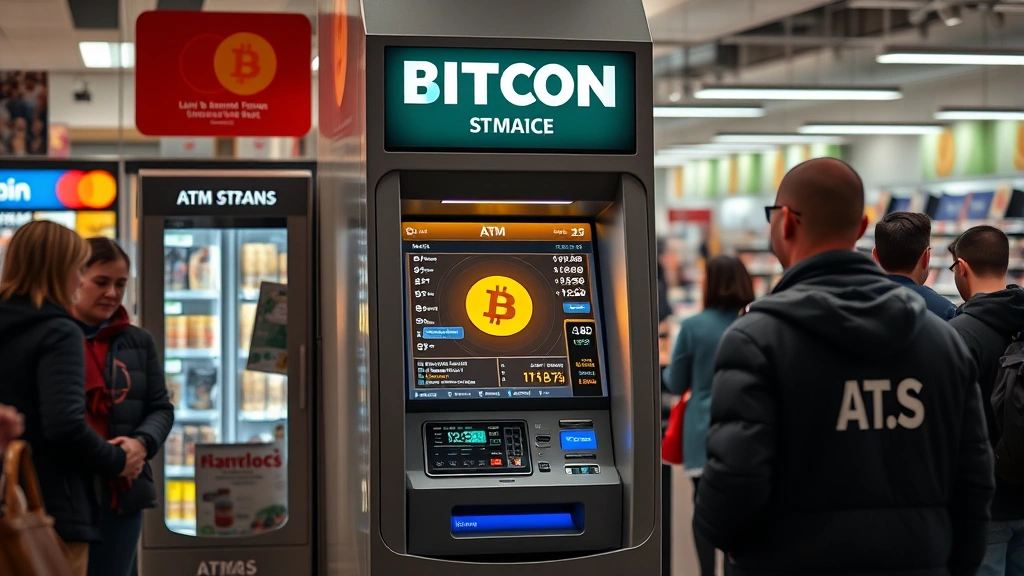
Bitcoin Depot operates primarily through its extensive network of Bitcoin ATMs (BTMs) distributed across North America. These machines enable customers to buy and sell Bitcoin and other cryptocurrencies using cash or debit cards without requiring traditional bank accounts or cryptocurrency exchange accounts. This accessibility-focused model addresses a significant market gap, particularly among unbanked and underbanked populations seeking cryptocurrency exposure.
The company generates revenue through multiple channels. Transaction fees represent the primary income source, with Bitcoin Depot earning a percentage on each buy and sell transaction conducted through its ATMs. Additionally, the company provides white-label solutions to retail partners, allowing convenience stores, gas stations, and other locations to offer cryptocurrency services under their own branding. This B2B segment diversifies revenue and extends market reach without requiring direct machine ownership.
Bitcoin Depot’s technology infrastructure includes proprietary software managing ATM operations, compliance, and customer data. The company must navigate complex regulatory requirements across different jurisdictions, implementing robust anti-money laundering (AML) and know-your-customer (KYC) protocols. Understanding these operational complexities is crucial for evaluating the company’s scalability and long-term viability. As Bitcoin adoption increases, Bitcoin Depot’s infrastructure becomes increasingly valuable to the broader ecosystem.
The expansion strategy focuses on increasing ATM density in high-traffic locations while optimizing the machine utilization rate. Each additional machine represents capital expenditure but generates recurring transaction revenue. The company’s ability to efficiently deploy capital and achieve positive returns on machine investments directly impacts shareholder value.

Financial Performance and Revenue Analysis
Analyzing Bitcoin Depot’s financial statements reveals the company’s operational efficiency and growth trajectory. Transaction volume and average transaction values fluctuate significantly based on Bitcoin price movements and cryptocurrency market sentiment. During bull markets, transaction volumes typically surge as retail investors seek exposure to appreciating assets. Conversely, bear market periods may reduce customer activity and transaction frequency.
The company’s profitability depends on maintaining healthy transaction margins while managing operational costs. Operating expenses include machine maintenance, software development, customer support, regulatory compliance, and administrative overhead. As the company scales, achieving operating leverage becomes critical for improving profitability metrics. Revenue growth must outpace expense growth for the business to demonstrate improving margins and financial health.
Bitcoin Depot’s cash flow dynamics deserve particular attention from investors. Capital-intensive expansion requires significant cash deployment, potentially limiting dividends or share buybacks. However, successful expansion into new markets with high machine utilization can generate substantial cash returns. Understanding the company’s capital allocation strategy and return on invested capital (ROIC) helps assess management’s effectiveness and the attractiveness of the investment.
The company’s balance sheet strength, debt levels, and liquidity position impact its ability to fund growth and weather market downturns. During cryptocurrency market corrections, reduced transaction activity may constrain cash flow, making adequate reserves essential. Investors should examine Bitcoin Depot’s financial position relative to industry peers and assess whether the company maintains sufficient liquidity for operational stability.
Market Position and Competitive Landscape
Bitcoin Depot competes within a growing but fragmented cryptocurrency ATM market. Competitors include other Bitcoin ATM operators like Coinbase (which acquired One River Digital), traditional ATM operators adding cryptocurrency services, and decentralized exchange platforms reducing the need for physical infrastructure. Understanding competitive dynamics helps assess Bitcoin Depot’s sustainable competitive advantages.
The company’s largest competitive advantage lies in its established network size and brand recognition within the Bitcoin ATM space. First-mover advantage and network effects create barriers to entry, as customers prefer convenient, familiar locations for cryptocurrency transactions. Bitcoin Depot’s partnerships with major retail chains provide distribution advantages that newer competitors struggle to replicate quickly.
However, the competitive landscape continues evolving. Cryptocurrency exchanges increasingly offer user-friendly mobile applications and instant funding options, reducing the necessity for physical ATM infrastructure. Stablecoins and layer-two Bitcoin scaling solutions may eventually reduce friction in cryptocurrency transactions, potentially disrupting the Bitcoin ATM business model. Bitcoin Depot must continuously innovate and expand service offerings to maintain relevance.
Regulatory developments significantly influence competitive positioning. Companies with robust compliance infrastructure and established regulatory relationships gain advantages over newer entrants navigating complex requirements. Bitcoin Depot’s compliance expertise and regulatory track record represent valuable competitive moats, assuming the company maintains these standards as markets evolve.
Bitcoin Market Dynamics and Stock Impact
Bitcoin Depot stock performance correlates strongly with Bitcoin price movements and broader cryptocurrency market sentiment. As Bitcoin price predictions become increasingly bullish, retail investor interest typically increases, driving higher transaction volumes and revenue for Bitcoin Depot. Conversely, concerns about Bitcoin crashing reduce customer activity and depress the company’s financial performance.
The relationship between Bitcoin price volatility and Bitcoin Depot’s business operates through multiple mechanisms. Higher Bitcoin prices attract new retail investors seeking exposure, increasing customer acquisition and transaction frequency. Price appreciation also increases the dollar value of individual transactions, boosting revenue even if transaction count remains stable. However, extreme volatility can reduce customer confidence and trading activity, creating headwinds.
Macroeconomic factors influence both Bitcoin prices and Bitcoin Depot’s business. Interest rate decisions, inflation expectations, and economic growth projections affect cryptocurrency valuations and investor demand. During periods of economic uncertainty, Bitcoin’s safe-haven properties may attract investment flows, benefiting Bitcoin Depot. Conversely, economic strength and rising interest rates can reduce cryptocurrency appeal relative to traditional assets.
Understanding cryptocurrency price predictions for 2025 helps contextualize potential revenue scenarios for Bitcoin Depot. Institutional adoption, regulatory clarity, and technological advancement could drive sustained Bitcoin appreciation, providing tailwinds for the company’s growth. However, regulatory crackdowns or macroeconomic shocks could reverse these trends.
Risk Factors and Challenges
Regulatory risk represents perhaps the most significant threat to Bitcoin Depot’s business model. Governments worldwide continue developing cryptocurrency regulations, and adverse regulatory developments could restrict ATM operations, impose burdensome compliance requirements, or limit cryptocurrency services. Changes in AML/KYC requirements could increase operational costs substantially, compressing margins and reducing profitability.
Technology risk emerges from the rapidly evolving cryptocurrency landscape. Layer-two scaling solutions, decentralized exchanges, and central bank digital currencies (CBDCs) could fundamentally alter cryptocurrency usage patterns. If cryptocurrency transactions increasingly occur on decentralized platforms or through traditional banking channels, the demand for Bitcoin ATM services could decline significantly. Bitcoin Depot must invest continuously in technology to remain competitive.
Operational risk includes cybersecurity threats, machine maintenance issues, and customer service challenges. Bitcoin ATMs handle significant cash volumes and cryptocurrency transactions, making them attractive targets for theft and fraud. Security breaches could damage customer trust and expose the company to liability. Maintaining robust cybersecurity infrastructure requires ongoing investment and vigilance.
Market risk directly links to cryptocurrency price volatility. Severe Bitcoin price declines typically reduce retail investor interest and transaction volume, directly impacting Bitcoin Depot’s revenue. Prolonged bear markets can stress the company’s profitability and cash flow, potentially limiting growth investments. The cyclical nature of cryptocurrency markets creates earnings volatility that stock investors must accommodate.
Competitive risk emerges from technological innovation and market consolidation. Larger financial institutions entering the cryptocurrency space could leverage existing customer bases and brand recognition to compete directly with Bitcoin Depot. Additionally, improvements in cryptocurrency usability could reduce demand for ATM services as consumers increasingly manage digital assets directly through mobile applications.
Investment Considerations
Evaluating Bitcoin Depot stock requires assessing the company’s valuation relative to growth prospects and risk factors. Traditional valuation metrics like price-to-earnings (P/E) ratios may be less meaningful during early growth phases when profitability remains inconsistent. Instead, investors should focus on revenue growth rates, customer acquisition costs, customer lifetime value, and path to sustainable profitability.
Portfolio diversification becomes critical when considering Bitcoin Depot stock. The company operates within the cryptocurrency ecosystem, creating correlation with Bitcoin prices and broader crypto market sentiment. Investors should consider Bitcoin Depot as a cryptocurrency-linked investment rather than a traditional technology stock, ensuring appropriate portfolio positioning.
Asset allocation strategies should account for Bitcoin Depot’s risk profile and correlation characteristics. Conservative investors may find the stock’s volatility unsuitable, while growth-oriented investors comfortable with cryptocurrency exposure might view it as an attractive infrastructure play. Understanding personal risk tolerance and investment objectives is essential before investing.
Long-term investors should examine Bitcoin Depot’s management team, board composition, and corporate governance. Experienced leadership with cryptocurrency industry knowledge and successful track records provides confidence in strategic decision-making. Clear communication regarding business strategy, financial performance, and risk management helps investors assess management quality.
Monitoring key performance indicators (KPIs) helps track Bitcoin Depot’s operational progress. Metrics including active machine count, transaction volumes, average transaction values, customer growth, and geographic expansion reveal whether the company executes its growth strategy effectively. Regular analysis of these metrics helps investors assess whether the investment thesis remains intact.
Protecting investments during economic downturns requires understanding Bitcoin Depot’s business resilience. During recessions, reduced consumer spending and increased risk aversion typically reduce cryptocurrency trading activity. Investors should assess the company’s cash reserves, debt obligations, and cost structure flexibility to determine survival prospects during prolonged downturns.
FAQ
What is Bitcoin Depot’s primary business?
Bitcoin Depot operates a network of Bitcoin ATMs allowing customers to buy and sell cryptocurrency using cash or debit cards. The company also provides white-label solutions to retail partners and generates revenue through transaction fees on cryptocurrency trades.
How does Bitcoin price affect Bitcoin Depot stock?
Bitcoin price movements directly impact Bitcoin Depot’s business. Higher Bitcoin prices typically increase retail investor interest and transaction volumes, boosting company revenue. Conversely, Bitcoin price declines reduce customer activity and depress financial performance, creating stock price pressure.
What are the main risks for Bitcoin Depot investors?
Key risks include regulatory changes restricting cryptocurrency services, technological disruption from decentralized platforms, cybersecurity threats, operational challenges, and cryptocurrency market volatility. Investors should carefully assess these risks before investing.
Is Bitcoin Depot profitable?
Bitcoin Depot’s profitability varies with cryptocurrency market conditions and transaction volumes. The company focuses on revenue growth and market expansion while working toward sustainable profitability. Investors should review current financial statements for specific profitability metrics.
How can I evaluate Bitcoin Depot as an investment?
Analyze revenue growth rates, transaction volumes, machine utilization, geographic expansion, management quality, and competitive positioning. Compare valuations to cryptocurrency industry peers and assess whether the company’s growth prospects justify the stock price relative to your risk tolerance.
Should I invest in Bitcoin Depot stock?
Investment suitability depends on individual financial goals, risk tolerance, and cryptocurrency market outlook. Bitcoin Depot offers cryptocurrency infrastructure exposure but carries significant volatility and regulatory risks. Consult financial advisors to determine appropriate positioning within your portfolio.


