Understanding Bitcoin Funding Rates: Analyst Insights
Bitcoin funding rates have emerged as one of the most critical metrics for traders and investors seeking to understand market sentiment and leverage positioning in cryptocurrency derivatives markets. These rates, paid between long and short traders on perpetual futures contracts, serve as a barometer for market extremes and potential reversals. Whether you’re a seasoned trader or just beginning your cryptocurrency journey with Bitcoin for Dummies concepts, understanding funding rates can significantly enhance your market analysis capabilities.
The mechanism behind bitcoin funding rates is elegantly simple yet profoundly impactful: when the market becomes overwhelmingly bullish and long positions dominate, longs pay shorts to maintain equilibrium. Conversely, when bearish sentiment prevails and short positions accumulate, shorts compensate longs. This constant flow of capital between opposing sides creates a self-correcting mechanism that professional analysts monitor obsessively to identify potential market tops and bottoms.
In this comprehensive guide, we’ll explore the mechanics of bitcoin funding rates, examine what analysts use them to predict, and discuss practical applications for your trading strategy. Understanding this concept transforms you from a passive market observer into an informed participant capable of reading the institutional sentiment flowing through derivatives markets.

What Are Bitcoin Funding Rates?
Bitcoin funding rates represent periodic payments exchanged between traders holding opposite positions in perpetual futures contracts. Unlike traditional futures that expire on specific dates, perpetual contracts trade indefinitely, requiring a mechanism to keep their prices aligned with spot market prices. Funding rates serve this critical function.
When you examine what Bitcoin fundamentally represents as a digital asset, you begin to appreciate how its derivatives markets have evolved. The funding rate system ensures that perpetual contract prices don’t deviate significantly from actual Bitcoin prices. If perpetual Bitcoin trades at a premium to spot prices, long traders (those betting on price increases) pay short traders to incentivize short positions and restore equilibrium.
These rates typically reset every eight hours on major exchanges like Binance, Bybit, and Deribit, though some platforms implement different schedules. The rates are expressed as a percentage, often ranging from -0.5% to +0.5% per period, though extreme market conditions can push these boundaries. A rate of 0.05% per eight-hour period translates to approximately 0.45% daily and 13.5% annualized, representing meaningful capital transfer between traders.
Professional analysts emphasize that funding rates serve dual purposes: they maintain price equilibrium in perpetual markets while simultaneously providing transparent windows into leveraged trader positioning. This transparency makes funding rates invaluable for understanding where speculative capital concentrates.
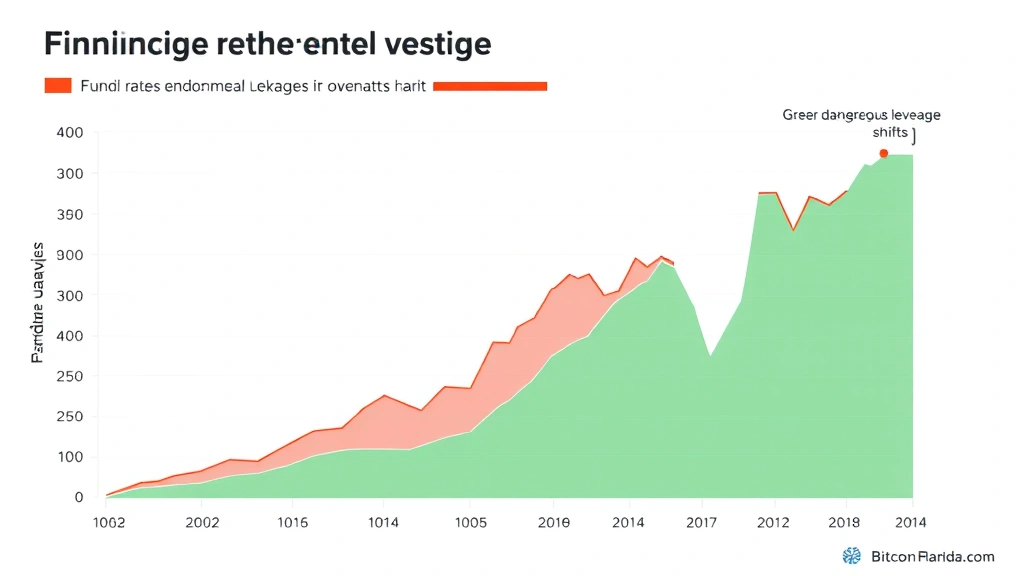
How Funding Rates Work in Perpetual Futures
The mechanics of funding rate calculations involve comparing perpetual contract prices to index prices derived from spot markets. Most exchanges use a formula incorporating the mark price (calculated from perpetual contract prices and order books) and index price (averaged from multiple spot exchanges). When the mark price exceeds the index price significantly, funding rates turn positive, signaling excessive bullish positioning.
Exchange-specific implementations vary slightly, but the principle remains consistent. Binance calculates funding rates every eight hours using premium index and interest rate components. Bybit employs a similar framework with minor variations. Deribit, the largest Bitcoin options exchange, also implements funding rates on its perpetual contracts to maintain price stability.
Funding rate calculations typically follow this structure: if perpetual Bitcoin trades above spot Bitcoin by more than a small threshold (usually 0.01-0.05%), the exchange increases funding rates to encourage traders to short perpetuals and long spot markets, narrowing the gap. This arbitrage opportunity naturally attracts sophisticated traders who profit from the spread while maintaining market equilibrium.
The beauty of this system lies in its self-correcting nature. Extreme funding rates become unsustainable, prompting traders to unwind leveraged positions. Analysts monitor funding rate spikes as early warning signals of potential market reversals, as these extremes indicate vulnerable positioning ripe for liquidation cascades.
Interpreting Positive and Negative Funding Rates
Positive funding rates indicate that long traders (bullish speculators) outnumber shorts significantly enough that perpetuals trade at a premium to spot prices. When rates climb above 0.05% per period (0.45% daily), market analysts interpret this as excessive bullish leverage that could precede sharp corrections. These conditions often emerge near local market tops when retail trader euphoria peaks.
Negative funding rates conversely suggest that short positions dominate and perpetuals trade at discounts to spot prices. While less common than positive rates, negative funding rates spike during panic sell-offs and market bottoms when capitulation dominates sentiment. Sophisticated traders view extremely negative funding rates as contrarian bullish signals, indicating that capitulation has reached unsustainable extremes.
The magnitude matters enormously. Funding rates of 0.01-0.03% per period represent normal market conditions with balanced positioning. Rates exceeding 0.1% per period signal extreme leverage that analysts flag as dangerous. Historical analysis reveals that bitcoin funding rates above 0.15% per eight-hour period have preceded every major correction in recent market cycles.
Understanding this relationship requires recognizing that funding rates measure leverage intensity rather than directional certainty. Positive funding rates don’t guarantee price declines; instead, they indicate that long leveraged traders outnumber shorts to dangerous degrees. When liquidation cascades occur, these over-leveraged longs capitulate simultaneously, creating sharp selling pressure.
Analyst Perspectives on Market Sentiment
Leading cryptocurrency analysts from firms like CoinDesk and independent researchers consistently highlight funding rates as essential market sentiment indicators. These analysts recognize that funding rates reveal institutional and sophisticated retail positioning better than most alternatives because they represent real capital movement.
Glassnode, a prominent on-chain analysis firm, tracks funding rate metrics across multiple exchanges to identify market extremes. Their research demonstrates strong correlations between funding rate spikes and subsequent price volatility. When aggregate funding rates across major exchanges spike above historical percentiles, probability of sharp corrections increases substantially.
Analysts also examine funding rate term structures—comparing rates across different perpetual contract expiries. When longer-dated perpetuals command higher funding rates than shorter-dated contracts, it suggests sustained bullish sentiment. Inverted structures, where near-term contracts pay higher rates, indicate uncertainty about price direction.
The relationship between funding rates and technical analysis patterns fascinates professional traders. Analysts note that funding rate extremes often coincide with technical resistance breakouts or support breaks, amplifying the significance of these price levels. This convergence of technical and sentiment signals provides high-conviction trading setups.
Regulatory perspectives on funding rates remain limited, as they operate within decentralized derivatives markets largely outside traditional oversight. However, analysts note that extreme funding rates occasionally trigger exchange interventions to prevent system instability. Some platforms have implemented funding rate caps to prevent rates from exceeding sustainable levels.
Using Funding Rates for Trading Decisions
Practical application of funding rate analysis requires integrating this metric with other analytical frameworks. Successful traders don’t rely solely on funding rates; instead, they use them as confirmation signals for positions identified through other methods. For investors exploring Bitcoin price predictions, funding rates provide crucial context for evaluating forecast reliability.
A common strategy involves monitoring funding rate extremes while watching for technical breakdown patterns. When bitcoin approaches resistance with positive funding rates climbing above 0.1% per period, the combination signals potential reversal. Traders might initiate short positions or reduce long exposure, positioning for the anticipated correction.
Conversely, when funding rates turn deeply negative (below -0.05% per period) during panic selling, contrarian traders recognize potential bottoms. This setup becomes particularly powerful when combined with oversold technical indicators and extreme on-chain metrics indicating capitulation. The convergence of bearish funding rates with technical oversold conditions often marks excellent entry points for long-term investors.
Risk management remains paramount when trading based on funding rates. These metrics can remain extreme for extended periods without triggering immediate reversals. Traders who shorted Bitcoin when funding rates exceeded 0.15% per period in late 2017 faced devastating losses as prices continued climbing despite unsustainable leverage. Patience and position sizing matter more than perfect timing.
Exchange selection impacts funding rate analysis significantly. Funding rates vary across platforms due to different leverage availability and trader populations. Binance’s massive liquidity produces different funding dynamics than smaller exchanges. Professional analysts monitor funding rates across multiple platforms to identify consensus signals versus platform-specific anomalies.
Historical Examples and Case Studies
Bitcoin’s market history provides numerous examples of funding rates predicting major movements. During the November 2021 peak near $69,000, funding rates climbed to extreme levels, with some exchanges recording 0.2%+ per eight-hour period. Analysts flagged these extremes as dangerous, and within weeks, Bitcoin crashed to $42,000 as leverage unwound catastrophically.
The May 2021 correction from $64,000 to $30,000 similarly featured elevated funding rates preceding the crash. Sophisticated traders who recognized the funding rate signals exited positions early, while over-leveraged longs experienced devastating liquidations. Post-mortems revealed that funding rates had provided clear warnings weeks before the peak.
Conversely, March 2020’s COVID-19 crash saw funding rates plunge deeply negative as panic selling reached extremes. Traders who recognized the contrarian signal and accumulated Bitcoin at $3,500-$4,000 prices profited enormously as funding rates normalized and prices recovered. This example illustrates how funding rate extremes mark capitulation points rather than price floors.
The 2022 crypto winter produced interesting funding rate dynamics as leverage drained from markets throughout the year. Funding rates gradually turned negative and remained subdued for extended periods, reflecting depressed sentiment and reduced speculative positioning. This environment, while painful for leveraged longs, actually created healthier market foundations by reducing systemic risk from excessive leverage.
Recent 2024 developments show funding rates returning to elevated levels as Bitcoin approaches all-time highs and leverage accumulates. Analysts monitoring these metrics warn that similar extremes to 2021 could emerge, necessitating careful risk management despite bullish sentiment.
Risk Considerations and Limitations
Funding rate analysis carries significant limitations that traders must understand. These metrics measure leverage positioning but don’t directly predict price movements. Markets can remain in extreme funding rate conditions for months without reversing, creating false signals for traders betting on immediate corrections.
Platform-specific variations introduce complexity. Funding rates on leveraged exchanges like FTX (before its collapse) differed substantially from rates on Binance or Deribit due to different trader populations and leverage availability. Comparing funding rates across platforms requires understanding these structural differences.
The relationship between leverage and market timing proves notoriously difficult, even for professional traders. Funding rates indicate when leverage becomes excessive but provide limited precision regarding timing. Traders betting on immediate reversals risk catastrophic losses if price momentum overwhelms fundamental leverage concerns.
Regulatory changes could alter funding rate dynamics significantly. If regulators restrict leverage availability, funding rate extremes might become impossible to reach, reducing their predictive power. Conversely, expanded leverage could push funding rates to unprecedented extremes, creating new market dynamics.
Alternative metrics like open interest, liquidation levels, and blockchain-based position analysis complement funding rate analysis. Sophisticated traders integrate multiple metrics rather than relying exclusively on funding rates for decision-making.
The psychological component of funding rates deserves attention. When traders become aware that funding rates signal danger, they may act preemptively, triggering corrections before leverage reaches truly extreme levels. This self-fulfilling prophecy aspect means that funding rate predictiveness could diminish as awareness spreads.
FAQ
What is a good bitcoin funding rate?
Funding rates between 0.01% and 0.03% per eight-hour period represent healthy, balanced market conditions. Rates above 0.1% per period indicate excessive bullish leverage, while rates below -0.05% suggest extreme bearish extremes. The “good” rate depends on your trading perspective—bulls prefer negative rates indicating short dominance, while bears prefer positive rates showing overbought conditions.
How often do bitcoin funding rates change?
Most major exchanges reset funding rates every eight hours, though some platforms implement different schedules. Binance uses eight-hour intervals, Bybit follows similar patterns, and Deribit also resets every eight hours. Funding rates can fluctuate within these periods as mark prices move relative to index prices, creating dynamic conditions throughout each interval.
Can funding rates predict bitcoin price movements?
Funding rates indicate leverage extremes and positioning imbalances but don’t directly predict price direction or timing. Extreme funding rates signal dangerous leverage conditions that could precede corrections, but markets can remain overbought for extended periods. Funding rates work best as confirmation signals combined with technical analysis, on-chain metrics, and macroeconomic context.
Where can I monitor bitcoin funding rates?
Major exchanges like Binance, Bybit, and Deribit display funding rates directly on their platforms. Third-party analytics platforms including Glassnode, Coinglass, and Cryptofees aggregate funding rates across exchanges. These tools help identify consensus signals versus platform-specific anomalies by comparing rates across multiple venues.
What causes extreme bitcoin funding rates?
Extreme funding rates result from imbalanced positioning where one side (longs or shorts) dominates overwhelmingly. Bullish sentiment driving retail traders into leveraged long positions creates positive extremes, while panic selling and capitulation trigger negative extremes. Major news events, regulatory announcements, and macroeconomic developments can rapidly shift funding rate dynamics.
Do funding rates guarantee profitable trades?
No. While funding rates indicate leverage extremes, they provide no guarantee of immediate price reversals. Traders betting exclusively on funding rate signals face significant risks, as overbought/oversold conditions can persist for weeks or months. Risk management, position sizing, and confirmation signals from other analytical methods are essential for profitable trading.


