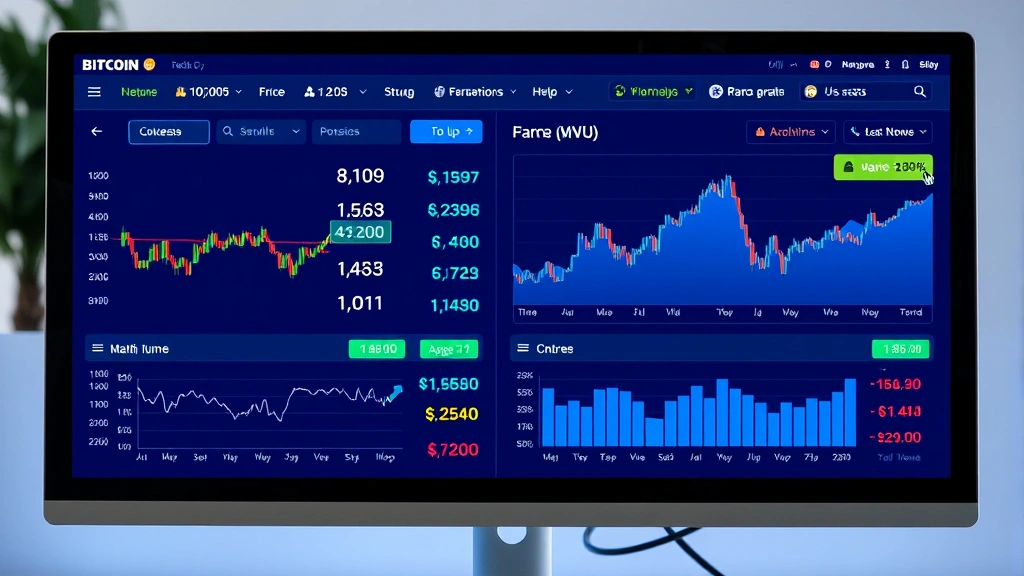
Bitcoin Calculator: How It Works? Tech Insights
A bitcoin calculator is an essential digital tool for anyone participating in the cryptocurrency market, whether you’re a seasoned trader or a curious beginner exploring digital assets. These calculators serve as bridges between raw market data and practical investment decisions, enabling users to convert between different currencies, estimate potential returns, and understand the real-time value of their holdings. Understanding how these tools function and what calculations they perform can significantly enhance your ability to make informed decisions in the volatile cryptocurrency landscape.
Bitcoin calculators have evolved from simple unit converters into sophisticated platforms that integrate multiple data sources, real-time price feeds, and advanced computational features. Whether you’re monitoring your portfolio’s performance, calculating mining profitability, or analyzing conversion rates between Bitcoin and fiat currencies, these tools provide the computational backbone for modern cryptocurrency management. This comprehensive guide explores the mechanics, features, and practical applications of bitcoin calculators while offering insights into how they integrate with broader market dynamics.
What Is a Bitcoin Calculator
A bitcoin calculator is a specialized computational tool designed to perform various calculations related to Bitcoin and other cryptocurrencies. At its core, it functions as a currency converter, allowing users to determine the equivalent value of Bitcoin in traditional fiat currencies like USD, EUR, or GBP, as well as conversions between different cryptocurrency pairs. However, modern bitcoin calculators have expanded far beyond simple unit conversion, now encompassing portfolio valuation, investment return analysis, mining profitability estimates, and transaction fee calculations.
The fundamental purpose of these calculators is to bridge the gap between Bitcoin’s decentralized nature and users’ need for clear, quantifiable financial information. Since Bitcoin operates on a 24/7 global market with prices fluctuating continuously, calculators provide real-time snapshots of value that help users make time-sensitive decisions. Whether you’re deciding whether to enter a position, assessing your current holdings’ worth, or planning future investments, bitcoin calculators transform abstract blockchain concepts into concrete numerical data.
These tools are particularly valuable given Bitcoin’s historical volatility and the complexity of managing assets across multiple exchanges and wallet platforms. A comprehensive bitcoin calculator can aggregate data from numerous sources, perform complex mathematical operations, and present results in user-friendly formats that make sense to both technical and non-technical users. Understanding what constitutes a quality calculator helps you choose the right tool for your specific needs.
Core Calculation Mechanisms
The foundation of any bitcoin calculator lies in its ability to perform accurate mathematical conversions based on current market prices. The most basic calculation involves multiplying the amount of Bitcoin you’re interested in by the current price per Bitcoin in your chosen fiat currency. For example, if Bitcoin is trading at $45,000 USD and you own 0.5 BTC, the calculator would compute: 0.5 BTC × $45,000 = $22,500 USD. This seemingly simple operation requires the calculator to access real-time price data, which it obtains from cryptocurrency exchanges and market data providers.
Beyond basic multiplication, calculators employ more sophisticated algorithms to handle various scenarios. When converting between multiple cryptocurrencies or analyzing historical price movements, calculators use time-series data and historical price databases. For instance, if you want to know what your current Bitcoin holdings would have been worth at a previous date, the calculator retrieves historical price data and performs the reverse calculation. This involves accessing archived price information and applying it to your specified holdings.
Mining profitability calculators operate on an entirely different mathematical framework. These tools account for numerous variables including hash rate (computational power), current network difficulty, block reward amount, electricity costs, hardware expenses, and pool fees. The calculation determines whether mining operations will generate profit after accounting for all operational expenses. The formula essentially divides the value of newly mined Bitcoin by total mining costs to determine profitability margins.
Transaction fee calculations require understanding the Bitcoin network’s fee structure, which operates on a per-byte basis rather than a percentage of transaction value. Calculators estimate transaction sizes based on input and output counts, then multiply by current fee rates measured in satoshis per byte (sat/B). This helps users understand how much they’ll pay to move Bitcoin between addresses, with fees fluctuating based on network congestion.
Types of Bitcoin Calculators
The calculator ecosystem encompasses several specialized tools, each designed for specific use cases and user needs. Price conversion calculators represent the most straightforward type, allowing users to convert Bitcoin amounts into fiat currencies or vice versa. These typically feature multiple currency options and update prices every few seconds, ensuring accuracy for time-sensitive conversions. Many include historical price data, allowing users to see how conversion rates have changed over weeks, months, or years.
Portfolio trackers function as comprehensive bitcoin calculators that monitor multiple holdings across different assets and platforms. These tools aggregate data from various cryptocurrency exchanges and personal wallets, calculating total portfolio value, individual asset performance, and overall percentage gains or losses. Advanced portfolio calculators include features like cost basis tracking, tax lot accounting, and performance attribution analysis. When you’re trying to understand your overall exposure to cryptocurrency, these calculators provide invaluable perspective on how your investments are performing relative to your initial capital deployment.
Mining profitability calculators serve a specific community of users operating mining equipment. These sophisticated tools require inputs such as your mining hardware specifications, current electricity rates, pool fees, and mining difficulty. They output estimated daily, monthly, and yearly profits based on current network conditions. Given that mining difficulty adjusts approximately every two weeks, these calculators provide forward-looking estimates rather than guarantees, as future profitability depends on network conditions that constantly evolve.
Investment return calculators help users model potential outcomes of different investment scenarios. These calculators typically allow users to input purchase price, holding period, and target price, then calculate potential returns as percentages and absolute values. Some advanced versions incorporate volatility models and scenario analysis, allowing users to understand potential outcomes under various market conditions. As you research Bitcoin price prediction information, these calculators help translate predictions into concrete return scenarios.
Fee and transaction calculators focus specifically on the costs associated with moving Bitcoin. These tools estimate transaction fees based on current network conditions and desired confirmation speed. Some calculators also account for exchange withdrawal fees, helping users understand the true cost of moving Bitcoin between platforms. This becomes particularly important during periods of high network congestion when transaction fees can spike dramatically.
Real-Time Data Integration
The accuracy and utility of any bitcoin calculator depends fundamentally on the quality and timeliness of its data sources. Most professional calculators integrate with multiple cryptocurrency exchanges through APIs (application programming interfaces), allowing them to pull real-time price data directly from trading platforms. Major exchanges like Coinbase, Kraken, and Binance publish price data that calculators consume to ensure accuracy.
These real-time integrations work by establishing continuous connections to exchange data feeds, which push price updates whenever trades occur. A sophisticated calculator might aggregate prices from multiple exchanges simultaneously, calculating volume-weighted averages that smooth out discrepancies between platforms. This approach provides more reliable pricing information than relying on a single exchange, which might experience temporary price anomalies or technical issues.
Beyond price data, calculators integrate with blockchain explorers to access network-specific information. Data like current network difficulty, hash rate, and average transaction fees come from analyzing blockchain data directly. Services like Blockchain.com and Blockchair provide APIs that allow calculators to access this information in real-time. This enables mining calculators to update profitability estimates as network conditions change.
Historical data integration allows calculators to provide perspective on price movements and calculate returns over specific time periods. Calculators maintain databases of historical prices, typically updated daily or at higher frequencies depending on the platform. This historical context proves invaluable when analyzing performance, understanding market trends, or calculating tax implications of cryptocurrency transactions.
Advanced Features and Functions
Modern bitcoin calculators increasingly incorporate sophisticated features that extend beyond basic arithmetic. Multi-asset portfolio analysis enables users to understand their total cryptocurrency exposure across Bitcoin, Ethereum, and hundreds of altcoins simultaneously. These calculators can weight different assets, calculate correlations, and provide diversification recommendations. As you consider how to diversify your investment portfolio, these analytical tools provide the computational foundation for intelligent asset allocation decisions.
Tax calculation features have become increasingly important as regulatory frameworks mature globally. Advanced calculators can track cost basis for each purchase, calculate capital gains or losses on sales, and generate reports suitable for tax filing. Some calculators even distinguish between short-term and long-term capital gains, accommodating different tax treatment in various jurisdictions. Given the complexity of cryptocurrency taxation, having a calculator that handles these computations accurately saves significant time during tax season.
Scenario modeling capabilities allow users to ask “what if” questions about their investments. For example, you might model what happens to your portfolio value if Bitcoin experiences a 20% decline, or what your returns would be if Bitcoin reaches a specific price target. These calculators use straightforward mathematics to project outcomes, helping users understand their risk exposure and potential upside scenarios. This feature proves particularly valuable for risk management and position sizing decisions.
Alert and notification systems transform calculators from passive tools into active monitoring systems. Users can set price targets, portfolio value thresholds, or fee rate limits, receiving notifications when conditions change. This automation helps busy investors stay informed without constantly checking prices manually. Some calculators integrate with mobile apps, delivering push notifications directly to smartphones.
API access and integration capabilities allow advanced users to incorporate calculator functions into their own applications or trading systems. Developers can build custom tools that leverage calculator APIs, automating calculations across their infrastructure. This capability appeals to professional traders, institutional investors, and developers building cryptocurrency applications.

Practical Applications
Bitcoin calculators serve numerous practical purposes in daily cryptocurrency management. Entry and exit planning relies heavily on calculator functionality to understand position sizing and risk exposure. Before entering a position, investors use calculators to determine how much capital to deploy based on their risk tolerance and portfolio allocation targets. When considering exits, calculators help determine what price points would achieve specific return targets, informing stop-loss and take-profit decisions.
Understanding why Bitcoin is going up or down requires context that calculators help provide. By tracking historical performance and calculating returns over various timeframes, calculators help investors understand whether current price movements represent significant changes or normal market volatility. This contextual analysis prevents emotional decision-making based on short-term price fluctuations.
Risk assessment and management becomes more concrete when you can calculate actual dollar exposure. A calculator showing that your Bitcoin holdings represent 40% of your total investment portfolio might prompt portfolio rebalancing if your target allocation is 20%. Similarly, calculating potential losses under various price scenarios helps determine whether your risk exposure aligns with your tolerance levels.
Exchange and arbitrage analysis leverages calculators to identify price discrepancies between different platforms. When the same Bitcoin trades at different prices on different exchanges, calculators can quickly compute whether arbitrage opportunities exist that exceed transaction costs and fees. Professional traders use this functionality to identify profitable trading opportunities.
For miners and staking participants, calculators determine operational viability and profitability. Mining operations require significant electricity costs and hardware investment, making profitability calculations essential before committing resources. By regularly updating these calculations as network conditions change, miners can make informed decisions about whether to continue operations or reallocate equipment.
Understanding concerns about whether Bitcoin is going to crash becomes more manageable with calculators that can model downside scenarios. If you calculate that a 50% Bitcoin decline would reduce your portfolio value below your risk tolerance, you might adjust your position size accordingly. This forward-looking risk analysis helps maintain emotional discipline during market stress.
Tax planning and reporting depend critically on accurate calculations of gains, losses, and transaction costs. Sophisticated calculators maintain detailed records of all transactions, automatically calculating tax implications based on jurisdiction-specific rules. This functionality saves countless hours during tax season and reduces the likelihood of costly errors in tax filings.
FAQ
How accurate are bitcoin calculators?
Bitcoin calculators are generally highly accurate for basic price conversions, typically within fractions of a percentage point of actual market prices. Accuracy depends on data source quality, update frequency, and whether the calculator uses single or multiple exchange price feeds. Calculators using aggregated data from multiple exchanges tend to be more reliable than those relying on single sources. However, calculators cannot predict future prices, so forward-looking projections are estimates rather than guarantees.
Which bitcoin calculator should I use?
The best calculator depends on your specific needs. For simple price conversions, basic online calculators suffice. For portfolio management, dedicated tracking platforms like CoinGecko or CoinMarketCap offer comprehensive features. For mining profitability, use mining-specific calculators like those on mining pool websites. For tax purposes, specialized cryptocurrency accounting software provides the most thorough functionality. Consider whether you need mobile access, multi-asset support, and advanced features when selecting a calculator.
Do bitcoin calculators charge fees?
Most basic bitcoin calculators are free to use, supported by advertising or as supplementary features on exchange and tracking platforms. Advanced features like detailed tax reporting, API access, or professional-grade portfolio management may require paid subscriptions. Some exchanges include calculator features free for account holders while charging non-members. Always review pricing structures before committing to any platform.
Can calculators help with investment decisions?
Bitcoin calculators provide the mathematical foundation for informed investment decisions by quantifying returns, risks, and scenarios. However, calculators should complement rather than replace fundamental research and market analysis. Calculators answer “what if” questions but cannot predict market movements or account for unforeseen events. Use calculations as one input among many when making investment decisions, particularly when considering exposure to volatile assets.
How often should I check my bitcoin calculator?
Checking frequency depends on your investment approach. Active traders might monitor prices continuously, while long-term investors might check monthly or quarterly. Research suggests that excessive monitoring can lead to emotional decision-making, so many advisors recommend checking less frequently. Set specific times for portfolio reviews rather than constantly monitoring price movements, which often reflect normal market volatility rather than significant changes.
Are bitcoin calculators secure?
Reputable calculator platforms employ security measures like HTTPS encryption and secure data handling practices. However, never enter sensitive information like private keys or exchange credentials into any calculator. Use only well-established platforms from trusted sources, and verify URLs carefully to avoid phishing attempts. Consider using calculators as read-only tools rather than platforms storing sensitive financial information.


