
Day Trading Bitcoin: Pro Tips for Success
Day trading Bitcoin represents one of the most dynamic and potentially lucrative opportunities in the cryptocurrency markets. Unlike traditional stock market day trading, Bitcoin operates 24/7 across global exchanges, creating continuous opportunities for traders to capitalize on price movements. However, success in day trading Bitcoin requires more than luck—it demands disciplined strategy, technical expertise, and emotional control. This comprehensive guide explores proven tactics that professional traders use to navigate Bitcoin’s volatile landscape and maximize profits while minimizing losses.
The cryptocurrency market’s inherent volatility makes Bitcoin an attractive asset for day traders seeking short-term gains. With price swings of 2-5% occurring regularly within single trading sessions, opportunities abound for those who understand market mechanics and technical patterns. Yet this same volatility claims many inexperienced traders who enter without proper preparation. Understanding the fundamentals of day trading Bitcoin, from risk management protocols to technical analysis tools, separates successful traders from those who deplete their capital quickly.
Understanding Bitcoin Day Trading Fundamentals
Day trading Bitcoin involves buying and selling the cryptocurrency within a single trading day, typically holding positions for minutes to hours rather than days or weeks. This differs fundamentally from swing trading or long-term investing, where positions may be held for extended periods. The goal is to capture small price movements repeatedly, compounding gains across multiple trades throughout a session.
Before diving into day trading Bitcoin, traders must understand that this approach carries substantial risks. The leverage available on many crypto exchanges can amplify both gains and losses dramatically. A 5% adverse price movement with 5x leverage results in a 25% account loss. Understanding technical analysis fundamentals becomes essential for identifying reliable entry and exit points.
Bitcoin’s price action is influenced by multiple factors including macroeconomic news, regulatory announcements, market sentiment, and technical patterns. Successful day traders monitor these elements continuously, staying alert to developments that could trigger significant price movements. The 24/7 nature of crypto markets means opportunities exist across all time zones, though liquidity varies by trading session.
Market structure understanding proves critical for day traders. Bitcoin trades across multiple exchanges simultaneously, with price discrepancies creating arbitrage opportunities. However, these windows close quickly as algorithmic traders exploit them. Understanding order book dynamics, support and resistance levels, and volume patterns helps traders anticipate price movements before they fully develop.
Essential Technical Analysis Tools and Indicators
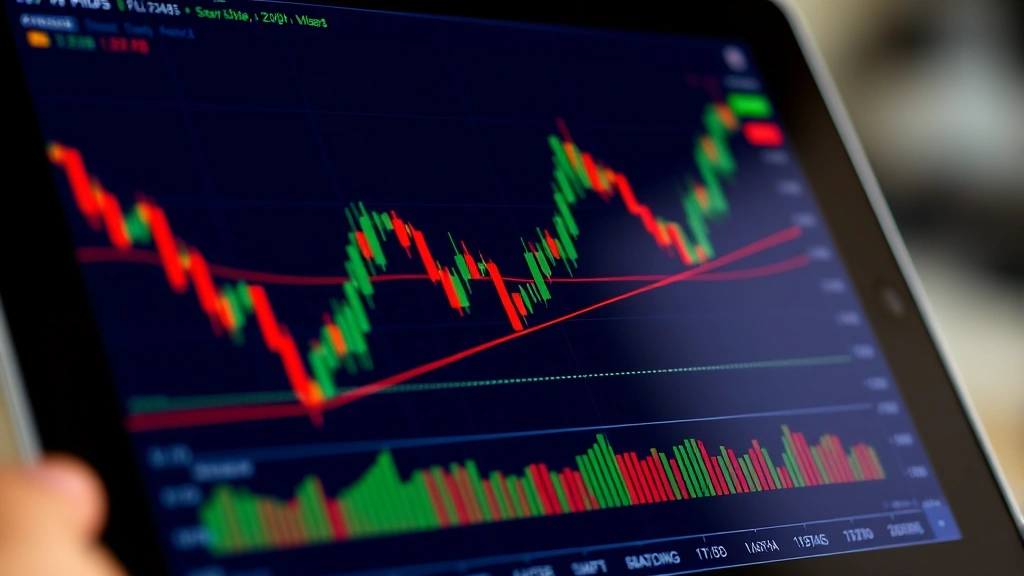
Mastering technical analysis is non-negotiable for day trading Bitcoin successfully. Chart patterns, moving averages, and momentum indicators provide the framework for identifying high-probability trade setups. The most effective day traders combine multiple indicators to confirm signals, reducing false entries that drain capital.
Moving Averages and Trend Identification
The 50-period and 200-period moving averages serve as fundamental trend indicators. When the 50-period average trades above the 200-period average, an uptrend exists; when below, a downtrend dominates. Day traders use shorter timeframes (5-minute, 15-minute charts) combined with these indicators to identify micro-trends within larger trends. Trading in the direction of the primary trend significantly increases win rates, as the underlying momentum supports your position.
Exponential moving averages (EMAs) respond faster to price changes than simple moving averages, making them superior for day trading where speed matters. The 12-period and 26-period EMAs create the foundation for MACD (Moving Average Convergence Divergence) calculations, a versatile indicator revealing momentum shifts before they manifest as obvious price movements.
Momentum and Reversal Indicators
The Relative Strength Index (RSI) measures momentum strength on a 0-100 scale. Readings above 70 suggest overbought conditions where pullbacks become likely; readings below 30 indicate oversold conditions where bounces frequently occur. Day traders use RSI divergences—where price makes new highs but RSI fails to confirm—as reversal signals. When Bitcoin price reaches new highs on weaker RSI momentum, a pullback often follows shortly.
Stochastic oscillators provide similar overbought/oversold signals with additional sensitivity to momentum changes. The crossover of the %K and %D lines creates entry signals that precede price reversals by several candles, offering day traders advance notice of potential direction changes.
Volume Analysis and Confirmation
Volume confirms price movements authentically. Breakouts accompanied by volume surges have higher probability of success than those on declining volume. Day traders watch for volume spikes that exceed the 20-period average—these often precede significant price moves. Volume profile analysis reveals where the majority of trading occurs, identifying support and resistance zones where price frequently reverses.
Understanding advanced indicators like the Pi Cycle helps traders identify potential market tops, though these work better on longer timeframes. For day trading specifically, volume-weighted price analysis and order flow imbalances provide more immediate signals.
Risk Management Strategies That Protect Capital
Professional day traders prioritize capital preservation above profit maximization. This counterintuitive approach—focusing on not losing money rather than making money—paradoxically leads to superior long-term returns. Risk management separates traders who survive market cycles from those who blow out their accounts.
Position Sizing and Leverage Management
The fundamental rule: never risk more than 1-2% of your total account on a single trade. This means if you have a $10,000 account, your maximum loss per trade should be $100-$200. This position sizing rule sounds conservative, but compounded across 20-30 trades daily, it creates substantial returns while maintaining account stability.
Leverage amplifies position sizing impact dramatically. A trader with $1,000 using 5x leverage controls a $5,000 position. A 2% adverse move against this position (which occurs frequently in Bitcoin) results in a 10% account loss. Most day traders should use 2-3x leverage maximum, with many professionals avoiding leverage entirely for day trading Bitcoin.
Stop-Loss Discipline
Every trade must have a predetermined stop-loss level where you exit automatically if the trade moves against you. This removes emotion from the exit decision and prevents catastrophic losses. The stop-loss should be placed at a technical level—below support for long trades, above resistance for short trades—not at arbitrary percentages.
Many traders struggle with stop-loss discipline, moving stops higher to avoid losses, which typically results in larger eventual losses. Successful traders treat stop-losses as non-negotiable rules. If a trade hits the stop-loss, the trade was wrong; accept the loss and move to the next opportunity.
Profit-Taking Strategies
Equally important as stop-losses are profit-taking levels. Day traders using the 1-2% risk rule typically target 2-3% gains, creating favorable risk-reward ratios (2:1 or 3:1). Rather than hoping for massive moves, day traders execute multiple small wins that compound substantially.
Partial profit-taking at intermediate targets locks in gains while letting winners run further. A common approach involves taking 50% profits at the first target, moving the stop-loss to breakeven, then letting remaining position run with a trailing stop. This approach captures gains while remaining exposed to larger moves.
Understanding market capitulation signals helps traders identify when panic selling creates opportunity. During these periods, volatility increases substantially, requiring tighter position sizing and more conservative approaches.
Developing Your Trading Plan and Entry Points
Successful day trading Bitcoin demands a documented trading plan written before market sessions begin. This plan specifies which setups you’ll trade, entry conditions, profit targets, and stop-loss levels. Trading without a plan resembles gambling; with a plan, you’re executing a tested strategy.
Identifying High-Probability Setups
Professional day traders focus on 2-3 specific chart patterns that they’ve backtested extensively. Common setups include breakouts above resistance with volume confirmation, reversals at support/resistance zones confirmed by oscillator divergences, and trend continuation patterns that offer entries during pullbacks.
The breakout setup works well for day trading Bitcoin: identify resistance levels where price has rejected multiple times, wait for volume surge above this level, then enter when price closes above resistance. Stop-loss goes below the resistance level, and profit target is set at 2-3x the risk amount. This setup’s simplicity makes it executable consistently across different market conditions.
Timeframe Selection and Session Analysis
Day traders typically use 5-minute, 15-minute, or 1-hour charts depending on their preferred holding period. Shorter timeframes (5-minute) suit traders holding positions for 15-60 minutes; longer timeframes (1-hour) suit those holding for 2-4 hours. Consistency matters more than timeframe selection—master one timeframe before attempting multiple timeframes simultaneously.
Bitcoin trading activity varies by session: Asian session (relatively quiet), European session (increasing volume), and US session (highest volume). Most day traders concentrate on high-volume sessions where price moves more decisively and stops are less likely to be hunted by market makers.
News and Event-Based Trading
Major announcements, regulatory news, or Bitcoin price movements often trigger substantial volatility. Some day traders specialize in trading around scheduled events (Federal Reserve announcements, inflation data, crypto-specific news). However, event-based trading carries elevated risk as gaps frequently occur, stopping out positions at unfavorable levels.
Conservative day traders avoid trading during major news events, preferring the more predictable technical setups that occur during quiet periods. Once you’re consistently profitable, adding event-based trading to your arsenal becomes viable.
Psychological Discipline and Emotional Control
The psychological component of day trading Bitcoin often determines success more than technical skill. Markets test traders emotionally—losses trigger fear and regret, while wins trigger overconfidence and revenge trading. Mastering your emotional responses separates consistent winners from traders who experience random results.
Overcoming Common Trading Psychology Pitfalls
Fear prevents traders from entering setups they’ve identified, causing them to miss profits. Greed causes traders to hold winning positions too long, ultimately reversing into losses. Revenge trading after losses drives traders to take excessive risks attempting to recover quickly. These psychological patterns repeat across all traders until consciously addressed.
Successful traders develop routines that maintain emotional equilibrium. Taking breaks after consecutive losses prevents revenge trading. Reviewing winning trades reinforces confidence. Maintaining a trading journal tracking every trade—entries, exits, emotional state, and lessons learned—creates accountability and reveals personal patterns.
Building Confidence Through Consistent Execution
Confidence emerges from consistent execution of a tested plan, not from winning percentages. A trader with 40% win rate can be highly profitable if each win averages 3% gain while each loss averages 1% loss. Conversely, a 70% win rate trader can be unprofitable if average wins are 0.5% while average losses are 2%.
Focus on executing your trading plan perfectly, regardless of outcomes. Over time, a sound plan with proper risk management produces positive results. This perspective shift—from outcome-focused to process-focused—eliminates emotional responses that sabotage trading.
The Importance of Breaks and Fresh Perspective
Day trading Bitcoin demands intense focus and mental energy. After 4-5 hours of active trading, mental fatigue impairs decision-making. Professional traders schedule breaks, step away from charts, and return refreshed. Many traders limit themselves to specific trading sessions (e.g., only the US session) rather than attempting to trade continuously.
Weekly and monthly reviews of your trading provide perspective impossible to achieve during daily grind. Analyzing your trades across longer periods reveals patterns—perhaps you trade better in specific market conditions, or your performance deteriorates after consecutive losses. These insights enable refinement of your approach.
Choosing the Right Exchange and Tools
The exchange you select directly impacts your day trading success. Different exchanges offer varying fee structures, liquidity, charting tools, and order types. Beginners should start on established exchanges before considering specialized day trading platforms.
Exchange Selection Criteria
Liquidity is paramount for day traders—you need substantial trading volume to enter and exit positions without slippage (price movement between order placement and execution). Major exchanges like Coinbase, Kraken, and Binance offer excellent Bitcoin liquidity, with tight bid-ask spreads minimizing slippage costs.
Fee structures matter substantially for day traders executing 20-30 trades daily. A 0.1% trading fee means $10 in costs per $10,000 traded. Across 25 trades daily, fees accumulate quickly. Many exchanges offer volume discounts or promotional fee structures for active traders—negotiate or seek platforms with inherently lower fees.
Charting tools and technical indicator availability vary significantly. Some exchanges provide basic candlestick charts; specialized platforms like TradingView offer advanced charting with hundreds of indicators. Most professional day traders use TradingView or similar for analysis, then execute trades on their chosen exchange.
API Integration and Automation
As you advance, API integration enables automated trading—bots execute your trading plan while you sleep or attend to other activities. Many exchanges support API connections enabling algorithmic trading. However, automation introduces new risks including bugs and unintended behaviors. Start with manual trading, master the fundamentals, then consider automation.
Paper trading (simulated trading with fake money) on your chosen exchange helps you understand the platform’s interface, order types, and fee structures without risking capital. Spend 1-2 weeks paper trading before deploying real capital.
Regulatory Considerations
Different jurisdictions regulate cryptocurrency exchanges and day trading differently. Research your local regulations regarding Bitcoin trading tax implications and reporting requirements. In many jurisdictions, each trade triggers a taxable event. Maintaining detailed trading records ensures compliance with tax authorities.
Using reputable, regulated exchanges protects your capital better than using offshore platforms with minimal oversight. While regulated exchanges may charge higher fees, the security and regulatory compliance justify the cost for serious day traders.
Monitor CoinDesk for regulatory news affecting exchanges and trading, as sudden regulatory actions can impact your chosen platform’s operations. Additionally, check SEC announcements and CFTC guidance regarding cryptocurrency trading regulations.
FAQ
What’s the minimum amount needed to start day trading Bitcoin?
Technically, you can start with any amount, but $1,000 minimum is recommended. This allows proper position sizing (1-2% risk per trade = $10-$20 per trade), enough to absorb several losses while learning. Smaller accounts face proportionally higher fees as a percentage of capital.
How many trades should I aim for daily?
Quality trumps quantity. Rather than forcing 30 trades daily, focus on executing 5-10 high-probability setups. A trader executing 5 trades with 60% win rate and 2:1 risk-reward outperforms a trader executing 20 trades with 45% win rate. Wait for optimal setups rather than trading constantly.
Can I day trade Bitcoin on leverage safely?
Leverage amplifies both gains and losses. For beginners, avoiding leverage entirely is advisable. Once profitable without leverage, 2-3x leverage maximum is reasonable. Never use more than 5x leverage for day trading—one bad trade can eliminate your account. Most professional traders avoid leverage entirely for day trading Bitcoin.
How long before I should expect consistent profitability?
Realistically, 3-6 months of focused learning and paper trading precedes profitable live trading for most traders. Then 6-12 months of live trading with small accounts establishes whether your strategy works in real conditions. Expecting profits immediately typically leads to overtrading and losses.
What’s the relationship between Bitcoin price movements and my trading success?
Ironically, sideways or slightly trending markets often suit day traders better than explosive bull markets. Explosive moves often trigger stop-losses prematurely before reversing. Consolidating markets with clear support and resistance create predictable setups. Your strategy should work across different market conditions, not just trending markets.
Should I specialize in Bitcoin or trade multiple cryptocurrencies?
Master Bitcoin first. Its liquidity, established patterns, and extensive research make it ideal for learning day trading. Once consistently profitable, adding Ethereum or other major cryptocurrencies becomes viable. Spreading focus across multiple assets before mastering one typically reduces profitability.


