How Long to Mine 1 Bitcoin? Expert Insights on Timeline and Profitability
Bitcoin mining remains one of the most discussed topics in the cryptocurrency ecosystem, yet the answer to “how long to mine 1 bitcoin” is far more complex than a simple number. The time required depends on numerous variables including your hardware capabilities, electricity costs, network difficulty, and mining pool participation. Understanding these factors is essential for anyone considering entering the mining space or evaluating whether mining aligns with their investment strategy.
The short answer: with modern ASIC miners in a pool, an average miner might expect 5-7 years to solo mine one bitcoin, though pool mining could yield results in months or years depending on hash power contributed. However, this oversimplifies the reality that most individual miners join pools where rewards are shared proportionally based on computational contribution. Let’s explore the comprehensive factors that determine your bitcoin mining timeline.
Understanding Bitcoin Mining Basics
Bitcoin mining is the process by which new bitcoins enter circulation and transactions are validated on the blockchain. Miners compete to solve complex mathematical puzzles, and the first to solve it gets to add a block to the blockchain and receive a reward. Currently, this reward stands at 6.25 BTC per block (after the most recent halving), though this amount decreases approximately every four years in an event called the “halving.”
The fundamental principle behind mining time calculations involves understanding that mining is a probabilistic process. You don’t know exactly when you’ll find the next block—it’s based on statistical likelihood determined by your share of the total network hash power. If you control 1% of the network’s computational power, you’d statistically find 1% of the blocks over a long period, assuming consistent difficulty.
The network currently processes approximately 10-minute block intervals on average. With thousands of miners worldwide competing simultaneously, the probability of any single miner finding a block is extraordinarily low unless they command substantial computational resources. This reality is why solo mining has become increasingly impractical for individual miners.
Understanding the relationship between hash power, difficulty, and time is crucial for realistic expectations. The Bitcoin network adjusts mining difficulty every 2,016 blocks (approximately two weeks) to maintain that average 10-minute block time. As more miners join the network, difficulty increases proportionally, making it harder for any individual miner to find blocks.
Hardware Requirements and Hash Power
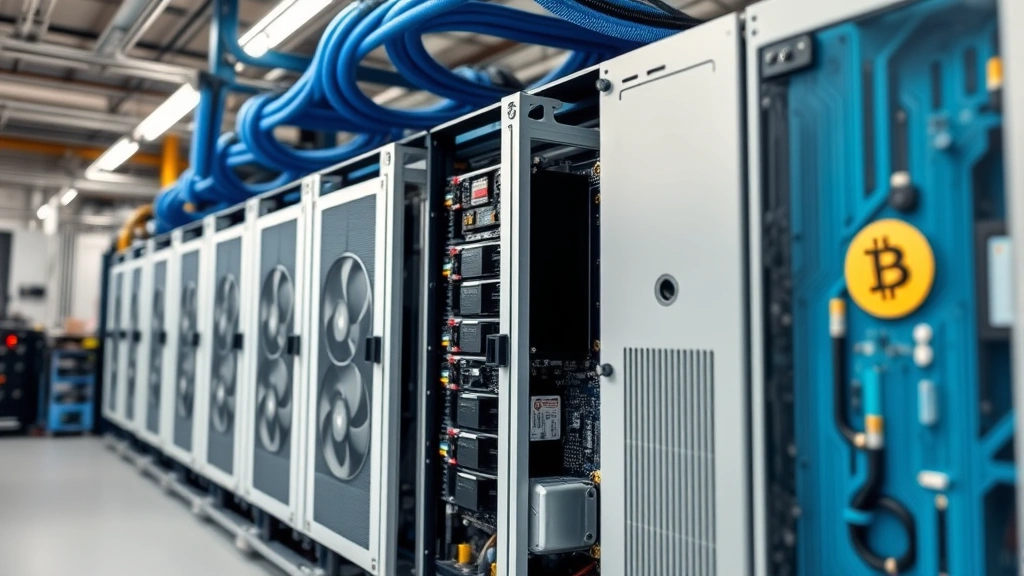
The type of mining hardware you use fundamentally determines your hash rate—the number of computations your equipment can perform per second. Modern Bitcoin mining exclusively uses ASIC (Application-Specific Integrated Circuit) miners, specialized computers designed solely for mining. Consumer-grade GPUs or CPUs are economically unviable for Bitcoin mining in today’s environment.
Current leading ASIC miners include models like the Antminer S19 Pro, Whatsminer M30S++, and Avalon 1166 Pro, each offering different hash rates measured in terahashes per second (TH/s). The S19 Pro, for example, produces approximately 110 TH/s while consuming around 1,450 watts of electricity. A single unit would require roughly 10,000 years of operation to mine one bitcoin at current difficulty, illustrating why industrial-scale operations dominate mining.
Hardware costs represent a significant barrier to entry. Quality ASIC miners range from $3,000 to $10,000+ per unit, and most miners operate multiple units to achieve meaningful hash power. Beyond the hardware itself, you must consider cooling systems, electrical infrastructure upgrades, and ongoing maintenance costs.
The relationship between your hash power and mining timeline follows a direct proportional formula: if you double your hash rate, you halve the expected time to mine one bitcoin (assuming constant difficulty). However, network difficulty adjustment complicates this simple relationship. As more miners deploy hardware, difficulty increases, effectively extending timelines for all miners.
Choosing efficient hardware is critical because electricity costs directly impact profitability. The hash per watt metric determines how efficiently your equipment converts electricity into mining power. Models with superior efficiency ratios generate better returns over their operational lifespan, even if the upfront cost is higher.
Network Difficulty and Mining Pools
Mining difficulty represents the computational challenge required to find valid blocks. Bitcoin’s difficulty adjusts based on the total network hash power, maintaining that 10-minute average block time regardless of how many miners participate. When difficulty increases, all miners proportionally take longer to find blocks.
The current network difficulty fluctuates but typically hovers around 80-90 trillion, meaning miners must solve cryptographic puzzles of staggering complexity. This difficulty has increased exponentially over Bitcoin’s history, from near-zero in 2009 to current astronomical levels. This trend reflects both increased adoption and the entry of well-capitalized mining operations.
Mining pools dramatically alter the timeline equation for individual miners. Rather than attempting to solve blocks independently (a task with minuscule success probability for small operators), miners join pools where collective computational power increases odds of block discovery. When a pool finds a block, the reward is distributed among members proportionally based on their contributed hash power.
Major mining pools like Foundry USA, AntPool, and F2Pool control substantial portions of network hash power. Joining an established pool typically involves minimal setup—you configure your miners to point to the pool’s servers and provide your wallet address. Pool fees typically range from 0-2.5%, representing the cost of coordinated mining infrastructure.
Pool mining transforms the timeline from “might take years” to “receives regular payouts.” A miner contributing 1 TH/s to a major pool might expect to receive small bitcoin fractions weekly or monthly, rather than waiting years for a solo block discovery. This predictability makes pool mining substantially more attractive for individual operators.
The total bitcoins remaining to be mined affects long-term mining viability. As supply approaches the 21-million limit, block rewards continue decreasing through halving events, eventually relying entirely on transaction fees for miner compensation.
Calculating Your Personal Mining Timeline
To estimate your personal bitcoin mining timeline, you need several variables: your total hash power (TH/s), current network difficulty, current block reward, and your mining pool’s fee structure. Several online calculators can assist, but understanding the underlying math proves valuable.
The formula essentially divides total network hash power by your hash power to determine your statistical share of blocks. Multiply this by the 10-minute average block time and the current block reward to estimate your bitcoin accumulation rate. For example, if the network operates at 500 exahashes per second (EH/s) and you contribute 1 TH/s, you represent 0.0000002% of network power.
Let’s work through a practical example: A miner with 50 TH/s (requiring approximately $50,000+ in hardware) operating in a pool would expect approximately 0.001 BTC monthly at current difficulty, translating to roughly 1,000 months (83 years) to accumulate 1 full bitcoin through mining alone. However, this assumes static difficulty, which never occurs in reality.
Difficulty adjustment every two weeks complicates projections. If network hash power increases 20% between difficulty adjustments, your mining output similarly decreases 20% assuming your hardware remains constant. Conversely, if miners exit the network, your relative share increases. These dynamics make long-term projections inherently uncertain.
Cost-benefit analysis requires comparing mining costs against alternative bitcoin acquisition methods. If electricity costs exceed $10,000 to mine one bitcoin while purchasing directly costs $40,000, mining might seem economically superior. However, this ignores hardware depreciation, maintenance, and opportunity costs. Dollar-cost averaging strategies might provide better risk-adjusted returns for many investors.
The timeline also depends heavily on your electricity costs. Miners in regions with cheap renewable energy (Iceland, El Salvador, parts of North America) enjoy substantially shorter timelines than those in expensive markets. A miner paying $0.05/kWh might achieve profitability where a miner paying $0.20/kWh cannot.
Profitability Factors and ROI
Mining profitability extends beyond simply calculating mining time—it requires comprehensive ROI analysis. Your return on investment depends on hardware costs, electricity expenses, pool fees, and bitcoin price appreciation.
Current mining economics typically show positive returns for industrial-scale operations with access to cheap electricity and efficient hardware. However, smaller individual miners face challenging economics. A $5,000 hardware investment might generate $2,000-3,000 annually in bitcoin rewards at current difficulty and prices, creating a 2-3 year payback period before generating profit.
Bitcoin price volatility significantly impacts mining profitability. If bitcoin appreciates 50% while you’re mining, your effective returns improve dramatically. Conversely, a 50% price decline devastates profitability. Some miners hedge this risk by immediately converting mining rewards to fiat currency, while others hold bitcoin expecting appreciation.
Electricity costs represent the largest ongoing expense for miners. At current prices, mining one bitcoin consumes approximately 1,500-1,600 kilowatt-hours of electricity. In regions with $0.10/kWh electricity, this represents $150-160 in power costs per bitcoin. In expensive markets charging $0.20/kWh, the cost doubles. These figures exclude hardware depreciation and maintenance.
Tax implications also affect profitability. In many jurisdictions, mining generates taxable income at the fair market value when received, not when sold. A miner receiving 0.1 BTC worth $4,000 owes income tax on $4,000 even if they immediately hold it, creating cash flow challenges.
The halving cycle presents another profitability consideration. Block rewards halve approximately every four years, reducing miner income by 50% overnight unless bitcoin price increases proportionally. The next halving scheduled for 2028 will reduce rewards from 6.25 BTC to 3.125 BTC per block, significantly impacting mining timelines.
Comparing Mining to Other Acquisition Methods
While mining might theoretically allow bitcoin acquisition without direct capital expenditure, comparing mining to direct purchase reveals important realities. Alternative cryptocurrency investment methods often provide superior returns with less complexity.
Direct bitcoin purchase through exchanges like Kraken, Coinbase, or Bitstamp offers immediate ownership with minimal technical knowledge required. This approach eliminates hardware risks, electricity cost uncertainties, and technical troubleshooting. For most investors, purchasing bitcoin directly represents a simpler path to ownership.
Dollar-cost averaging through regular small purchases reduces timing risk compared to mining’s lumpy, unpredictable rewards. A miner might receive nothing for months then suddenly 0.05 BTC, creating volatile cash flow. Regular purchase plans provide consistent, predictable accumulation regardless of market conditions.
Dollar-cost averaging strategies eliminate the complexity of mining operations while providing statistically superior outcomes for most individuals. Rather than investing $10,000 in mining hardware with uncertain returns, purchasing $200 of bitcoin monthly for 50 months provides equivalent exposure with lower risk.
Mining makes sense primarily for those with access to exceptionally cheap electricity (geothermal, hydroelectric, or solar) or those with technical expertise who enjoy the process. For most investors, the capital requirements, technical complexity, and uncertain returns make mining a suboptimal bitcoin acquisition strategy compared to direct purchase or systematic accumulation plans.
However, mining retains value for Bitcoin network security and decentralization. Large-scale mining operations, while economically rational, concentrate power among well-capitalized entities. Individual miners, despite lower profitability, contribute to network resilience and distribution. Some miners prioritize this mission alignment over pure financial returns.
The environmental impact of mining deserves consideration in this comparison. Mining consumes significant electricity, though increasingly from renewable sources. An investor concerned about environmental impact might prefer analyzing bitcoin’s broader ecosystem before committing to energy-intensive mining operations.
FAQ
What is the realistic timeframe to mine 1 bitcoin as an individual?
For an individual miner with modest hardware (10-50 TH/s) in a mining pool, realistically expect 5-10 years to accumulate 1 full bitcoin, assuming constant difficulty and electricity costs. Solo mining would require 100+ years for most individuals. Pool mining provides more predictable timelines with regular fractional bitcoin payouts.
Is bitcoin mining still profitable in 2024?
Mining profitability depends heavily on electricity costs and hardware efficiency. Operations with access to electricity below $0.08/kWh remain profitable. Those paying $0.15+/kWh face challenging economics. Industrial-scale operations with optimized infrastructure remain profitable; small individual operations struggle unless they have exceptional electricity costs.
How does mining difficulty affect my timeline?
Network difficulty adjusts every two weeks, typically increasing as more miners join. Each 10% difficulty increase extends your mining timeline by approximately 10% (assuming constant hardware). This means timelines are moving targets rather than fixed numbers. Difficulty has increased over 1,000x in Bitcoin’s history, dramatically extending timelines for all miners.
Should I mine or buy bitcoin directly?
For most investors, direct purchase or dollar-cost averaging provides superior risk-adjusted returns compared to mining. Mining requires significant capital investment, technical expertise, and electricity cost certainty. Direct purchase offers simplicity, immediate ownership, and lower overhead. Mining makes sense only for those with exceptional electricity costs or mission-aligned motivations.
What are the main costs associated with mining?
Primary costs include: hardware ($3,000-10,000+ per unit), electricity (the largest ongoing expense), cooling systems, maintenance, pool fees (0-2.5%), and potential facility upgrades. Secondary costs include property taxes on equipment, potential cooling water expenses, and replacement hardware as equipment ages and becomes obsolete.
How do mining pools work, and should I join one?
Mining pools combine computational power from multiple miners, increasing block discovery probability. When the pool finds a block, rewards distribute proportionally to members based on contributed hash power. Joining a pool is strongly recommended for individual miners, as solo mining has become virtually impossible for small operators. Pool fees typically range 0-2.5% of rewards.
What happens to mining after all bitcoins are mined?
Mining will continue indefinitely, but miners will earn exclusively from transaction fees rather than block rewards. This transition occurs gradually as block rewards halve every four years, eventually becoming negligible. By 2140, all 21 million bitcoins will be mined, and the network will rely entirely on transaction fees for miner compensation.
How does the Bitcoin halving affect mining timelines?
Bitcoin’s halving event reduces block rewards by 50% every four years. The next halving in 2028 will reduce rewards from 6.25 BTC to 3.125 BTC per block, doubling mining timelines unless bitcoin price increases proportionally. Halvings make mining progressively less rewarding unless accompanied by price appreciation.


