Bitcoin, the world’s first and most valuable cryptocurrency, exists purely in digital form—yet this doesn’t stop people from asking what it looks like. Whether you’re a curious newcomer or someone exploring crypto investments, understanding Bitcoin’s visual representation and physical manifestations can help demystify this revolutionary asset. Unlike traditional currencies with coins and bills you can hold in your hand, Bitcoin exists only as data on a distributed network, but it can be represented in several tangible ways that make it easier to comprehend and transact.
The question “what does a Bitcoin look like” often reveals a fundamental misunderstanding about cryptocurrency’s nature. Bitcoin doesn’t have a physical form—it’s a digital asset secured by cryptographic algorithms and stored on blockchain technology. However, Bitcoin can be represented visually through QR codes, wallet addresses, and the iconic ₿ symbol that has become synonymous with the cryptocurrency movement. Understanding these representations is essential for anyone looking to buy, sell, or store Bitcoin securely.

The Digital Nature of Bitcoin
Bitcoin is fundamentally a digital currency that exists only as information recorded on the blockchain—a distributed ledger maintained by thousands of computers worldwide. There are no physical coins or notes to hold, no treasury to print new currency, and no central authority controlling its supply. Instead, Bitcoin exists as transaction records and balances stored cryptographically on the network. Each Bitcoin is divisible into smaller units called satoshis, with one Bitcoin equaling 100 million satoshis, allowing for precise transactions of any size.
The blockchain is the underlying technology that makes Bitcoin possible. It’s a chain of blocks, each containing transaction data, timestamps, and cryptographic hashes that link them together. When someone asks what Bitcoin looks like, they’re often confused about how something so valuable and widely traded can have no physical presence. The answer lies in understanding that Bitcoin’s value comes from its scarcity (capped at 21 million coins), security through cryptography, and widespread acceptance across the globe. This digital nature is actually one of Bitcoin’s greatest strengths, enabling instant global transfers without intermediaries.
If you’re interested in Bitcoin’s future prospects and market movements, check out our Bitcoin Forecast 2025 analysis. For those considering investments, understanding what Bitcoin actually is—beyond its appearance—is crucial before diving into Bitcoin Options Trading or other advanced trading strategies.
Visual Representations and Symbols
While Bitcoin itself is invisible as pure data, it’s represented visually through several symbols and designs that have become globally recognized. The most iconic symbol is the Bitcoin logo: ₿ (a capital B with two vertical lines through it). This symbol was designed to resemble traditional currency symbols like $ and €, and it’s used across exchanges, wallets, and financial media to denote Bitcoin quantities and prices. The symbol’s design conveys both the digital nature of Bitcoin and its aspiration to function as a legitimate currency.
The Bitcoin logo appeared in 2010 when community member Satoshi Nakamoto (the pseudonymous creator) introduced the symbol to the community. It has since become the universal standard for representing Bitcoin visually. You’ll see ₿ on cryptocurrency exchanges, wallet applications, price charts, and news articles discussing Bitcoin’s value. The orange and white color scheme often associated with Bitcoin branding—particularly the orange circle with the Bitcoin symbol—has also become instantly recognizable in crypto circles. This visual branding helps Bitcoin stand out in a crowded marketplace of thousands of cryptocurrencies.
Beyond the symbol itself, Bitcoin is often represented through various design elements that emphasize its technological foundation. Blockchain networks are frequently depicted as chains of interconnected blocks, though these are purely conceptual representations. In infographics and educational materials, Bitcoin is sometimes shown as digital coins—stylized representations that don’t correspond to any actual visual appearance but help people grasp the concept of digital currency. These representations are marketing tools rather than accurate depictions of what Bitcoin “looks like” technically.
Bitcoin Wallet Addresses and QR Codes
When you own Bitcoin, you don’t receive a physical certificate or document. Instead, you receive a wallet address—a long string of alphanumeric characters that serves as your Bitcoin account number. A Bitcoin address looks something like this: 1A1z7agoat2YMRJVAZCWNJRJEWWFNF2cZ3. These addresses are derived from your private key through cryptographic hashing and serve as the destination for Bitcoin transactions. Each address is unique and can receive Bitcoin from anyone, but only the holder of the corresponding private key can spend the Bitcoin stored at that address.
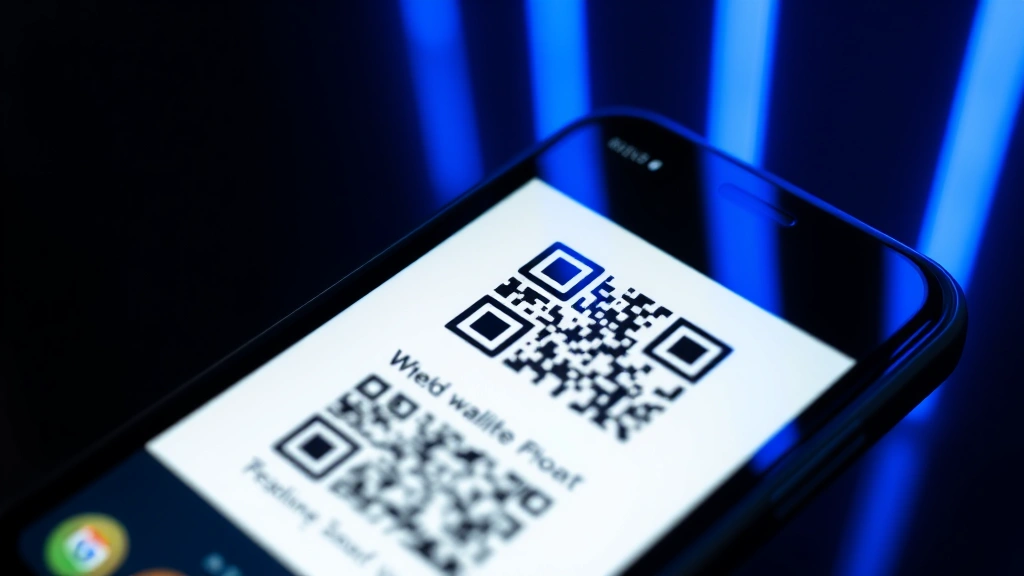
Bitcoin addresses are typically represented visually as QR codes for easy scanning with smartphones. A QR code is a two-dimensional barcode that encodes the wallet address in a format that cameras can read instantly. When you see a QR code associated with Bitcoin, it’s simply a convenient visual representation of that long alphanumeric address. This makes receiving Bitcoin as simple as showing someone your QR code or sharing your address—they can scan or copy it and send you Bitcoin without typing out the entire address manually. QR codes have become the primary visual interface through which most people interact with Bitcoin addresses.
The security of these addresses is paramount. Your public address (the one you share to receive Bitcoin) is safe to distribute widely, but your private key—the cryptographic secret that controls the Bitcoin at an address—must be kept completely confidential. Some people print their private keys on paper wallets or store them on hardware devices, creating a tangible representation of digital wealth. However, these are just storage methods; the actual Bitcoin remains purely digital, recorded on the blockchain and secured by mathematics rather than any physical medium.
Physical Bitcoin Representations
Despite Bitcoin being entirely digital, several physical representations have emerged over the years. Physical Bitcoin coins are collectibles that contain an embedded private key, usually under a hologram or tamper-evident seal. When you “redeem” a physical Bitcoin coin by revealing the private key, you’re actually just accessing the digital Bitcoin stored at that address on the blockchain. The coin itself is just a novelty container for the cryptographic information. These physical coins have become popular as gifts and collectibles, but they have no intrinsic value beyond what’s encoded within them.
Hardware wallets are another form of physical Bitcoin representation—small USB-like devices that securely store your private keys offline. Devices like Ledger and Trezor are physical objects you can hold, but the Bitcoin itself remains on the blockchain. The hardware wallet is simply a secure tool for managing access to your digital assets. Paper wallets—printed documents containing your public address and private key—represent another attempt to give Bitcoin a tangible form, though this method is increasingly discouraged due to security risks.
Some Bitcoin enthusiasts and institutions have created physical vaults and storage facilities, but these are for storing hardware wallets or backup materials, not Bitcoin itself. The concept of holding Bitcoin “in hand” is metaphorical; what you’re actually doing is securing the cryptographic credentials that prove ownership of digital assets recorded on the blockchain. This distinction is important for understanding Bitcoin’s true nature as a purely digital phenomenon with no inherent physical form.
How Bitcoin Appears on Exchanges
On cryptocurrency exchanges like Coinbase, Kraken, and Binance, Bitcoin appears as digital balances denominated in Bitcoin (₿) or satoshis. Your exchange account displays your Bitcoin holdings as a number—for example, “0.5 ₿” means you own half a Bitcoin. The exchange maintains records of your ownership on its internal database, though the actual Bitcoin is typically held in the exchange’s custodial wallets on the blockchain. When you see your Bitcoin balance on an exchange interface, you’re viewing a representation of your claim to Bitcoin, not the Bitcoin itself.
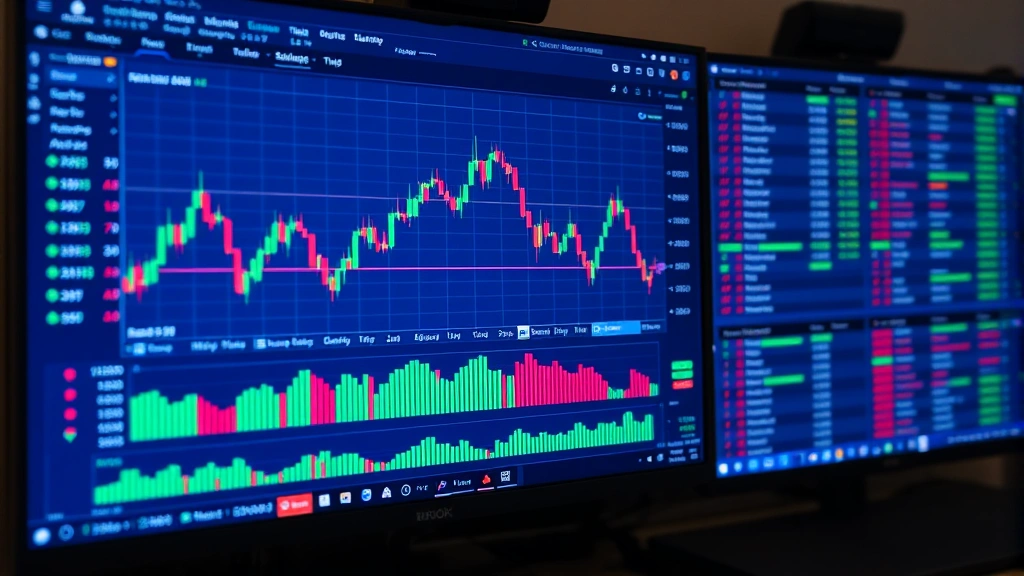
Exchange interfaces display Bitcoin prices in various fiat currencies, charts showing historical price movements, and order books indicating buy and sell activity. Bitcoin appears as candlestick charts, line graphs, and transaction histories—all visual representations of market activity and price movements. These interfaces are purely informational; they show you numerical data about Bitcoin’s value and trading activity, not any visual appearance of Bitcoin itself. The Bitcoin exists invisibly on the blockchain, while the exchange’s interface provides a human-readable window into Bitcoin’s market data and your personal holdings.
If you’re considering Bitcoin as an investment vehicle, understanding how it appears on trading platforms is essential. Our guide on What is Asset Allocation can help you understand how Bitcoin fits into a diversified portfolio. Additionally, learning about What is Fundamental Analysis will help you evaluate Bitcoin beyond just its price movements.
Understanding Blockchain Visualization
Blockchain explorers like Blockchain.com and Blockchair provide visual interfaces for exploring Bitcoin’s blockchain. These tools display the blockchain as a series of blocks, each containing transaction data. You can see transaction hashes, wallet addresses, timestamps, and the amount of Bitcoin transferred in each transaction. The blockchain itself is visualized as a chain of blocks, often shown as connected boxes or a timeline, though these are purely conceptual representations rather than actual depictions of how data is stored on computers worldwide.
When you use a blockchain explorer to look up a Bitcoin transaction, you’re viewing the immutable record of that transaction on the distributed ledger. The transaction appears as text data showing the sender’s address, recipient’s address, amount transferred, transaction fee, and confirmation status. These explorers help demystify Bitcoin by showing the actual transaction data recorded on the blockchain, proving that Bitcoin transactions are real, verifiable, and permanently recorded. This transparency is one of Bitcoin’s defining characteristics—anyone can verify any transaction without needing permission from a central authority.
The visualization of blockchain data helps people understand Bitcoin’s transparency and security. Each block contains a cryptographic hash of the previous block, creating an unbreakable chain. Attempting to alter any historical transaction would require recalculating all subsequent blocks, which would require more computational power than the entire Bitcoin network possesses. This visual representation of blockchain structure helps explain why Bitcoin is so secure and why no single entity can manipulate it.
Security and Visual Verification
Bitcoin’s security relies entirely on cryptography rather than any physical characteristics. You can’t visually verify Bitcoin’s authenticity the way you might with a physical banknote using security features like watermarks or holograms. Instead, Bitcoin’s authenticity is verified through cryptographic mathematics. When you receive Bitcoin, the transaction is verified by thousands of nodes on the network, each checking that the sender actually owns the Bitcoin they’re sending and that the transaction follows all protocol rules.
Visual verification in Bitcoin comes primarily through QR codes and wallet addresses. When someone gives you a QR code to send them Bitcoin, you should verify the address carefully—you can compare the first and last few characters of the address displayed on your screen with the address shown in the QR code. However, this visual verification is less important than trusting the source; if you’re buying Bitcoin from a reputable exchange or receiving it from someone you trust, you can be confident in the transaction’s legitimacy.
The concept of “seeing” Bitcoin ownership comes down to viewing cryptographic signatures and transaction records. Your private key is a string of characters that proves you own the Bitcoin at a particular address. This private key should never be visually displayed or photographed, as anyone with access to it can steal your Bitcoin. Unlike physical valuables that you can see and touch, Bitcoin ownership is proven purely through possession of the private key—an invisible but absolute proof of ownership.
FAQ
Can I see what Bitcoin looks like in person?
No, Bitcoin exists only as digital data on the blockchain. You cannot see, touch, or hold Bitcoin in its native form. You can purchase physical Bitcoin collectibles that contain encoded private keys, but these are novelty items. The actual Bitcoin remains purely digital, recorded as transaction data on thousands of computers worldwide.
What does a Bitcoin address look like?
A Bitcoin address is a long string of alphanumeric characters, typically 26-35 characters long, beginning with 1, 3, or bc1. An example is: 1A1z7agoat2YMRJVAZCWNJRJEWWFNF2cZ3. These addresses are usually displayed as QR codes for easy scanning, but the underlying address is just text that serves as your Bitcoin account identifier.
Is Bitcoin just a number on a screen?
In a practical sense, yes. Bitcoin balances appear as numbers on exchange websites and wallet applications. However, Bitcoin is more than just a number—it’s a cryptographic record on the blockchain proving your ownership of digital value. The “number” represents your claim to actual Bitcoin secured by mathematical algorithms and distributed across thousands of computers.
How do I know I actually own Bitcoin if I can’t see it?
You own Bitcoin through possession of the private key associated with a Bitcoin address. This private key is a long string of characters that only you should know. When you transact, you use your private key to sign the transaction, proving ownership without revealing the key itself. This cryptographic proof of ownership is more secure than any physical possession could be.
Can Bitcoin be counterfeited?
Bitcoin cannot be counterfeited because it exists as cryptographic data verified by thousands of independent computers. The Bitcoin protocol uses mathematical algorithms to ensure that only valid transactions are recorded on the blockchain. Unlike physical currency, there’s no way to create fake Bitcoin—the network automatically rejects invalid transactions.
What does the Bitcoin symbol mean?
The Bitcoin symbol ₿ represents Bitcoin in the same way $ represents the US Dollar. It’s a visual shorthand for Bitcoin used in exchanges, wallets, and financial media. The symbol was designed to resemble traditional currency symbols, emphasizing Bitcoin’s role as a medium of exchange, though Bitcoin’s function is entirely digital rather than physical.
Should I be concerned that Bitcoin isn’t physical?
Not at all. Bitcoin’s digital nature is actually one of its greatest advantages, enabling instant global transfers without intermediaries or geographic restrictions. The security of Bitcoin comes from cryptography and distributed consensus, not from physical properties. In fact, the lack of physical form makes Bitcoin impossible to counterfeit or steal through conventional means—it can only be accessed with the private key.
Understanding what Bitcoin looks like—or rather, why it doesn’t look like anything—is fundamental to grasping how modern cryptocurrency works. Bitcoin’s value comes not from physical characteristics but from its mathematical security, limited supply, and network effects. Whether you’re exploring Bitcoin Price Prediction May 2025 or considering how Bitcoin relates to broader political and economic trends like Bitcoin and Trump, remembering that Bitcoin is purely digital will help you make informed decisions about this revolutionary asset.


