Bitcoin Address Format: Quick Overview
Bitcoin addresses are fundamental to understanding how cryptocurrency transactions work. Whether you’re sending Bitcoin to a friend, receiving payments, or simply exploring the blockchain, understanding address formats is essential. A Bitcoin address is essentially a unique identifier that allows you to receive Bitcoin from others, similar to how a bank account number works in traditional finance. However, unlike bank accounts, Bitcoin addresses are pseudonymous and can be generated instantly without any intermediary approval.
The format of a Bitcoin address tells you important information about the transaction type, security level, and blockchain compatibility. When someone asks what does a bitcoin address start with, they’re often curious about the prefixes that indicate different address types. The answer depends on which type of Bitcoin address you’re examining, as the network has evolved to support multiple formats for enhanced functionality and privacy. This guide will walk you through everything you need to know about Bitcoin address formats, their characteristics, and how to identify them correctly.

Understanding Bitcoin Address Basics
Before diving into specific address formats, it’s crucial to understand what a Bitcoin address actually is. A Bitcoin address is a cryptographic hash derived from a public key. When you create a Bitcoin wallet, the wallet generates a private key (which you must keep secret) and derives a public key from it. The address is then created by hashing the public key through a series of mathematical operations. This process ensures that while addresses are publicly shareable, they maintain security through cryptographic principles.
Bitcoin addresses serve as receiving destinations on the blockchain. When you want to receive Bitcoin, you share your address with the sender. The sender then includes your address as the output in their transaction. Once the transaction is confirmed and added to the blockchain, the Bitcoin is credited to your address. You can view all transactions associated with your address on any blockchain explorer, though the identity behind the address remains pseudonymous unless you voluntarily reveal it.
The Bitcoin network has evolved significantly since its inception, introducing multiple address formats to improve efficiency, reduce fees, and enhance privacy. Understanding these different formats is essential because they affect transaction costs, compatibility with exchanges, and the features available to you as a user. Each format has distinct characteristics that make it suitable for different use cases.
Legacy Address Format (P2PKH)
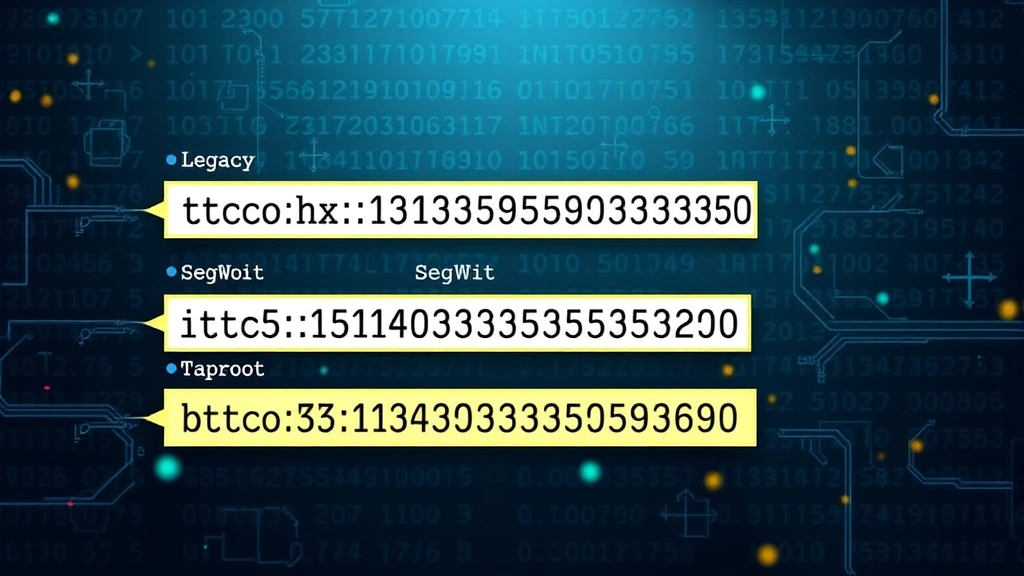
Legacy addresses, formally known as P2PKH (Pay-to-Public-Key-Hash) addresses, are the original Bitcoin address format introduced by Satoshi Nakamoto. Legacy addresses always start with the number 1, making them immediately identifiable. For example, a legacy address might look like: 1A1z7agoat2YTENE6Bu5HL8kZNqPP5Pch. These addresses are approximately 34 characters long and use Base58Check encoding, which excludes certain characters to reduce transcription errors.
When you send Bitcoin to a legacy address, you’re executing a Pay-to-Public-Key-Hash transaction. The Bitcoin remains locked until the owner proves they control the private key corresponding to that address. Legacy addresses have been in use for over a decade and remain widely supported across all Bitcoin wallets and exchanges. This universal compatibility makes them reliable for beginners and anyone unfamiliar with newer address formats.
However, legacy addresses have some drawbacks compared to newer formats. They require more block space per transaction, resulting in higher transaction fees during periods of network congestion. The transaction size for a legacy address input is approximately 148 bytes, whereas newer formats can achieve the same functionality with fewer bytes. For users making frequent transactions or managing large amounts of Bitcoin, this inefficiency can result in significant fee expenses over time. Despite these limitations, legacy addresses remain popular due to their simplicity and universal compatibility across the ecosystem.
SegWit Address Format (P2WPKH)
SegWit addresses, introduced in 2017, represent a significant upgrade to the Bitcoin protocol. SegWit stands for Segregated Witness and was designed to solve transaction malleability issues and improve scalability. SegWit addresses start with the number 3, distinguishing them from legacy addresses. A typical SegWit address looks like: 3J98t1WpEZ73CNmYviecrnyiWrnqRhWNLy. These addresses are also approximately 34 characters long but use a different encoding standard.
It’s important to note that SegWit addresses starting with 3 are technically P2SH (Pay-to-Script-Hash) addresses that contain SegWit scripts. Native SegWit addresses, also called bech32 addresses, start with bc1 and represent the purest form of SegWit implementation. A native SegWit address example: bc1qw508d6qejxtdg4y5r3zarvary0c5xw7kv8f3t4. The distinction between P2SH-wrapped SegWit and native SegWit is technical but important for understanding the ecosystem.
The primary advantage of SegWit addresses is their efficiency. By segregating the witness data from the transaction script, SegWit transactions use less block space. This reduction in data requirements translates to lower transaction fees, especially during periods of high network activity. SegWit transactions typically use only 68% of the block space required by legacy transactions, making them significantly more cost-effective. Additionally, SegWit addresses provide better protection against transaction malleability, a vulnerability where attackers could modify transaction signatures without invalidating them.
Most modern wallets and exchanges now support SegWit addresses, though some older services may still primarily use legacy addresses. When choosing between address types, SegWit offers a clear advantage in terms of fees and efficiency. However, both legacy and SegWit addresses function identically from a security perspective; the difference is purely in transaction size and fee efficiency. If you’re starting fresh with how to invest in cryptocurrency, requesting a SegWit address is generally recommended.
Taproot Address Format (P2TR)
Taproot, activated in November 2021, introduced the newest Bitcoin address format. Taproot addresses start with bc1p and represent the most advanced address format available today. A Taproot address example: bc1p5cyp4p8stq6fnzf2h8e4ksmnq4ycmpt33fsf2k9wltjcjyp8cwqf355ql. These addresses are longer than legacy or SegWit addresses, typically 62 characters, but offer superior functionality and efficiency.
Taproot addresses enable complex smart contracts and multi-signature transactions while maintaining exceptional privacy. One of Taproot’s most significant features is that all transactions, regardless of complexity, appear identical on the blockchain. This privacy enhancement means that outside observers cannot determine whether a transaction is a simple payment or a complex multi-signature contract. For users concerned about financial privacy, this represents a major advancement over previous address formats.
From an efficiency standpoint, Taproot transactions are smaller than legacy transactions and competitive with SegWit transactions. The real advantage of Taproot lies in enabling more sophisticated Bitcoin applications without sacrificing efficiency or privacy. Taproot addresses are ideal for advanced users, institutional investors, and anyone utilizing complex transaction scripts. However, adoption remains slower than SegWit, with some wallets and exchanges still in the process of implementing full Taproot support. As the Bitcoin ecosystem matures, Taproot adoption is expected to increase significantly, particularly for institutional and enterprise applications.
Understanding the progression from legacy to SegWit to Taproot illustrates how Bitcoin evolves to address technological limitations while maintaining backward compatibility. All three address formats coexist on the Bitcoin network, and you can send Bitcoin between them without issues. The choice of address format primarily affects transaction efficiency and available features rather than fundamental security or functionality.
How to Verify Address Authenticity
Verifying that a Bitcoin address is valid and authentic is crucial for secure transactions. Bitcoin addresses use checksums built into their encoding, which allows wallets to catch typos automatically. If you mistype even a single character in an address, the wallet will reject it as invalid. This built-in protection prevents accidental sending of funds to non-existent addresses, though it cannot prevent intentional sending to wrong addresses.
To verify an address, you can use a blockchain explorer to search for the address and view its transaction history. This allows you to confirm the address exists on the blockchain and see all associated transactions. When receiving Bitcoin, always verify the address format matches what you expect. If someone gives you a legacy address and you’re expecting a SegWit address, double-check that they provided the correct address.
QR codes provide another verification method. Most Bitcoin wallets can generate QR codes for addresses, and scanning these codes is more reliable than manually copying addresses. This eliminates transcription errors and reduces the risk of sending funds to incorrect addresses. When receiving Bitcoin, always use the QR code feature when possible, or carefully verify the address character by character. The first few characters and last few characters are particularly important to verify, as these are most likely to be modified in phishing attempts.
Common Address Format Mistakes
One frequent mistake is confusing different address formats. Understanding what is cryptocurrency includes recognizing that not all Bitcoin addresses look the same. New users sometimes assume that because an address doesn’t start with 1, it must be for a different cryptocurrency. This confusion can lead to attempts to send Bitcoin to incorrect address types or even different blockchains entirely.
Another common error involves mixing up Bitcoin addresses with other cryptocurrencies. Bitcoin addresses are specific to the Bitcoin blockchain, while Ethereum has its own address format, Litecoin has different formats, and so on. Sending Bitcoin to an Ethereum address will result in permanent loss of funds, as the receiving blockchain cannot process the transaction. Always verify you’re using the correct address for the specific cryptocurrency you’re sending.
Case sensitivity presents another potential issue. Bitcoin addresses are case-insensitive due to their Base58Check encoding, but this doesn’t mean you should ignore capitalization. When copying and pasting addresses, ensure the entire string transfers correctly. Some poorly designed interfaces might alter capitalization, though the address will remain valid. The safest approach is always to use QR codes or copy-paste functionality rather than manually typing addresses.
Address reuse is a privacy concern many users overlook. While technically you can reuse a Bitcoin address indefinitely, doing so reduces privacy by making it easier for observers to link multiple transactions to the same person. Many modern wallets generate new addresses automatically for each transaction, enhancing privacy. If you’re receiving multiple payments, using different addresses for each transaction improves financial privacy significantly.
Security Considerations
Bitcoin address security fundamentally depends on protecting your private key. The address itself is public information that you can safely share with anyone, but your private key must remain absolutely secret. If someone gains access to your private key, they can steal all Bitcoin associated with that address. This is why hardware wallets, which keep private keys offline, are recommended for storing significant amounts of Bitcoin.
When generating new addresses, use reputable wallet software or hardware devices. Some lesser-known wallet applications may contain malware that steals private keys. Stick with established, open-source wallets that have undergone security audits. Popular options include wallets recommended by Bitcoin.org, which provides detailed security information for each option.
Phishing attacks targeting Bitcoin users often involve fake websites or emails requesting you to enter your private key or seed phrase. Legitimate services will never ask for this information. Be extremely cautious about clicking links in emails or messages that claim to be from cryptocurrency services. Always navigate directly to official websites by typing the URL yourself rather than clicking links provided by others.
Understanding address formats is particularly important for security because it helps you identify legitimate services. If a website claims to be a Bitcoin exchange but provides addresses in an unusual format or asks you to send Bitcoin to suspicious-looking addresses, these are red flags. Familiarizing yourself with proper address formats helps you recognize when something is amiss.
For institutional investors and those managing large portfolios, understanding address formats becomes even more critical. Different exchanges and custody solutions may prefer specific address formats, and compatibility issues could delay transactions or increase costs. Before transferring significant amounts of Bitcoin, verify that your receiving address format is compatible with your chosen service.
The relationship between address security and overall investment strategy is important to consider. As you explore Bitcoin price prediction and investment opportunities, remember that security must be your primary concern. An investment that becomes inaccessible due to security breaches or lost private keys provides no value regardless of price appreciation.
FAQ
What does a Bitcoin address start with?
Bitcoin addresses start with different prefixes depending on their format. Legacy addresses start with 1, SegWit addresses starting with 3 are P2SH-wrapped, native SegWit addresses start with bc1, and Taproot addresses start with bc1p. Each format serves different purposes and offers varying levels of efficiency and functionality.
Can I send Bitcoin between different address formats?
Yes, you can send Bitcoin between all address formats without any issues. Legacy, SegWit, and Taproot addresses all exist on the same blockchain and can receive Bitcoin from any other address type. The format only affects transaction efficiency and available features, not compatibility.
Which address format should I use?
For most users, SegWit addresses (starting with 3 or bc1) are recommended as they offer better fee efficiency than legacy addresses while maintaining excellent compatibility. Taproot addresses are ideal for advanced users and institutional applications. Beginners can safely use any format, but SegWit provides the best balance of efficiency and support.
Are Bitcoin addresses case-sensitive?
Bitcoin addresses are technically case-insensitive due to their encoding, but this doesn’t mean capitalization doesn’t matter. When copying addresses, ensure the entire string, including capitalization, transfers correctly. Using copy-paste or QR codes is safer than manual typing.
How long is a Bitcoin address?
Legacy addresses are approximately 34 characters, SegWit addresses are also around 34 characters, and Taproot addresses are typically 62 characters. The length varies slightly depending on the specific format and encoding used.
What happens if I send Bitcoin to the wrong address?
If you send Bitcoin to a valid address that you don’t control, the Bitcoin is permanently lost. The blockchain cannot reverse transactions, so sending to the wrong address is irreversible. Always verify addresses carefully before confirming transactions.
Can I have multiple Bitcoin addresses?
Yes, and it’s actually recommended. Most wallets generate new addresses automatically for each transaction, enhancing privacy. You can have unlimited addresses, and all can be managed within a single wallet using a seed phrase or private key backup.


