
The year 2016 stands as a pivotal chapter in Bitcoin’s history, marked by significant price volatility, regulatory developments, and growing institutional interest. After the devastating collapse of Mt. Gox in 2014 and the subsequent bear market that plagued 2015, Bitcoin entered 2016 trading near $430, setting the stage for one of the most transformative years in cryptocurrency history. This period witnessed the first Bitcoin halving event since 2012, geopolitical tensions affecting fiat currencies, and the emergence of new blockchain technologies that would reshape the entire crypto landscape.
Understanding the price of Bitcoin in 2016 provides invaluable lessons for modern investors seeking to comprehend long-term market cycles and the factors that drive cryptocurrency valuations. The year demonstrated how macroeconomic conditions, technological milestones, and market sentiment converge to create substantial price movements. By examining 2016’s trends, we can better appreciate the resilience of Bitcoin as an asset class and the patterns that continue to influence markets today.
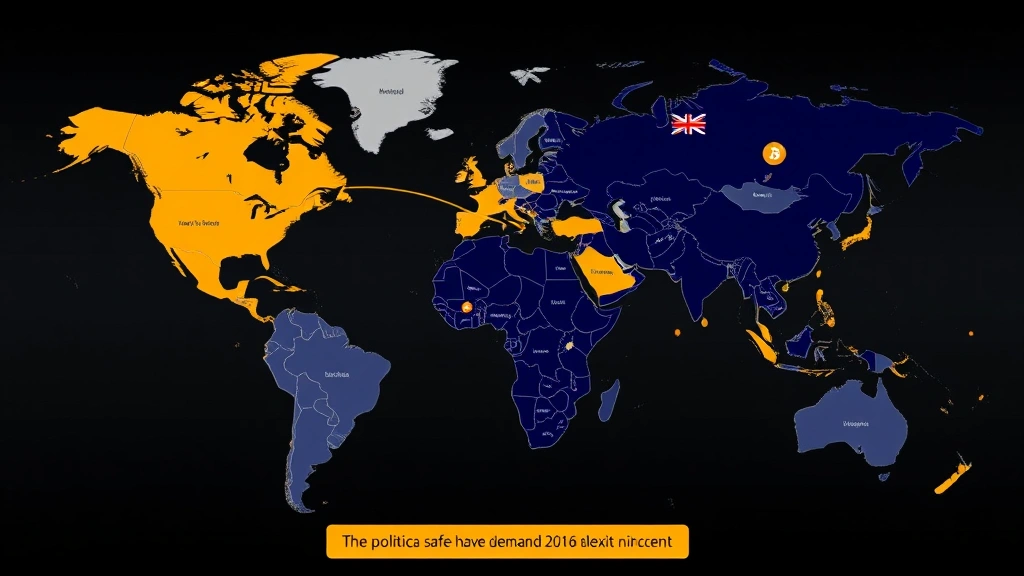
Bitcoin Price Performance in Early 2016
Bitcoin commenced 2016 at approximately $430 per coin, following a challenging 2015 that had seen prices decline from $500 to below $430. The cryptocurrency market remained subdued as the year began, with many investors still bearing the scars of previous crashes and regulatory uncertainties. However, the opening months revealed subtle signs of recovery, with Bitcoin gradually climbing toward the $500 mark by February. This modest upward trajectory reflected growing confidence among early adopters and institutional observers who recognized the potential of blockchain technology beyond currency speculation.
The period from January through March 2016 was characterized by consolidation, where Bitcoin’s price oscillated within a relatively narrow range. This sideways movement, while seemingly stagnant compared to later rallies, actually represented a crucial foundation-building phase. Traders and investors were reassessing Bitcoin’s value proposition in light of cryptocurrency fundamentals, examining the technology’s scalability challenges, and debating its utility as both a store of value and medium of exchange. Chinese exchanges were beginning to dominate trading volume, introducing a new dynamic to global price discovery mechanisms.
During this early period, regulatory clarity remained elusive in many jurisdictions. The U.S. Securities and Exchange Commission and the Commodity Futures Trading Commission were still formulating their approaches to Bitcoin oversight. Meanwhile, central banks worldwide were grappling with negative interest rates and unprecedented monetary stimulus measures, which would eventually create an environment favorable to alternative assets like Bitcoin. The contrast between traditional financial uncertainty and Bitcoin’s decentralized nature became increasingly apparent to forward-thinking investors.
The Halving Event and Market Impact
On July 9, 2016, Bitcoin experienced its second halving event, reducing block rewards from 25 BTC to 12.5 BTC. This programmatic reduction in new supply occurred at block height 420,000 and represented a critical moment in Bitcoin’s economic model. The halving was anticipated months in advance, generating significant discussion within the community about its potential impact on mining economics and price dynamics. Unlike the 2012 halving, which preceded a multi-year bull market, the 2016 halving occurred during a more measured market environment.
The price of Bitcoin in 2016 around the halving period reflected fascinating market psychology. Rather than spiking immediately before the event, Bitcoin actually consolidated in the $600-700 range leading up to July. This suggested that much of the positive sentiment had already been priced into the market. Interestingly, the significant rally occurred in the months following the halving, not during it. This post-halving surge demonstrated how supply shocks, while important, require complementary demand catalysts to drive substantial price appreciation.
The halving reduced the daily supply of new Bitcoin from 3,600 to 1,800 coins, representing a 50% decrease in mining output. This fundamental supply reduction, combined with growing adoption and improving infrastructure, created a favorable backdrop for price appreciation. Mining economics shifted significantly, requiring greater operational efficiency and forcing less profitable operations to shut down. This consolidation in mining ultimately strengthened the network by reducing the number of potential attack vectors and improving hash rate distribution.
For investors considering their current strategies, understanding how supply dynamics influence price is essential. Those interested in long-term accumulation strategies may want to explore dollar-cost averaging approaches that smooth out volatility over extended periods.
Mid-Year Recovery and Momentum Building
Following the halving, Bitcoin’s price exhibited renewed momentum throughout the summer and into fall. By August 2016, Bitcoin had climbed above $600, and by September, it approached $650. This mid-year recovery was fueled by several converging factors. First, the supply shock from the halving was beginning to manifest in tighter market conditions. Second, growing recognition of Bitcoin’s value proposition during a period of central bank uncertainty bolstered demand. Third, improving exchange infrastructure and custody solutions made Bitcoin more accessible to mainstream investors.
The Chinese market played an outsized role during this period. Major Chinese exchanges like OKCoin and Huobi were driving substantial trading volume, with prices on Chinese platforms occasionally trading at significant premiums to Western exchanges. This arbitrage opportunity attracted traders and highlighted the growing global demand for Bitcoin as a hedge against currency depreciation in emerging markets. Chinese investors, concerned about yuan devaluation and capital controls, viewed Bitcoin as a potential store of value and investment asset.
Technological developments also contributed to market sentiment. The Bitcoin community was actively debating scaling solutions and protocol improvements. Discussions around Segregated Witness (SegWit) were gaining traction, promising to increase transaction capacity and improve network efficiency. These technical advancements, while complex, signaled that Bitcoin was evolving beyond its original design and addressing real-world limitations. For those new to these concepts, our guide to cryptocurrency basics provides helpful context.
Geopolitical Factors and Safe-Haven Demand
The latter half of 2016 saw Bitcoin increasingly viewed as a safe-haven asset, particularly in markets experiencing currency instability or political uncertainty. The British referendum on European Union membership (Brexit) in June and the U.S. presidential election in November created macroeconomic volatility that drove capital toward alternative stores of value. Bitcoin, with its fixed supply and decentralized nature, appealed to investors seeking protection from traditional market turbulence and currency debasement.
Emerging markets became particularly important drivers of Bitcoin adoption and price appreciation. In countries experiencing hyperinflation or currency crises, Bitcoin offered an alternative to depreciating fiat currencies. Venezuela, where inflation was accelerating, saw growing Bitcoin adoption despite limited access to exchanges. India’s demonetization of high-value currency notes in November 2016 prompted some citizens to explore Bitcoin and other cryptocurrencies as stores of value. These real-world use cases demonstrated Bitcoin’s utility beyond speculative trading.
Central bank policies worldwide created additional tailwinds for Bitcoin’s appeal. The European Central Bank maintained negative interest rates, the Bank of Japan pursued aggressive quantitative easing, and the U.S. Federal Reserve signaled uncertainty about future rate hikes. In this environment of financial repression and currency debasement, Bitcoin’s fixed supply of 21 million coins became increasingly attractive. Investors recognized that Bitcoin operated according to immutable rules, immune to the whims of monetary policymakers.
The price of Bitcoin in 2016 reflected this growing recognition of its macroeconomic importance. By November, Bitcoin had surpassed $700 and was approaching $800 as year-end approached. This trajectory represented a remarkable recovery from the $430 starting point, with Bitcoin gaining over 80% during the year despite starting from a depressed valuation.
Q4 Surge and Year-End Rally
The final quarter of 2016 witnessed an extraordinary rally, with Bitcoin’s price surging from approximately $600 in early October to nearly $950 by mid-December. This explosive appreciation was driven by multiple factors converging simultaneously. The U.S. presidential election in November created significant market volatility and uncertainty, with Bitcoin gaining as investors hedged against potential policy shifts. Chinese regulatory concerns about capital outflows also paradoxically supported prices, as wealthy individuals sought to move capital internationally through Bitcoin channels.
By November 2016, Bitcoin had broken above $700 and was establishing new highs. The month saw substantial institutional interest emerging, with major financial media outlets dedicating increased coverage to Bitcoin’s resurgence. Hedge funds and family offices began allocating small percentages to Bitcoin as a portfolio diversifier. This institutional recognition, while still nascent compared to today’s levels, represented a meaningful shift in how sophisticated investors perceived cryptocurrency.
The year-end rally accelerated in December, with Bitcoin approaching $1,000 for the first time since 2013. This psychological milestone generated enormous media attention and retail investor interest. News headlines proclaimed Bitcoin’s return to prominence, and social media discussions intensified as people recognized the substantial gains achieved over the preceding months. The price of Bitcoin in 2016 finished the year near $950, representing a 120% gain from January’s $430 starting point.
This dramatic recovery offered valuable lessons about market cycles and the importance of long-term perspective. Those who had accumulated Bitcoin during the 2015 bear market were handsomely rewarded. For current investors evaluating their strategies, examining contemporary price predictions requires understanding these historical patterns.
Key Market Drivers and Catalysts
The price movements of Bitcoin in 2016 were influenced by a complex interplay of technical, fundamental, and macroeconomic factors. Understanding these drivers provides insights applicable to modern market analysis. The halving event, while important, was perhaps less influential than anticipated, suggesting that market expectations had already incorporated the supply reduction. Instead, macroeconomic conditions and geopolitical uncertainty emerged as more powerful price drivers during the latter half of the year.
Regulatory developments, or the lack thereof, also played a role. The absence of comprehensive regulatory bans, combined with growing recognition from financial authorities that Bitcoin was here to stay, created a more stable operating environment. While regulation remained incomplete and inconsistent across jurisdictions, the trajectory was toward acceptance rather than prohibition. This shift in regulatory sentiment, while subtle in 2016, proved significant for long-term adoption.
Exchange improvements and infrastructure development cannot be overlooked. The emergence of regulated platforms, better custody solutions, and improved user interfaces made Bitcoin more accessible to average investors. Companies building on the Bitcoin blockchain were also expanding, creating use cases beyond simple currency transfer. These infrastructure improvements provided the foundation for subsequent adoption waves.
Media coverage and social sentiment constituted additional catalysts. As Bitcoin’s price recovered and news coverage increased, retail investor interest expanded. The narrative shifted from “Bitcoin is dead” to “Bitcoin has returned,” creating self-reinforcing momentum. This psychological aspect of markets, while sometimes dismissed by academics, proved remarkably powerful in driving real capital flows.
For investors considering their current position, understanding whether Bitcoin remains a worthwhile investment requires examining these same categories of drivers in contemporary markets. Additionally, those with limited capital should explore beginner investment strategies to start their crypto journey.
Looking toward the future, 2025 cryptocurrency price predictions should incorporate lessons from 2016’s price discovery process. The combination of supply constraints, macroeconomic conditions, geopolitical uncertainty, and infrastructure improvements continues to influence Bitcoin’s trajectory.
FAQ
What was Bitcoin’s starting price in 2016?
Bitcoin began 2016 at approximately $430 per coin, recovering from lows near $200 in early 2015. This starting price reflected the aftermath of the Mt. Gox collapse and the subsequent bear market that characterized 2014-2015.
How much did Bitcoin gain during 2016?
Bitcoin gained approximately 120% during 2016, rising from $430 to nearly $950 by year-end. This represented a significant recovery and demonstrated Bitcoin’s resilience as an asset class despite previous crashes.
What was the impact of the 2016 halving event?
The 2016 halving reduced new Bitcoin supply from 3,600 to 1,800 coins daily. While the halving itself didn’t immediately spike the price, it contributed to the supply-constrained environment that enabled the subsequent rally in the latter half of the year.
Why did Bitcoin price increase more in Q4 2016?
Q4 2016 saw accelerated gains due to macroeconomic factors including Brexit uncertainty, the U.S. presidential election, central bank policies favoring alternative assets, Chinese capital outflow concerns, and improving exchange infrastructure attracting institutional interest.
How did geopolitical events influence Bitcoin’s 2016 price?
Major geopolitical events like Brexit and the U.S. election created market volatility, driving investors toward alternative stores of value like Bitcoin. Additionally, currency instability in emerging markets increased demand for Bitcoin as a hedge against fiat currency depreciation.
Was the 2016 Bitcoin rally sustainable?
The 2016 rally established a strong foundation for subsequent appreciation, though Bitcoin would experience corrections in 2017-2018. The improvements in infrastructure, regulatory clarity, and institutional recognition achieved during 2016 proved durable and supported longer-term adoption trends.


