
How Long Does a Bitcoin Transaction Take? Complete User Experience Guide
Bitcoin transactions represent one of the most frequently asked questions in the cryptocurrency space, and for good reason. Whether you’re a seasoned investor checking on your portfolio or a newcomer sending crypto for the first time, understanding transaction timing is crucial for managing expectations and making informed decisions. The answer isn’t as straightforward as “10 minutes” because multiple variables influence how quickly your Bitcoin moves from one wallet to another.
Transaction speed has become increasingly important as Bitcoin adoption grows and users demand faster settlement times. Unlike traditional banking systems that operate during business hours, Bitcoin’s decentralized network processes transactions 24/7, but the actual confirmation time depends on network conditions, fee structures, and current demand. This guide explores every aspect of Bitcoin transaction timing, helping you understand what happens behind the scenes and how to optimize your experience.
Understanding Bitcoin Transaction Basics
A Bitcoin transaction begins the moment you initiate a transfer from your wallet. However, this initial broadcast is just the first step in a longer process. Your transaction must travel across the peer-to-peer network, reach miners or validators, be included in a block, and then receive sufficient confirmations before it’s considered final. Understanding this journey helps explain why Bitcoin doesn’t provide instant settlement like some competing systems.
When you create a Bitcoin transaction, your wallet software signs it cryptographically using your private key. This signature proves you authorized the transaction without revealing your key. The transaction then enters the mempool—a temporary holding area where unconfirmed transactions wait. Miners select transactions from the mempool based on fee priority, creating blocks approximately every 10 minutes on average. Once a transaction receives its first confirmation (inclusion in a block), it’s technically irreversible, though most exchanges and merchants wait for additional confirmations for security.
The Bitcoin network maintains a target block time of 10 minutes through its difficulty adjustment mechanism. This means that under normal conditions, you can expect your first confirmation within this timeframe. However, “normal conditions” is the key phrase—network activity, fee competition, and transaction size all influence actual confirmation times. Understanding why Bitcoin remains valuable despite these timing considerations involves recognizing the security and decentralization trade-offs inherent in the design.
Average Transaction Times Explained
The most commonly cited figure is that Bitcoin transactions take approximately 10 minutes for the first confirmation. This reflects the network’s target block interval, but actual times vary considerably. During periods of low network activity, your transaction might confirm in just 2-3 minutes if included in the next block. Conversely, during peak demand periods, transactions can remain unconfirmed for hours or even days if the fee is insufficient.
Most Bitcoin transactions achieve final settlement after 3-6 confirmations, which typically takes 30-60 minutes under normal network conditions. This timeframe has become the standard for exchanges, payment processors, and merchants. Some high-value transactions or those prioritizing maximum security wait for 10+ confirmations, equivalent to roughly 100 minutes. Understanding these standards helps you set realistic expectations based on your transaction’s importance and urgency.
The relationship between confirmation time and transaction finality is important to grasp. After one confirmation, your transaction is effectively irreversible unless a catastrophic network event occurs. The subsequent confirmations add layers of security by making it increasingly expensive to reverse the transaction through a 51% attack. For most practical purposes, 3 confirmations provides excellent security, though exchanges often require 6 confirmations to protect against large-value fraud attempts.
Factors Affecting Transaction Speed
Several critical variables determine how quickly your Bitcoin transaction confirms. The transaction fee you include is the most significant factor under your control. Bitcoin miners prioritize transactions by fee density (satoshis per byte), meaning transactions with higher fees relative to their size get included in blocks first. When network demand is high, this competition intensifies dramatically.
Transaction size, measured in bytes, directly impacts how much you need to spend in fees for priority treatment. A standard transaction might be 200-250 bytes, while complex transactions with multiple inputs can reach 500+ bytes. This is why wallet efficiency matters—consolidating inputs during low-fee periods reduces future transaction sizes. Your choice of wallet software affects this, as some wallets automatically optimize input selection better than others.
Network congestion represents the second major factor affecting confirmation times. The Bitcoin network has a maximum block size of 1 MB, which limits the number of transactions that can fit in each block. During high-activity periods—often coinciding with Bitcoin price movements or major news events—competition for block space intensifies. The mempool can contain hundreds of thousands of pending transactions, and your transaction’s position in the queue depends entirely on its fee competitiveness.
Node distribution and geographic location have minimal impact on Bitcoin transaction times for end users, though they matter for miners. The Bitcoin network includes thousands of distributed nodes worldwide, ensuring redundancy and preventing censorship. Once your transaction reaches any node, it propagates across the network within seconds, so geographic location doesn’t significantly delay confirmation.
Mempool and Network Congestion
The Bitcoin mempool functions as a dynamic marketplace where transactions compete for inclusion in the next blocks. Understanding mempool dynamics helps you time transactions strategically and set appropriate fees. When the mempool is small (fewer pending transactions), you can include a low fee and still confirm quickly. When the mempool is large and growing, fee requirements climb rapidly.
During extreme congestion events—such as sudden price movements, network attacks, or major exchange activity—the mempool can balloon to contain millions of unconfirmed transactions. In these scenarios, transactions with minimum or below-market fees might wait days for confirmation. This is why monitoring mempool size and fee recommendations before initiating transactions is valuable. Several websites provide real-time mempool data, showing the distribution of pending transactions by fee rate.
Fee estimation algorithms used by wallets analyze recent block data to recommend appropriate fees for your desired confirmation speed. A good fee estimator considers current mempool conditions and recent block inclusion patterns. Many wallets offer multiple options: slow (lower fee, longer confirmation time), standard (moderate fee, typical confirmation time), and fast (higher fee, priority confirmation). Understanding these options empowers you to make informed choices based on your transaction’s urgency.
Network upgrades and protocol changes influence mempool dynamics over time. The SegWit upgrade reduced effective transaction sizes, allowing more transactions per block. The Taproot upgrade further improved efficiency and privacy. These improvements increase throughput, though fundamental block size limits remain unchanged. This is relevant to understanding Bitcoin mining economics, as increased efficiency affects miner incentives and transaction inclusion patterns.
Fee Strategies for Faster Confirmations
Optimizing your transaction fees requires understanding the relationship between fee rate, transaction size, and confirmation probability. The fee rate, measured in satoshis per byte (sat/B), determines your transaction’s priority. During low-congestion periods, you might achieve confirmation with fees as low as 1-2 sat/B. During peak periods, competitive rates might exceed 50-100 sat/B or higher.
Replace-by-Fee (RBF) functionality allows you to increase the fee on an unconfirmed transaction, essentially bumping it up in the queue. This feature is invaluable when initial fee estimates prove insufficient due to unexpected congestion. Most modern wallets support RBF, enabling you to rebroadcast your transaction with a higher fee without creating a new transaction. This flexibility helps you adapt to changing network conditions.
Child-Pays-for-Parent (CPFP) is another strategy where you create a new transaction spending outputs from your unconfirmed transaction with a high fee. The combined fee rate of the parent and child transactions incentivizes miners to include both, effectively accelerating the original transaction. This technique requires more wallet sophistication but works effectively when RBF isn’t available.
Batching multiple payments into a single transaction reduces overall fees by sharing the transaction overhead. If you’re sending Bitcoin to multiple recipients, combining these into one transaction costs less per recipient than separate transactions. This strategy is particularly valuable during high-fee periods and is commonly used by exchanges and payment processors.
Timing your transactions during low-demand periods can dramatically reduce costs. Bitcoin activity varies by time of day and day of week, with weekends typically experiencing lower congestion than weekday peak hours. If your transaction isn’t time-sensitive, waiting for a low-activity period might save 50-80% on fees. This requires some flexibility but can be worthwhile for large transactions.
Layer 2 Solutions and Fast Transactions
Bitcoin’s base layer intentionally prioritizes security and decentralization over speed. Recognizing this limitation, developers created Layer 2 solutions that enable fast, cheap transactions while settling periodically to the main chain. These solutions address the speed concerns without requiring changes to Bitcoin’s core protocol.
The Lightning Network is the most prominent Layer 2 solution, enabling near-instant Bitcoin payments with minimal fees. Users open payment channels with other participants, allowing them to transact multiple times without broadcasting to the blockchain. Settlement to the main Bitcoin chain happens only when closing channels or periodically for security. This architecture allows millions of transactions per second theoretically, compared to Bitcoin’s 7 transactions per second on-chain.
Sidechains like Stacks enable smart contract functionality and faster transactions while maintaining Bitcoin security through periodic anchoring. These alternative blockchains operate independently but periodically settle state to Bitcoin, providing stronger security guarantees than purely independent chains. The trade-off involves accepting some additional complexity and relying on sidechain validators.
Rollups and other emerging solutions promise even greater scalability while maintaining stronger Bitcoin security guarantees. These solutions batch multiple transactions off-chain and post cryptographic proofs to Bitcoin, allowing the main chain to verify correctness without processing every transaction individually. As these technologies mature, they’ll likely become increasingly important for Bitcoin-based applications requiring high throughput.
Understanding these alternatives contextualizes Bitcoin’s intentional design decisions. Bitcoin prioritizes being a store of value and settlement layer, accepting slower base-layer transactions to maintain maximum security. For everyday payments, Layer 2 solutions provide superior user experience. For large value transfers and long-term holding, on-chain Bitcoin offers unmatched security and decentralization.
Real-World Transaction Scenarios
Consider a typical scenario: You’re transferring Bitcoin between your personal wallets. This isn’t time-critical, so you can use a low fee and accept 12-24 hour confirmation time. Using a fee estimator showing current rates, you might set a fee of 1-5 sat/B, costing just a few hundred satoshis total. Your transaction will eventually confirm, and you’ve minimized costs.
Alternatively, imagine you’re withdrawing Bitcoin from an exchange to secure it in cold storage. While not immediately urgent, you want confirmation within an hour for peace of mind. You’d select the wallet’s “fast” option, accepting a higher fee (perhaps 20-30 sat/B) to ensure inclusion in the next 2-3 blocks. This might cost $1-3 in fees but provides quick settlement and reduces exchange custody risk.
A third scenario involves receiving a Bitcoin payment that requires immediate confirmation for business purposes. Perhaps you’re accepting Bitcoin at a retail location and need to verify payment before releasing goods. In this case, you’d want confirmation within 10 minutes. The payer should include a competitive fee (25-50 sat/B during normal times), and you’d monitor the transaction’s confirmation status in real-time using a block explorer.
During extreme congestion—such as during the 2017 bull market or during specific attack scenarios—confirmation times can extend dramatically. A transaction with a 10 sat/B fee that would normally confirm within an hour might wait days or weeks. This teaches an important lesson: always include appropriate fees based on current conditions, and plan for worst-case scenarios when timing matters.
Understanding Bitcoin market volatility and potential price movements helps contextualize why some transactions are time-sensitive. A user might want quick confirmation to lock in current prices or secure profits before expected market movements. Conversely, someone transferring long-term holdings can afford to wait for optimal fee conditions.
Monitoring Your Transaction Status
Once you’ve broadcast a Bitcoin transaction, monitoring its progress is straightforward using blockchain explorers. These services display the Bitcoin blockchain in human-readable form, allowing you to search for your transaction by its ID (TXID). CoinDesk’s blockchain explorer and similar services show transaction details including inputs, outputs, fees, and confirmation count.
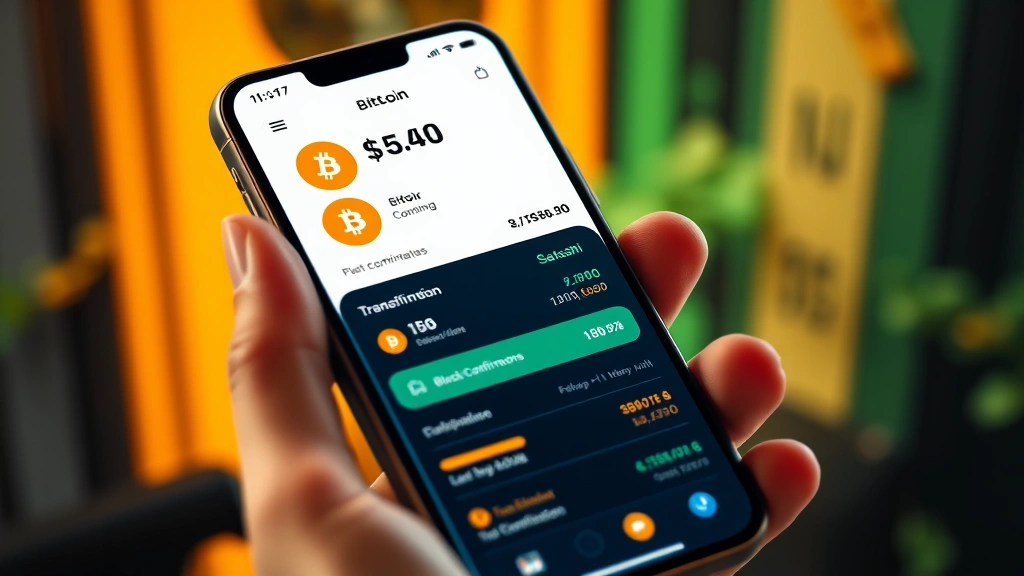
When you first broadcast your transaction, it appears as “unconfirmed” in the mempool. The explorer shows its position and estimated confirmation time based on current fee rates and network conditions. As each block is mined, the confirmation count increases. Most explorers highlight transactions with 6+ confirmations as “final,” though the exact threshold varies by use case.
Your wallet software typically provides simpler transaction monitoring, showing confirmation count and estimated completion time. Some wallets notify you when confirmations reach specific milestones, providing peace of mind without requiring manual checking. This user experience matters significantly for non-technical users who might otherwise worry about transaction status.
If your transaction remains unconfirmed after several hours, several options exist. If your wallet supports RBF, you can increase the fee and rebroadcast. If RBF isn’t available, you can use CPFP to accelerate confirmation. Alternatively, you can contact your wallet provider’s support if the transaction appears stuck. Understanding these options prevents panic and enables effective problem-solving.
Several external resources provide valuable monitoring information. Mempool.space offers detailed mempool visualization and fee estimates. CoinDesk provides market context and network news affecting transaction fees. Bitcoin fee estimation services help you set appropriate fees before broadcasting. These resources transform transaction monitoring from confusing to empowering.
Comparing real-time Bitcoin price information with transaction timing helps you understand market-driven urgency. During price spikes, transaction volume often increases, driving up confirmation times and fees. Recognizing these patterns helps you anticipate congestion and adjust your strategy accordingly.

Understanding regulatory context also matters for transaction timing expectations. The SEC and other regulatory bodies increasingly focus on cryptocurrency, which influences exchange policies and transaction requirements. Some exchanges require longer confirmation periods (10+) for regulatory compliance, affecting your settlement timeline even after on-chain confirmation.
FAQ
What is the absolute fastest a Bitcoin transaction can confirm?
Under ideal conditions with a high fee during low-congestion periods, a Bitcoin transaction can confirm in the next block, potentially within 2-3 minutes. However, this represents the best-case scenario. Average fastest confirmation under normal conditions is 10-20 minutes with competitive fees.
Can I cancel a Bitcoin transaction after sending it?
Once a Bitcoin transaction receives its first confirmation, it’s irreversible. Before confirmation, you can use Replace-by-Fee to increase the fee and encourage faster inclusion, but you cannot completely cancel it. Prevention through careful verification before sending is essential.
How many confirmations should I wait for before considering a transaction final?
One confirmation is technically final and irreversible. However, most exchanges require 3-6 confirmations for security against large-value fraud. For personal transfers, 1-3 confirmations provides excellent security. For extremely high-value transactions, 10+ confirmations adds extra security margins.
Why do some transactions take days to confirm?
Transactions with insufficient fees relative to network congestion can remain unconfirmed indefinitely. If the mempool is full with higher-fee transactions, yours might never be included unless you use RBF to increase the fee. This is why fee estimation based on current conditions is crucial.
Do I pay the fee even if my transaction doesn’t confirm?
No, if a transaction remains unconfirmed and the mempool clears (which happens after several days of no confirmation), your transaction is dropped and no fee is charged. However, this is rare—most transactions either confirm or you’ll want to accelerate them using RBF before this occurs.
How does the Lightning Network compare to on-chain transactions?
Lightning Network transactions confirm instantly (within seconds) and cost fractions of a cent. However, they require opening payment channels first and are best suited for frequent payments rather than large value transfers. On-chain transactions are slower but provide stronger security guarantees and don’t require channel setup.
What happens if I set the fee too low?
Your transaction enters the mempool but might not confirm for hours or days. You can use Replace-by-Fee to increase the fee and encourage faster confirmation. Alternatively, you can wait for network congestion to decrease naturally, at which point your transaction will eventually confirm.
Does sending Bitcoin to a hardware wallet take longer?
No, transaction time depends on network conditions and fees, not the receiving wallet type. Hardware wallets, software wallets, and exchange addresses all receive transactions at the same speed. The hardware wallet simply provides additional security for stored funds.
Can I track my Bitcoin transaction in real-time?
Yes, using blockchain explorers, you can search your transaction ID and monitor confirmation progress. Most wallets also provide real-time confirmation tracking. You’ll see your transaction move from “unconfirmed” to “1 confirmation” to subsequent confirmations as blocks are mined.
Why does Bitcoin institutional adoption care about transaction speed?
Institutions need reliable settlement timelines for risk management and regulatory compliance. While Bitcoin’s base layer speed is adequate for settlement purposes, institutions increasingly use Layer 2 solutions for faster internal transfers and trading operations. This reflects Bitcoin’s role as a settlement layer rather than a payment system.


