How to Buy Bitcoin Anonymously: Privacy Tips for 2024
Privacy in cryptocurrency transactions has become increasingly important as regulatory scrutiny intensifies across global markets. While Bitcoin was originally designed with pseudonymity in mind, the reality of modern blockchain surveillance means that purchasing Bitcoin through traditional channels often leaves a traceable record linked to your identity. This comprehensive guide explores legitimate methods to acquire Bitcoin while maintaining enhanced privacy, examining both the technical and practical considerations involved.
Understanding the distinction between anonymity and pseudonymity is crucial before proceeding. Bitcoin transactions are pseudonymous by default—your wallet address doesn’t display your name, but sophisticated blockchain analysis can potentially link addresses to identities through exchange records, IP tracking, or transaction patterns. This guide addresses genuine privacy concerns while emphasizing the importance of complying with applicable laws in your jurisdiction, as regulatory frameworks vary significantly worldwide.
Understanding Bitcoin Privacy Fundamentals
Before exploring acquisition methods, it’s essential to understand how Bitcoin privacy actually works. When you purchase Bitcoin through a regulated exchange that requires Know Your Customer (KYC) verification, your identity becomes permanently associated with your wallet addresses on that platform’s records. This creates what privacy advocates call a “taint” that can follow your coins through the blockchain.
The pseudonymity problem: Every Bitcoin transaction is recorded on the public ledger, visible to anyone with internet access. While wallet addresses appear as random strings of characters, sophisticated blockchain analysis firms—some employed by law enforcement—can correlate addresses, transaction patterns, and timing to identify users. Companies like Chainalysis and Elliptic specialize in exactly this kind of forensic analysis.
Your initial purchase point is the most critical vulnerability. Whether you buy through a bank transfer, credit card, or cash, that transaction creates a record linking you to specific Bitcoin addresses. Once this link exists, all future transactions involving those addresses become theoretically traceable to you, even if you later move the coins through mixing services or other privacy tools.
This doesn’t mean Bitcoin is inherently unsuitable for privacy—rather, it means achieving privacy requires deliberate action and understanding the limitations of various approaches. Dollar cost averaging strategies can be adapted for privacy-conscious investors who want to accumulate Bitcoin over time while minimizing their exposure to surveillance.
Peer-to-Peer Trading Methods
The most direct path to anonymous Bitcoin acquisition involves peer-to-peer (P2P) transactions where you trade directly with another individual, bypassing centralized exchanges entirely.
LocalBitcoins and similar platforms: While LocalBitcoins significantly reduced its operations following regulatory pressure, the P2P model itself remains viable. Several platforms continue operating in this space, connecting buyers and sellers. These services typically allow cash transactions, which provide genuine anonymity at the point of purchase. However, users should recognize that these platforms often require some verification, and meeting strangers to exchange cash for cryptocurrency carries obvious security risks.
In-person cash transactions: The most anonymous method involves meeting someone in your community and exchanging cash directly for Bitcoin. This eliminates any digital trail connecting your identity to the purchase. However, finding reliable trading partners outside established platforms requires careful vetting and carries inherent risks—both financial and personal security risks. Cryptocurrency communities, local meetups, and forums sometimes facilitate these connections, though verifying the legitimacy of potential trading partners becomes challenging.
Bitcoin ATMs: Cryptocurrency ATMs exist in many major cities, allowing users to insert cash and receive Bitcoin to a wallet address. Many ATMs require minimal or no identification for smaller transactions, though regulatory changes have increasingly required verification. CoinATMRadar maps ATM locations globally and displays verification requirements for each machine.
The advantage of P2P methods is that they avoid creating a record with financial institutions. The disadvantages include limited availability in some regions, security concerns, higher price volatility, and the reality that many jurisdictions are implementing reporting requirements even for P2P transactions above certain thresholds.
Privacy-Focused Exchanges and Services
Several cryptocurrency exchanges have built their business models around privacy, though “privacy exchange” doesn’t mean completely unregulated or illegal—rather, these services implement privacy-protective practices within legal frameworks.
Monero-first exchanges: While this guide focuses on Bitcoin, some exchanges that prioritize privacy allow you to purchase privacy coins like Monero without extensive KYC requirements, then atomic swap them for Bitcoin. This adds a layer of obfuscation, though it’s not foolproof and involves additional transaction costs and complexity.
Decentralized exchanges (DEXs): Platforms like Uniswap and others operate without central servers or identity requirements, though they primarily trade Ethereum-based tokens rather than Bitcoin directly. Some DEXs are exploring Bitcoin layer-2 solutions, but this remains an emerging area.
Regulated privacy services: Some legitimate exchanges operate with privacy as a core feature while maintaining regulatory compliance in their operating jurisdictions. These typically use tiered verification—requiring less information for smaller transactions—and implement privacy-by-design architecture. However, regulatory pressure continues to increase compliance requirements globally.
When evaluating privacy-focused services, distinguish between genuinely privacy-protective and potentially fraudulent operations. Legitimate services maintain transparent fee structures, have verifiable operational history, and operate in jurisdictions with clear regulatory frameworks. Red flags include promises of “complete anonymity,” lack of any identity verification option, and operations solely on dark web marketplaces.
Advanced Privacy Techniques
Even when acquiring Bitcoin through channels that create some identity link, several techniques can enhance privacy for subsequent transactions.
CoinJoin and mixing services: These services combine multiple users’ Bitcoin transactions to obscure the trail between input and output addresses. Whirlpool (integrated into Samourai Wallet) and JoinMarket represent different approaches to mixing. While not providing absolute anonymity—determined blockchain analysts can sometimes trace mixed coins—they significantly increase the complexity and cost of tracking transactions. It’s important to understand that CoinDesk and other reputable sources have documented cases where mixing alone hasn’t prevented law enforcement tracking.
Multiple wallets and address reuse avoidance: Creating separate wallets for different purposes and never reusing addresses prevents transaction linking. Each Bitcoin address you use should theoretically be used only once, though this practice has become less common as wallet software has improved.
Layer-2 solutions: The Lightning Network allows Bitcoin transactions off-chain, theoretically offering better privacy than on-chain transactions. However, Lightning has its own privacy limitations, as routing information can reveal transaction patterns.
Hardware wallets and self-custody: Storing Bitcoin in a hardware wallet you control—rather than on an exchange—prevents the exchange from monitoring your subsequent transactions. This doesn’t make the initial purchase anonymous, but it prevents ongoing surveillance of your holdings and movements.
Legal and Regulatory Considerations
The legal landscape for anonymous Bitcoin purchases varies dramatically by jurisdiction, and this variation is crucial to understand before proceeding.
United States and EU regulations: Both jurisdictions have implemented increasingly strict reporting requirements. In the US, the Financial Crimes Enforcement Network (FinCEN) requires exchanges to report transactions above $10,000 and suspicious activity. The EU’s Fifth Anti-Money Laundering Directive (5AMLD) mandates cryptocurrency exchange registration and user verification. These frameworks don’t prohibit Bitcoin ownership, but they do require that exchanges report purchases to authorities.
FATF recommendations: The Financial Action Task Force has issued recommendations that most countries are implementing, requiring “travel rule” compliance where transaction information must accompany transfers between exchanges—similar to bank wire requirements.
Jurisdictional variation: Some countries prohibit cryptocurrency entirely, others tax all transactions, and still others maintain relatively light-touch regulation. Attempting to evade taxes or regulatory requirements through anonymous Bitcoin purchases can constitute serious financial crimes in most jurisdictions.
The critical legal principle: privacy is not the same as illegality. You can legitimately desire privacy for transactions without engaging in illegal activity. However, attempting to hide assets from tax authorities, sanctions compliance, or anti-money laundering requirements crosses into criminal territory in virtually all jurisdictions.
Risk Management and Security
Beyond legal considerations, pursuing anonymous Bitcoin acquisition introduces multiple practical risks requiring careful management.
Counterparty risk in P2P trading: Meeting strangers to exchange cash for cryptocurrency creates obvious vulnerabilities. Scammers may disappear after receiving cash, provide non-functional wallet addresses, or send coins to addresses they still control. Legitimate P2P platforms provide dispute resolution mechanisms and reputation systems, but these offer only partial protection.
Cryptocurrency market volatility: Whether buying anonymously or through conventional channels, Bitcoin’s price volatility remains a significant risk. A position that seems reasonable at purchase can decline 20-30% within weeks. This reality applies equally to long-term Bitcoin forecasts and short-term trading strategies.
Wallet security and loss: If pursuing self-custody to maintain privacy, the responsibility for securing your private keys falls entirely on you. Lost or compromised keys mean permanent loss of your Bitcoin. Hardware wallets significantly mitigate this risk compared to software wallets or exchanges, but they introduce their own considerations around backup and recovery.
Regulatory changes: The regulatory environment continues evolving rapidly. Services legal today may face restrictions tomorrow. Bitcoin you acquire through privacy-focused methods today might become subject to reporting requirements if you attempt to convert it to fiat currency in the future.
Sophisticated investors often combine strategies: using dollar cost averaging through established channels for most holdings while exploring privacy techniques for a portion of their portfolio. This approach balances privacy desires against practical risk management.
Understanding the relationship between Bitcoin privacy and broader portfolio strategy matters significantly. Portfolio diversification principles apply to cryptocurrency as much as traditional assets, and privacy considerations shouldn’t override fundamental investment discipline.
For investors considering alternative strategies, understanding techniques like shorting Bitcoin can provide hedging opportunities, though shorting itself creates its own privacy and tracking implications through centralized derivative platforms.
Some investors explore Bitcoin ETF options as an alternative to direct ownership, though ETFs inherently create identity records and don’t provide privacy benefits despite their other advantages for certain investors.
Another consideration: Bitcoin mining or mining participation represents an alternative acquisition method that can potentially offer privacy advantages compared to purchasing, though it involves different technical and financial considerations.
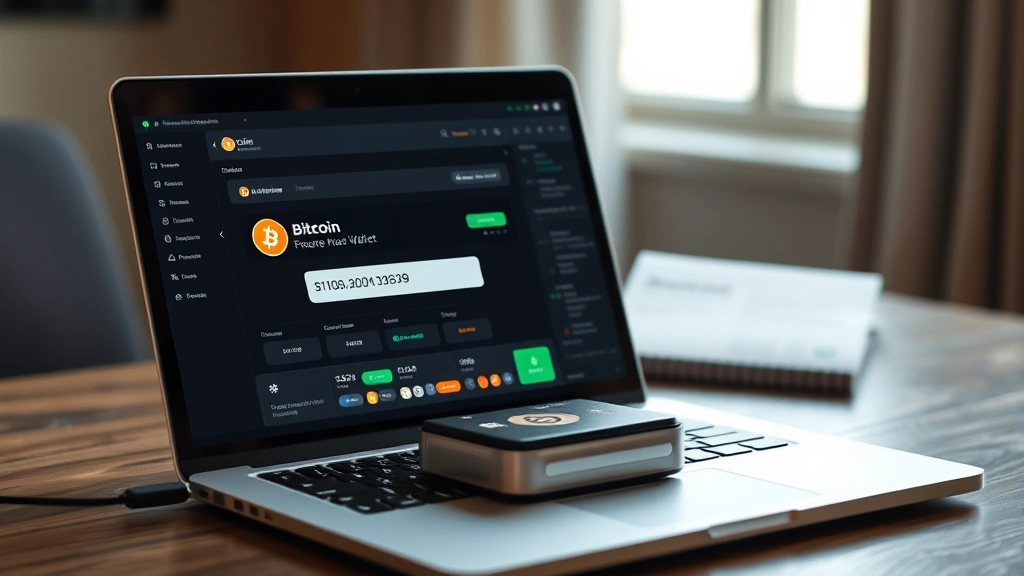
” alt=”Secure hardware wallet setup with privacy-focused laptop, displaying cryptocurrency wallet interface with Bitcoin address generation process”/>
Practical privacy workflow: A realistic approach for privacy-conscious Bitcoin acquisition might involve: (1) purchasing Bitcoin through a regulated exchange using standard KYC procedures for the initial acquisition, (2) immediately transferring to a self-custody hardware wallet to prevent exchange surveillance of subsequent movements, (3) optionally using mixing services for transaction privacy, and (4) avoiding transaction patterns that might flag accounts as suspicious. This approach acknowledges regulatory reality while implementing practical privacy measures where feasible.
” alt=”Abstract representation of blockchain privacy concepts with interconnected nodes, encryption symbols, and digital security visualization without text or identifiable information”/>
FAQ
Is buying Bitcoin anonymously illegal?
Purchasing Bitcoin itself is legal in most jurisdictions. However, the legality of the method depends on your location and intent. Using anonymous methods to hide taxable income or evade reporting requirements is illegal in virtually all countries. Privacy-conscious purchasing for legitimate reasons is generally legal, though increasingly regulated.
Can law enforcement trace anonymous Bitcoin purchases?
Modern blockchain analysis can often trace Bitcoin transactions, even those acquired through privacy-focused methods. Law enforcement has successfully identified users in cases involving significant funds or criminal activity. However, tracing becomes exponentially more difficult with proper privacy practices, mixing services, and time delays between transactions.
What’s the difference between anonymity and pseudonymity?
Pseudonymity means your identity isn’t attached to your transactions by default—wallet addresses appear as random strings. Anonymity means transactions cannot be linked to any individual. Bitcoin is pseudonymous, not anonymous. Achieving anonymity requires deliberate additional steps.
Are privacy-focused exchanges safe to use?
Legitimate privacy-focused exchanges operating in regulated jurisdictions with transparent operations can be as safe as conventional exchanges. However, the privacy-focused space also attracts fraudulent operators. Research operational history, regulatory licensing, user reviews, and security practices before using any exchange.
Does mixing Bitcoin make it completely untraceable?
Mixing services significantly increase transaction privacy and traceability cost, but sophisticated blockchain analysis can sometimes trace mixed coins. Mixing is a practical privacy tool, not absolute anonymity. Combined with other techniques and time delays, mixing substantially improves privacy without guaranteeing untraceable transactions.
What should I consider before pursuing anonymous Bitcoin acquisition?
Evaluate your genuine privacy needs against regulatory compliance requirements in your jurisdiction, the additional complexity and potential costs of privacy methods, security risks associated with P2P transactions, and counterparty risks with unregulated services. For most users, legitimate regulated channels combined with self-custody and mixing services provide adequate privacy without legal risk.


