Bitcoin Policy’s Impact on Markets: Expert Analysis
Government policies and regulatory frameworks have become the primary drivers of Bitcoin’s price movements and market sentiment. As institutions and policymakers worldwide grapple with cryptocurrency integration, understanding how policy decisions shape market dynamics has become essential for investors, traders, and analysts. The relationship between regulatory announcements and Bitcoin’s volatility reveals critical insights into market psychology and the cryptocurrency’s evolving role in global finance.
The Bitcoin Policy Institute and similar research organizations have documented how legislative proposals, central bank statements, and government enforcement actions create measurable market reactions. From SEC rulings on spot ETFs to international banking regulations, policy developments generate both immediate price swings and long-term structural changes in how Bitcoin trades and functions within traditional financial systems.

How Government Policies Shape Bitcoin Markets
Bitcoin’s price discovery mechanism operates differently from traditional assets because regulatory uncertainty creates persistent volatility. When policymakers signal restrictive stances toward cryptocurrency, market participants respond by adjusting their risk premiums and position sizing. The Bitcoin forecast for 2025 increasingly depends on anticipated policy developments rather than purely technical factors.
Policy announcements from major economies trigger cascading effects across global markets. A single statement from a Federal Reserve official regarding cryptocurrency regulation can shift Bitcoin’s valuation by hundreds of dollars within minutes. This sensitivity reflects the asset class’s dependence on regulatory clarity for mainstream adoption and institutional participation. The absence of clear policy frameworks creates a risk premium that suppressses Bitcoin’s correlation with traditional risk assets.
Governments face competing interests when developing Bitcoin policies. Central banks worry about monetary policy transmission and financial stability implications. Treasury departments focus on tax compliance and anti-money laundering objectives. Financial regulators emphasize consumer protection and market integrity. These competing mandates often produce inconsistent or contradictory policies across jurisdictions, creating arbitrage opportunities and market fragmentation.
The relationship between policy uncertainty and Bitcoin volatility has strengthened over time. Early adopters treated Bitcoin as a niche asset uncorrelated with government actions. Modern Bitcoin markets, however, exhibit heightened sensitivity to regulatory news because institutional capital now represents a substantial portion of trading volume. These sophisticated participants model policy probabilities into their valuations, creating feedback loops between policy expectations and market prices.
Regulatory Frameworks and Price Volatility
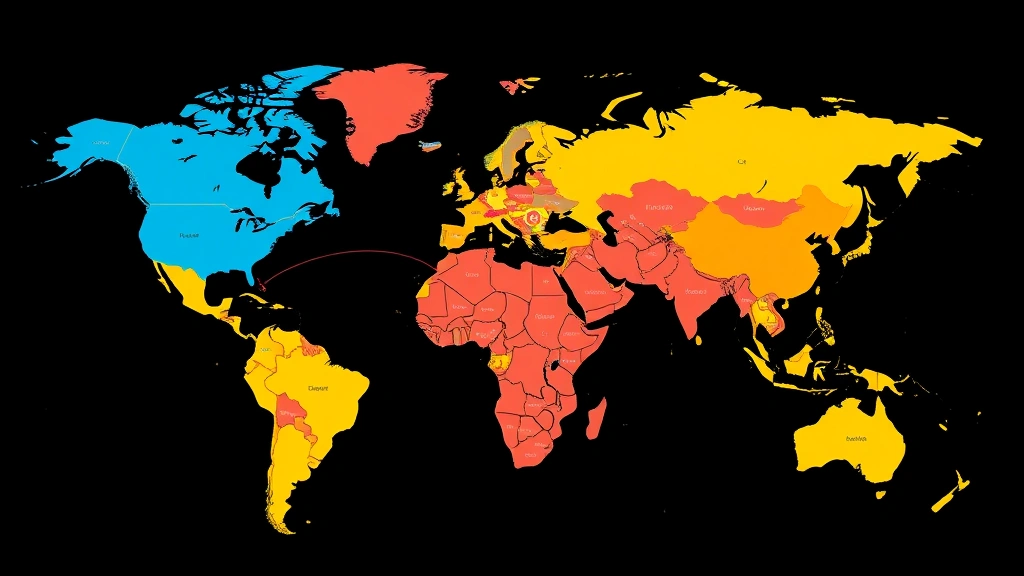
Different regulatory approaches across jurisdictions create distinct market structures and trading patterns. The European Union’s Markets in Crypto-Assets Regulation (MiCA) established comprehensive licensing requirements and operational standards. These regulations increased compliance costs but also enhanced market legitimacy and institutional confidence. Bitcoin prices in euro-denominated pairs showed reduced volatility following MiCA implementation as regulatory uncertainty diminished.
The United States maintains a fragmented regulatory approach where multiple agencies claim jurisdiction over different aspects of cryptocurrency markets. The SEC oversees spot Bitcoin ETFs and token offerings. The CFTC regulates Bitcoin futures contracts. FinCEN enforces anti-money laundering requirements. State regulators license money transmitters. This jurisdictional complexity creates compliance burdens that disproportionately affect smaller market participants while larger institutions navigate regulatory requirements more effectively.
When analyzing best indicators to use on Bitcoin charts, policy-sensitive traders incorporate regulatory calendars and legislative schedules. Congressional hearings on cryptocurrency regulation, SEC comment periods on proposed rules, and international regulatory coordination meetings all create predictable windows for policy-driven volatility. Sophisticated traders position ahead of these events, anticipating either bullish or bearish policy outcomes.
Regulatory clarity generally correlates with increased institutional participation and reduced price volatility. When jurisdictions establish clear licensing frameworks and operational standards, institutional asset managers gain confidence to allocate capital to Bitcoin. Singapore’s progressive regulatory approach attracted regional cryptocurrency exchanges and institutional investors. El Salvador’s Bitcoin legal tender status created a macroeconomic policy experiment with significant market implications, though practical adoption remained limited.
Conversely, regulatory crackdowns produce sharp price declines and sustained volatility. China’s 2021 cryptocurrency mining ban triggered a 40% decline in Bitcoin prices within weeks. The subsequent migration of mining operations to North America and other jurisdictions restructured the mining industry but demonstrated policy’s immediate market impact. Traders who understood the policy landscape positioned defensively ahead of the announcement, while those caught unprepared absorbed significant losses.
Central Banks and Monetary Policy Effects
Central bank monetary policy creates macroeconomic conditions that influence Bitcoin demand and valuation models. During periods of monetary tightening, rising interest rates increase the opportunity cost of holding non-yielding assets like Bitcoin. Conversely, accommodative monetary policy with low rates and quantitative easing creates conditions where investors seek inflation hedges and alternative stores of value.
The relationship between Bitcoin and global M2 money supply reveals important structural dynamics. Periods of rapid M2 growth, whether from central bank asset purchases or fiscal stimulus, historically precede Bitcoin price appreciation. This correlation reflects investor concerns about currency debasement and inflation, driving demand for non-correlated assets. Central banks’ policy communications about money supply management therefore create significant market implications for Bitcoin valuations.
The Federal Reserve’s 2022-2023 interest rate hiking cycle created headwinds for Bitcoin as real rates rose and alternative investments like Treasury bonds became more attractive. Bitcoin declined from $69,000 to below $17,000 during this period, demonstrating monetary policy’s powerful effects on risk asset valuations. As the Fed signaled potential rate cuts in 2024, Bitcoin recovered significantly, suggesting investors anticipated easier monetary conditions ahead.
Central bank digital currencies (CBDCs) present longer-term policy implications for Bitcoin markets. Some policymakers view CBDCs as competitive threats to Bitcoin adoption, potentially driving regulatory restrictions on private cryptocurrencies. Other central banks pursue CBDC projects while maintaining neutral or supportive stances toward Bitcoin, viewing cryptocurrency and digital currency as complementary rather than competitive. These divergent approaches create policy uncertainty that affects Bitcoin valuations across different regions.
Interest rate policy also influences Bitcoin mining economics and network security. Higher interest rates increase the opportunity cost of capital for mining operations, reducing profitability and network hash rate growth. Lower rates enable mining expansion and increased network security spending. This relationship between monetary policy and mining incentives creates feedback loops that affect Bitcoin’s long-term security and adoption trajectory.
Institutional Adoption Driven by Policy Clarity
Institutional investors require clear regulatory frameworks before committing significant capital to Bitcoin. The approval of spot Bitcoin ETFs in major markets represented a watershed moment for institutional adoption because it provided regulatory certainty and simplified custody solutions. The January 2024 spot Bitcoin ETF approvals in the United States triggered institutional inflows that supported price appreciation and reduced volatility compared to earlier periods.
Policy clarity enables institutional asset managers to integrate Bitcoin into diversified portfolios with clear risk management frameworks. When regulatory frameworks provide transparent rules for custody, trading, and reporting, institutional fiduciaries gain confidence to recommend Bitcoin allocations to clients. Insurance products, lending facilities, and derivative markets develop more readily in jurisdictions with established regulatory frameworks.
Understanding how to short Bitcoin effectively requires knowledge of regulatory constraints in different jurisdictions. Some regulators restrict short selling or impose additional capital requirements on bearish positions. These regulatory differences create hedging challenges for institutional investors managing Bitcoin exposure. Derivatives markets develop differently across jurisdictions based on regulatory treatment of futures, options, and synthetic instruments.
The Basel III regulatory framework for banks gradually incorporated Bitcoin and cryptocurrency holdings, establishing capital requirements and operational standards. This regulatory development opened pathways for banks to offer cryptocurrency services to institutional clients. However, the conservative capital requirements initially limited bank enthusiasm for large Bitcoin holdings, demonstrating how prudential regulation influences institutional demand patterns.
Pension funds and endowments increasingly consider Bitcoin allocations as policymakers clarify regulatory status and institutional infrastructure develops. Yale University’s endowment allocation to Bitcoin, made public in 2023, signaled institutional acceptance of cryptocurrency as a legitimate asset class. This institutional legitimacy depends directly on regulatory frameworks that provide confidence about asset permanence and trading accessibility.
Global Policy Divergence and Market Fragmentation
Different countries pursue contradictory Bitcoin policies, creating market fragmentation and regional price variations. El Salvador, the first nation to adopt Bitcoin as legal tender, created unique economic conditions where Bitcoin serves specific functions in the payment system. Hong Kong and Singapore pursue crypto-friendly regulatory frameworks to attract financial innovation and institutional capital. These contrasting approaches create divergent market structures and price discovery mechanisms.
Regulatory arbitrage opportunities emerge when different jurisdictions apply different tax treatments or compliance requirements to Bitcoin transactions. Traders and investors shift activities to lower-cost jurisdictions, creating trading volume concentrations in specific regions. Cryptocurrency exchanges located in permissive jurisdictions attract global trading volume, while exchanges in restrictive jurisdictions struggle to compete. This geographic fragmentation affects price discovery and liquidity distribution.
The CoinDesk news platform regularly covers policy developments across major jurisdictions, demonstrating the complexity of global Bitcoin regulatory landscape. No unified international framework governs Bitcoin regulation, creating persistent uncertainty about future policy directions. International organizations like the Financial Action Task Force (FATF) develop recommendations for cryptocurrency regulation, but implementation varies significantly across countries.
Sanctions and capital controls create additional policy-driven market dynamics. Countries facing international sanctions sometimes explore Bitcoin as a mechanism to circumvent financial restrictions. Iran, Russia, and North Korea have pursued cryptocurrency strategies to evade sanctions, creating geopolitical dimensions to Bitcoin policy. Western governments counter these strategies with regulatory restrictions on cryptocurrency transactions involving sanctioned entities, creating cat-and-mouse dynamics between policymakers and market participants.
Developing nations pursue different Bitcoin policies based on their macroeconomic conditions and financial infrastructure. Countries with high inflation rates and unstable currencies view Bitcoin as a hedge against currency debasement. Nations with weak financial systems see Bitcoin as a potential mechanism to improve financial inclusion. These diverse policy motivations create different Bitcoin demand patterns across regions and affect global price dynamics.
Future Policy Trends and Market Implications
Policymakers increasingly recognize Bitcoin’s role in global finance and pursue more sophisticated regulatory approaches rather than outright bans. This shift toward constructive engagement creates longer-term positive implications for Bitcoin adoption and price stability. However, regulatory frameworks continue evolving, creating persistent uncertainty about specific policy outcomes.
The relationship between how to read financial statements and Bitcoin valuation models demonstrates that traditional financial analysis increasingly applies to cryptocurrency markets. As regulatory frameworks mature and institutional participation increases, Bitcoin pricing increasingly reflects macroeconomic fundamentals rather than purely speculative sentiment. This evolution suggests future policy developments will have predictable market effects similar to traditional asset classes.
Tax policy represents an emerging area where government decisions significantly affect Bitcoin demand and trading patterns. Favorable capital gains treatment encourages Bitcoin investment, while punitive taxation discourages participation. Different jurisdictions pursue contradictory tax policies, creating incentives for investors to relocate or restructure transactions. Future tax policy harmonization could reduce these distortions and create more efficient global Bitcoin markets.
Environmental policy increasingly influences Bitcoin mining dynamics and investor sentiment. Regulations restricting fossil fuel electricity usage for mining operations affect mining profitability and network security. Conversely, policies incentivizing renewable energy development create competitive advantages for mining operations located in regions with abundant clean energy resources. These environmental policies create long-term structural changes in mining geography and economics.
Bitcoin mining policy specifically addresses environmental concerns, energy consumption, and local economic impacts. Some jurisdictions restrict mining operations due to environmental objections. Others actively recruit mining operations by offering favorable electricity rates and regulatory treatment. These mining-specific policies affect network security and Bitcoin’s long-term sustainability as a global monetary network.
The evolution of SEC regulatory guidance on cryptocurrency markets continues reshaping institutional participation and market structure. Future SEC decisions regarding token classification, custody standards, and trading rules will significantly affect Bitcoin trading volumes and price discovery mechanisms. Traders and investors should monitor SEC regulatory developments closely as indicators of future market direction.
International regulatory coordination through organizations like the Financial Action Task Force aims to establish consistent cryptocurrency standards across jurisdictions. Successful coordination could reduce regulatory arbitrage and create more uniform global markets. However, geopolitical tensions and competing national interests limit coordination effectiveness, suggesting persistent policy fragmentation for the foreseeable future.
Climate policy and sustainability standards increasingly affect Bitcoin’s regulatory treatment in developed markets. Institutional investors face pressure from environmental, social, and governance (ESG) mandates that restrict Bitcoin investments. Future policy developments addressing Bitcoin’s environmental impact through regulation or taxation could significantly affect demand from ESG-constrained investors. Conversely, improvements in Bitcoin mining’s renewable energy utilization could reduce these regulatory headwinds.
FAQ
How quickly do Bitcoin markets respond to policy announcements?
Bitcoin markets respond to major policy announcements within minutes, with price movements of 2-5% common following significant regulatory news. Futures markets react fastest, followed by spot exchanges and over-the-counter trading desks. Sophisticated traders position ahead of anticipated policy announcements, amplifying market reactions when news becomes public.
Which government policies have the biggest impact on Bitcoin prices?
SEC decisions regarding spot ETF approvals, Federal Reserve monetary policy statements, and major regulatory crackdowns create the largest Bitcoin price movements. International policy developments in major economies like the European Union, United Kingdom, and Singapore also significantly affect global Bitcoin valuations. Tax policy changes and mining regulations produce more gradual but substantial long-term effects.
Can Bitcoin investors predict policy-driven market movements?
Investors can anticipate policy developments by monitoring regulatory calendars, legislative schedules, and policymaker statements. However, predicting specific policy outcomes remains extremely difficult. Investors should focus on understanding how different policy scenarios would affect Bitcoin valuations rather than attempting to predict exact policy decisions. Scenario analysis and stress testing prove more useful than point forecasting for policy-driven market movements.
How does Bitcoin policy differ across countries?
Regulatory approaches vary dramatically across jurisdictions, from El Salvador’s Bitcoin legal tender status to China’s comprehensive mining bans. Singapore and Hong Kong pursue crypto-friendly frameworks, while the European Union implements comprehensive regulation through MiCA. The United States maintains fragmented regulation across multiple agencies. These differences create regulatory arbitrage opportunities and geographic price variations.
What role does the Bitcoin Policy Institute play in market development?
The Bitcoin Policy Institute conducts research on cryptocurrency regulation, publishes policy recommendations, and engages with policymakers on Bitcoin-related issues. Their research helps investors understand policy landscapes and anticipate future regulatory developments. While not a government body, their work influences policy discussions and provides valuable insights into emerging regulatory trends.
How will central bank digital currencies affect Bitcoin?
CBDC development could either complement or compete with Bitcoin depending on specific designs and policy approaches. CBDCs emphasizing central control and privacy restrictions might drive demand toward Bitcoin as a privacy-preserving alternative. CBDCs designed for international settlements might reduce Bitcoin’s utility for cross-border transactions. Future CBDC policies therefore create significant uncertainty about Bitcoin’s long-term role in global finance.


