Bitcoin vs XRP: Which is the Better Investment?
The cryptocurrency market presents investors with countless options, but two assets consistently dominate discussions: Bitcoin and XRP. Bitcoin, created in 2009, established itself as the world’s first decentralized digital currency and remains the market leader by capitalization. XRP, launched by Ripple in 2012, takes a different approach, focusing on facilitating fast, low-cost international payments for financial institutions. Understanding the differences between these two cryptocurrencies is essential for making informed investment decisions.
Choosing between Bitcoin and XRP requires examining their underlying technology, use cases, regulatory status, and market dynamics. While Bitcoin appeals to those seeking store-of-value properties and decentralization, XRP targets the cross-border payment market with institutional backing. This comprehensive guide breaks down the critical factors that distinguish these two digital assets and helps you determine which might align better with your investment goals and risk tolerance.
Understanding Bitcoin’s Foundation and Purpose
Bitcoin operates on a peer-to-peer network without central authority, embodying the principles outlined in Satoshi Nakamoto’s 2008 whitepaper. The cryptocurrency uses proof-of-work consensus mechanism, where miners validate transactions and secure the network by solving complex mathematical puzzles. This decentralized approach eliminates the need for banks or payment processors, allowing users to transact directly with one another.
The primary purpose of Bitcoin extends beyond simple transactions. Many investors view Bitcoin as digital gold—a store of value with limited supply. Bitcoin’s protocol caps the total supply at 21 million coins, creating inherent scarcity. This supply limitation, combined with increasing institutional adoption, has positioned Bitcoin as a hedge against inflation and currency devaluation. Understanding market capitalization helps investors recognize Bitcoin’s dominant position in the crypto ecosystem.
Bitcoin’s network effects strengthen its position continuously. As more users adopt Bitcoin, the network becomes more valuable and secure. Major corporations and institutional investors now hold Bitcoin on their balance sheets, legitimizing it as an alternative asset class. The cryptocurrency’s 15-year track record demonstrates resilience through multiple market cycles, regulatory challenges, and technological innovations.
Transaction finality on Bitcoin typically occurs within 10 minutes, though network congestion can extend this timeframe. The blockchain operates continuously, processing transactions 24/7 without intermediaries. This immutability and transparency appeal to users seeking financial sovereignty and protection from censorship.
The XRP Ecosystem and Ripple’s Vision
XRP represents a fundamentally different approach to cryptocurrency. Rather than decentralization as the primary goal, Ripple designed XRP to solve real-world problems in international finance. The token facilitates payments across the RippleNet network, which connects banks, payment providers, and money services businesses. Ripple’s technology enables institutions to settle cross-border transactions in seconds rather than days.
The XRP Ledger operates through a consensus mechanism that differs significantly from Bitcoin’s proof-of-work system. Instead of miners, a network of validators confirms transactions, making the process more energy-efficient and faster. Ripple maintains significant influence over the network and holds a substantial XRP reserve, which some argue contradicts true decentralization principles.
Ripple’s business model centers on institutional partnerships and adoption. Banks using RippleNet’s on-demand liquidity feature can settle international payments instantly without maintaining nostro accounts. This practical application addresses a genuine pain point in traditional finance, where cross-border transfers often take 3-5 business days. Major financial institutions, including SBI Remit and Siam Commercial Bank, have integrated Ripple’s solutions.
XRP’s utility within the Ripple ecosystem provides intrinsic value beyond speculation. The token facilitates liquidity and reduces transaction costs for financial institutions. However, this institutional focus means XRP’s value proposition differs substantially from Bitcoin’s peer-to-peer, decentralized vision. When learning how to read cryptocurrency charts, investors should recognize these fundamental differences reflected in price movements and adoption patterns.
Market Capitalization and Adoption
Bitcoin maintains overwhelming market dominance, with a market capitalization consistently exceeding $500 billion and often surpassing $1 trillion. This dominance reflects Bitcoin’s status as the primary cryptocurrency and its role as a benchmark for the entire digital asset class. Bitcoin’s adoption spans retail investors, institutional funds, corporations, and governments exploring central bank digital currencies.
XRP’s market capitalization typically ranges between $20-50 billion, placing it among the top cryptocurrencies but far behind Bitcoin. However, market capitalization alone doesn’t determine investment merit. XRP’s smaller market cap reflects its different purpose and narrower use case focused on institutional payments rather than universal adoption.
Understanding what market capitalization means reveals important distinctions between these assets. Bitcoin’s larger market cap indicates broader acceptance and liquidity, making it easier to buy and sell large quantities without significantly impacting price. XRP’s lower market cap means it experiences higher volatility and potentially greater price swings from institutional buying or selling.
Adoption metrics also differ significantly. Bitcoin’s network includes millions of addresses and transactions daily. XRP’s adoption concentrates within Ripple’s partner network and institutional customers. This distinction affects long-term value propositions—Bitcoin benefits from network effects as more individuals participate, while XRP’s value depends on Ripple’s success in converting traditional financial institutions to blockchain-based settlement.
Global awareness and accessibility favor Bitcoin substantially. Retail investors can purchase Bitcoin through virtually every cryptocurrency exchange, traditional brokerages, and even some banks. XRP enjoys similar exchange availability but lacks Bitcoin’s mainstream recognition and integration into traditional finance.

Technology and Transaction Speed
Bitcoin prioritizes security and decentralization over transaction speed. The network confirms transactions through energy-intensive proof-of-work, which ensures network security but limits throughput to approximately 7 transactions per second. This limitation has prompted discussions about scaling solutions, including the Lightning Network, which enables faster, off-chain transactions.
XRP’s technology achieves dramatically faster transaction settlement. The RippleNet consensus mechanism processes thousands of transactions per second, with typical settlement occurring in 3-5 seconds. This speed advantage directly addresses banking institutions’ needs for rapid settlement and liquidity management. For international payments, this represents a revolutionary improvement over traditional systems requiring multiple intermediaries and days for completion.
The tradeoff between Bitcoin and XRP reflects different design philosophies. Bitcoin sacrifices speed for uncompromising security and decentralization. Every node in the Bitcoin network can validate the entire blockchain independently, ensuring no single entity can manipulate the system. This redundancy and transparency come at the cost of transaction speed.
XRP’s faster architecture relies on a curated validator set, introducing elements of centralization. While Ripple continues expanding the validator network to reduce its influence, the system inherently differs from Bitcoin’s fully decentralized approach. This centralization enables efficiency but introduces counterparty risk that Bitcoin’s design eliminates.
Environmental impact represents another technological distinction. Bitcoin’s proof-of-work consensus requires substantial computational power and electricity consumption. Environmental concerns have prompted some investors to seek alternatives, though Bitcoin mining increasingly utilizes renewable energy. XRP’s consensus mechanism consumes negligible energy compared to Bitcoin, appealing to environmentally conscious investors.
Regulatory Landscape and Legal Challenges
Bitcoin’s regulatory status varies globally but generally faces less legal ambiguity than XRP. Most jurisdictions classify Bitcoin as property or a commodity rather than a security, providing clearer regulatory frameworks for investors. Bitcoin’s decentralization means no single entity bears responsibility for the network’s operation, simplifying regulatory compliance. The U.S. Commodity Futures Trading Commission classifies Bitcoin as a commodity, enabling futures trading and institutional investment through regulated channels.
XRP faces significantly more regulatory scrutiny and legal challenges. In December 2020, the U.S. Securities and Exchange Commission filed a lawsuit against Ripple, alleging that XRP constitutes an unregistered security. The SEC argued that Ripple sold XRP as an investment contract rather than a utility token, violating securities laws. This legal dispute creates substantial uncertainty for XRP investors and has impacted the token’s price and exchange listings.
The outcome of Ripple’s legal battles could fundamentally affect XRP’s investment thesis. If courts determine XRP is a security, the token may face restrictions on trading and use, potentially devastating its value. Conversely, a favorable ruling could clarify XRP’s status and unlock institutional investment. The ongoing litigation demonstrates regulatory risk that Bitcoin investors largely avoid due to Bitcoin’s established commodity classification.
International regulatory approaches differ significantly. Some countries embrace cryptocurrency innovation, while others impose strict restrictions or outright bans. Bitcoin’s prominence means most jurisdictions have developed specific Bitcoin regulations. XRP’s regulatory status remains less settled globally, introducing additional uncertainty. Investors should monitor regulatory developments closely, as government actions can dramatically impact cryptocurrency values and usability.
Financial institutions’ regulatory obligations also affect these assets differently. Banks using Ripple’s services must comply with existing financial regulations, which may limit their cryptocurrency involvement. Bitcoin’s peer-to-peer nature means retail users can transact without institutional intermediaries, though exchanges and custodians must meet regulatory requirements.
Investment Risk Factors
Both Bitcoin and XRP present distinct risk profiles that investors must carefully evaluate. Volatility represents the most obvious risk—cryptocurrency prices fluctuate dramatically based on market sentiment, regulatory news, and macroeconomic factors. Bitcoin’s volatility, while substantial, typically trails smaller cryptocurrencies like XRP, which can experience 20-30% price swings in single days.
Regulatory risk affects both assets but with different magnitudes. Bitcoin faces relatively stable regulatory frameworks in most developed economies, though potential bans or restrictions remain possible. XRP’s regulatory uncertainty, particularly regarding its potential classification as a security, introduces significant downside risk. An unfavorable legal determination could severely damage XRP’s value and utility.
Technological obsolescence presents another consideration. Bitcoin’s proof-of-work mechanism, while secure, may eventually yield to more efficient consensus mechanisms. Quantum computing could theoretically compromise Bitcoin’s cryptographic security, though experts debate the timeline and severity of this threat. Understanding quantum computing’s potential impact on Bitcoin helps investors assess long-term technological risks.
XRP’s centralization introduces counterparty risk. Ripple’s substantial XRP holdings mean the company’s actions directly impact token value. If Ripple faces financial difficulties, regulatory sanctions, or makes poor strategic decisions, XRP investors suffer direct consequences. Bitcoin’s decentralization eliminates this single-point-of-failure risk.
Liquidity risk varies between the assets. Bitcoin’s enormous market cap and global exchange availability ensure investors can liquidate positions quickly at reasonable prices. XRP’s smaller market cap means large sales could significantly impact price, though liquidity remains generally acceptable for most investor sizes.
Adoption risk also differs significantly. Bitcoin’s network effects and established position mean declining adoption is unlikely, though not impossible. XRP’s value depends on Ripple’s success in converting financial institutions to its platform. If banks develop competing solutions or regulatory barriers prevent adoption, XRP’s value proposition weakens substantially.
Price Volatility and Historical Performance
Bitcoin’s price history demonstrates both substantial gains and significant drawdowns. Since its 2009 inception, Bitcoin has experienced multiple boom-and-bust cycles, including the 2017-2018 crash that saw prices decline over 80% from peaks. However, Bitcoin’s long-term trajectory shows impressive appreciation, with early investors realizing extraordinary returns. Understanding historical Bitcoin price movements provides context for evaluating volatility patterns.
Bitcoin’s volatility has gradually declined as the asset class matured and institutional adoption increased. Early Bitcoin investors experienced extreme price swings, while current investors typically see more moderate daily fluctuations, though substantial monthly or yearly changes remain common. This trend suggests Bitcoin may continue stabilizing as adoption deepens.
XRP’s price history shows even greater volatility than Bitcoin. XRP surged dramatically in 2017-2018, reaching over $3 per token before collapsing to under $0.20. The 2020-2021 bull market saw XRP recover substantially, but the December 2020 SEC lawsuit triggered another sharp decline. XRP’s price remains highly sensitive to regulatory news and Ripple developments, creating outsized volatility compared to Bitcoin.
Correlation between Bitcoin and XRP exists but remains imperfect. Bitcoin’s price movements often drive broader cryptocurrency market sentiment, affecting most digital assets including XRP. However, XRP-specific news, regulatory developments, and Ripple partnerships can move XRP independently of Bitcoin. Investors seeking diversification within cryptocurrency should recognize these different price drivers.
Risk-adjusted returns require considering both price appreciation potential and volatility. Bitcoin’s larger price swings in absolute terms are offset by its more stable long-term trend. XRP offers potentially higher returns for risk-tolerant investors but with greater downside risk and regulatory uncertainty. Conservative investors typically prefer Bitcoin’s established track record and clearer regulatory framework.
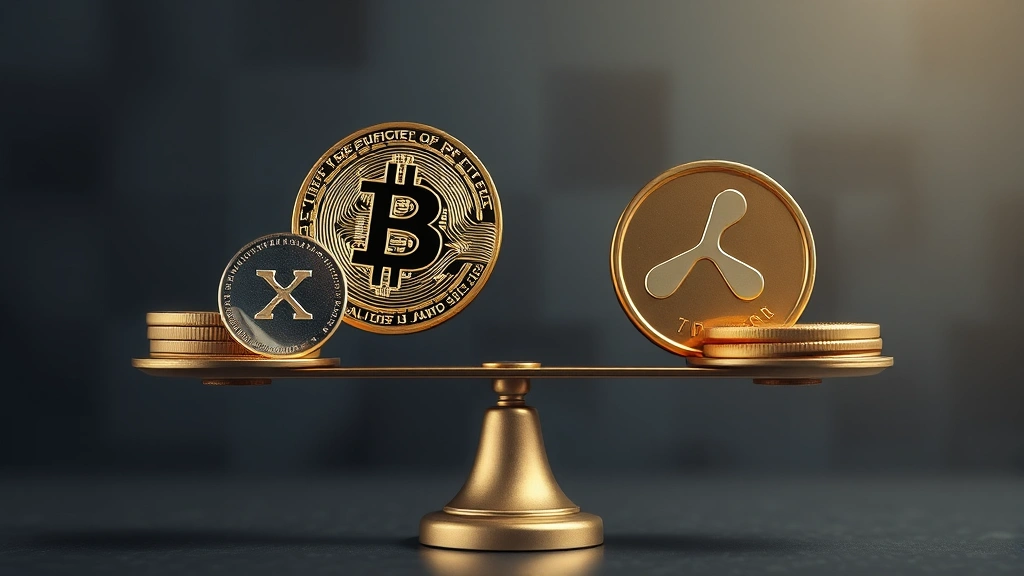
Making Your Investment Decision
Selecting between Bitcoin and XRP depends on your investment goals, risk tolerance, and time horizon. Bitcoin suits investors seeking a long-term store of value with established market infrastructure and clearer regulatory status. Bitcoin’s limited supply, decentralization, and network effects position it as a potential hedge against inflation and currency devaluation. If you value financial sovereignty and believe in cryptocurrency’s long-term adoption, Bitcoin represents the safer choice between these two assets.
XRP appeals to investors believing in Ripple’s institutional payment solution and willing to accept higher volatility and regulatory risk for potentially greater returns. If you predict rapid adoption by financial institutions and favorable legal outcomes for Ripple, XRP could deliver substantial appreciation. However, this requires conviction about Ripple’s competitive advantages over traditional payment systems and potential competitors.
Many investors adopt a balanced approach, allocating to both Bitcoin and XRP rather than choosing exclusively. This strategy captures Bitcoin’s stability and XRP’s upside potential while managing overall portfolio risk. The appropriate allocation depends on your risk tolerance—conservative investors might favor 70-80% Bitcoin with 20-30% XRP, while aggressive investors might reverse this ratio.
Before investing, consider factors beyond these two assets. Understanding investment fees and expenses associated with cryptocurrency purchases ensures you’re not overpaying through high-cost intermediaries. Exchange fees, custody costs, and transaction charges can significantly impact returns, particularly for smaller investments.
Security represents another critical consideration. Whether storing Bitcoin or XRP, ensure you use secure custody solutions. Cold storage wallets provide maximum security but less convenience, while exchange accounts offer accessibility with increased counterparty risk. Evaluate your security comfort level and technical expertise before deciding on custody arrangements.
Dollar-cost averaging—investing fixed amounts at regular intervals—can reduce timing risk for both assets. Rather than attempting to predict optimal entry points, consistent investments smooth out volatility and reduce the impact of poor timing decisions. This approach suits investors uncertain about short-term price direction but confident in long-term prospects.
Finally, never invest money you cannot afford to lose. Both Bitcoin and XRP remain volatile, speculative assets despite their improvements in stability and adoption. Cryptocurrency should represent only a portion of a diversified investment portfolio. If losing your entire investment would cause financial hardship, reduce your cryptocurrency allocation accordingly.
FAQ
Is Bitcoin safer than XRP?
Bitcoin generally presents lower risk due to its established regulatory status, decentralized architecture, and larger market cap. XRP faces regulatory uncertainty from ongoing SEC litigation and relies on Ripple’s continued success. However, “safer” depends on your specific concerns—Bitcoin’s volatility exceeds XRP’s in some periods, while XRP’s regulatory risk exceeds Bitcoin’s.
Can XRP reach Bitcoin’s price?
XRP’s current price significantly trails Bitcoin’s, but comparing prices directly is misleading since these tokens have different supply levels and purposes. For XRP’s market capitalization to approach Bitcoin’s, the token’s value would need to appreciate substantially. Whether this occurs depends on institutional adoption and regulatory clarity.
Should I invest in Bitcoin or XRP?
The choice depends on your investment philosophy and risk tolerance. Bitcoin suits investors seeking a decentralized store of value with established market infrastructure. XRP appeals to those betting on institutional payment adoption and willing to accept regulatory risk. Many investors hold both for diversification.
What are the main differences between Bitcoin and XRP?
Bitcoin operates through decentralized proof-of-work consensus and prioritizes financial sovereignty. XRP uses centralized validators and targets institutional cross-border payments. Bitcoin has limited supply and no central authority, while Ripple controls significant XRP reserves and influences network decisions. Bitcoin processes ~7 transactions per second, while XRP processes thousands.
How do I buy Bitcoin or XRP safely?
Purchase cryptocurrency through established, regulated exchanges and use secure custody solutions. For beginners, exchange-based wallets offer convenience, while serious investors should consider hardware wallets or institutional custody. Learn about purchasing options and security considerations before committing funds.
Will XRP win the payments war?
XRP’s success depends on Ripple converting financial institutions to blockchain-based settlement. While Ripple has secured partnerships, traditional finance and competing blockchain solutions present significant competition. XRP’s regulatory status and centralization concerns may limit adoption among some institutions.


