Can Raspberry Pi Mine Bitcoin? Expert Review
The idea of mining Bitcoin on a Raspberry Pi—a credit-card-sized, affordable computer—has captivated cryptocurrency enthusiasts for years. It represents the democratization dream: anyone with minimal investment can participate in securing the Bitcoin network and earn rewards. However, the reality of Raspberry Pi Bitcoin mining is far more complex than the narrative suggests. This comprehensive guide explores whether mining Bitcoin on a Raspberry Pi is feasible, profitable, and worth your time and electricity costs.
Bitcoin mining has evolved dramatically since Satoshi Nakamoto’s whitepaper in 2008. What started as a hobby on personal computers has transformed into an industrial operation dominated by specialized hardware and massive mining farms. Understanding where Raspberry Pi mining fits in this landscape requires examining the technical specifications, economic realities, and practical challenges involved. We’ll break down the myths, present the facts, and help you make an informed decision about whether this venture is right for you.
How Bitcoin Mining Works
Bitcoin mining is the process by which new bitcoins are created and transactions are validated on the blockchain. Miners compete to solve complex mathematical puzzles using the SHA-256 hashing algorithm. The first miner to solve the puzzle gets to add a new block to the blockchain and receives a reward—currently 6.25 BTC plus transaction fees (as of 2024, though this halves approximately every four years).
The difficulty of these mathematical puzzles adjusts every 2,016 blocks (approximately two weeks) to maintain an average block time of 10 minutes, regardless of total network hash rate. This is crucial: as more miners join the network and computational power increases, the difficulty increases proportionally. This mechanism ensures that mining becomes progressively harder over time, which directly impacts the viability of using consumer-grade hardware like Raspberry Pi.
Mining difficulty is measured in terahashes per second (TH/s). Currently, the Bitcoin network requires approximately 84 trillion terahashes to mine one block. A single Raspberry Pi can produce only a fraction of a gigahash per second when paired with basic USB mining hardware—making the mathematical odds of solving a block virtually impossible without joining a mining pool.
Mining pools allow individual miners to combine their computational power. When a pool successfully mines a block, the reward is distributed among members based on their contributed hash rate. This approach offers more consistent, albeit smaller, payouts compared to solo mining.

Raspberry Pi Specifications and Limitations
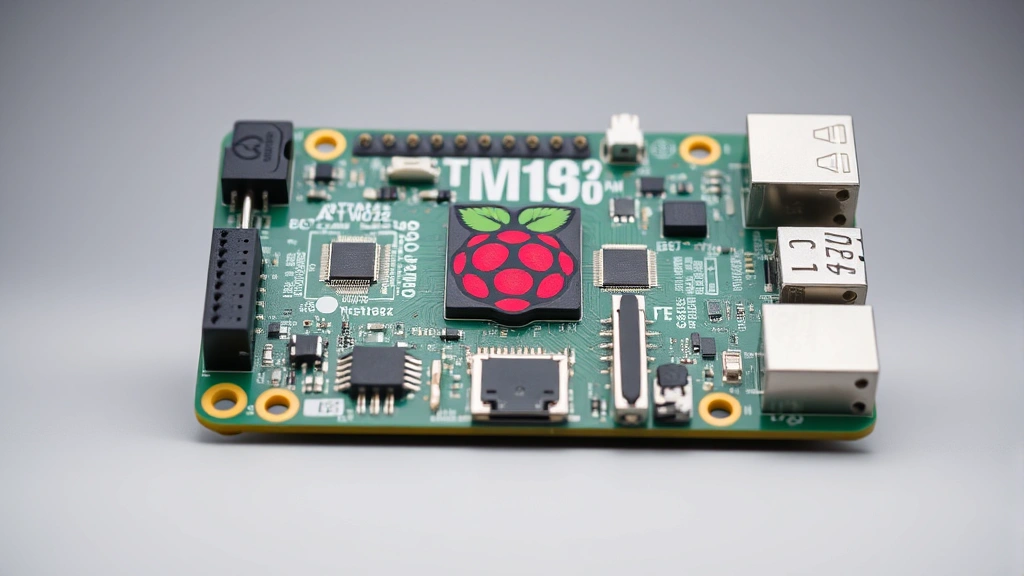
The Raspberry Pi is a marvel of modern engineering—a full-featured computer costing between $35-75 depending on the model. The latest models (Raspberry Pi 5) feature quad-core ARM processors, up to 8GB RAM, and modest power consumption around 5-10 watts during normal operation. These specifications are excellent for educational projects, home servers, and IoT applications.
However, Bitcoin mining presents a fundamentally different challenge. The Raspberry Pi’s CPU is simply not designed for cryptographic hashing operations at the scale required for mining. Its ARM architecture processes instructions sequentially at speeds measured in single-digit gigahertz. Modern ASIC (Application-Specific Integrated Circuit) miners, by contrast, are purpose-built for SHA-256 hashing and achieve terahash-scale performance.
The processor bottleneck is only one limitation. Raspberry Pi boards have limited USB bandwidth (typically 480 Mbps on USB 2.0 or 5 Gbps on USB 3.0 in newer models). Mining hardware communicates through USB, and this bandwidth constraint can limit the number and type of external mining devices you can efficiently connect. Additionally, thermal management becomes problematic when running intensive mining operations for extended periods—Raspberry Pi boards lack sophisticated cooling solutions.
Memory constraints also matter. Mining software requires adequate RAM to maintain blockchain data and manage mining algorithms. While 8GB is sufficient for basic operations, it’s not optimal for serious mining endeavors. The onboard storage (typically microSD card with 32-256GB) is fast enough for most purposes but slower than enterprise-grade storage solutions used in professional mining operations.
Mining Hardware Requirements
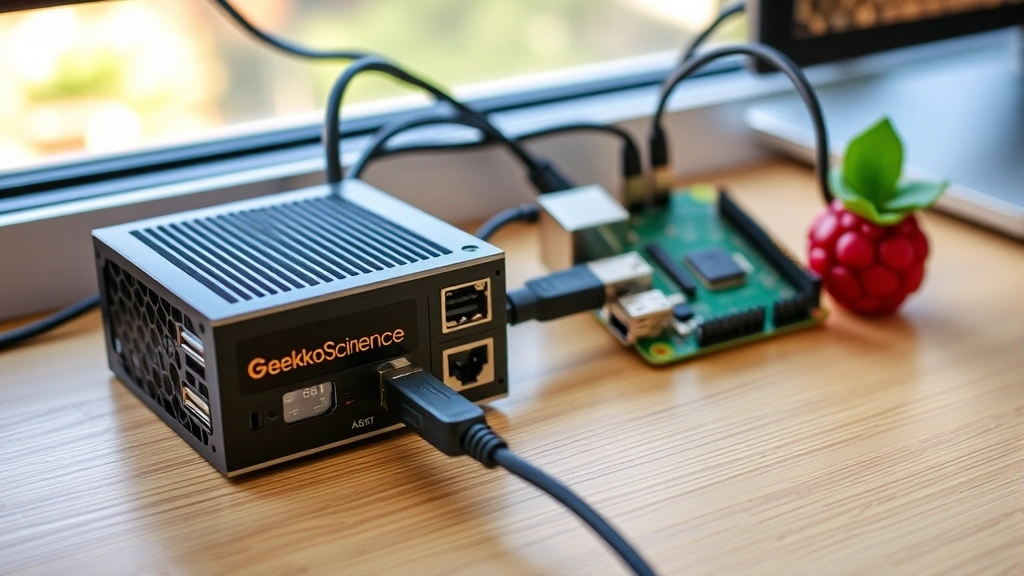
To mine Bitcoin with a Raspberry Pi, you cannot rely solely on the board’s CPU or GPU. Instead, you must connect external ASIC mining hardware via USB. Several ASIC miners are theoretically compatible with Raspberry Pi, including the Antminer U3, GekkoScience Compac F4, and BraiinsOS-compatible devices.
The GekkoScience Compac F4 represents one of the most practical options for Raspberry Pi mining. It’s a USB ASIC miner delivering approximately 16 GH/s (gigahashes per second) and consuming only 2.5-5 watts. Despite these modest specifications by professional standards, it remains impractical for meaningful Bitcoin mining at current difficulty levels. At current Bitcoin projection metrics, the Compac F4 would require approximately 1,800 years to mine a single Bitcoin solo.
The Antminer S9, an older but still-functional ASIC miner, delivers 14 TH/s but consumes 1,375 watts—far exceeding what a Raspberry Pi’s power supply can handle. This illustrates a critical point: most profitable ASIC miners are incompatible with Raspberry Pi’s limited power delivery capabilities.
Some enthusiasts attempt to connect multiple USB miners to a Raspberry Pi, but this approach faces practical limitations. Each additional device increases power draw, USB bandwidth competition, and heat generation. Most setups max out at 2-3 USB miners before stability issues emerge.
For context on mining economics, understanding how long to mine 1 Bitcoin with consumer hardware reveals why this endeavor is largely impractical in 2024-2025.
Profitability Analysis
Let’s examine the profitability scenario with concrete numbers. Assume you invest in a GekkoScience Compac F4 (approximately $50-100 used) and already own a Raspberry Pi ($50-75). Your total hardware investment is roughly $100-175.
The Compac F4’s 16 GH/s hash rate, when joined to a mining pool, generates approximately $0.15-0.30 per month in mining rewards at current Bitcoin prices and difficulty levels. This assumes 24/7 operation with minimal downtime. After accounting for electricity costs (roughly $2-5 per month for the Raspberry Pi and miner combined), you’re operating at a loss or break-even at best.
Even if Bitcoin’s price surges significantly, the fundamental issue remains: your hash rate is infinitesimal compared to the total network hash rate (currently exceeding 600 exahashes per second). Your share of mining rewards diminishes as network difficulty increases, which it historically does over time.
Mining pool payouts are distributed based on contributed hash power. Your tiny contribution means tiny payouts. Most mining pools have minimum withdrawal thresholds ($5-20), meaning you might wait months to accumulate enough earnings to withdraw.
The opportunity cost is substantial. The time spent researching, configuring, troubleshooting, and monitoring could be invested in other income-generating activities. For most people, purchasing Bitcoin directly through a cryptocurrency exchange would be more economical than attempting to mine it with consumer hardware.
However, some miners justify the endeavor based on Bitcoin funding rates and long-term appreciation potential. If you believe Bitcoin will increase in value significantly and you’re willing to forgo immediate profitability, accumulating even small amounts through mining might appeal to you from a philosophical or educational standpoint.
Power Consumption and Costs
Electricity represents the primary ongoing cost in mining operations. A Raspberry Pi 5 consumes approximately 5-10 watts during normal operation. Adding a GekkoScience Compac F4 increases consumption to roughly 7-15 watts total (the miner itself uses 2.5-5 watts, but power supply inefficiencies add overhead).
At 15 watts continuous operation, your monthly electricity consumption is 10.8 kWh (15 watts × 24 hours × 30 days ÷ 1000). In the United States, average electricity costs approximately $0.14 per kWh, resulting in monthly costs around $1.51. In expensive regions like California or Hawaii, costs could reach $3-5 monthly. In countries with subsidized electricity, costs might be lower, but this is irrelevant in most developed nations where mining profitability is already marginal.
Over a year, electricity costs total $18-60 depending on your region. This might seem negligible, but when monthly mining rewards are $0.15-0.30, you’re operating at a loss unless Bitcoin appreciates dramatically.
Power efficiency matters more as you scale. Professional mining operations obsess over watts-per-terahash metrics because even small efficiency improvements multiply across thousands of devices. For Raspberry Pi mining, efficiency is less relevant since profitability is already impossible through rewards alone.
The real financial argument for Raspberry Pi mining hinges on Bitcoin price appreciation. If you believe Bitcoin will increase from $40,000 to $100,000+ in the coming years, accumulating even tiny amounts through mining becomes valuable in retrospect. This is speculation rather than rational profit-seeking, but it’s the honest assessment of the situation.
Practical Setup and Configuration
If you’re determined to attempt Raspberry Pi Bitcoin mining despite the economic realities, here’s how to proceed. First, install a suitable operating system. Most miners use Raspberry Pi OS or Ubuntu, configured with mining software like CGMiner, BFGMiner, or pool-specific software.
Next, select a mining pool. Popular options include Slush Pool, F2Pool, and Bitcoin.com Pool. Register an account and create worker credentials for your Raspberry Pi setup.
Connect your ASIC mining hardware via USB to the Raspberry Pi. Install appropriate drivers and mining software. Configure your mining software with pool credentials and mining parameters. Monitor performance through the mining software dashboard and pool statistics.
Thermal management is critical. Ensure adequate ventilation around your Raspberry Pi. Consider adding a small cooling fan. Monitor CPU temperatures regularly—sustained operation above 80°C risks hardware degradation.
Many miners document their experiences on GitHub and cryptocurrency forums. These communities provide invaluable troubleshooting assistance and real-world insights. Before investing, review recent experiences from other Raspberry Pi miners to understand current challenges.
Understanding whether Bitcoin is going to crash matters for your long-term mining strategy, as market volatility affects profitability calculations and your willingness to continue.
Environmental Impact
Bitcoin mining consumes substantial electricity globally—estimates suggest 150+ terawatt-hours annually. However, individual Raspberry Pi mining operations consume negligibly from an environmental perspective. A single Raspberry Pi miner uses approximately 131 kWh annually, equivalent to running a typical household LED bulb continuously.
The broader environmental concern relates to Bitcoin mining’s aggregate energy consumption and carbon footprint. This depends heavily on your electricity grid’s energy sources. If powered by renewable energy, environmental impact is minimal. If powered by fossil fuels, your mining contributes to emissions—though your individual contribution is trivial.
Some argue that Bitcoin mining incentivizes development of renewable energy infrastructure and provides economic uses for stranded renewable energy in remote locations. Others contend that mining diverts clean energy from other productive uses. This debate continues among environmentalists, technologists, and economists.
For Raspberry Pi specifically, the environmental concern is negligible. Focus your environmental concerns on larger mining operations if this matters to you philosophically.
Consider also the electronic waste implications. ASIC miners become obsolete as network difficulty increases and newer, more efficient hardware emerges. Proper recycling of electronic components is important. Raspberry Pi boards, being general-purpose computers, have longer useful lifespans and can be repurposed for other projects, reducing waste.
Recent trends in Bitcoin dominance and pros and cons of cryptocurrency discussions increasingly incorporate environmental considerations, reflecting growing awareness of mining’s ecological footprint.
FAQ
Is Raspberry Pi Bitcoin mining profitable in 2024-2025?
No, not in any conventional sense. Monthly mining rewards ($0.15-0.30) are typically exceeded by electricity costs ($1.51-5.00). Profitability depends entirely on Bitcoin price appreciation, which is speculation rather than reliable income generation.
How much Bitcoin can a Raspberry Pi mine?
A Raspberry Pi with a GekkoScience Compac F4 miner might accumulate 0.00001-0.0001 BTC monthly depending on pool luck and difficulty. At current prices, this represents $0.15-3.00 monthly—far below profitability thresholds.
What’s the fastest way to accumulate Bitcoin with a Raspberry Pi?
Purchasing Bitcoin directly through exchanges is orders of magnitude faster and more economical than mining. If you’re interested in mining for educational purposes, that’s legitimate, but acknowledge it’s not a practical wealth-building strategy.
Can multiple Raspberry Pis mine together?
Yes, you can network multiple Raspberry Pis, but each operates as a separate mining node. They don’t combine computing power—you’re simply running multiple independent mining operations. Each faces the same profitability challenges individually.
What about mining altcoins instead of Bitcoin?
Some altcoins are more CPU/GPU-friendly than Bitcoin. However, most profitable altcoins also use ASIC-resistant algorithms that are still impractical on Raspberry Pi. Research specific coins, but expect similar profitability challenges. Regulatory uncertainty around altcoins adds additional risk.
Is Raspberry Pi mining worth it for the learning experience?
Absolutely, if approached as an educational project. Understanding blockchain technology, mining mechanics, and cryptocurrency economics through hands-on experimentation has value beyond financial returns. Many developers and crypto professionals started with Raspberry Pi mining projects.
What’s the best mining pool for Raspberry Pi users?
Slush Pool is historically reliable and beginner-friendly. CoinDesk and other crypto news sources regularly review mining pools. Choose based on transparency, fee structure (typically 1-2%), and community reputation.
How do I track my mining rewards?
Most mining pools provide real-time dashboards showing your hash rate, estimated earnings, and withdrawal history. You can also track transactions on blockchain explorers by monitoring your wallet address.
Is it legal to mine Bitcoin on a Raspberry Pi?
Bitcoin mining is legal in most countries. However, some jurisdictions have restrictions or taxation implications. Check local regulations before starting. Additionally, verify your electricity contract doesn’t prohibit mining operations—some landlords or ISPs restrict this activity.
What happens when Bitcoin halving occurs?
Bitcoin halving reduces block rewards by 50% (next occurrence in 2028). This makes mining progressively less profitable unless Bitcoin price increases proportionally. Halving events are scheduled approximately every four years and are fundamental to Bitcoin’s monetary policy.


