Bitcoin’s Impact on Art: Expert Insights
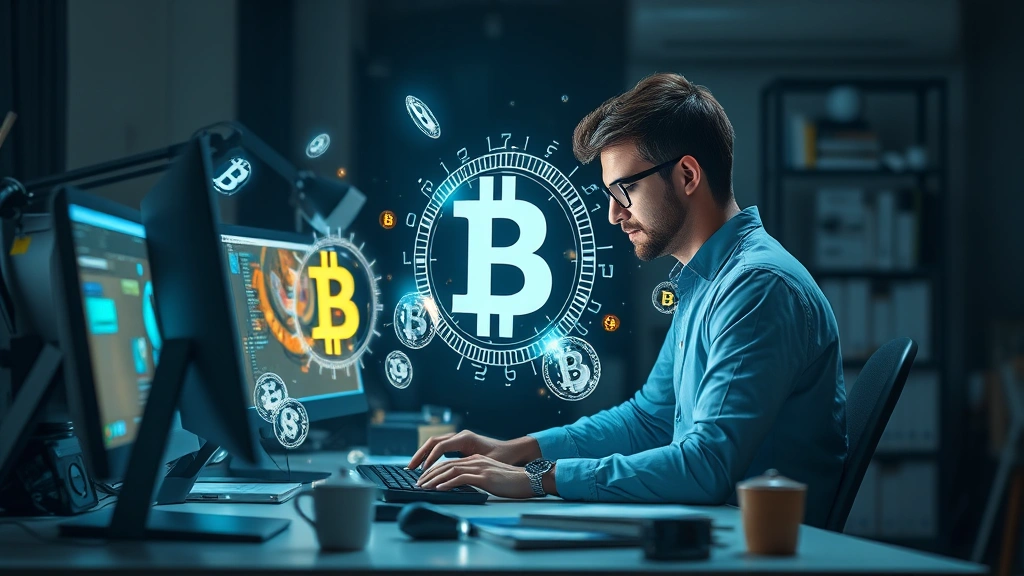
The intersection of Bitcoin and contemporary art represents one of the most fascinating cultural phenomena of the 21st century. What began as a purely technological innovation has evolved into a transformative force reshaping how artists create, distribute, and monetize their work. From digital masterpieces selling for millions to blockchain-verified authenticity certificates, Bitcoin and its underlying technology have fundamentally altered the art world’s landscape.
This comprehensive exploration examines how cryptocurrency, particularly Bitcoin, has influenced artistic expression, collector behavior, and the very definition of ownership in the digital age. We’ll delve into expert perspectives on this dynamic intersection and explore the implications for both established and emerging artists navigating this new frontier.
The Evolution of Digital Art and Cryptocurrency
The relationship between Bitcoin and art didn’t emerge overnight. Prior to cryptocurrency’s mainstream adoption, digital artists struggled with fundamental challenges: how to prove ownership of intangible assets, prevent unauthorized copying, and establish scarcity in a medium where perfect duplication is trivial. Bitcoin’s blockchain technology provided an elegant solution to these centuries-old art world problems.
When Satoshi Nakamoto introduced Bitcoin in 2009, few anticipated its application beyond financial transactions. However, the underlying blockchain architecture—a distributed ledger recording every transaction immutably—offered unprecedented possibilities for digital asset verification. This innovation attracted forward-thinking artists and technologists who recognized the potential to create verifiable scarcity in the digital realm.
The early 2010s witnessed experimental projects like Colored Coins and later Counterparty, which layered additional functionality onto Bitcoin’s blockchain. These protocols enabled artists to embed ownership information directly into the immutable ledger, creating the conceptual foundation for what would eventually become Non-Fungible Tokens (NFTs). Artists like Kevin McCoy and Anil Dash pioneered this space, though their groundbreaking work initially received minimal recognition.
Understanding current Bitcoin price prediction trends helps contextualize how market volatility influences art investment decisions. When Bitcoin valuations surge, collectors with cryptocurrency holdings often redirect portions into digital art, creating observable market cycles within the crypto-art ecosystem.
NFTs and Bitcoin’s Role in Art Authentication
While Ethereum emerged as the primary blockchain for NFT creation due to its smart contract capabilities, Bitcoin’s foundational technology and brand recognition continue influencing the broader crypto-art narrative. Bitcoin’s immutability and security characteristics established the gold standard for blockchain reliability, which subsequent art-focused platforms emulate.
NFTs represent the most visible manifestation of blockchain technology in art, yet this application extends Bitcoin’s core principles into the cultural sphere. Each NFT functions as a cryptographically secured certificate of authenticity and ownership, addressing the art world’s perpetual authentication challenge. Unlike traditional certificates of authenticity—which can be forged—blockchain-based certificates become exponentially harder to counterfeit as more computational power secures the network.
Expert art market analysts note that Bitcoin’s established reputation for security provided psychological comfort to early NFT collectors. When Beeple’s “Everydays: The First 5000 Days” sold for $69.3 million at Christie’s in March 2021, it validated the conceptual framework Bitcoin had established: digital scarcity is real, verifiable, and economically valuable. This landmark sale demonstrated that blockchain-authenticated art could command prices rivaling traditional contemporary art.
The authentication mechanism works through cryptographic hashing, where each artwork receives a unique digital fingerprint. Any alteration to the underlying file produces a completely different hash, making fraud detectable. This technology, which Bitcoin pioneered, ensures collectors possess genuine proof of ownership rather than merely possessing a file that could be duplicated infinitely.
Leading institutions have begun recognizing this authentication value. Museums and galleries now accept blockchain verification as legitimate provenance documentation, fundamentally restructuring how art historical records are maintained. This shift validates Bitcoin’s technological legacy while democratizing access to professional-grade authentication previously available only through expensive traditional channels.

Market Dynamics: How Bitcoin Affects Art Pricing
Bitcoin’s market performance directly influences crypto-art valuations through multiple interconnected mechanisms. When Bitcoin experiences significant appreciation, the cryptocurrency holdings of wealthy collectors expand, increasing their purchasing power for digital assets. Conversely, bear markets create liquidity pressures that can suppress art prices as collectors prioritize securing their cryptocurrency positions.
The correlation between Bitcoin volatility and art market activity reveals sophisticated behavioral economics at play. During Bitcoin’s 2017 bull run, digital art sales exploded alongside cryptocurrency valuations. When the market corrected in 2018, art market activity contracted correspondingly. This cyclical pattern repeated during the 2021-2022 period, with art sales reaching unprecedented heights during Bitcoin’s peak before declining during the subsequent bear market.
Expert market analysts emphasize that Bitcoin’s price movements serve as a leading indicator for crypto-art market sentiment. Bitcoin technical analysis frameworks adapted for art market prediction have proven surprisingly effective, as the same investor psychology driving Bitcoin trading also influences digital art acquisition decisions.
Institutional adoption of Bitcoin has further legitimized crypto-art as an investment asset class. When major corporations and funds announced Bitcoin holdings, it signaled mainstream acceptance that extended credibility to related technologies and applications. This institutional validation encouraged wealthy collectors to explore digital art with greater confidence, knowing the underlying blockchain infrastructure received serious institutional scrutiny.
Pricing mechanisms in crypto-art markets have evolved to reflect Bitcoin’s influence. Many platforms price digital artworks in Bitcoin or Bitcoin-equivalent values, establishing Bitcoin as a de facto standard of value within the ecosystem. This convention strengthens the psychological association between Bitcoin and digital art ownership, reinforcing the narrative that cryptocurrency represents the native currency for digital asset transactions.
Artists Embracing Blockchain Technology
Progressive artists have recognized Bitcoin’s technological underpinnings as liberating force enabling direct relationships with collectors while eliminating intermediaries who traditionally captured substantial portions of art sales proceeds. This disintermediation represents perhaps the most significant economic impact of cryptocurrency on artistic practice.
Contemporary digital artists including Pak, Refik Anadol, and Grimes have built substantial careers around blockchain-authenticated work. These artists leverage Bitcoin’s credibility and the broader cryptocurrency ecosystem’s infrastructure to reach global audiences without gallery representation. Their success demonstrates that blockchain authentication satisfies collector demand for legitimacy while enabling artists to retain greater economic control.
The technical sophistication required to engage with blockchain art has decreased substantially, democratizing participation. Artists previously requiring computer science expertise can now mint NFTs through user-friendly platforms, focusing energy on creative work rather than technical implementation. This accessibility has expanded the diversity of artistic voices within the crypto-art space.
Established artists including Damien Hirst and Takashi Murakami have experimented with blockchain-based releases, bringing traditional art world credibility to digital formats. Their participation signals that blockchain art represents genuine artistic evolution rather than speculative bubble. These institutional endorsements accelerate mainstream acceptance of cryptocurrency-authenticated work.
Financial incentives drive artistic adoption of blockchain technologies. Smart contracts enable artists to receive royalties automatically whenever their work resells, a capability absent in traditional art markets where secondary sales benefit only dealers and collectors. This mechanism ensures artists participate economically in their work’s appreciation, fundamentally restructuring art world economics in artists’ favor.
Understanding how to invest in cryptocurrency has become essential knowledge for contemporary artists seeking to engage with blockchain-based distribution systems. Educational resources increasingly include cryptocurrency fundamentals alongside traditional art business instruction, reflecting the technology’s integration into contemporary artistic practice.
Challenges and Criticisms in Crypto Art
Despite transformative potential, Bitcoin and crypto-art face legitimate criticisms that experts acknowledge require serious consideration. Environmental concerns regarding blockchain energy consumption represent perhaps the most substantive critique. Bitcoin’s proof-of-work consensus mechanism requires enormous computational resources, consuming electricity equivalent to small nations’ power usage.
Environmental advocates argue that artists promoting blockchain-authenticated work inadvertently endorse energy-intensive infrastructure conflicting with sustainability values many contemporary artists embrace. This tension has prompted development of more energy-efficient blockchain alternatives, though Bitcoin’s dominance persists due to its security and network effects.
Market manipulation and speculation concerns plague crypto-art ecosystems. The relative illiquidity of digital art compared to cryptocurrencies creates conditions where prices can be artificially inflated through coordinated trading activity. Experts warn that some crypto-art purchases represent speculative bets on cryptocurrency appreciation rather than genuine artistic appreciation, creating bubble conditions vulnerable to dramatic correction.
Accessibility challenges limit crypto-art’s democratic potential despite technological democratization. Cryptocurrency ownership remains concentrated among wealthy individuals and early adopters, meaning blockchain-authenticated art markets primarily serve privileged populations. This concentration contradicts utopian narratives about cryptocurrency enabling universal art market participation.
Authentication’s permanence creates novel problems absent in traditional art. Once artwork mints on blockchain, the record becomes immutable, meaning artists cannot modify, contextualize, or disassociate themselves from their work. This permanence conflicts with artistic practice historically involving recontextualization and reinterpretation across creators’ careers.
Speculation about whether Bitcoin will crash reflects broader concerns about cryptocurrency market stability that directly impact crypto-art valuations. Art markets built on volatile asset foundations inherit that instability, potentially devastating collectors who purchased work during speculative peaks.
Future Trends and Expert Predictions
Expert consensus suggests Bitcoin’s direct influence on art markets will continue evolving as cryptocurrency matures and regulatory frameworks solidify. Rather than explosive growth continuing indefinitely, experts anticipate stabilization where blockchain-authenticated art represents a permanent but proportionally modest segment of total art market activity.
Institutional adoption will likely accelerate, with major auction houses, museums, and investment firms developing sophisticated crypto-art divisions. Christie’s, Sotheby’s, and other traditional institutions’ crypto-art initiatives signal this institutional integration trend. As professional gatekeepers apply traditional art market standards to digital assets, speculation may decrease while valuations potentially stabilize at higher baseline levels.
Technological developments will improve blockchain art’s user experience, reducing technical barriers that currently exclude non-technical collectors. Layer-two scaling solutions and alternative consensus mechanisms will address environmental concerns while maintaining security characteristics Bitcoin established as essential standards.
Regulatory clarity will profoundly influence crypto-art market development. Clear legal frameworks defining digital asset ownership, tax implications, and securities regulations will reduce uncertainty currently suppressing institutional participation. Experts anticipate regulatory evolution will ultimately expand rather than contract crypto-art markets by providing confidence currently inhibiting major institutional allocations.
The relationship between traditional and digital art markets will increasingly blur. Rather than viewing blockchain-authenticated art as separate category, future markets may integrate digital and physical art into unified ecosystems where provenance documentation spans both formats seamlessly. Bitcoin’s foundational role in establishing blockchain credibility positions it as essential infrastructure underlying this integrated future.
Emerging applications extending beyond visual art suggest Bitcoin’s cultural impact will expand. Blockchain authentication increasingly applies to music, literature, performance art, and other creative domains. Bitcoin’s brand recognition and technological precedence ensure it remains central to conversations about authenticity and ownership across all creative fields.
Artists seeking to participate in emerging markets should understand fundamental cryptocurrency concepts. Resources explaining mining bitcoins solo and related technical concepts help artists comprehend blockchain infrastructure underlying their work’s authentication. Complementary resources on how long to mine 1 Bitcoin contextualize the computational investment securing artwork authentication.
FAQ
How does Bitcoin specifically authenticate digital art?
Bitcoin’s blockchain records ownership transfers and transaction history immutably. While Ethereum dominates NFT creation, Bitcoin’s security model establishes the credibility standard other blockchains emulate. Artwork minted on Bitcoin or recorded through Bitcoin-compatible protocols receives authentication through cryptographic proof that cannot be forged without controlling majority network hash power—computationally impossible given Bitcoin’s scale.
Can digital art created using Bitcoin lose value if Bitcoin crashes?
Digital art valuations correlate with but remain distinct from Bitcoin price movements. While Bitcoin bear markets typically suppress crypto-art prices through reduced collector liquidity, exceptional artworks maintain value based on artistic merit and cultural significance. However, speculative purchases made purely for cryptocurrency appreciation risk substantial losses during market corrections.
What makes blockchain-authenticated art more valuable than traditional certificates?
Blockchain certificates cannot be forged, lost, or destroyed without destroying the artwork record itself. Traditional certificates of authenticity can be duplicated, damaged, or questioned through expert analysis. Blockchain creates permanent, transparent provenance accessible to anyone, eliminating authentication disputes that plague traditional art markets.
Are environmental concerns about Bitcoin valid for crypto-art?
Yes, Bitcoin’s energy consumption represents legitimate environmental concern. However, newer blockchains like Ethereum 2.0 use energy-efficient proof-of-stake consensus. Artists increasingly utilize these alternatives, and Bitcoin’s environmental footprint is improving through renewable energy adoption by miners. The environmental impact deserves consideration but shouldn’t dismiss blockchain art’s potential entirely.
Can traditional artists profit from crypto-art without technical expertise?
Absolutely. User-friendly platforms enable artists to mint NFTs without programming knowledge. Platforms like SuperRare, Foundation, and OpenSea provide intuitive interfaces handling technical complexity. Artists can focus entirely on creative work while platforms manage blockchain interactions, smart contracts, and royalty distribution automation.


