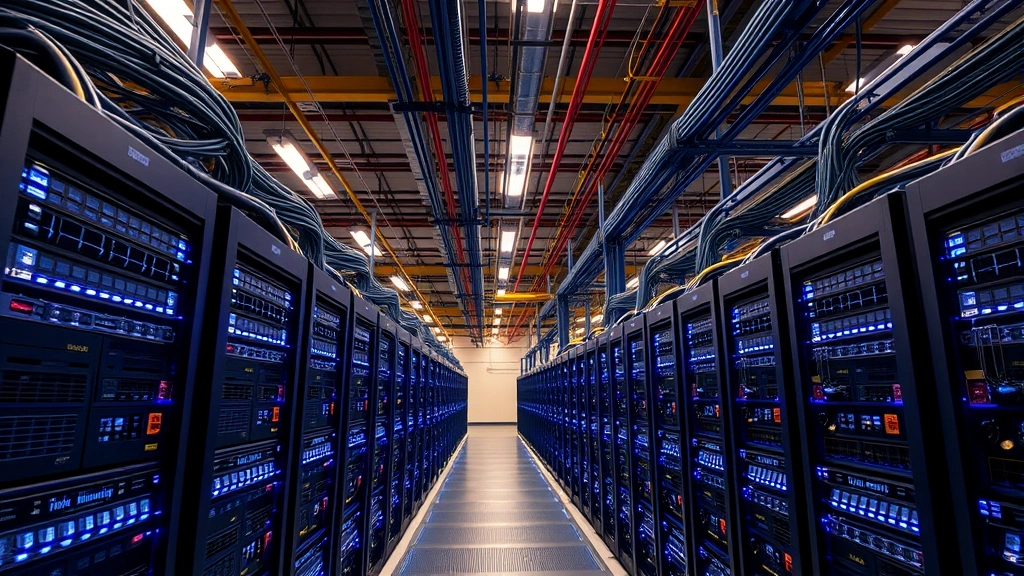
Is Free Bitcoin Mining Possible? Expert Insights
The allure of free Bitcoin mining has captivated cryptocurrency enthusiasts for years. The promise of earning digital assets without significant upfront investment sounds appealing, but the reality is far more nuanced. As Bitcoin has matured and mining difficulty has skyrocketed, the landscape has shifted dramatically from the early days when individuals could mine profitably from their laptops. Today, understanding what’s genuinely possible versus what’s pure fantasy is crucial for anyone considering mining as an income stream.
Mining Bitcoin requires computational power, electricity, and technical knowledge. While theoretically free Bitcoin mining exists in limited forms, the practical returns and feasibility depend heavily on your resources, location, and expectations. This comprehensive guide explores the legitimate methods, debunks common myths, and provides expert insights into whether free Bitcoin mining can realistically fit into your cryptocurrency strategy.
Understanding Bitcoin Mining Fundamentals
Bitcoin mining is the process by which new bitcoins are created and transactions are verified on the blockchain. Miners compete to solve complex mathematical puzzles, and the first to solve the puzzle gets to add a block to the blockchain and receives newly minted Bitcoin plus transaction fees as a reward. This process requires substantial computational resources.
The mining difficulty adjusts approximately every two weeks to maintain a consistent block time of roughly 10 minutes. As more miners join the network with more powerful equipment, the difficulty increases proportionally. This means that the hardware requirements and energy consumption needed to remain competitive have grown exponentially since Bitcoin’s inception in 2009.
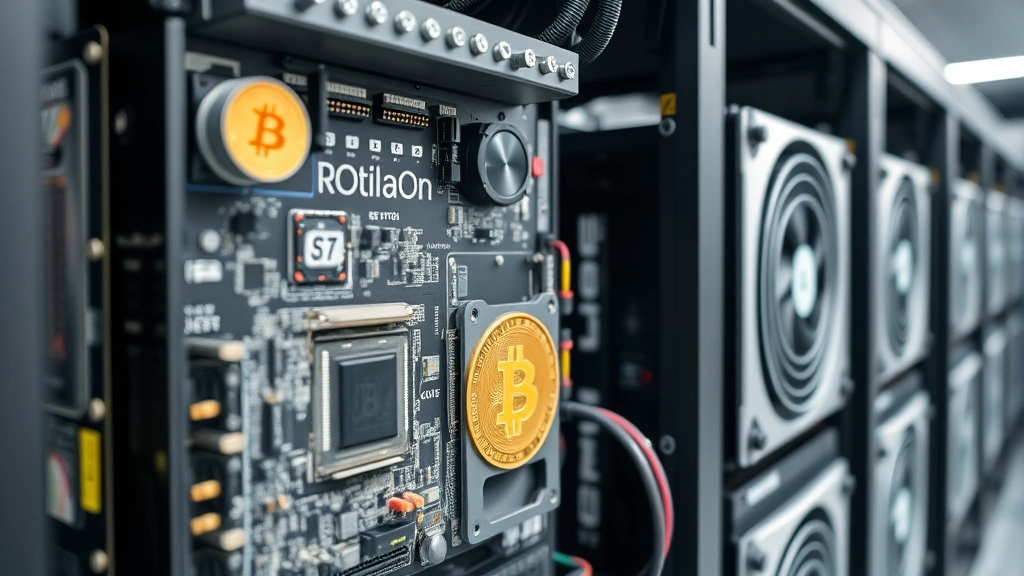
When considering how to invest in cryptocurrency, mining was historically presented as an alternative to purchasing Bitcoin directly. However, the economics have shifted significantly. Modern Bitcoin mining is dominated by large-scale operations with specialized hardware called ASICs (Application-Specific Integrated Circuits), which are purpose-built machines designed solely for mining. These devices cost thousands of dollars and consume enormous amounts of electricity.

Can You Really Mine Bitcoin for Free?
The straightforward answer is: not really, but there are some gray-area methods worth exploring. True free Bitcoin mining—where you invest absolutely nothing and receive Bitcoin—is virtually impossible at scale in the current environment. However, several approaches come close to being “free” or involve minimal investment:
- Using existing hardware: If you already own a computer, running mining software on it costs nothing in hardware but will consume electricity you must pay for. This electricity cost typically exceeds any Bitcoin generated.
- Exploiting free resources: Some individuals have attempted to use university computer labs, workplace equipment, or cloud computing free trials for mining, though this is typically against terms of service and potentially illegal.
- Participating in mining pools: Joining mining pools allows smaller miners to combine computational power, increasing chances of earning rewards, though you still need hardware and electricity.
- Referral programs: Some mining platforms offer free credits or referral bonuses that can be used toward mining operations.
The critical factor is understanding that even if initial hardware is free or already owned, electricity costs are not. Bitcoin mining consumes significant power—the Bitcoin network uses more electricity annually than many countries. Unless you have access to extremely cheap or free electricity, mining will likely be unprofitable.
Cloud Mining and Its Realities
Cloud mining services promise to let you mine Bitcoin without owning hardware. You pay a company to use their mining equipment, and you receive a share of the profits. While some legitimate cloud mining operations exist, this sector is notorious for scams.
Legitimate cloud mining providers operate transparent facilities and provide verifiable proof of mining operations. However, many are structured as Ponzi schemes where early investors are paid with funds from later investors rather than actual mining proceeds. The U.S. Securities and Exchange Commission has warned repeatedly about fraudulent cloud mining schemes.
The mathematical reality of cloud mining is unfavorable for retail participants. If a company genuinely operates profitable mining equipment, they have little incentive to share those profits with customers. They would maximize returns by mining for themselves. When companies offer cloud mining contracts, the fees and difficulty increases often mean customers receive minimal returns.
For those interested in passive cryptocurrency income, exploring how to invest with little money as a beginner presents more reliable alternatives than cloud mining.
Browser-Based and Mobile Mining Options
Browser-based and mobile mining applications have emerged as supposedly accessible mining methods. These applications claim to mine cryptocurrency using your device’s processor or allow websites to use your computational resources in exchange for rewards.
The practical reality is disappointing. Mobile and browser mining generates trivial amounts of cryptocurrency—often fractions of a cent per day. The computational power of smartphones and standard computers is millions of times less efficient than ASIC hardware. Additionally, these applications drain battery life, generate heat, and reduce device lifespan, creating hidden costs.
Some websites embed mining scripts into their pages without explicit user consent, using visitor computational resources to mine cryptocurrency. This is considered unethical and is increasingly blocked by browsers and security software. Legitimate sites that use this model typically offer it transparently as an alternative to displaying advertisements.
While technically you could earn small amounts of cryptocurrency through these methods, the returns are so minimal that they don’t constitute meaningful free mining. The opportunity cost of your time is better spent elsewhere.
The Economics of Home Mining
Let’s examine the financial reality of home mining with concrete numbers. Suppose you purchase an ASIC miner like an Antminer S19 Pro, which costs approximately $1,500-$2,000. This miner consumes about 1,450 watts of electricity.
If electricity costs $0.12 per kilowatt-hour (the U.S. average), running this miner continuously costs approximately $1.74 per day or $635 annually in electricity alone. At current Bitcoin prices and network difficulty, this miner might generate approximately $2-$5 per day in Bitcoin, depending on market conditions and difficulty adjustments.
The math shows that in favorable conditions, home mining might generate modest returns after accounting for electricity costs. However, this assumes: perfect uptime, stable electricity costs, no equipment failure, and that difficulty doesn’t increase dramatically. Additionally, you must account for equipment depreciation and potential cooling costs.
For most individuals, purchasing Bitcoin directly through an exchange presents better risk-adjusted returns than mining. Understanding why Bitcoin goes up and what technical analysis reveals about price movements may help inform better investment decisions than pursuing marginal mining returns.
Geographic location dramatically affects mining viability. Countries with cheap hydroelectric power, like Iceland, El Salvador, or parts of Canada, can sustain profitable mining operations at scales that would be unprofitable elsewhere. If you don’t have access to significantly below-average electricity costs, home mining is unlikely to be worthwhile.
Legitimate Free Mining Alternatives
If you’re determined to earn Bitcoin without significant investment, several legitimate (though modest) alternatives exist:
- Bitcoin faucets: Websites that distribute small amounts of Bitcoin for completing tasks like solving captchas or watching advertisements. Earnings are minimal—often just satoshis (fractions of Bitcoin)—but truly free.
- Staking rewards: While not mining, proper asset allocation in proof-of-stake cryptocurrencies generates passive income. Ethereum, for example, offers staking rewards without the electricity consumption of mining.
- Airdrops and bounties: Cryptocurrency projects sometimes distribute free tokens to community members, wallet holders, or those completing promotional tasks.
- Cashback programs: Some cryptocurrency exchanges and platforms offer cashback in Bitcoin when you make purchases through their partners.
- Mining pool participation with minimal investment: Some mining pools accept very small contributions, allowing you to participate in shared mining rewards with minimal hardware investment.
These alternatives share a common characteristic: returns are small. Expecting to generate life-changing income from any free or nearly-free cryptocurrency method is unrealistic.
Red Flags and Scams to Avoid
The free Bitcoin mining space is rife with scams. Learning to identify red flags is essential:
- Guaranteed returns: Any promise of guaranteed mining returns is a red flag. Mining returns depend on difficulty adjustments, hardware performance, and electricity costs—none of which can be guaranteed.
- Pressure to recruit: If the primary way to earn is through recruiting others, it’s likely a pyramid or Ponzi scheme.
- Lack of transparency: Legitimate mining operations provide verifiable information about their hardware, locations, and operations. Vague claims about mining facilities or unavailable proof are warning signs.
- Requests for upfront payments: Be skeptical of services requiring substantial upfront payments for mining access or equipment, especially without verifiable legitimacy.
- Unrealistic claims: Promises of mining with your smartphone, earning Bitcoin while sleeping, or getting rich quick are not realistic in the current mining environment.
- Unregistered securities: Some cloud mining schemes are actually unregistered securities offerings, which violates regulations.
The Federal Trade Commission has published extensive warnings about cryptocurrency mining scams. Before engaging with any mining service, research thoroughly and verify claims independently.
Expert Recommendations for Beginners
Cryptocurrency experts generally advise against free or low-cost mining for beginners. Here’s why and what to do instead:
Why mining isn’t ideal for most people: Mining has become industrialized and professionalized. The barrier to entry, electricity costs, and technical knowledge required make it unsuitable for casual investors. You’re competing against operations with millions of dollars in equipment and access to cheap electricity worldwide.
Better alternatives for cryptocurrency beginners: If you’re interested in cryptocurrency, direct purchase through established exchanges like CoinDesk or other platforms offers more transparent, regulated, and straightforward exposure. You can start with small amounts and gradually build your position. Understanding fundamental analysis helps you make informed investment decisions.
If you’re determined to mine: Only consider mining if you have access to below-market electricity costs and are willing to invest in quality ASIC hardware. Join established mining pools like Stratum or F2Pool. Start small and scale up only after verifying profitability in your specific circumstances.
Consider staking instead: For proof-of-stake cryptocurrencies, staking offers similar passive income benefits to mining without the hardware requirements or electricity consumption. This represents a more accessible entry point for most people.
The most important advice: be skeptical of anyone promising free cryptocurrency. If something sounds too good to be true in the mining space, it almost certainly is. Legitimate wealth building in cryptocurrency requires either genuine investment capital or significant time and expertise.
FAQ
Is Bitcoin mining still profitable in 2024?
Bitcoin mining can be profitable, but only under specific conditions. You need access to cheap electricity (below $0.08 per kilowatt-hour), quality ASIC hardware, and membership in a mining pool. For most individuals without these advantages, mining is not profitable compared to alternative uses of capital.
What’s the cheapest way to start mining Bitcoin?
The cheapest entry point is joining a mining pool with minimal hardware investment or using existing computer hardware to participate in merged mining of alternative cryptocurrencies. However, returns will be negligible. For meaningful returns, you need to invest in ASIC hardware, which costs several thousand dollars.
Are there any truly free ways to earn Bitcoin?
Bitcoin faucets, airdrops, and cashback programs offer truly free Bitcoin, but amounts are tiny—often worth just a few cents per day. These are more suitable for learning about cryptocurrency than generating meaningful income.
Is cloud mining legitimate?
Some cloud mining operations are legitimate, but the sector has a high concentration of scams. If considering cloud mining, research the company thoroughly, verify their mining facilities independently, and be prepared to receive minimal returns after fees.
What’s the difference between mining and staking?
Mining requires computational work and electricity consumption to validate transactions and earn rewards. Staking requires holding cryptocurrency in a wallet to support network operations and earn rewards. Staking typically requires less investment and electricity than mining.
Why is mining difficulty increasing?
Bitcoin’s protocol automatically adjusts mining difficulty every two weeks to maintain a consistent block time of approximately 10 minutes. As more miners join the network with more powerful equipment, difficulty increases to compensate, ensuring Bitcoin remains decentralized and secure.
Can I mine Bitcoin on my laptop or phone?
Technically yes, but profitably no. The computational power of standard laptops and phones is millions of times less efficient than ASIC hardware. You would generate trivial amounts of Bitcoin while consuming significant battery life and reducing device lifespan.


