Top Bitcoin Chart Indicators: Trader’s Guide
Bitcoin trading requires more than intuition—it demands a sophisticated understanding of technical analysis and the indicators that reveal market trends. Whether you’re a seasoned trader or just beginning your crypto journey, mastering the best indicators to use on Bitcoin charts can significantly improve your decision-making and risk management. This comprehensive guide explores the most effective technical indicators that professional traders rely on to identify entry and exit points, gauge market momentum, and anticipate potential price reversals.
The cryptocurrency market operates 24/7, creating unique opportunities and challenges compared to traditional financial markets. Bitcoin, as the flagship digital asset, exhibits distinct behavioral patterns that can be decoded through proper technical analysis. Understanding which indicators work best for Bitcoin’s volatility and price action is essential for developing a consistent trading strategy. In this guide, we’ll examine both foundational indicators and advanced tools that can enhance your trading performance.
Moving Averages and Trend Identification
Moving averages form the foundation of technical analysis and remain one of the most reliable indicators for Bitcoin traders. These simple yet powerful tools smooth out price data to reveal underlying trends by filtering out short-term noise. The most common moving averages used in Bitcoin trading are the 50-day, 100-day, and 200-day exponential moving averages (EMAs), with the 200-day EMA widely considered the gold standard for identifying long-term trend direction.
The exponential moving average gives more weight to recent price action, making it more responsive than simple moving averages (SMAs). When Bitcoin’s price trades above the 200-day EMA, it typically signals an uptrend, while trading below suggests a downtrend. Traders often use moving average crossovers as trading signals—when a shorter-term moving average crosses above a longer-term one, it generates a bullish signal, while a downward cross indicates bearish momentum.
For swing traders focusing on shorter timeframes, the 20-day and 50-day EMAs provide more responsive signals. However, it’s crucial to understand that moving averages lag price action by design, meaning they work best in trending markets rather than choppy, sideways price movements. Combining multiple moving averages creates a moving average ribbon, which can help identify trend strength and potential reversal zones. Understanding how to use these trends effectively connects directly to developing better Bitcoin price prediction strategies.
Relative Strength Index (RSI)
The Relative Strength Index stands as one of the most popular momentum oscillators in technical analysis. Developed by J. Welles Wilder Jr., the RSI measures the magnitude of recent price changes to evaluate overbought or oversold conditions. The indicator ranges from 0 to 100, with readings above 70 typically indicating overbought conditions and readings below 30 suggesting oversold conditions.
Bitcoin’s volatility sometimes pushes RSI to extreme levels more frequently than traditional assets, which is why many Bitcoin traders adjust their RSI parameters. Some professionals use 40 and 60 as thresholds instead of the standard 30 and 70, particularly during strong trending markets. The RSI also reveals divergences—situations where price makes a new high but the RSI fails to confirm it, signaling potential trend weakness and possible reversals.
The RSI’s strength lies in its ability to identify momentum exhaustion before price actually reverses. When Bitcoin reaches overbought levels during an uptrend, it doesn’t necessarily mean price will immediately decline, but it does suggest the rally may be losing steam. Conversely, oversold readings during downtrends can indicate capitulation and potential bounce opportunities. Smart traders combine RSI analysis with price action and other indicators for confirmation before executing trades.
MACD: Momentum and Signal Crossovers
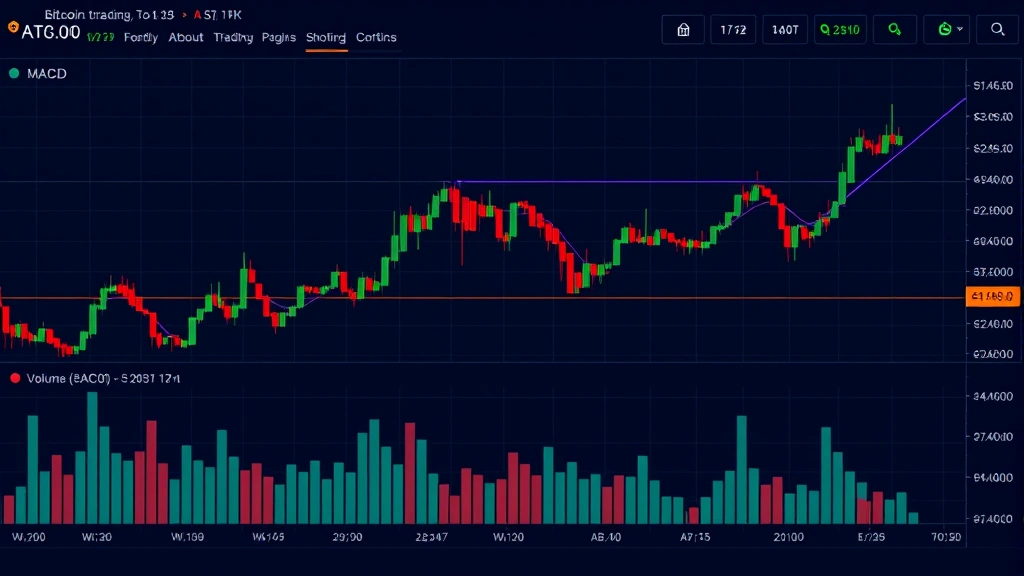
The Moving Average Convergence Divergence (MACD) indicator excels at identifying momentum shifts and trend changes. This indicator consists of three components: the MACD line (the difference between the 12-period and 26-period EMAs), the signal line (a 9-period EMA of the MACD line), and the histogram (the difference between the MACD and signal line). The power of MACD emerges from the interplay between these three elements.
Bitcoin traders watch for MACD line crossovers above or below the signal line, which generate trading signals. When the MACD line crosses above the signal line, it suggests bullish momentum is building, while a crossover below indicates weakening momentum or potential downside. The histogram visually represents these crossovers and their strength, making it easy to spot momentum changes at a glance.
One of MACD’s most valuable features for Bitcoin trading is divergence identification. When price reaches a new high but the MACD fails to follow suit, it reveals hidden weakness. This bearish divergence often precedes significant price declines. Conversely, bullish divergences occur when price makes a new low while MACD shows higher lows, indicating building upside momentum. These divergences frequently align with major Bitcoin market turning points, making them invaluable for risk management and position timing.
Bollinger Bands and Volatility Analysis
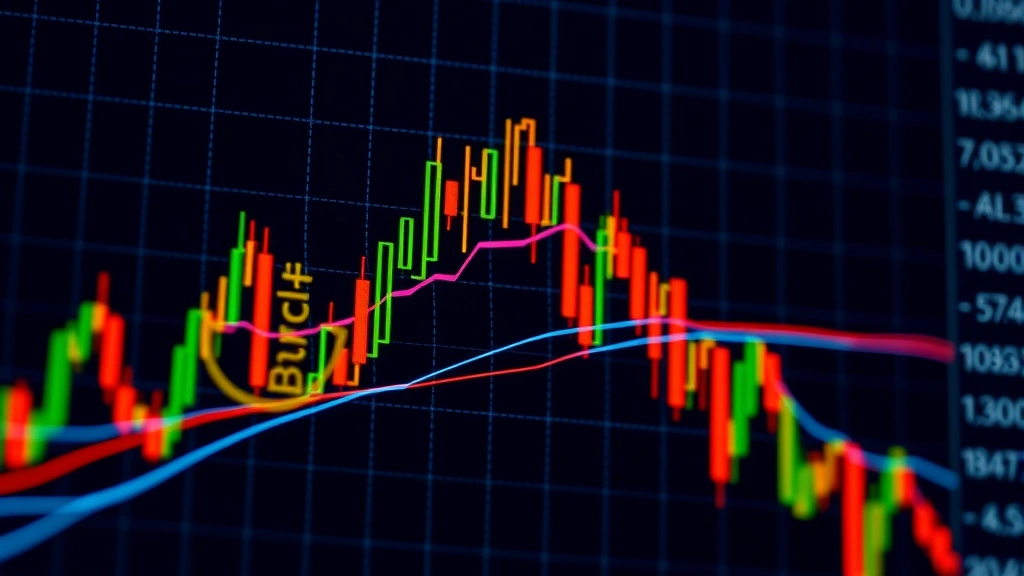
Bollinger Bands provide a dynamic framework for understanding Bitcoin’s volatility and identifying potential support and resistance levels. Created by John Bollinger, these bands consist of a middle band (typically a 20-period SMA) and upper and lower bands positioned two standard deviations away from the middle band. The bands expand during volatile periods and contract during quiet markets, making them exceptionally useful for Bitcoin’s notorious price swings.
Bitcoin’s price tends to bounce between the upper and lower Bollinger Bands, making these bands natural support and resistance levels. When price touches the upper band during an uptrend, it doesn’t necessarily signal a reversal but rather indicates that Bitcoin is trading at elevated levels relative to recent volatility. The “squeeze” pattern—when Bollinger Bands tighten significantly—often precedes major price moves, as periods of low volatility historically lead to explosive breakouts.
Traders also use Bollinger Band width to assess market conditions. Narrow bands indicate low volatility and potentially boring market conditions, while wide bands signal high volatility and potential trading opportunities. For Bitcoin, which regularly experiences 10-20% moves, understanding volatility patterns through Bollinger Bands helps traders adjust position sizing and risk parameters appropriately. Many traders use band breakouts as entry signals, entering long positions when price breaks above the upper band in an uptrend.
Stochastic Oscillator
The Stochastic Oscillator measures momentum by comparing Bitcoin’s closing price to its price range over a specific period. This indicator ranges from 0 to 100 and consists of two lines: %K (the main stochastic line) and %D (a moving average of %K). The Stochastic Oscillator helps traders identify overbought and oversold conditions similar to RSI, but uses a different calculation method that sometimes catches signals RSI misses.
The Stochastic Oscillator is particularly valuable for identifying potential reversals in Bitcoin’s price action. When the %K line crosses above the %D line from oversold territory (below 20), it generates a bullish signal, while a %K cross below %D from overbought territory (above 80) suggests a bearish setup. These crossovers work best when combined with other indicators and price action analysis, as the Stochastic can generate false signals in choppy markets.
Bitcoin traders often use slower stochastic settings (14 or 21 periods) to reduce false signals. The Stochastic Oscillator also reveals divergences similar to RSI, where price makes new highs or lows but the indicator fails to confirm, signaling momentum exhaustion. For intraday Bitcoin traders, the Stochastic Oscillator on hourly or 4-hour charts can provide reliable entry and exit timing when combined with support and resistance analysis.
Volume Profile and On-Balance Volume
Volume analysis reveals the underlying strength of Bitcoin’s price movements and identifies significant trading levels. On-Balance Volume (OBV) accumulates volume on up days and subtracts volume on down days, creating a running total that shows whether volume is supporting price moves. Increasing OBV during uptrends confirms strong bullish momentum, while OBV divergences reveal potential trend weakness.
Volume Profile takes this analysis deeper by showing exactly how much Bitcoin was traded at each price level over a specific period. This visualization reveals support and resistance zones based on actual trading activity rather than arbitrary price levels. High-volume nodes (price levels where significant trading occurred) often act as strong support or resistance, while low-volume gaps represent areas where price can move quickly with minimal buying or selling pressure.
Bitcoin’s 24/7 trading creates unique volume patterns compared to stock markets. Weekend volumes typically decline while weekday volumes spike, creating predictable volatility patterns that traders can exploit. Understanding how volume relates to Bitcoin price movements helps traders confirm trend strength and identify potential breakout zones. Weak volume during price moves suggests the trend lacks conviction and may reverse, while strong volume confirms trend validity.
Advanced Indicators for Bitcoin
Beyond standard technical indicators, Bitcoin traders employ specialized tools developed specifically for cryptocurrency analysis. The Bitcoin Pi Cycle Top Indicator combines multiple moving averages to identify potential market tops with remarkable accuracy. This indicator has successfully predicted several major Bitcoin peaks, making it invaluable for long-term investors and swing traders.
The Mayer Multiple divides Bitcoin’s price by its 200-day moving average, showing whether Bitcoin is trading at a discount or premium to its long-term trend. Historically, Bitcoin has topped when the Mayer Multiple exceeded 2.4, providing traders with a useful gauge for identifying potential sell opportunities. The MVRV (Market Value to Realized Value) ratio compares Bitcoin’s market cap to its realized cap, revealing whether holders are sitting on significant profits or losses—information that helps predict market bottoms and tops.
The Funding Rate indicator tracks perpetual futures contracts, showing when traders are excessively bullish or bearish. Extreme positive funding rates often precede corrections, while extremely negative rates can signal capitulation bottoms. For Bitcoin traders using leverage, monitoring funding rates helps identify when to reduce risk and secure profits. The On-Chain Volume Profile, derived from blockchain data, shows where Bitcoin has been accumulated and distributed, revealing the true conviction behind price movements.
Combining Indicators Effectively
The most successful Bitcoin traders don’t rely on a single indicator but rather combine multiple tools to confirm signals and reduce false positives. A robust trading system might use moving averages for trend identification, RSI or Stochastic for momentum confirmation, MACD for signal timing, and volume analysis to verify conviction. This multi-indicator approach filters out noise and increases the probability of profitable trades.
When combining indicators, traders must understand that correlation between indicators can create false confidence. If multiple indicators use similar calculations, they’ll move together without adding new information. The best indicator combinations blend different analysis methods—trend following (moving averages), momentum measurement (RSI, MACD), volatility analysis (Bollinger Bands), and volume confirmation. Testing combinations on historical Bitcoin data through backtesting reveals which combinations work best for specific market conditions and timeframes.
Risk management remains paramount regardless of which indicators traders use. No indicator is 100% accurate, and Bitcoin’s volatility can produce whipsaw trades that test even the best systems. Successful traders set stop-losses before entering trades, position size based on risk tolerance, and adjust strategies as market conditions change. Understanding that cryptocurrency markets differ significantly from traditional markets helps traders avoid applying stock market strategies directly to Bitcoin without modifications.
The relationship between technical indicators and broader investment principles becomes clearer when considering long-term strategies. Whether you’re interested in how to invest with little money or building substantial positions, understanding Bitcoin chart indicators improves decision-making at any investment level. Even investors focused on real estate or dividend stocks can benefit from learning technical analysis principles that apply across asset classes.
FAQ
What is the most reliable indicator for Bitcoin trading?
No single indicator is universally reliable, but the 200-day exponential moving average consistently ranks among the most valuable for identifying long-term trends. Most professional traders combine multiple indicators rather than relying on one tool. The best indicator depends on your trading timeframe, strategy, and market conditions. What works for swing trading may not work for day trading or long-term investing.
How often should I check Bitcoin chart indicators?
Your indicator-checking frequency should match your trading strategy. Day traders might check indicators every few minutes or hours, while swing traders monitor daily or weekly charts. Long-term investors might only review indicators monthly or quarterly. Checking indicators too frequently can lead to overtrading and emotional decisions, while checking too infrequently might cause you to miss important signals.
Can indicators predict Bitcoin’s future price?
Indicators are tools for analyzing past price action and current momentum, not crystal balls predicting future prices. They help traders identify probabilities and potential setups, but cannot guarantee outcomes. Bitcoin’s price depends on numerous factors including regulatory news, adoption developments, macroeconomic conditions, and market sentiment that indicators don’t capture. Successful traders use indicators as decision-support tools, not absolute prediction systems.
Should I use different indicators for different Bitcoin timeframes?
Absolutely. Indicators that work well on daily charts may generate excessive false signals on 5-minute charts. Bitcoin traders typically use longer-period settings on higher timeframes and shorter-period settings on lower timeframes. Many traders use multiple timeframe analysis, confirming signals from longer timeframes with shorter timeframe entries. A trend identified on weekly charts provides stronger conviction than a trend visible only on hourly charts.
How do I know which indicators to trust during Bitcoin’s high volatility?
Bitcoin’s volatility sometimes overwhelms traditional indicator settings, requiring adjustments. Volume-based indicators and divergences tend to hold up better during volatile periods than simple momentum readings. Traders often loosen overbought/oversold thresholds during extreme volatility and focus more on trend confirmation and divergences. Backtesting your indicator combinations during volatile periods reveals which tools remain reliable when Bitcoin experiences 15-20% moves.
Are technical indicators enough to trade Bitcoin successfully?
Technical indicators should form part of a comprehensive trading approach that includes risk management, position sizing, news awareness, and emotional discipline. Many profitable Bitcoin traders combine technical analysis with fundamental analysis, on-chain metrics, and sentiment analysis. Indicators work best when traders understand market structure, support/resistance levels, and the broader context of Bitcoin’s adoption cycle.