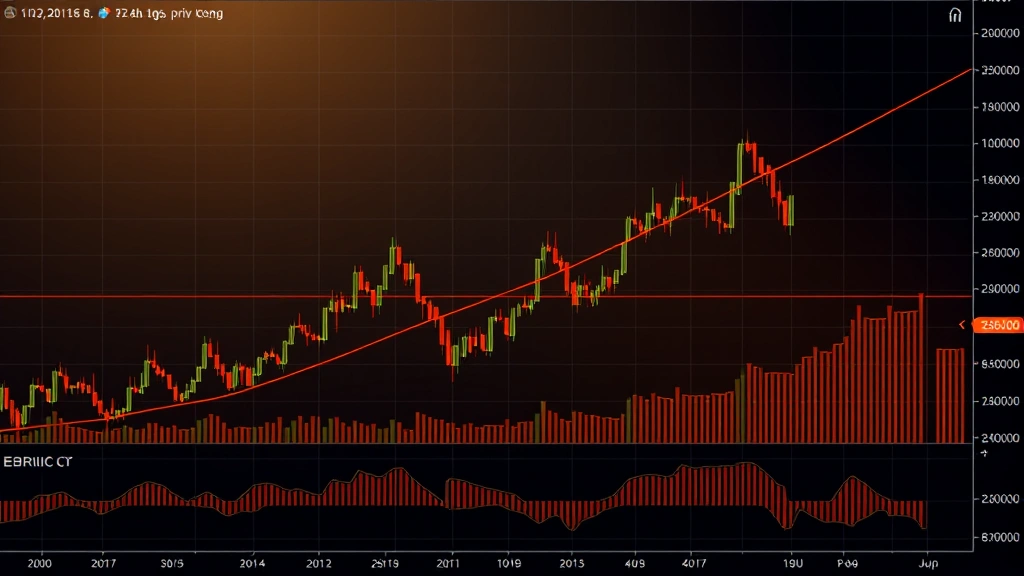
Bitcoin Pi Cycle Top: Reliable Indicator or Market Myth?
The Bitcoin Pi Cycle Top indicator has gained significant attention among cryptocurrency traders and analysts seeking to predict market peaks. This technical analysis tool combines multiple moving averages to identify potential selling opportunities before major price corrections occur. Understanding whether this indicator truly delivers reliable signals requires examining its methodology, historical performance, and inherent limitations in the volatile cryptocurrency market.
As Bitcoin continues to mature as an asset class, traders increasingly rely on sophisticated technical indicators to time their entries and exits. The Pi Cycle Top stands out among these tools for its specific focus on identifying cyclical peaks rather than general trend directions. However, like all technical indicators, it comes with both strengths and significant caveats that investors must understand before making trading decisions.

What is the Bitcoin Pi Cycle Top Indicator?
The Bitcoin Pi Cycle Top indicator is a technical analysis tool developed to identify potential market peaks in Bitcoin’s price movements. It combines two exponential moving averages (EMAs) in a specific ratio based on the mathematical constant pi (π, approximately 3.14159). This unique approach attempts to capture the cyclical nature of Bitcoin’s bull and bear markets by recognizing when price momentum reaches unsustainable levels.
The indicator was introduced by cryptocurrency analyst Cole Garner, who observed patterns in Bitcoin’s historical price cycles. The core premise suggests that Bitcoin’s market cycles follow predictable patterns that can be quantified through mathematical relationships. When certain conditions align—specifically when the ratio between two moving averages reaches specific thresholds—the indicator signals a potential market top.
What distinguishes the Pi Cycle Top from conventional moving average crossovers is its focus on identifying cycle peaks rather than trend reversals. This distinction matters significantly for traders because it suggests the indicator targets a specific market phase: the euphoric peak of a bull run when maximum buying pressure has been exhausted. Understanding this specific application helps traders determine whether the tool suits their trading strategy.

How Does the Pi Cycle Top Work?
The Bitcoin Pi Cycle Top indicator operates through a mathematical relationship between two exponential moving averages calculated on different timeframes. The standard configuration uses a 111-day EMA and a 350-day EMA, with the ratio between these averages forming the basis of the signal. The number 111 represents approximately 35.5 times pi (3.14159), while 350 represents 111.4 times pi, creating the mathematical harmony the indicator’s creator intended.
When Bitcoin’s price reaches a point where the 111-day EMA rises to approximately 1.3 times the 350-day EMA, the indicator suggests a potential market top is near. This crossing point theoretically represents the moment when short-term momentum has diverged maximally from long-term trend direction. Traders watch for this specific ratio to trigger, signaling an opportune moment to reduce long positions or initiate short positions.
The indicator’s power lies in its historical correlation with major Bitcoin market peaks. According to analysis of previous cycles, the signal has appeared near significant price tops in 2013, 2017, and 2021. However, interpreting the signal requires understanding that it doesn’t necessarily predict an immediate reversal. Instead, it suggests entering a high-risk zone where corrections become increasingly probable, though timing remains uncertain.
Implementing the Pi Cycle Top requires access to charting platforms that support custom indicator creation or pre-built versions available through TradingView and similar services. Understanding how to read a stock chart provides foundational knowledge for interpreting the indicator’s signals effectively. Most traders using this tool combine it with additional confirmation indicators to increase signal reliability.
Historical Performance and Accuracy
Examining the Bitcoin Pi Cycle Top’s historical performance reveals a mixed but noteworthy track record. During the 2017 bull market, the indicator provided a signal in December 2017, just as Bitcoin approached its all-time high of approximately $20,000. The timing proved remarkably accurate, offering traders a warning before the subsequent 80% correction over the following year.
The 2021 cycle demonstrated the indicator’s effectiveness again, with signals appearing in November 2021 near Bitcoin’s peak around $69,000. This accuracy reinforced believers’ confidence in the tool’s predictive power. However, the indicator’s performance during less pronounced market peaks and in sideways markets has been considerably less impressive, sometimes generating false signals that caught traders off-guard.
A critical consideration when evaluating historical performance involves survivorship bias. The indicator was developed by analyzing past Bitcoin cycles, meaning it naturally performs well on the data it was designed to fit. This doesn’t guarantee future performance, especially as market structure evolves and more sophisticated traders incorporate similar tools into their strategies. When many traders use identical indicators, their collective behavior can change market dynamics in unpredictable ways.
Research from cryptocurrency analysis firms examining the Pi Cycle Top’s reliability suggests accuracy rates between 60-75% in identifying approximate cycle peaks, though the timing of reversals varies considerably. Some signals preceded major corrections by weeks, while others appeared after significant moves had already occurred. For investors considering whether they should buy Bitcoin now, relying solely on this indicator would be imprudent given these accuracy limitations.
Comparing Pi Cycle to Other Indicators
The Bitcoin Pi Cycle Top occupies a specific niche within the broader ecosystem of technical analysis tools. Unlike moving average crossovers that signal trend changes or momentum oscillators that identify overbought conditions, the Pi Cycle Top specifically targets cyclical peaks. This unique focus requires understanding how it compares to alternative approaches for identifying market tops.
The Bitcoin Rainbow Chart represents an alternative cyclical analysis approach using logarithmic regression bands. While the Rainbow Chart provides continuous visual feedback about valuation levels, the Pi Cycle Top generates discrete signals. Some traders prefer the Rainbow Chart’s continuous guidance, while others favor the Pi Cycle Top’s specific trigger points that facilitate automated trading strategies.
Relative Strength Index (RSI) and other momentum indicators identify overbought conditions but lack the cyclical focus that distinguishes the Pi Cycle Top. The Fibonacci retracement tool helps traders identify support and resistance levels but operates on different mathematical principles. The Multiple Time Frame Analysis approach examines trends across different timeframes but requires more subjective interpretation than the Pi Cycle Top’s mathematical foundation.
Many professional traders employ a multi-indicator confirmation strategy, using the Pi Cycle Top alongside other tools. For instance, combining it with RSI divergences, volume analysis, and support/resistance levels can increase confidence in top identification. This approach acknowledges that no single indicator proves universally reliable while leveraging the Pi Cycle Top’s specific strength in identifying cyclical peaks.
When evaluating Bitcoin forecast 2025 predictions, analysts often incorporate multiple methodologies including the Pi Cycle Top, on-chain metrics, and macroeconomic analysis. This diversified approach reduces reliance on any single tool’s accuracy while building a more robust analytical framework.
Limitations and Risks
Despite its historical success, the Bitcoin Pi Cycle Top indicator carries significant limitations that traders must acknowledge. The most fundamental limitation stems from its development methodology: the indicator was created by analyzing historical cycles, inherently fitting past data. This curve-fitting problem means the indicator may perform worse on future data than historical backtests suggest.
Market structure evolution presents another critical limitation. Bitcoin’s market has transformed dramatically since the indicator’s development, with institutional participation, derivatives markets, and regulatory developments creating dynamics that differ from earlier cycles. These structural changes may alter the timing and intensity of cyclical peaks in ways the historical model didn’t anticipate.
False signals represent a practical risk for traders implementing the Pi Cycle Top. The indicator occasionally generates signals during periods of consolidation or minor corrections rather than major cycle peaks. Traders who automatically exit positions on every signal may lock in losses prematurely or miss significant gains by selling too early. Conversely, traders who ignore signals hoping for better timing risk holding through major corrections.
The indicator also struggles during periods when Bitcoin’s behavior diverges from historical cyclical patterns. Extended sideways markets, periods of sustained institutional accumulation, and regulatory-driven corrections may not produce clear Pi Cycle Top signals despite significant price movements. This limitation became apparent during certain 2022-2023 market phases when the indicator provided ambiguous signals.
Time zone and data feed variations can introduce minor discrepancies in signal timing, particularly for traders using different data sources. Additionally, the indicator’s effectiveness may diminish as more traders incorporate it into their strategies, potentially creating self-referential feedback loops that alter the market dynamics the indicator originally captured.
Risk management becomes paramount when using the Pi Cycle Top. Traders should never rely on this single indicator for position sizing or stop-loss placement. Instead, treating the signal as one factor within a comprehensive risk management framework protects against the indicator’s inevitable failures. Position sizing, diversification, and pre-established exit strategies provide essential safeguards against over-reliance on any technical tool.
Practical Application for Traders
For traders considering incorporating the Bitcoin Pi Cycle Top into their strategy, practical implementation requires careful planning. The first step involves understanding your trading timeframe and objectives. Swing traders targeting cycle peaks benefit more from the indicator than day traders or long-term buy-and-hold investors. Clarifying your trading approach helps determine whether the Pi Cycle Top’s signals align with your strategy.
Setting up the indicator on a charting platform like TradingView involves selecting the appropriate moving average lengths (111-day and 350-day EMAs for Bitcoin). Most platforms offer pre-built Pi Cycle Top indicators, reducing implementation complexity. Once configured, traders should backtest the indicator on historical data relevant to their trading style, examining how often signals preceded major reversals and how much advance warning the indicator typically provided.
Developing a rules-based trading plan prevents emotional decision-making when signals appear. A comprehensive plan should specify: the exact conditions that trigger a signal, how many positions to close or reduce, predetermined stop-loss levels if the market doesn’t reverse as expected, and profit-taking strategies when reversals do occur. Writing these rules before signals appear increases the likelihood of disciplined execution.
Combining the Pi Cycle Top with additional confirmation indicators strengthens signal reliability. Many traders pair it with:
- RSI divergences: When price makes new highs but RSI fails to confirm, a top may be forming
- Volume analysis: Decreasing volume on rallies suggests weakening momentum
- On-chain metrics: Whale accumulation or distribution patterns provide independent confirmation
- Support/resistance levels: Signals near significant resistance increase reliability
Position sizing deserves special emphasis when using the Pi Cycle Top. Rather than exiting entire positions on a single signal, many traders reduce positions gradually as the indicator strengthens and additional confirmation indicators align. This approach allows participation in continued upside if the market ignores the signal while limiting downside exposure if a reversal materializes.
Understanding market capitalization and other fundamental metrics provides context for technical signals. During periods when Bitcoin’s market cap reaches extreme valuations relative to historical norms, technical signals gain additional weight. Conversely, during early bull phases when valuations remain reasonable, even strong technical signals warrant skepticism about immediate reversals.
For those developing comprehensive investment strategies, reviewing cryptocurrency price prediction 2025 analyses incorporating multiple methodologies provides perspective on how different analytical approaches inform market outlook. This broader context prevents over-weighting any single indicator’s signals.
Keeping detailed trading records when using the Pi Cycle Top enables objective performance evaluation. Document each signal, your response, the actual market outcome, and whether confirmation indicators aligned with the Pi Cycle Top signal. Over time, this record reveals the indicator’s actual performance in your specific trading context, informing whether continued use makes sense for your strategy.
FAQ
Is the Bitcoin Pi Cycle Top indicator always accurate?
No, the indicator generates false signals and occasionally misses significant peaks. Historical accuracy ranges from 60-75% in identifying approximate cycle tops, though timing remains uncertain. Traders should never rely solely on this indicator for trading decisions.
Can I use the Pi Cycle Top for daily or weekly trading?
The indicator was designed for longer-term cycle analysis and performs best on daily or weekly charts. Using it for intraday trading typically produces unreliable signals due to the extended moving average periods involved.
What should I do when the Pi Cycle Top generates a signal?
Treat it as one input within your comprehensive trading plan. Look for confirmation from additional indicators, assess current market structure and valuations, and implement pre-planned position reduction strategies rather than immediate exits. Never base entire trading decisions on a single indicator.
Has the Pi Cycle Top worked during 2024 and 2025?
The indicator’s recent performance has been mixed. While it continues to generate signals, market structure evolution and increased institutional participation have altered traditional cycle dynamics. This emphasizes the importance of combining multiple analytical approaches rather than relying on historical patterns.
Where can I find more information about the Pi Cycle Top?
The original developer Cole Garner published analysis on cryptocurrency platforms and social media. Additionally, CoinDesk frequently publishes technical analysis covering various indicators including the Pi Cycle Top. Academic research on technical analysis reliability provides additional perspective on the indicator’s theoretical foundation.
Should I use the Pi Cycle Top for long-term investing?
Long-term buy-and-hold investors typically benefit more from fundamental analysis and dollar-cost averaging strategies than from short-term cyclical indicators. The Pi Cycle Top serves traders attempting to reduce exposure near cycle peaks, not long-term investors with multi-year horizons.


