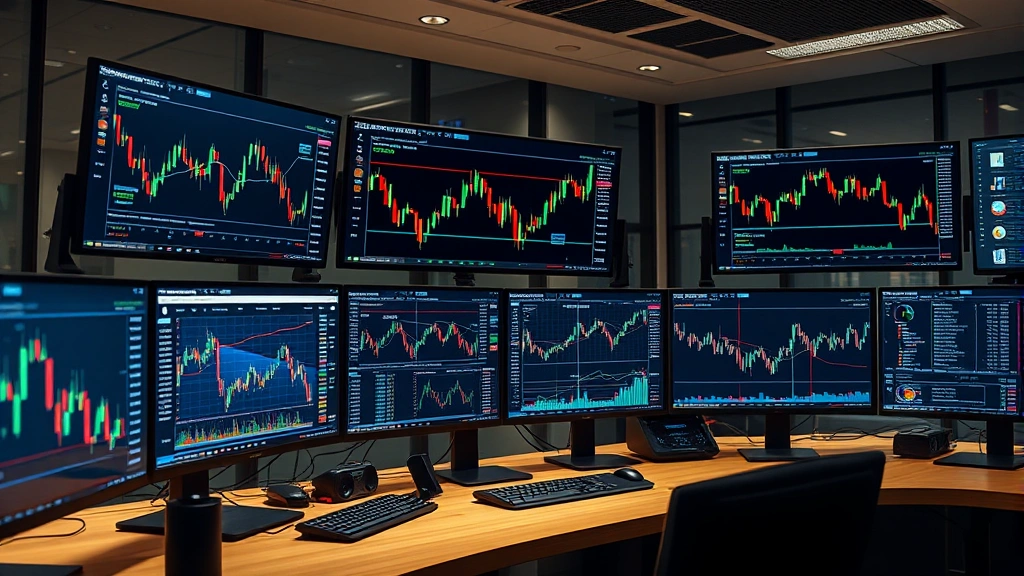
Bitcoin Solaris Price Prediction: Analyst Insights and Market Analysis
Bitcoin Solaris has emerged as an intriguing project within the cryptocurrency ecosystem, attracting attention from both retail investors and institutional analysts. As the crypto market continues to evolve with increasing regulatory clarity and institutional adoption, understanding price predictions for emerging assets like Bitcoin Solaris becomes essential for portfolio diversification and risk management. This comprehensive analysis examines current market conditions, analyst perspectives, and the fundamental factors that may influence Bitcoin Solaris price movements in the coming months.
The cryptocurrency landscape has matured significantly since Bitcoin’s inception, with projects now requiring robust fundamentals, transparent development roadmaps, and clear utility propositions. Bitcoin Solaris represents a specific niche within this broader ecosystem, and evaluating its price trajectory requires understanding both macro market conditions and project-specific metrics. Whether you’re a seasoned crypto investor or exploring what cryptocurrency fundamentals mean, this guide provides the analytical framework necessary for informed decision-making.
Understanding Bitcoin Solaris: Project Overview
Bitcoin Solaris operates within the broader cryptocurrency ecosystem, combining blockchain technology with specific features designed to address particular market needs. To understand price predictions, investors must first grasp what makes this project distinct from established cryptocurrencies like Bitcoin and Ethereum. The project’s technical architecture, tokenomics, and development team credentials form the foundation for valuation models used by professional analysts.
The project distinguishes itself through its approach to scalability, security, and sustainability. Unlike some altcoins that prioritize novelty over functionality, Bitcoin Solaris focuses on practical implementation of blockchain technology. This commitment to real-world utility influences how institutional investors and analysts evaluate its long-term viability. Understanding the pros and cons of cryptocurrency investments becomes particularly relevant when assessing projects with specific use cases.
The development roadmap reveals planned upgrades, partnerships, and feature implementations that directly impact price projections. Analysts typically examine whether the team meets announced milestones, as delays or cancellations can significantly affect market sentiment. Bitcoin Solaris’s community engagement, developer activity on GitHub, and transparent communication channels all factor into comprehensive price analysis.
Current Market Position and Valuation Metrics
Market capitalization represents the most straightforward metric for understanding Bitcoin Solaris’s position relative to other cryptocurrencies. Current valuations fluctuate based on trading volume, exchange listings, and broader market sentiment toward altcoins. Professional analysts monitor market cap rankings, trading pairs across major exchanges, and liquidity metrics when constructing price models.
Valuation multiples commonly used in crypto analysis include price-to-sales ratios, network value-to-transactions ratios, and comparisons to similar projects. These metrics help analysts determine whether Bitcoin Solaris trades at premiums or discounts relative to peers with comparable features. A project trading below historical averages might present upside potential, while elevated multiples could indicate overvaluation risk.
Exchange listings significantly influence accessibility and price discovery. Bitcoin Solaris’s presence on major exchanges like Binance, Coinbase, or Kraken versus smaller platforms dramatically affects trading volume and price stability. Listing announcements typically generate positive price momentum, while delisting threats create downward pressure. Current trading volume and bid-ask spreads indicate market liquidity, with tighter spreads suggesting more efficient price discovery.
The circulating supply versus maximum supply ratio affects tokenomics and inflation expectations. Projects with large percentages of tokens already in circulation face different supply dynamics than those with significant future emissions. Vesting schedules for team tokens, advisor allocations, and treasury reserves all influence long-term price pressure and support levels.
Image Placeholder:
Analyst Price Predictions and Forecasts
Professional analysts employ diverse methodologies when predicting Bitcoin Solaris prices, ranging from technical analysis to fundamental valuation models. Reputable research firms like CoinDesk and specialized crypto analysis platforms publish regular updates on price targets and market outlooks. These predictions typically include multiple scenarios—bullish, base case, and bearish—reflecting different assumptions about adoption, regulation, and market conditions.
Short-term price predictions (3-6 months) often rely heavily on technical analysis, examining support and resistance levels, trend patterns, and momentum indicators. Analysts look for breakouts above resistance or breaks below support to identify entry and exit points. Moving averages, relative strength index (RSI), and MACD indicators help traders time market cycles, though these tools work better in trending markets than during sideways consolidation periods.
Medium-term forecasts (6-18 months) incorporate fundamental developments like partnership announcements, protocol upgrades, and regulatory clarity. Analysts track development velocity, community growth metrics, and competitive positioning to assess whether Bitcoin Solaris maintains or loses market share. Price targets in this timeframe often reflect expectations about total addressable market expansion and adoption curves.
Long-term predictions (18+ months) become increasingly speculative but attempt to model adoption scenarios and competitive dynamics. Some analysts use S-curve adoption models applied to cryptocurrency usage, extrapolating from early-stage metrics to mature market penetration. Conservative analysts remain cautious about long-term predictions given the nascent nature of blockchain technology and unpredictable regulatory environments.
Consensus price targets among multiple analysts provide more reliable signals than individual predictions. When numerous independent researchers reach similar conclusions through different methodologies, that convergence suggests robust analytical foundations. Conversely, wide divergence between analyst predictions indicates significant uncertainty and disagreement about valuation drivers.
Technical Analysis and Price Patterns
Technical analysis examines historical price and volume data to identify patterns suggesting future price movements. Bitcoin Solaris price charts reveal support levels where buyers have historically stepped in and resistance levels where sellers have emerged. Traders use these zones to plan position sizing and risk management strategies.
Chart patterns like head-and-shoulders formations, double tops, and triangles suggest potential breakout directions and price targets. Volume analysis reveals whether price moves occur on strong conviction (high volume) or weak participation (low volume). Moves on low volume often reverse, while volume-confirmed breakouts tend to persist longer. This distinction helps separate genuine trend changes from false signals.
Moving averages smooth price data to reveal underlying trends, with shorter-term averages (20-day, 50-day) useful for tactical trading and longer-term averages (200-day) indicating structural support or resistance. When shorter-term averages cross above longer-term averages, analysts interpret this as bullish momentum, while crosses below suggest bearish pressure.
Momentum indicators like RSI measure the velocity and magnitude of price changes, identifying overbought conditions (RSI above 70) suggesting potential pullbacks and oversold conditions (RSI below 30) indicating potential rebounds. MACD compares short-term and long-term exponential moving averages, with crossovers signaling potential trend changes. Stochastic oscillators compare closing prices to price ranges, helping identify turning points.
Fibonacci retracements help traders identify likely support and resistance levels based on mathematical ratios. When Bitcoin Solaris pulls back from highs, retracement levels at 38.2%, 50%, and 61.8% of the prior move often attract buyers. Extensions at 138.2% and 161.8% suggest potential targets if uptrends resume. These levels work best when combined with other technical indicators and fundamental analysis.
Fundamental Factors Driving Value
Cryptocurrency valuations ultimately rest on fundamental factors determining long-term utility and adoption potential. Bitcoin Solaris’s value proposition—what problems it solves and for whom—forms the foundation of bull cases in analyst reports. Projects addressing real market needs with superior solutions to existing alternatives attract institutional capital and sustainable user growth.
Network effects create powerful valuation drivers in cryptocurrency markets. As more users adopt Bitcoin Solaris, the network becomes more valuable to existing users, creating self-reinforcing growth cycles. Analysts examine user growth metrics, transaction volumes, and developer ecosystem expansion to assess whether network effects are strengthening or stalling. Stagnating user metrics despite price increases often signal unsustainable valuations.
Partnership announcements demonstrate real-world utility and accelerate adoption pathways. When major corporations, financial institutions, or other blockchain projects integrate Bitcoin Solaris, it validates the use case and expands addressable markets. Strategic partnerships also provide revenue streams or cost efficiencies that support long-term profitability. Analysts track partnership quality and exclusivity when evaluating growth prospects.
Regulatory clarity significantly impacts cryptocurrency valuations, particularly for projects with financial services applications. Clear regulatory frameworks reduce legal uncertainty and enable institutional participation. Conversely, regulatory crackdowns create headwinds and trigger sell-offs. Bitcoin Solaris’s regulatory status across major jurisdictions—United States, European Union, Asia-Pacific—influences institutional adoption potential and price sustainability.
Competitive positioning determines whether Bitcoin Solaris maintains relevance or faces displacement by superior alternatives. Analysts assess competitive advantages including technology differentiation, first-mover benefits, network effects, and team execution capabilities. Projects losing competitive ground to newer competitors face valuation compression regardless of current price levels. Understanding how to invest in cryptocurrency effectively requires evaluating competitive moats and sustainable advantages.
Development team quality and track record heavily influence analyst confidence in project execution. Teams with prior successful exits, deep blockchain expertise, and transparent communication inspire confidence that announced milestones will materialize. Conversely, teams with limited track records or previous failures face skepticism from professional investors. Key person risk—dependency on specific founders or developers—also concerns long-term investors.
Image Placeholder:
Risk Factors and Market Considerations
Bitcoin Solaris price predictions must acknowledge substantial risks inherent in cryptocurrency investments. Regulatory changes represent perhaps the most significant tail risk, with government actions potentially rendering projects illegal or severely restricting use cases. Investors must evaluate regulatory trajectories in major jurisdictions and consider how different regulatory scenarios impact valuations.
Technology risks include potential security vulnerabilities, network failures, or fundamental flaws in underlying protocols. Major hacks or exploits can destroy project credibility overnight, as demonstrated by various DeFi protocol failures. Audits by reputable security firms help mitigate technology risks, but no system achieves absolute security. Analysts assess technology risk by examining code quality, audit results, and incident response protocols.
Market risks stem from cryptocurrency market volatility and potential asset class corrections. Bitcoin Solaris prices correlate with broader crypto market sentiment, meaning Bitcoin and Ethereum price movements significantly influence altcoin valuations. Extended bear markets can compress altcoin valuations regardless of fundamental improvements, as investors flee to safer assets. Risk-averse investors should understand what asset allocation means for portfolio construction.
Liquidity risks affect smaller cryptocurrency projects more severely than established assets. Limited trading volume can make position entry and exit difficult, with large orders moving prices significantly. Projects with limited exchange listings face liquidity constraints that create additional price volatility. Investors should verify that Bitcoin Solaris maintains sufficient liquidity across multiple exchanges before committing substantial capital.
Competition risks arise as new projects with superior technology or better-funded teams emerge. The cryptocurrency landscape evolves rapidly, with new innovations rendering existing projects obsolete. Bitcoin Solaris must continuously innovate to maintain competitive positioning. Stagnation in development or lost competitive advantage creates downside risks analysts must incorporate into valuation models.
Execution risks reflect uncertainty about whether development teams deliver announced features on schedule and within budget. Delays, scope reductions, or abandoned features create disappointment that drives price declines. Teams with strong execution track records inspire greater confidence, while those with histories of missed deadlines face investor skepticism. Analyst price predictions should discount for execution risk based on team performance.
Investment Strategies for Bitcoin Solaris
Successful cryptocurrency investors employ disciplined strategies rather than attempting to time market peaks and troughs. Dollar cost averaging reduces timing risk by spreading investment purchases across multiple periods. This approach helps investors accumulate positions without attempting to identify perfect entry points, reducing emotional decision-making during volatile periods.
Position sizing determines how much capital to allocate to Bitcoin Solaris relative to overall portfolio holdings. Higher-risk, higher-growth-potential investments should represent smaller portfolio percentages than stable assets. Conservative investors might limit Bitcoin Solaris to 1-3% of portfolios, while growth-oriented investors might allocate 5-10%. Size positions based on risk tolerance and conviction level in analyst predictions.
Stop-loss orders protect against catastrophic losses by automatically selling positions when prices decline by predetermined percentages. A 20-30% stop-loss allows for normal volatility while protecting against major adverse moves. Trailing stops lock in gains while allowing continued upside participation, moving stop levels up as prices rise. Stop-losses reduce emotional decision-making during sharp declines.
Taking partial profits at predetermined price targets locks in gains and reduces position risk. If analyst price targets suggest potential 50-100% gains from current levels, selling 25-50% of positions at the lower target captures significant gains while maintaining exposure to higher targets. This approach balances profit-taking with upside participation.
Portfolio rebalancing maintains target allocations despite price movements. If Bitcoin Solaris price appreciation increases its portfolio weight beyond targets, rebalancing by selling some holdings brings allocation back to desired levels. This systematic approach enforces buying weakness and selling strength, improving long-term returns. Review and rebalance quarterly or when allocations drift more than 5% from targets.
Diversification across multiple cryptocurrency projects reduces concentration risk. Even if Bitcoin Solaris performs well, portfolio concentration in single assets increases volatility and downside risk. Combine Bitcoin Solaris with beginner-friendly investment approaches that emphasize diversification and risk management. Consider exposure to major cryptocurrencies, stablecoins, and other alternative assets.
Research and monitoring remain essential throughout investment holding periods. Subscribe to analyst research, follow project development announcements, and monitor competitive dynamics. Price predictions become outdated as new information emerges, requiring periodic reassessment of positions. Investors who passively hold without monitoring miss important warning signals indicating valuation reassessment or fundamental deterioration.
FAQ
What factors most influence Bitcoin Solaris price predictions?
Analyst price predictions incorporate technical factors like support/resistance levels and momentum, fundamental factors including adoption metrics and partnership announcements, macro factors like overall crypto market sentiment, and regulatory developments. The most reliable predictions typically integrate multiple analytical approaches rather than relying on single methodologies.
How reliable are analyst price predictions for Bitcoin Solaris?
Analyst predictions provide useful frameworks for understanding valuation but should not be treated as certainties. Cryptocurrency markets remain volatile and unpredictable, with prices subject to rapid changes from news events or sentiment shifts. Use analyst predictions as one input among many in investment decision-making, not as definitive forecasts. Diversification and risk management matter more than prediction accuracy.
Should I invest in Bitcoin Solaris based on price predictions?
Price predictions should inform but not solely determine investment decisions. Evaluate whether Bitcoin Solaris aligns with your investment goals, risk tolerance, and portfolio strategy. Ensure you understand the project fundamentals and maintain appropriate position sizing. Never invest more than you can afford to lose, given cryptocurrency volatility. Consult with financial advisors familiar with digital assets if needed.
Where can I find reliable Bitcoin Solaris price analysis?
Reputable sources include CoinDesk for comprehensive crypto news and analysis, blockchain explorers for on-chain data, major cryptocurrency exchanges for real-time pricing and volume data, and specialized crypto research firms publishing regular reports. Cross-reference multiple sources to identify consensus views and understand different analytical perspectives.
How often should I review Bitcoin Solaris price predictions?
Review analyst predictions quarterly or whenever significant developments occur—major partnerships, regulatory announcements, or competitive threats. Markets incorporate new information quickly, rendering outdated predictions less useful. Monitor price action relative to predicted levels to assess whether predictions remain on track or require revision based on new developments.
What’s the difference between short-term and long-term Bitcoin Solaris price predictions?
Short-term predictions (3-6 months) rely heavily on technical analysis and near-term catalysts, with higher accuracy potential due to shorter timeframes. Long-term predictions (18+ months) incorporate fundamental adoption scenarios and competitive positioning but face greater uncertainty. Short-term predictions suit traders, while long-term predictions guide strategic investors building positions for years ahead.
Leading analysts expect Bitcoin to rally in 2024 driven by halving supply constraints, institutional adoption, favorable macroeconomic conditions, and ETF momentum. Risks remain.