
Taproot vs SegWit: Understanding Bitcoin’s Major Upgrades
Bitcoin’s evolution has been marked by significant technological upgrades designed to improve scalability, security, and functionality. Two of the most important upgrades in recent history are SegWit (Segregated Witness) and Taproot, each representing a fundamental shift in how Bitcoin transactions are processed and validated. While SegWit addressed critical blockchain limitations, Taproot built upon that foundation to introduce advanced cryptographic capabilities and enhanced privacy features. Understanding the differences between these upgrades is essential for anyone seeking to comprehend Bitcoin’s technical trajectory and its implications for the network’s future.
The debate between Taproot and native SegWit implementation reflects broader discussions within the cryptocurrency community about optimization priorities, backward compatibility, and the balance between innovation and stability. Rather than viewing these as competing solutions, it’s more accurate to understand Taproot as an evolution that leverages SegWit’s infrastructure while introducing new possibilities for smart contracts, multi-signature transactions, and Lightning Network functionality. This comprehensive guide explores both upgrades in detail, examining their technical foundations, practical benefits, and impact on Bitcoin’s ecosystem.

What is SegWit and Why It Mattered
SegWit, activated on Bitcoin’s mainnet in August 2017, fundamentally changed how transaction data is structured and validated. The upgrade separated transaction signatures (witness data) from the transaction body itself, addressing the critical issue of transaction malleability—a vulnerability that allowed attackers to alter transaction identifiers without changing the actual transfer of funds. This separation provided multiple immediate benefits that resonated throughout the Bitcoin ecosystem.
Before SegWit, Bitcoin’s block size limit of 1 megabyte created a bottleneck for transaction throughput. By removing signature data from the traditional transaction format, SegWit effectively increased the block size limit to approximately 4 megabytes of data, though measured differently through a weighting system. This innovation meant that more transactions could fit into each block, reducing transaction fees and improving confirmation times during periods of high network congestion.
The upgrade also enabled the development of the Lightning Network, a second-layer scaling solution that relies on SegWit’s functionality. By allowing the creation and modification of payment channels without publishing every transaction to the blockchain, the Lightning Network dramatically increases Bitcoin’s transaction capacity. Understanding SegWit’s role in enabling these second-layer solutions is crucial for appreciating modern Bitcoin’s scalability architecture.
SegWit introduced two address formats: P2WPKH (Pay-to-Witness-Public-Key-Hash) for single-signature transactions and P2WSH (Pay-to-Witness-Script-Hash) for more complex scripts. These native SegWit addresses, beginning with “bc1”, offer enhanced security and lower transaction fees compared to legacy P2PKH addresses. The adoption of native SegWit has become a standard practice among Bitcoin exchanges and custodians, though legacy and wrapped SegWit formats remain widely supported for backward compatibility.
Understanding Taproot Technology
Taproot, activated on November 14, 2021, represents the next evolutionary step in Bitcoin’s development. This upgrade introduces Schnorr signatures, a cryptographic innovation that fundamentally changes how Bitcoin transactions are signed and verified. Unlike ECDSA (Elliptic Curve Digital Signature Algorithm) used in earlier Bitcoin implementations, Schnorr signatures enable signature aggregation—multiple signatures can be combined into a single signature, reducing transaction size and improving efficiency.
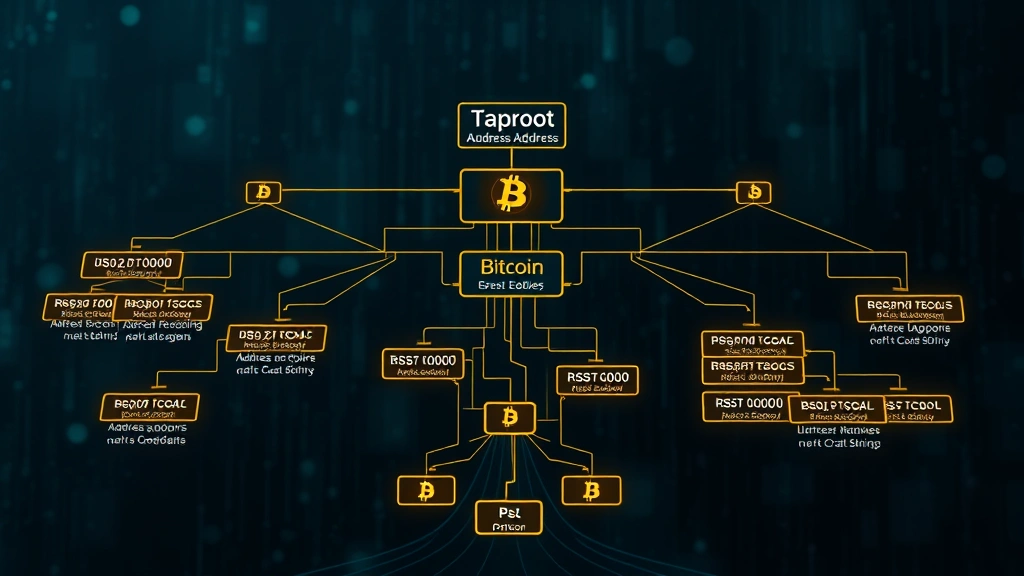
The Taproot upgrade consists of three Bitcoin Improvement Proposals (BIPs): BIP 340 (Schnorr Signatures), BIP 341 (Taproot), and BIP 342 (Tapscript). Together, these proposals introduce a new transaction type called P2TR (Pay-to-Taproot), which uses a single public key to represent both a simple payment path and complex smart contract conditions. This innovation enables what’s called “key tree” architecture, where multiple spending conditions can be encoded into a single taproot address without revealing which condition will ultimately be used.
Taproot’s design philosophy emphasizes privacy and efficiency. In most cases, complex transactions appear on the blockchain as simple single-signature transactions, making it impossible for external observers to determine whether a transaction involves a simple payment or a sophisticated multi-signature arrangement or smart contract. This privacy enhancement represents a significant leap forward compared to earlier address formats, where transaction complexity is often visible to blockchain analysts.
The upgrade also dramatically improves Bitcoin’s smart contract capabilities. While Bitcoin has always supported programmable transactions through Script, Taproot’s new scripting language (Tapscript) provides more flexibility and efficiency. Developers can now create sophisticated contracts with multiple conditions, time locks, and complex authorization schemes while maintaining smaller transaction sizes and improved privacy compared to previous methods.
Key Differences Between Taproot and SegWit
While SegWit and Taproot are often discussed together, they serve different purposes and operate at different technical levels. Understanding their distinctions is essential for grasping Bitcoin’s upgrade trajectory and current capabilities.
Signature Algorithm: SegWit uses ECDSA signatures, the same cryptographic standard that secured Bitcoin since its inception. Taproot introduces Schnorr signatures, which are mathematically simpler, more flexible, and enable signature aggregation. This fundamental difference allows Taproot to achieve superior efficiency and privacy characteristics.
Transaction Size: Both upgrades reduce transaction size compared to legacy formats, but Taproot achieves even greater compression through signature aggregation. A multi-signature transaction using Taproot can be significantly smaller than the equivalent SegWit transaction, resulting in lower fees and improved blockchain efficiency. For users managing Bitcoin holdings, this efficiency translates to meaningful cost savings during fee spikes.
Privacy Features: SegWit improved privacy by separating signature data, but transaction structure still reveals information about transaction complexity. Taproot obscures this information completely—all Taproot transactions appear identical on the blockchain, regardless of whether they’re simple payments or complex multi-signature arrangements. This represents a substantial privacy upgrade for Bitcoin users.
Smart Contract Capability: SegWit enabled basic smart contracts through P2WSH, but Taproot’s Tapscript provides more sophisticated scripting capabilities with better efficiency. This makes Taproot the preferred choice for building complex financial instruments and decentralized applications on Bitcoin.
Backward Compatibility: Both upgrades maintain backward compatibility with older Bitcoin versions, though nodes must be updated to fully validate the new transaction types. SegWit addresses can be received by all modern wallets, while Taproot requires more recent wallet implementations. This phased adoption approach ensures network stability while enabling innovation.
Technical Architecture and Implementation
The technical implementation of these upgrades reveals the sophisticated engineering required to maintain Bitcoin’s security and decentralization while introducing new features.
SegWit’s implementation involved creating a new witness field in the transaction structure. Transactions are divided into two parts: the base transaction (containing inputs, outputs, and metadata) and the witness data (containing signatures and scripts). This separation allows nodes to validate transaction signatures independently from the transaction ID calculation, solving the malleability problem while enabling the increased block weight limit. The witness field uses a separate weight calculation: non-witness data counts as 4 weight units per byte, while witness data counts as 1 weight unit per byte, resulting in the effective 4MB block size limit.
Taproot’s implementation is more complex, introducing several interrelated components. Schnorr signatures use a different mathematical foundation than ECDSA, based on elliptic curve operations that are more efficient and enable key aggregation. The taproot output format uses a single 32-byte public key, which can represent either a simple payment key or the root of a tree containing multiple spending conditions. This “taproot tree” structure allows complex contracts to be hidden until they’re actually executed, providing significant privacy and efficiency benefits.
The activation of these upgrades demonstrates Bitcoin’s governance model. Both SegWit and Taproot used Speedy Trial activation, a consensus mechanism where miners signal support for the upgrade. Once a threshold of blocks signal readiness, the upgrade activates automatically. This approach balances the need for protocol changes with the requirement for broad consensus among network participants.
Privacy and Security Improvements
Privacy and security enhancements are central to both upgrades, though they address these concerns differently.
SegWit improved security by solving transaction malleability, which had implications for both individual users and scaling solutions like the Lightning Network. By making signature data immutable within the transaction structure, SegWit eliminated a vector through which transactions could be manipulated. Additionally, SegWit transactions provide some privacy improvements by separating signature data, making it slightly harder for observers to trace transaction patterns.
Taproot takes privacy to a new level through several mechanisms. First, signature aggregation means that multi-signature transactions appear identical to single-signature transactions on the blockchain. An observer cannot distinguish between a simple payment and a 15-of-15 multisig arrangement, dramatically improving privacy for institutional and complex transaction types. Second, the taproot tree structure allows multiple spending paths to be encoded into a single address, with only the executed path revealed when the transaction is spent. This means that unused contract conditions remain completely private.
Security improvements in Taproot stem from Schnorr signatures’ mathematical properties. These signatures are non-malleable at the protocol level, preventing certain classes of attacks. Additionally, key aggregation reduces the attack surface by allowing multiple parties to create a single combined key rather than requiring explicit multi-signature constructions. This is particularly important for Bitcoin’s long-term security model, as it enables more efficient cryptographic constructions.
Both upgrades maintain Bitcoin’s fundamental security model based on cryptographic proofs and decentralized consensus. They don’t introduce new trusted intermediaries or alter the core security assumptions that make Bitcoin trustworthy.
Impact on Bitcoin Scalability
Scalability remains one of Bitcoin’s most pressing challenges, and both upgrades contribute to solutions in different ways.
SegWit’s impact on scalability was immediate and substantial. By increasing the effective block size limit, SegWit improved transaction throughput on the base layer. More importantly, it enabled the Lightning Network, which can process millions of transactions per second while settling periodically on the Bitcoin blockchain. The Lightning Network has grown significantly, with over 16,000 channels and capacity exceeding 5,000 BTC, demonstrating SegWit’s practical scalability impact. For those tracking Bitcoin price movements, scalability improvements are a fundamental driver of long-term value, as they determine the network’s utility and adoption potential.
Taproot enhances scalability through multiple mechanisms. Schnorr signature aggregation reduces transaction size, allowing more transactions to fit in each block. For Lightning Network channels, Taproot enables more efficient state management and reduces the size of transactions needed to close channels or manage disputes. The upgrade also improves efficiency for complex multi-signature arrangements, which are increasingly important for institutional custody and decentralized finance applications.
However, neither upgrade solves Bitcoin’s fundamental scalability limitations on the base layer. The Bitcoin network maintains a 10-minute average block time and approximately 1 MB of non-witness data per block. This design prioritizes security and decentralization over raw throughput. Both SegWit and Taproot work within these constraints, optimizing transaction efficiency rather than increasing raw capacity. True scalability for Bitcoin comes from second and third-layer solutions like the Lightning Network, which these upgrades enable and improve.
Adoption Rates and Network Integration
The adoption trajectory of these upgrades reflects different factors and timelines in the Bitcoin ecosystem.
SegWit adoption was gradual but ultimately comprehensive. When activated in 2017, adoption was slow, with resistance from some community members who preferred larger block sizes. However, by 2023, the vast majority of Bitcoin transactions used SegWit addresses, with adoption rates exceeding 85% among major exchanges and wallets. This widespread adoption created network effects, as using SegWit became the default standard, and legacy addresses became increasingly rare.
Taproot adoption has been faster than SegWit’s initial uptake, reaching approximately 30-40% of transactions within two years of activation. Major exchanges including FintechZoom Bitcoin Price Today platforms have integrated Taproot support, and wallet developers have prioritized implementation. This faster adoption reflects the Bitcoin community’s increased maturity and the clear benefits that Taproot provides.
Integration into the broader Bitcoin ecosystem varies by use case. Lightning Network implementations have rapidly adopted Taproot to reduce channel management costs. Custodians and institutional service providers have integrated Taproot support to offer clients improved efficiency and privacy. However, some legacy systems and older wallet software remain on earlier address formats, creating a diverse ecosystem where multiple upgrade levels coexist.
The coexistence of legacy, SegWit, and Taproot addresses demonstrates Bitcoin’s backward compatibility approach. Users can receive payments to any address format, and wallets handle conversion transparently. This flexibility ensures that upgrades don’t force users to migrate immediately, reducing friction while enabling innovation.
Future Implications for Bitcoin Development
The successful implementation of SegWit and Taproot provides a roadmap for Bitcoin’s future development and suggests several implications for the protocol’s evolution.
These upgrades demonstrate that Bitcoin can successfully implement significant protocol changes while maintaining consensus and security. The activation mechanisms used—particularly Speedy Trial—have proven effective for coordinating upgrades across a decentralized network. Future upgrades may use similar approaches, enabling continued innovation while respecting the need for broad agreement among stakeholders.
The focus on efficiency and privacy in recent upgrades suggests that future development will continue these themes. Potential future upgrades might include improved covenants (allowing transactions to constrain how their outputs can be spent), enhanced zero-knowledge proof integration, or new cryptographic primitives that further improve privacy and efficiency. Understanding Bitcoin’s technical evolution through indicators and analysis helps investors and users anticipate how protocol changes might affect network value and utility.
The relationship between base-layer upgrades and second-layer solutions continues to be central to Bitcoin’s scaling strategy. Taproot improvements to smart contracts and multi-signature efficiency will likely enable more sophisticated Lightning Network implementations and potentially new layer-two protocols optimized for specific use cases.
Institutional adoption of Bitcoin depends partly on technical features that SegWit and Taproot provide. Improved privacy, reduced transaction costs, and enhanced smart contract capabilities make Bitcoin more attractive for institutional custody, settlement, and complex financial arrangements. As institutions increasingly hold Bitcoin, Bitcoin price predictions become increasingly influenced by technical developments that improve institutional utility.
The upgrade process itself has become more sophisticated and participatory. Community discussions, testing periods, and staged activation mechanisms ensure that upgrades reflect genuine consensus and have been thoroughly vetted. This mature governance approach contrasts with early Bitcoin days and suggests that future upgrades will continue to benefit from rigorous technical review and broad stakeholder input.
Finally, these upgrades highlight Bitcoin’s ability to balance innovation with stability. Rather than pursuing radical changes, Bitcoin’s development follows a conservative approach where improvements are thoroughly analyzed, tested extensively, and activated only after clear consensus. This approach has proven effective at maintaining Bitcoin’s core security properties while enabling meaningful improvements in functionality and efficiency.
FAQ
What is the main difference between Taproot and SegWit?
The primary difference is that SegWit introduced signature separation to increase block capacity and enable second-layer solutions, while Taproot adds Schnorr signatures and signature aggregation for improved efficiency, privacy, and smart contract capabilities. Taproot builds upon SegWit’s foundation rather than replacing it.
Do I need to switch to Taproot addresses immediately?
No. Bitcoin maintains backward compatibility, so you can continue using legacy or SegWit addresses. However, Taproot addresses offer lower fees and enhanced privacy. If your wallet supports Taproot, it’s generally beneficial to migrate, but there’s no urgency unless you’re making frequent transactions.
How do Schnorr signatures improve Bitcoin security?
Schnorr signatures are non-malleable at the protocol level, preventing certain signature manipulation attacks. They also enable key aggregation, allowing multiple parties to create a combined key with better security properties than traditional multi-signature schemes.
Can Taproot significantly increase Bitcoin’s transaction throughput?
Taproot improves efficiency, allowing more transactions per block through smaller transaction sizes. However, true scalability for Bitcoin comes from second-layer solutions like the Lightning Network, which Taproot helps improve. Base-layer throughput remains limited by design to maintain decentralization and security.
What percentage of Bitcoin transactions use Taproot?
As of late 2024, approximately 30-40% of Bitcoin transactions use Taproot addresses, with adoption continuing to grow. Major exchanges and wallet providers have integrated Taproot support, driving broader ecosystem adoption.
Will there be upgrades after Taproot?
Yes. Bitcoin development continues, with proposals for covenants, improved privacy features, and other enhancements under discussion. However, upgrades proceed cautiously, with extensive testing and broad consensus required before activation.


