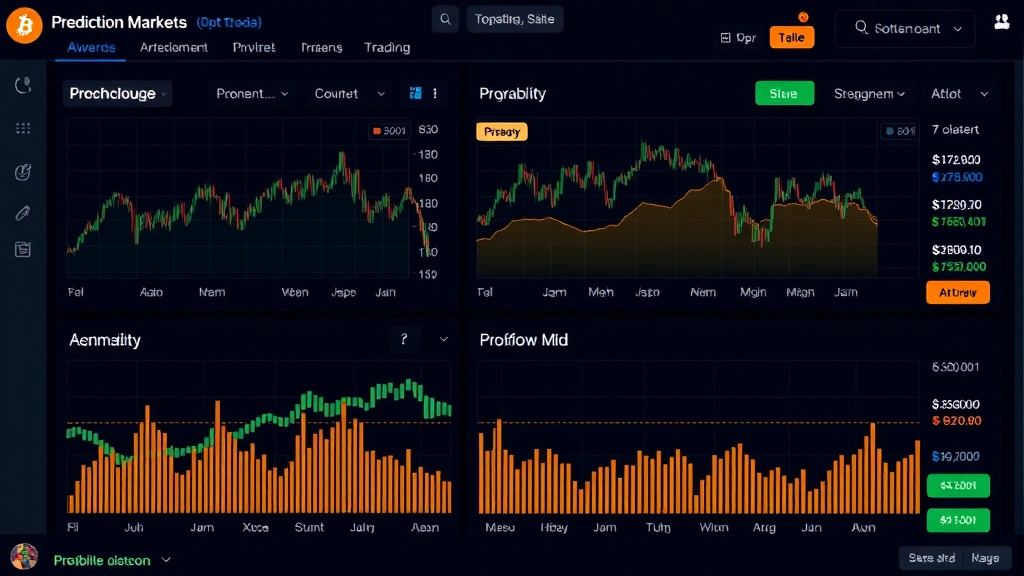
Polymarket Bitcoin Insights: Expert Analysis of Prediction Markets
Polymarket has emerged as one of the most influential prediction markets in the cryptocurrency ecosystem, offering real-time insights into how traders and analysts view Bitcoin’s future. By aggregating thousands of participants’ beliefs through financial incentives, Polymarket creates a powerful signal for understanding market sentiment and potential price movements. This decentralized prediction platform has become essential for anyone serious about understanding Bitcoin’s trajectory and making informed investment decisions.
The platform’s unique mechanism—where participants stake real money on outcomes—creates a market-driven consensus that often proves more accurate than traditional forecasting methods. Unlike social media speculation or analyst predictions, Polymarket participants have genuine financial skin in the game, making their predictions more reliable and actionable. Understanding how to interpret Polymarket Bitcoin insights can significantly enhance your investment strategy and risk management approach.
What Is Polymarket and How Does It Work
Polymarket is a decentralized prediction market platform built on blockchain technology that allows users to buy and sell shares tied to the outcomes of future events. The platform operates on the principle that aggregated market prices reflect the collective wisdom of all participants, creating what economists call a prediction market or futures market for information. Users deposit funds, purchase shares predicting specific outcomes, and can sell those shares at any time before the event resolution.
The mechanics are straightforward: each market presents a binary or multi-outcome question, such as “Will Bitcoin reach $100,000 by December 31, 2025?” Users can buy “yes” or “no” shares, with prices fluctuating based on supply and demand. If you believe Bitcoin will reach that price and purchase yes shares at $0.65 per share, and the outcome resolves affirmatively, your shares become worth $1.00, generating a 54% return on that position. The opposite applies if you’re wrong—you lose your investment.
What makes Polymarket particularly valuable for Bitcoin forecast 2025 analysis is the continuous price discovery mechanism. As new information emerges—regulatory announcements, macroeconomic data, technical developments—the market prices adjust in real-time. This creates a living, breathing estimate of what informed traders believe will happen, updated constantly throughout the day.
Bitcoin Prediction Markets on Polymarket
Bitcoin prediction markets on Polymarket span multiple timeframes and price targets, creating a comprehensive map of market expectations. At any given time, dozens of active markets exist regarding Bitcoin’s future price, ranging from short-term (next week) to long-term (next year or beyond) predictions. Popular market categories include specific price target questions, halving-related outcomes, regulatory developments, and macroeconomic scenarios affecting Bitcoin adoption.
The most liquid and frequently traded Bitcoin markets typically focus on round-number price targets: will Bitcoin exceed $50,000, $75,000, or $100,000 by specific dates? These markets attract institutional traders, sophisticated retail participants, and casual speculators, creating deep liquidity and tight bid-ask spreads. The volume in these markets means prices reflect genuine market consensus rather than thin trading from a small number of participants.
Understanding current Polymarket Bitcoin positions requires checking the platform regularly, as markets evolve continuously. Markets that seemed unlikely weeks ago may become probable following major news events, while previously favored outcomes may lose support. This dynamic nature makes Polymarket an excellent tool for tracking how professional traders reassess Bitcoin’s prospects in response to changing conditions.
When analyzing why Bitcoin is going up, Polymarket data often provides clues about what specific factors traders believe are driving prices. If markets predicting Bitcoin gains following specific regulatory approval show sharp price increases, you understand the market is pricing in that catalyst’s importance. This granular insight helps distinguish genuine fundamental drivers from temporary price movements.

” alt=”Blockchain network visualization with cryptocurrency tokens and digital connections flowing through nodes”>
Reading Market Signals and Probability Data
Interpreting Polymarket Bitcoin data requires understanding what market prices actually represent. A market trading at $0.72 doesn’t mean there’s a 72% probability of that outcome occurring—it means that’s the price at which the marginal buyer and seller agreed to transact. However, in efficient markets with adequate liquidity and diverse participants, prices do approximate probability assessments.
The relationship between market price and true probability becomes more meaningful when considering several factors. Markets with higher trading volume and more participants typically generate more accurate probability estimates, as the aggregated wisdom of many independent decision-makers tends toward accuracy. Markets with thin liquidity or few participants may reflect the biases of dominant traders rather than genuine consensus.
When reading Polymarket Bitcoin insights, pay attention to several key metrics. First, examine the current price relative to historical prices for that market. If a market previously traded at $0.45 and now trades at $0.68, something has changed the market’s assessment. Second, look at trading volume and velocity—rapidly increasing volume suggests new information or shifted sentiment, while declining volume may indicate consensus forming around current prices.
Third, compare across related markets. If multiple markets predicting Bitcoin outcomes at different price levels show consistent probability distributions, you’re likely seeing genuine market consensus. If outcomes seem disconnected or contradict each other, one or more markets may be mispriced. These arbitrage opportunities sometimes exist in Polymarket, though sophisticated traders quickly identify and exploit them.
The historical accuracy of prediction markets has been extensively documented by researchers. CoinDesk and other crypto research organizations frequently analyze how well prediction market prices correlated with actual outcomes, generally finding that prediction markets outperform individual expert predictions and traditional forecasting methods.
Comparing Polymarket Forecasts with Traditional Analysis
Traditional Bitcoin analysis relies on technical analysis, fundamental analysis, and expert opinion—approaches that have significant limitations when compared to prediction market aggregation. A single analyst, regardless of expertise, brings personal biases, information gaps, and potential conflicts of interest. Prediction markets overcome these limitations by aggregating many independent views with financial consequences for accuracy.
Technical analysis examines historical price patterns and trading volume to forecast future movements. While useful for identifying support and resistance levels, technical analysis provides probabilistic guidance rather than definitive predictions. Polymarket markets complement technical analysis by showing whether the broader trader community believes technical patterns will hold or break down in the current environment.
Fundamental analysis evaluates Bitcoin’s intrinsic value based on adoption metrics, network effects, institutional interest, and macroeconomic conditions. This approach requires deep expertise and access to quality information. Polymarket aggregates the conclusions of many fundamental analysts, creating a consensus view on whether Bitcoin’s fundamentals support higher or lower prices. When Polymarket prices diverge significantly from your fundamental analysis conclusions, it’s worth reconsidering whether you’re missing important information.
Expert predictions, whether from prominent cryptocurrency analysts or traditional finance experts entering the crypto space, carry the limitations of individual judgment. However, when these experts actively trade on Polymarket, their predictions gain credibility through their willingness to stake capital. Markets where recognized experts hold substantial positions often show different price dynamics than markets where participation remains anonymous and diffuse.
Understanding whether Bitcoin will crash requires synthesizing Polymarket data with traditional analysis. Prediction markets showing low probabilities for major price declines suggest traders believe downside risks are limited, but this reflects current sentiment rather than certainty. Combining this market-based assessment with your technical and fundamental analysis creates more robust decision-making.
Risk Considerations and Market Limitations
While Polymarket provides valuable insights, understanding its limitations is crucial for responsible interpretation. First, prediction markets can remain irrational or mispriced for extended periods, especially when dominated by participants with similar biases or information. Markets focused on controversial outcomes may reflect the convictions of passionate believers rather than balanced probability assessment.
Second, Polymarket’s regulatory status remains uncertain in various jurisdictions. The platform operates in a gray legal area in some countries, and changes in regulation could affect market liquidity, participation, and reliability. Traders in jurisdictions where prediction markets face legal challenges may withdraw, reducing market depth and accuracy.
Third, resolution criteria matter enormously for market accuracy. Markets must clearly define what outcome constitutes resolution, and disputes about resolution have occurred in prediction market history. A market asking “Will Bitcoin reach $100,000?” seems clear, but ambiguity arises regarding the exact timeframe, whether intra-day wicks count, and how to handle hard forks affecting Bitcoin’s definition.
Fourth, Polymarket primarily reflects the beliefs of traders willing and able to participate on the platform. Geographic restrictions, regulatory limitations, and platform access requirements mean that Polymarket participants aren’t truly representative of all Bitcoin stakeholders globally. Wealthy traders with more capital to deploy may have disproportionate influence, even if they don’t hold majority positions.
Fifth, prediction markets can exhibit momentum and herding behavior where traders follow recent price movements rather than independently assessing probabilities. If a market rapidly moves from $0.40 to $0.70, some traders may buy at higher prices simply because others are buying, not because their probability assessment changed. This can create bubbles within prediction markets themselves.

” alt=”Futuristic digital interface showing flowing data streams and cryptocurrency market indicators in blue and purple tones”>
Integrating Polymarket Data Into Your Strategy
Effectively incorporating Polymarket Bitcoin insights into your investment strategy requires systematic approaches rather than reactive trading. Begin by identifying which Polymarket markets most closely align with your investment thesis and timeframe. If you’re a long-term Bitcoin holder, focus on markets predicting outcomes over 12-24 months rather than daily price movements.
Develop a framework for comparing Polymarket prices to your own probability assessments. If Polymarket prices a Bitcoin outcome at $0.65 but your analysis suggests $0.40 probability, you’ve identified a potential opportunity. However, apply appropriate humility—prediction market aggregation often proves more accurate than individual analysis, so significant divergences warrant reconsideration of your assumptions.
Use Polymarket data for portfolio diversification purposes by understanding how traders price different scenarios. If markets show low probability for severe Bitcoin price declines, your portfolio hedging strategy might differ than if markets showed 35% probability of major crashes. Polymarket probabilities help calibrate your risk management approach.
Track Polymarket sentiment changes over time to identify shifting trader conviction. When a market that traded steady at $0.60 begins moving toward $0.75, something has changed. Investigating what news or developments drove this shift helps you understand whether the market is responding to information you’ve already incorporated into your thinking or whether you’ve missed important developments.
Consider participating in Polymarket trading yourself as a way to clarify your own thinking and test your probability assessments. The discipline of putting capital at risk forces clearer thinking than passive speculation. However, recognize that prediction market trading involves real risk, and positions can move against you regardless of your analysis quality.
Integrate Polymarket insights with asset allocation decisions by allowing market-based probability estimates to inform position sizing. If Polymarket shows 85% probability of Bitcoin reaching $60,000 but only 25% probability of reaching $150,000, your position sizing might reflect these asymmetric probabilities.
Consult external authoritative sources alongside Polymarket data. Blockchain.com provides on-chain analysis and metrics that complement prediction market sentiment. Glassnode offers advanced on-chain intelligence that reveals whether large Bitcoin holders are accumulating or distributing. Investopedia’s Bitcoin resources provide foundational knowledge that helps contextualize prediction market data.
When considering protecting investments during recession scenarios, Polymarket markets predicting Bitcoin’s behavior in economic downturns become particularly relevant. Compare prediction market probabilities of Bitcoin serving as portfolio insurance against historical data and your own recession analysis.
Monitor Polymarket markets actively during high-impact events like Federal Reserve announcements, regulatory developments, or major cryptocurrency exchange incidents. These moments reveal how quickly prediction markets adjust to new information and whether the market’s reassessment aligns with your analysis. Observing market reactions to events you’ve analyzed helps calibrate your confidence in your own predictions.
FAQ
How accurate are Polymarket Bitcoin predictions historically?
Polymarket Bitcoin predictions have demonstrated better accuracy than individual expert predictions in multiple studies, though accuracy varies by market. Markets with higher liquidity, longer timeframes, and clearer resolution criteria generally prove more accurate than illiquid markets or those with ambiguous resolution definitions. Historical analysis shows prediction markets outperform traditional forecasting methods approximately 70-80% of the time, though this varies significantly by specific market and timeframe.
Can I use Polymarket data for day-trading Bitcoin?
While Polymarket data reflects current trader sentiment, using it for day-trading carries substantial risks. Prediction markets measure probability of longer-term outcomes rather than intraday price movements. Markets predicting Bitcoin will exceed $60,000 within a month provide limited guidance for today’s price action. Prediction markets work best for strategic positioning rather than tactical day-trading decisions.
What’s the difference between Polymarket prices and actual probability?
Market prices approximate probability in efficient, liquid markets with diverse participants and adequate information availability. However, several factors can create divergence: trader risk preferences, liquidity constraints, information asymmetries, and behavioral biases. A market price of $0.70 suggests approximately 70% probability, but shouldn’t be interpreted as exact—it represents the marginal trading price, not necessarily the true probability.
Are Polymarket Bitcoin markets legal in my country?
Polymarket’s legal status varies by jurisdiction. The platform operates in a regulatory gray area in many countries, with some jurisdictions explicitly permitting prediction markets while others restrict or prohibit them. Check your local financial regulations before participating, as trading on Polymarket may violate local gambling or securities laws. Consult legal counsel if uncertain about your jurisdiction’s stance.
How should I weight Polymarket data against my own analysis?
Prediction market aggregation typically outperforms individual analysis, but shouldn’t completely override your views. If Polymarket data contradicts your analysis significantly, investigate whether you’re missing important information rather than automatically trusting the market. A balanced approach combines prediction market data with your fundamental and technical analysis, using disagreement as a signal to reconsider your assumptions.
Can prediction markets be manipulated?
Large participants with substantial capital can influence prediction market prices, particularly in illiquid markets. However, true manipulation—where a participant forces market prices to reflect false probabilities—becomes increasingly difficult as market liquidity and participation increase. Bitcoin markets on Polymarket, being among the most liquid, show greater resistance to manipulation than smaller, less-traded markets.


