
Shorting Bitcoin: Risks and Rewards Explained
Bitcoin shorting represents one of the most sophisticated and potentially lucrative strategies in the cryptocurrency market, yet it remains shrouded in complexity and misconception. Unlike traditional investing where you profit from price increases, shorting allows traders to capitalize on declining asset values. However, this strategy comes with asymmetrical risks that can quickly deplete trading capital if market conditions move unexpectedly.
Understanding shorting Bitcoin requires grasping both the mechanics of how these positions work and the psychological discipline needed to manage them effectively. Whether you’re a seasoned trader exploring advanced strategies or a curious investor wanting to understand market dynamics, this comprehensive guide walks you through everything you need to know about Bitcoin short positions, from basic concepts to risk management techniques that separate successful traders from those who experience catastrophic losses.
What Is Shorting Bitcoin?
Shorting Bitcoin involves borrowing Bitcoin (or taking a short position on a derivative contract) and immediately selling it at the current market price, with the intention of repurchasing it at a lower price in the future. The difference between the selling price and the repurchase price represents your profit. This strategy inverts the traditional “buy low, sell high” approach to instead “sell high, buy low.”
The fundamental appeal of shorting lies in its ability to generate returns during bear markets when most traditional investors suffer losses. While a bull market typically rewards long positions, bear markets reward those who correctly anticipated downward price movements. Bitcoin’s notorious volatility makes it an attractive asset for short sellers, as significant price swings create numerous profit opportunities for traders with precise timing and risk management.
It’s important to distinguish between different types of shorting mechanisms. Bitcoin price forecasts help inform shorting decisions, but the execution method varies significantly depending on your chosen platform and risk tolerance. Some traders use margin trading on centralized exchanges, while others prefer derivatives like futures contracts or options, each carrying distinct risk profiles and regulatory considerations.
How Bitcoin Shorting Works
The mechanics of shorting Bitcoin differ based on the method you employ. In margin trading, you borrow Bitcoin from your exchange’s lending pool and immediately sell it. You then owe the exchange that Bitcoin plus interest fees. When the price drops, you purchase Bitcoin at the lower price and return it to the lender, pocketing the difference minus fees and interest charges.
Consider a practical example: you identify a bearish setup and believe Bitcoin will decline from $45,000. You borrow 1 Bitcoin and sell it for $45,000. Bitcoin subsequently drops to $40,000, and you buy 1 Bitcoin at this lower price. You return the borrowed Bitcoin to the lender, keeping the $5,000 difference minus borrowing costs. If borrowing fees totaled $200, your net profit would be $4,800.
Futures contracts offer another shorting mechanism without requiring you to hold actual Bitcoin. You simply open a short position on a Bitcoin futures contract, betting on price decline. If Bitcoin drops, your position gains value. These contracts typically involve leverage, meaning you control a larger notional value than your actual collateral. This amplifies both potential gains and losses.
Perpetual futures—available on platforms like Bybit and Binance—allow indefinite short positions without expiration dates. Traditional futures contracts have expiration dates, requiring you to either close positions or roll them into future contracts before expiry. Understanding these mechanics prevents costly mistakes when managing active short positions.

Key Risks of Shorting Bitcoin
Unlimited Loss Potential represents the most critical risk distinguishing shorting from long positions. When you buy Bitcoin, your maximum loss is 100%—if Bitcoin falls to zero, you lose your entire investment. When you short Bitcoin, there is theoretically no limit to losses. Bitcoin could rise to $100,000, $500,000, or beyond, and your losses would continue mounting indefinitely. This asymmetrical risk structure makes position sizing absolutely crucial.
Liquidation Risk emerges when using leverage on margin trading or futures positions. Exchanges automatically close your position if losses exceed your collateral. A 5% adverse move with 20x leverage triggers immediate liquidation, erasing your entire position at the worst possible moment. This forced exit prevents you from waiting for recovery and locks in maximum losses precisely when recovery seems impossible.
Borrowing Costs steadily erode profits in margin short positions. Bitcoin lending rates fluctuate based on supply and demand. During bull markets when many traders want to short, borrowing rates spike dramatically. You might secure a short at 8% annual interest, but rates could jump to 25% or higher during intense rallies, consuming your profits even if price movements favor your position.
Short Squeeze Dynamics create sudden, violent price spikes that liquidate unprepared traders. When numerous short positions cluster at similar price levels, coordinated buying (whether organic or manipulative) triggers cascading liquidations. As traders get forced to buy Bitcoin to close positions, buying pressure intensifies, pushing prices higher and triggering more liquidations. Retail traders caught in these squeezes often experience devastating losses.
Regulatory and Platform Risk deserves serious consideration. Some jurisdictions restrict or prohibit shorting. Exchanges may disable shorting during volatile periods or restrict borrowing availability. Platform bankruptcies, as seen with FTX, can result in complete loss of collateral. Using unregistered or unreliable platforms amplifies these risks substantially.
Potential Rewards and Profit Scenarios
Shorting Bitcoin during significant bear markets generates substantial returns for traders with proper positioning. Consider Bitcoin’s 2022 bear market when prices fell from $69,000 to $16,000. A trader who successfully shorted at $60,000 and covered at $20,000 would realize 66% gains. Applied to 10 Bitcoin with proper leverage, this translates to hundreds of thousands in profits.
The psychological advantage of shorting during prolonged downtrends lies in trading with momentum rather than against it. Long traders during bear markets constantly battle psychological pressure to hold losing positions, hoping for recovery. Short sellers during downtrends enjoy tailwinds—each new lower low reinforces their thesis, making position management psychologically easier.
Shorting also provides portfolio hedging benefits. If you hold significant Bitcoin positions, implementing short positions at certain price levels protects against downside while maintaining long-term exposure. This hedging strategy allows you to diversify your investment portfolio more effectively by reducing concentration risk.
High-conviction short positions during specific technical setups can generate quick profits. Bitcoin often experiences predictable pullbacks within larger trends. A trader recognizing these patterns can establish short positions at resistance levels, capturing 5-15% moves within days or weeks. Repeated execution of these tactical shorts compounds into meaningful annual returns.
When you evaluate whether it’s a good time to buy Bitcoin, the inverse analysis applies to shorting. Identifying market tops and distribution patterns creates shorting opportunities with favorable risk-reward ratios where potential gains exceed potential losses significantly.
Shorting Methods and Platforms
Margin Trading on centralized exchanges like Binance and Kraken allows borrowing Bitcoin directly. You deposit collateral, borrow Bitcoin against it, and sell immediately. This method suits traders wanting direct Bitcoin exposure without derivatives. However, borrowing fees and liquidation risks require careful management.
Futures Contracts on platforms like CME, Binance Futures, and Bybit enable shorting without holding Bitcoin. These contracts have expiration dates (except perpetuals) and involve leverage. Futures attract institutional traders and those wanting leverage without borrowing Bitcoin directly. Regulatory oversight is generally stronger for futures than margin trading.
Perpetual Futures combine leverage benefits with indefinite position duration. No expiration dates mean you hold positions as long as desired, paying only funding rates rather than borrowing fees. These instruments dominate retail trading volume and offer the most flexibility for active traders managing short positions across multiple timeframes.
Options Strategies provide sophisticated shorting alternatives. Put options give you the right to sell Bitcoin at a predetermined price, creating defined-risk short exposure. This method caps maximum losses (to the premium paid) while maintaining significant profit potential. Options require deeper understanding but appeal to risk-conscious traders.
Bitcoin Inverse ETFs offer traditional investment vehicles for shorting. These funds track inverse Bitcoin price movements, allowing shorting through regular brokerage accounts. However, they typically target short-term performance and suffer from decay over extended periods, making them better for tactical rather than long-term shorts.
Risk Management Strategies
Position Sizing represents the foundational risk management principle. Never risk more than 1-2% of your total trading capital on any single position. If your trading account contains $10,000, your maximum loss per trade should be $100-200. This discipline ensures that even multiple consecutive losses don’t significantly impair your capital. Many experienced traders suggest sizing short positions even smaller due to unlimited loss potential.
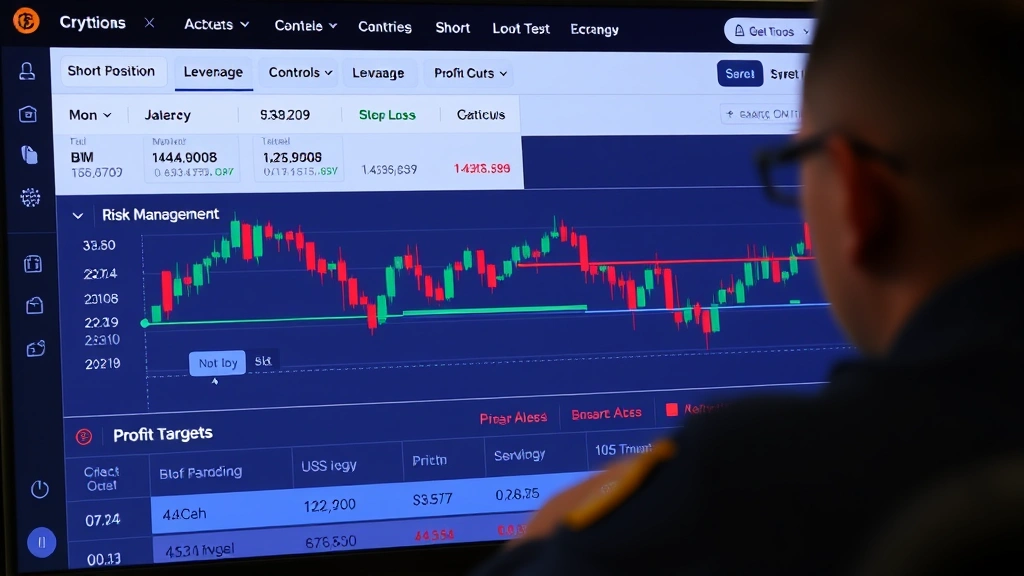
Stop Loss Implementation is non-negotiable for short positions. Establish your maximum loss tolerance before entering the trade—perhaps 5-10% above your entry price. Place stop loss orders immediately upon entering the short. This prevents emotion from overriding logic when adverse price movements occur. Some traders use mental stops for precise control, though automated stops provide more reliable execution.
Leverage Discipline determines whether shorting becomes a wealth-building strategy or a capital-destruction mechanism. Most retail traders lose money using leverage because they underestimate volatility and overestimate conviction. Conservative traders never exceed 3-5x leverage on short positions. Many successful traders use 1-2x leverage or no leverage at all, accepting smaller profits for substantially reduced ruin risk.
Profit Taking requires predetermined exit strategies. Many short sellers suffer losses by holding positions too long, hoping for additional declines. Establish your profit target before entering—perhaps 10-20% gains—and exit automatically when achieved. Letting winners run sounds appealing, but short selling’s unlimited loss potential makes disciplined exits more important than maximizing individual trade gains.
Diversification of short positions prevents concentration risk. Rather than shorting Bitcoin exclusively, consider shorting Bitcoin and Ethereum or other correlated assets. Different short positions based on different technical setups reduce the probability that a single market catalyst wipes out your entire short portfolio.
Monitoring Borrowing Costs in margin trading ensures your position remains profitable. If borrowing rates spike above 20% annually while your short position moves slightly against you, exit before fees consume all potential profits. Set alerts that notify you when rates exceed predetermined thresholds, triggering position review and possible closure.
Market Conditions for Shorting
Shorting works best during established downtrends where lower lows and lower highs characterize price action. Bitcoin typically moves in multi-month or multi-year trends. Shorting against the primary trend—attempting to short during bull markets—generates losses most of the time. Successful short sellers trade with the dominant trend, not against it.
Technical resistance levels provide optimal entry points for short positions. When Bitcoin approaches major resistance that previously rejected higher prices, shorting at these levels offers favorable risk-reward setups. The resistance level provides a natural stop loss location, while potential downside extends significantly below.
Divergences between price and momentum indicators create high-probability shorting opportunities. When Bitcoin reaches new highs but momentum indicators fail to confirm these highs, a reversal often follows. These setups offer excellent risk-reward ratios because your stop loss can sit just above resistance while potential profits extend significantly downward.
Elevated Bitcoin funding rates on perpetual futures signal excessive leverage and shorting risk. When funding rates reach extreme levels (above 0.1% per 8-hour period), it suggests over-leveraged long positions vulnerable to liquidation. Shorting into this environment increases the probability of short squeezes, making it a dangerous time for new short positions.
Seasonal patterns and macro conditions influence shorting probability. Tax-loss harvesting in December often creates selling pressure in Bitcoin. Regulatory announcements sometimes trigger sharp declines. Macro recession concerns reduce risk appetite, pressuring Bitcoin. Shorting during these seasonal and cyclical periods aligns with broader market forces rather than fighting them.
Comparing Shorting to Long Strategies
Long Bitcoin positions suit most retail investors because they align with Bitcoin’s long-term uptrend and require less active management. Holding Bitcoin for years through multiple cycles has historically generated substantial wealth. This buy-and-hold approach works despite periodic drawdowns because Bitcoin ultimately trends upward over extended periods.
Shorting requires significantly more active management, technical skill, and emotional discipline. You cannot simply hold a short through a bull market—losses mount relentlessly. Successful short sellers exit positions regularly, manage leverage carefully, and avoid holding shorts during established bull trends. This demands constant attention and market awareness.
When considering how much to invest in Bitcoin, most financial advisors recommend long positions for long-term wealth building. Shorting suits active traders seeking tactical profits during specific market conditions, not long-term investors. The psychological and financial costs of managing short positions typically exceed benefits for buy-and-hold investors.
Combining Long and Short Strategies through hedging offers balanced approaches. Investors holding significant Bitcoin positions can establish small short positions at resistance levels, protecting against downside while maintaining long-term exposure. This hybrid approach captures long-term uptrends while reducing drawdown severity.
Tax implications differ significantly between strategies. In many jurisdictions, short-term capital gains (including most short selling profits) face higher tax rates than long-term gains. This tax drag reduces short-selling profitability, making it less attractive for retirement accounts or investors in high tax brackets. Long positions held beyond one year often receive preferential tax treatment.
Volatility Considerations favor shorting during periods of extreme Bitcoin price swings. Bitcoin’s 20-30% daily moves create substantial shorting opportunities that don’t exist in less volatile assets. During calm periods with minimal daily fluctuation, shorting becomes less attractive because potential profits per unit time decline significantly.
FAQ
What is the maximum loss when shorting Bitcoin?
Theoretically, losses are unlimited when shorting Bitcoin. If you short at $40,000 and Bitcoin rises to $100,000, your loss is $60,000 per Bitcoin shorted. Bitcoin could theoretically rise to $1 million or higher, creating unlimited loss potential. This is why strict stop losses and position sizing are absolutely critical for short sellers.
Can I short Bitcoin on traditional stock exchanges?
Most traditional stock exchanges don’t offer direct Bitcoin shorting. However, some brokerages offer Bitcoin inverse ETFs or futures contracts through standard brokerage accounts. Bitcoin futures trade on CME, allowing shorting through regulated traditional finance channels. Check your broker’s offerings for available shorting mechanisms.
Is shorting Bitcoin illegal?
Shorting Bitcoin is legal in most jurisdictions, though regulations vary. Some countries restrict or prohibit shorting certain assets during crises. Always verify your local regulations before shorting. Regulated exchanges and brokerages provide compliant shorting mechanisms, while unregistered platforms may violate local securities laws.
How much leverage should I use when shorting Bitcoin?
Conservative traders use 1-3x leverage or no leverage at all. Moderate traders might use 5-10x leverage with strict risk management. Anything above 10x leverage substantially increases ruin risk. Most retail traders lose money with high leverage because they underestimate volatility and overestimate conviction. Start with minimal leverage while learning.
What are Bitcoin funding rates and how do they affect shorting?
Funding rates on perpetual futures represent payments between long and short traders. When funding rates are positive (and high), long traders pay short traders, rewarding shorts. When negative, shorts pay longs. Extreme positive funding rates signal excessive leverage and potential short squeezes, making shorting riskier. Monitor funding rates before establishing new short positions.
Can I short Bitcoin in a retirement account?
Most retirement accounts (401k, IRA) restrict or prohibit shorting due to fiduciary rules and regulatory requirements. Some self-directed retirement accounts permit shorting, but this is uncommon. Consult your account custodian about available shorting mechanisms. Tax implications also make shorting less attractive in retirement accounts where short-term gains face higher rates.
What’s the difference between shorting Bitcoin and buying put options?
Shorting Bitcoin creates unlimited loss potential but unlimited profit potential. Put options limit maximum loss to the premium paid but also limit maximum profit. Options provide more defined risk but cost upfront premiums. Shorting requires ongoing management (borrowing fees, liquidation risk) while options have fixed costs. Choose based on your risk tolerance and market outlook duration.
How do I know when to exit a short position?
Exit short positions when predetermined profit targets are reached or when stop loss levels are triggered. Don’t hold shorts indefinitely hoping for more declines. Set exit targets before entering (perhaps 10-20% gains) and execute automatically. If your thesis changes and you believe Bitcoin will rise, exit immediately. Never let emotions override predetermined exit rules.
Is shorting Bitcoin more profitable than buying and holding?
Over extended periods (multiple years), Bitcoin’s long-term uptrend makes buying and holding more profitable for most investors. Shorting generates tactical profits during specific downtrends but requires active management and perfect timing. Most retail short sellers underperform buy-and-hold investors when accounting for time invested and tax implications. Shorting suits active traders, not passive investors.
What platforms offer Bitcoin shorting with the best safety records?
Regulated platforms like Binance, Kraken, and Coinbase offer shorting mechanisms with regulatory oversight. CME futures provide institutional-grade safety for futures shorting. Bybit and other major perpetual futures platforms have solid track records, though crypto exchange risk remains higher than traditional finance. Always use established platforms with significant trading volume and regulatory compliance.


