What’s a Bitcoin Address? Beginner’s Guide to Understanding Your Digital Wallet Identity
If you’re stepping into the world of cryptocurrency, one of the first concepts you’ll encounter is the Bitcoin address. Whether you’re planning to buy your first Bitcoin, receive payments, or simply understand how the network operates, knowing what a Bitcoin address is and how it works is fundamental to your crypto journey. Think of it as the cryptocurrency equivalent of your bank account number or email address—it’s a unique identifier that allows others to send you Bitcoin.
In this comprehensive guide, we’ll demystify Bitcoin addresses, explain what they start with, how they’re generated, and why security matters when handling them. By the end, you’ll have a solid understanding of this essential component of Bitcoin ownership and usage.

What Exactly Is a Bitcoin Address?
A Bitcoin address is a unique string of alphanumeric characters that serves as a destination for Bitcoin transactions on the blockchain. When someone wants to send you Bitcoin, they need your address—it’s the only information required to initiate a transfer. The address is derived from your public key through a series of cryptographic hashing functions, making it a one-way mathematical process.
Unlike traditional banking systems where your account number might be kept somewhat private, Bitcoin addresses are completely public. In fact, the entire Bitcoin blockchain is transparent and immutable, meaning anyone can view the transaction history of any address. However, this transparency doesn’t necessarily compromise your privacy because addresses aren’t inherently linked to your identity—unless you voluntarily associate them with your personal information.
The beauty of Bitcoin addresses lies in their functionality. You can generate as many addresses as you want from a single wallet without any cost. Many experienced Bitcoin users create a new address for each transaction to enhance privacy and reduce the risk of someone linking multiple transactions to the same entity. Understanding the structure and types of addresses is crucial for safe and effective Bitcoin use.
What Does a Bitcoin Address Start With?
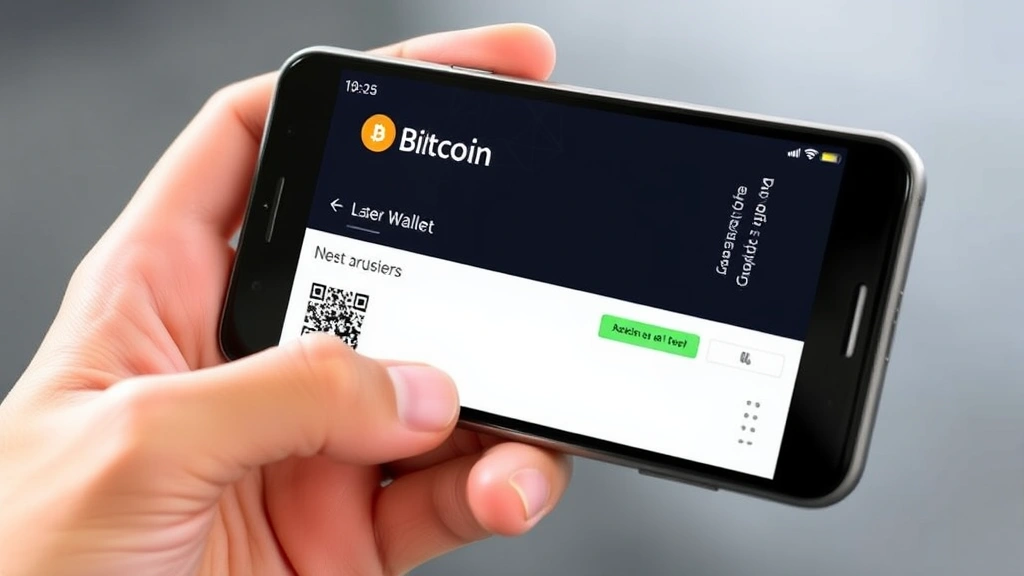
This is one of the most common questions beginners ask, and the answer depends on the type of address format being used. Bitcoin addresses typically start with specific characters that indicate their type and version:
- Legacy addresses (P2PKH) start with the number 1. For example: 1A1z7agoat7SfNUcUjFjhxjJ2d8DwWYDyv. These are the original Bitcoin address format and remain widely supported across all wallets and exchanges.
- Pay-to-Script-Hash addresses (P2SH) start with the number 3. For example: 3J98t1WpEZ73CNmYviecrnyiWrnqRhWNLy. These addresses offer enhanced security features and are commonly used for multi-signature wallets.
- SegWit addresses (Bech32) start with bc1. For example: bc1qw508d6qejxtdg4y5r3zarvary0c5xw7kv8f3t4. These are the newest format, offering better efficiency and lower transaction fees.
The reason addresses start with these specific characters relates to Bitcoin’s encoding system and the version byte that precedes the address data. When Bitcoin was created, Satoshi Nakamoto implemented a system where different address types would have distinct prefixes for easy identification. This design choice has proven invaluable for users and developers who need to quickly determine which address format they’re working with.
When checking current Bitcoin price information on various platforms, you’ll often need to input a Bitcoin address to track specific transactions. Understanding what your address starts with helps ensure you’re using the correct format and that your wallet supports the address type you’re working with.
Types of Bitcoin Addresses Explained
Bitcoin has evolved over the years, introducing multiple address formats to improve functionality, security, and efficiency. Understanding each type is essential for choosing the right one for your needs.
Legacy Addresses (P2PKH – Pay to Public Key Hash): These addresses, starting with 1, are the original format introduced with Bitcoin’s launch in 2009. They’re generated by hashing your public key and encoding the result in Base58Check format. While they remain universally compatible, they’re less efficient than newer formats and typically result in higher transaction fees. Most exchanges and wallets still support legacy addresses, making them a reliable choice for beginners.
P2SH Addresses (Pay to Script Hash): Starting with 3, these addresses were introduced in 2012 to enable more complex transaction types. P2SH addresses are particularly useful for multi-signature wallets, where multiple private keys are required to authorize a transaction. This format is popular among institutional investors and users who want additional security layers. P2SH addresses are more compact than legacy addresses, resulting in slightly lower transaction fees.
SegWit Addresses (Bech32): The newest standard, starting with bc1, was introduced in 2017. SegWit stands for Segregated Witness and represents a significant upgrade to Bitcoin’s protocol. These addresses are the most efficient, offering the lowest transaction fees and fastest confirmation times. They’re also more resistant to certain types of attacks. However, some older wallets and exchanges don’t yet support Bech32 addresses, though this is becoming increasingly rare.
Your choice of address type should depend on your wallet’s capabilities and your transaction needs. Most modern wallets support all three formats, giving you flexibility. For new users, Bech32 addresses are recommended if your wallet and exchange support them, as they offer the best efficiency and lowest fees.
How Bitcoin Addresses Are Generated
The process of generating a Bitcoin address involves sophisticated cryptography and several mathematical steps. Understanding this process demystifies how Bitcoin maintains security while allowing unlimited address creation.
Step 1: Private Key Generation: The process begins with generating a private key, which is a 256-bit random number. This is essentially a very large random number that serves as the foundation for your address. Your private key must be kept absolutely secret, as anyone with access to it can spend all Bitcoin associated with that address.
Step 2: Public Key Derivation: Using the Elliptic Curve Digital Signature Algorithm (ECDSA), your private key is mathematically transformed into a public key. This transformation is one-way—you can derive a public key from a private key, but you cannot reverse the process to discover the private key from the public key. This asymmetric cryptography is what makes Bitcoin security possible.
Step 3: Hashing: The public key is then processed through two cryptographic hash functions: first SHA-256, then RIPEMD-160. This produces a 160-bit hash, which is significantly shorter than the original public key. This hashing process is irreversible, meaning the original public key cannot be recovered from the hash.
Step 4: Encoding: Finally, the hash is encoded using Base58Check (for legacy and P2SH addresses) or Bech32 (for SegWit addresses). The encoding adds a version byte at the beginning (which determines whether the address starts with 1, 3, or bc1) and a checksum at the end to catch typos.
This entire process happens instantaneously in your wallet software. The remarkable thing about Bitcoin’s design is that you can create millions of addresses from a single master seed phrase without ever needing to interact with the blockchain. This is why modern wallets use Hierarchical Deterministic (HD) technology—a single seed phrase can generate an essentially unlimited number of addresses, all of which can be recovered from that single seed.
Public vs Private Keys: Understanding the Difference
The distinction between public and private keys is absolutely fundamental to Bitcoin security. Confusing these concepts could lead to catastrophic loss of funds.
Your Public Key (and Address): Your Bitcoin address is derived from your public key and can be safely shared with anyone. Think of it as your email address—you want people to know it so they can send you Bitcoin. You can post your address on social media, include it on a website, or share it in any public forum without any security risk. In fact, the entire Bitcoin blockchain is transparent, so your address and all its transaction history are publicly visible to anyone who cares to look.
Your Private Key: This is the cryptographic secret that proves ownership of the Bitcoin associated with your address. If someone obtains your private key, they can spend all your Bitcoin. Your private key should be treated with extreme caution and never shared with anyone, ever. Not your bank, not your wallet provider, not your family members. If you lose your private key and don’t have a backup, your Bitcoin is lost forever.
Modern wallets simplify this by using a seed phrase (also called a recovery phrase or mnemonic seed) instead of requiring you to manage raw private keys. A seed phrase is typically 12 or 24 words that can be used to regenerate all your private keys and addresses. If you back up your seed phrase securely, you can recover your Bitcoin even if your device is lost or damaged.
When you’re learning about the pros and cons of cryptocurrency, the relationship between public and private keys is crucial to understand. It’s one area where crypto differs significantly from traditional banking, requiring more personal responsibility for security.
Security Best Practices for Bitcoin Addresses
Since Bitcoin addresses are permanent and immutable, security is paramount. A single mistake could result in irreversible loss of funds.
Use Strong Random Generation: Always use a reputable wallet to generate your addresses. Don’t try to create addresses manually or use random number generators that aren’t specifically designed for cryptographic purposes. Weak randomness in private key generation is one of the most common causes of Bitcoin theft.
Secure Your Seed Phrase: Your seed phrase is the master key to all your addresses and Bitcoin. Write it down on paper and store it in a secure location—a safe, safety deposit box, or other secure storage. Never store your seed phrase digitally unless it’s encrypted with military-grade encryption. Never take a screenshot or photograph of it. Never type it into your computer unless you’re in the process of recovering a wallet on a secure device.
Use Hardware Wallets for Large Amounts: If you’re holding significant amounts of Bitcoin, consider using a hardware wallet like Ledger, Trezor, or Coldcard. These devices generate and store your private keys offline, making them immune to online hacking attempts. They cost between $50-200 but provide peace of mind for holdings worth thousands or more.
Verify Addresses Carefully: Always double-check Bitcoin addresses before sending funds. Bitcoin transactions are irreversible. Malware can modify addresses in your clipboard, so compare the first few and last few characters of the address you’re sending to with the address you intended. Many users have lost Bitcoin by sending to slightly wrong addresses.
Use Address Whitelisting: If you’re using a wallet that supports it, whitelist addresses you regularly send to. This adds a confirmation delay before new addresses can be used for withdrawals, preventing immediate loss if your wallet is compromised.
Enable Multi-Signature Wallets for Large Holdings: For institutional or very large personal holdings, consider multi-signature wallets where multiple private keys (potentially held by different people or devices) are required to authorize transactions. This significantly reduces the risk of a single point of failure.
Common Mistakes to Avoid
Even experienced Bitcoin users sometimes make critical errors. Learning from others’ mistakes can save you thousands of dollars.
Confusing Send and Receive Addresses: Your receive address is where you want people to send Bitcoin to you. Your send address is where Bitcoin is being sent from your wallet. Always ensure you’re using the correct address for the correct purpose. Some wallets label these clearly, but confusion here can lead to lost funds.
Assuming Address Reuse Is Safe: While you can reuse the same address multiple times, it’s not recommended for privacy reasons. Each time you use an address, you’re creating a permanent public record linking that address to your transaction. Using a new address for each transaction is better for privacy, though it doesn’t improve security.
Losing Your Recovery Phrase: This is the most common cause of permanent Bitcoin loss among individual users. Countless Bitcoin holders have lost access to wallets containing significant amounts because they lost or forgot where they stored their seed phrase. Treat your seed phrase with the same care you’d treat the deed to your house.
Falling for Scams: Scammers frequently impersonate wallet providers or exchanges, asking users to provide their private keys or seed phrases. Legitimate companies will never ask for this information. If someone is requesting your private key or seed phrase, it’s a scam, period.
Using Weak Passwords: If your wallet is password-protected, use a strong, unique password that you can’t be guessed. Consider using a password manager to generate and store complex passwords. A weak password protecting access to your seed phrase defeats the purpose of having a seed phrase.
Ignoring Software Updates: Wallet developers regularly release security updates to patch vulnerabilities. Always update your wallet software promptly. Using outdated software increases your risk of falling victim to known exploits.
Understanding what your address starts with and the security implications of Bitcoin addresses becomes even more important when considering Bitcoin’s volatility and price fluctuations. The more Bitcoin you hold, the more critical these security practices become.
FAQ
Can I change my Bitcoin address?
You don’t need to change your Bitcoin address—you can generate new ones as needed. Addresses are derived from your private keys, and you can create unlimited addresses from a single wallet. However, you cannot change an address you’ve already created. If you want to use a different address, simply generate a new one from your wallet.
Is it safe to share my Bitcoin address publicly?
Yes, completely safe. Your Bitcoin address is meant to be shared. In fact, the entire Bitcoin blockchain is public, so all addresses and their transaction histories are visible to anyone. The only information you must keep secret is your private key or seed phrase.
What happens if I send Bitcoin to the wrong address?
Bitcoin transactions are irreversible. If you send Bitcoin to an address you don’t control, that Bitcoin is gone. Always triple-check addresses before sending, especially for large amounts. This is one of the most important lessons in Bitcoin security.
Can two people have the same Bitcoin address?
Theoretically possible but astronomically unlikely. Bitcoin addresses are generated from 256-bit private keys, giving 2^256 possible combinations. The probability of two people randomly generating the same address is so minuscule that it’s considered impossible in practical terms.
How many Bitcoin addresses can I have?
Unlimited. You can generate as many addresses as you want from a single wallet. Modern HD wallets can theoretically generate 2^32 addresses from a single seed phrase, which is over 4 billion addresses. In practice, you’ll never need nearly that many.
Do I need a different address for each Bitcoin transaction?
No, but it’s recommended for privacy. You can reuse the same address multiple times without any security risk. However, reusing addresses creates a permanent public record linking your identity (if known) to all those transactions. Using a new address for each transaction enhances privacy.
What’s the difference between a Bitcoin address and a wallet?
A Bitcoin address is a single destination for receiving Bitcoin, derived from a public key. A wallet is software or hardware that manages multiple addresses and private keys. You can think of a wallet as a collection of addresses, similar to how a physical wallet might contain multiple credit cards.
How do I know if a Bitcoin address is valid?
Valid Bitcoin addresses have proper checksums built into their encoding. Most wallets will automatically validate addresses before allowing you to send Bitcoin. If an address is invalid, your wallet will typically show an error. You can also use online validators or blockchain explorers to check if an address is valid and view its transaction history.
Can hackers steal Bitcoin just by knowing my address?
No. Your address alone is not sufficient to steal Bitcoin. A hacker would need your private key or seed phrase. Your address is public information—it’s like knowing someone’s email address but not having their password. The address tells you where Bitcoin is, but not how to move it.
What should I do if I lose access to my wallet?
If you have your seed phrase backed up, you can restore your wallet on any compatible wallet software. Simply import your seed phrase, and all your addresses and Bitcoin will be recovered. If you don’t have your seed phrase backed up, recovery may not be possible. This is why backing up your seed phrase is absolutely critical.


