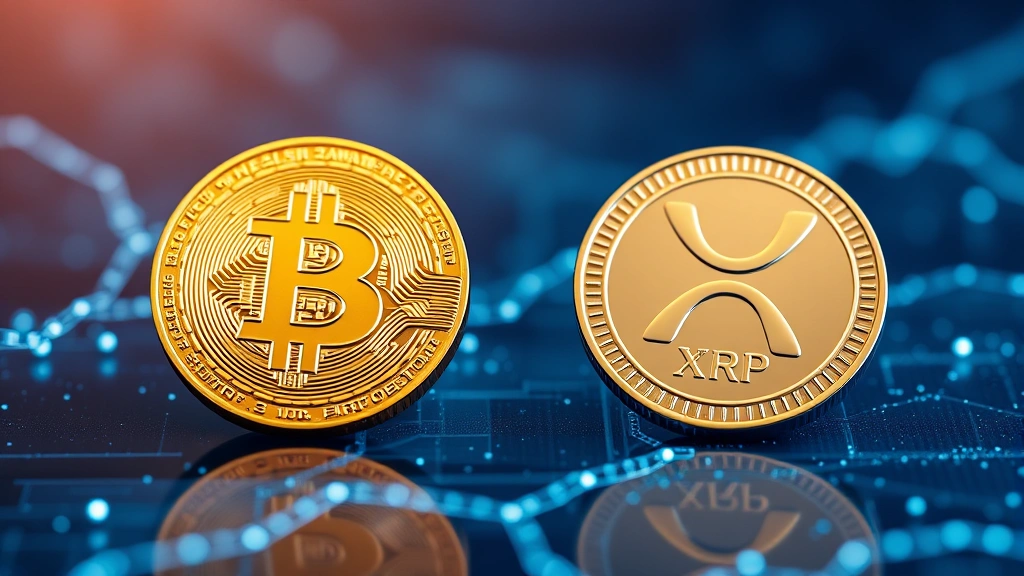
XRP vs Bitcoin: Which is Better? Analyst Insight
The cryptocurrency market presents investors with countless choices, but two assets consistently dominate conversations: Bitcoin and XRP. While Bitcoin established itself as the world’s first and most recognized cryptocurrency, XRP emerged as a bridge asset designed for institutional payment settlements. Understanding the differences between these two cryptocurrencies requires examining their fundamental purposes, technological architectures, market performance, and use cases. This comprehensive analysis will help you determine which asset aligns better with your investment strategy.
Both Bitcoin and XRP have attracted millions of investors worldwide, yet they serve distinctly different purposes within the blockchain ecosystem. Bitcoin functions as digital gold and a store of value, while XRP operates as a liquidity tool for cross-border transactions. The choice between them depends on your investment philosophy, risk tolerance, and understanding of each asset’s unique value proposition. Let’s explore what makes these cryptocurrencies distinct and how they compare across multiple dimensions.

Understanding Bitcoin: The Original Cryptocurrency
Bitcoin, created in 2009 by an anonymous figure known as Satoshi Nakamoto, revolutionized the financial world by introducing the first successful decentralized digital currency. With a fixed supply of 21 million coins, Bitcoin operates on a proof-of-work consensus mechanism that requires miners to solve complex mathematical problems to validate transactions and secure the network. This scarcity and immutability have positioned Bitcoin as a store of value comparable to precious metals.
The Bitcoin network operates independently without central authority, making it resistant to censorship and government control. Transaction times typically range from 10 minutes to several hours depending on network congestion and fee levels. Bitcoin’s blockchain is transparent, allowing anyone to verify transactions and participate in the network. The asset has experienced significant price appreciation since its inception, attracting institutional investors, corporations, and individuals seeking portfolio diversification.
Bitcoin’s dominance in the cryptocurrency market remains unmatched, commanding the largest market capitalization and trading volume. Its recognition extends beyond crypto enthusiasts to mainstream financial institutions, making it the most accessible digital asset for beginners. Understanding Bitcoin’s fundamentals is essential before comparing it with other cryptocurrencies like XRP. Many analysts recommend reading about Bitcoin Forecast 2025 to understand future price predictions and market sentiment.

What is XRP and Its Purpose
XRP, the native token of the XRP Ledger, serves a fundamentally different purpose than Bitcoin. Developed by Ripple Labs in 2012, XRP functions as a bridge currency designed to facilitate rapid international money transfers and settlement between financial institutions. Unlike Bitcoin’s decentralized mining network, XRP uses a consensus mechanism involving trusted validators, making transactions faster and more energy-efficient.
The XRP Ledger can process thousands of transactions per second with settlement times measured in seconds rather than minutes or hours. This speed and efficiency make XRP particularly attractive for banks and payment providers seeking to reduce remittance costs and settlement times. Ripple, the company behind XRP, has partnered with numerous financial institutions worldwide, creating a network called RippleNet designed to streamline cross-border payments.
XRP’s total supply is predetermined at 100 billion tokens, with most coins held in escrow by Ripple to control inflation and market dynamics. This centralized approach differs significantly from Bitcoin’s distributed mining model. The token’s primary utility lies in facilitating liquidity provision and reducing costs for financial institutions, rather than serving as a direct store of value like Bitcoin. Understanding XRP’s institutional focus helps clarify why its price movements often differ from Bitcoin’s trajectory.
Technology and Architecture Comparison
The technological foundations of Bitcoin and XRP differ substantially, impacting their performance, scalability, and environmental footprint. Bitcoin’s proof-of-work system requires significant computational power and energy consumption, with miners worldwide competing to validate blocks. This energy-intensive process provides security through decentralization, as no single entity can control the network without owning 51% of its computing power.
XRP Ledger employs a consensus mechanism based on trusted validators rather than miners, allowing for faster transaction processing and lower energy consumption. Validators are known entities that stake their reputation on maintaining network integrity, creating accountability different from Bitcoin’s anonymous mining pools. This design enables XRP to achieve transaction finality in seconds, compared to Bitcoin’s longer confirmation times.
Scalability represents another crucial difference. Bitcoin’s block size limits (1MB) and 10-minute block times constrain its transaction throughput to approximately 7 transactions per second. The XRP Ledger can handle 1,500+ transactions per second without modifications, making it more suitable for high-volume payment processing. However, Bitcoin’s limitations are intentional, prioritizing security and decentralization over speed. Layer 2 solutions like the Lightning Network enhance Bitcoin’s scalability for smaller transactions while maintaining security.
The environmental impact varies significantly between these cryptocurrencies. Bitcoin’s proof-of-work mechanism consumes substantial electricity, drawing criticism from environmental advocates. XRP’s consensus model requires minimal energy, making it more environmentally sustainable. For investors concerned with environmental, social, and governance (ESG) factors, this distinction matters considerably when building a responsible portfolio.
Market Performance and Price History
Bitcoin’s price history demonstrates remarkable growth despite extreme volatility. Starting from virtually zero value in 2009, Bitcoin reached $69,000 in November 2021 before experiencing a significant correction. Throughout 2024 and into 2025, Bitcoin has maintained strong performance, benefiting from institutional adoption and macroeconomic factors. The asset’s long-term trend remains bullish for many analysts, though short-term volatility persists.
XRP’s price performance tells a different story, marked by explosive growth periods followed by substantial declines. XRP reached approximately $3.84 in January 2018 during the crypto boom, then declined significantly during the 2018-2020 bear market. A regulatory lawsuit from the U.S. Securities and Exchange Commission (SEC) against Ripple Labs created substantial uncertainty, impacting XRP’s price and adoption. Recent developments in the lawsuit have generated renewed interest in the token, with price recovery in 2023-2024.
Comparing risk-adjusted returns requires examining volatility alongside price appreciation. Bitcoin, while volatile, has demonstrated more consistent growth trends and institutional confidence. XRP’s volatility appears higher when accounting for regulatory risks and centralization concerns. Investors seeking stability might prefer Bitcoin’s established track record, while those with higher risk tolerance might explore XRP’s potential upside if regulatory clarity improves. Consider reviewing What is Portfolio Diversification to understand how these assets fit within a balanced portfolio.
Regulatory Environment and Legal Status
Bitcoin’s regulatory status has evolved from complete obscurity to mainstream acceptance in most developed countries. While some nations restrict or ban Bitcoin trading, major economies including the United States, European Union, and Japan have established regulatory frameworks allowing Bitcoin ownership and trading. The approval of Bitcoin spot ETFs in the United States and other markets has legitimized Bitcoin as an institutional investment vehicle.
XRP faces more complex regulatory challenges, primarily due to Ripple’s business model and the SEC’s classification dispute. The SEC sued Ripple Labs in December 2020, arguing that XRP should be classified as a security rather than a commodity. This lawsuit created significant uncertainty for XRP investors and exchanges, with some delisting XRP from their platforms. A partial victory for Ripple in July 2023 clarified that XRP itself is not inherently a security, though secondary sales might be subject to securities laws depending on circumstances.
Regulatory clarity significantly impacts investor confidence and asset adoption. Bitcoin’s established regulatory framework provides institutional investors with certainty for large-scale investments. XRP’s ongoing regulatory ambiguity creates barriers to institutional adoption and mainstream exchange listings. Investors concerned with regulatory risk should carefully monitor developments in both the XRP case and broader cryptocurrency regulations. Staying informed about How to Protect Investments During a Recession becomes crucial when regulatory uncertainty increases.
Use Cases and Real-World Applications
Bitcoin’s primary use case centers on being a store of value and medium of exchange for those seeking to avoid traditional banking systems. While merchant adoption has increased, Bitcoin transactions remain relatively expensive during high-fee periods, limiting everyday payment utility. Bitcoin functions effectively as digital gold, with investors holding it long-term as portfolio protection against inflation and currency devaluation.
XRP’s designed use case focuses specifically on institutional cross-border payments and remittances. Banks and payment providers can utilize XRP to reduce settlement times from days to seconds and decrease costs significantly. Ripple’s partnerships with financial institutions worldwide demonstrate XRP’s potential in traditional finance integration. However, actual adoption has progressed slower than Ripple’s original projections, with some institutions choosing alternative solutions.
The distinction in use cases creates different investment theses. Bitcoin appeals to those seeking portfolio diversification and protection against monetary debasement. XRP attracts investors betting on institutional adoption of blockchain technology for payments and settlement. Neither asset dominates the other’s intended use case, making direct comparison challenging. Your investment rationale should align with each asset’s designed purpose and real-world adoption trajectory.
Investment Strategy Considerations
Selecting between Bitcoin and XRP depends heavily on your investment goals, time horizon, and risk tolerance. Bitcoin suits investors seeking a core holding representing cryptocurrency exposure and alternative asset diversification. Its established market position, regulatory clarity, and institutional acceptance make it appropriate for conservative crypto portfolios. How to Invest with Little Money: A Beginner’s Guide provides useful strategies for building positions regardless of capital constraints.
XRP appeals to speculative investors betting on institutional blockchain adoption and potential regulatory clarity improving the asset’s prospects. Those with conviction in Ripple’s vision and financial institution partnerships might allocate a portion of their crypto portfolio to XRP. However, XRP’s regulatory uncertainty and slower institutional adoption compared to Bitcoin suggest limiting XRP allocation to positions you can afford to lose substantially.
Many sophisticated investors maintain positions in both assets, recognizing their different roles and risk profiles. A diversified approach might allocate 60-80% of crypto holdings to Bitcoin with smaller allocations to XRP and other altcoins. This structure balances Bitcoin’s stability and institutional acceptance with exposure to higher-growth potential alternatives. Review Should I Sell or Hold My Bitcoin This Cycle for guidance on position management and rebalancing strategies.
Risk Factors and Volatility Analysis
Both Bitcoin and XRP carry significant risks that investors must understand before committing capital. Bitcoin’s primary risks include extreme price volatility, regulatory changes, technological vulnerabilities, and macroeconomic factors affecting investor sentiment. A single regulatory announcement or security incident can trigger substantial price movements. Additionally, Bitcoin’s energy consumption faces increasing scrutiny from environmental advocates, potentially impacting adoption and regulations.
XRP-specific risks center on regulatory uncertainty, centralization concerns, and slower institutional adoption than originally projected. The ongoing SEC litigation, though partially resolved, continues creating uncertainty about XRP’s legal status and exchange listing availability. Ripple’s significant ownership of XRP tokens raises concerns about token distribution control and potential dilution if Ripple releases more tokens from escrow. These factors combine to create higher perceived risk compared to Bitcoin.
Volatility analysis shows both assets experiencing significant price swings, though Bitcoin’s larger market capitalization and institutional ownership may provide slightly more stable price discovery. XRP’s smaller market cap means larger percentage moves from institutional or retail trading activity. Investors uncomfortable with 20-50% price swings within weeks should carefully reconsider cryptocurrency allocation or focus exclusively on Bitcoin’s more established market.
Understanding your personal risk tolerance is essential before choosing between these assets. Conservative investors should limit crypto exposure to 5-10% of total portfolio value, with Bitcoin comprising the majority. Aggressive investors comfortable with substantial losses might allocate higher percentages including both assets. How to Choose Stocks for Beginners provides frameworks applicable to cryptocurrency selection as well, emphasizing thorough research and conviction-based decision making.
FAQ
Is XRP better than Bitcoin for investment?
Neither asset is objectively “better”—they serve different purposes. Bitcoin functions as digital gold and store of value with established market position and regulatory clarity. XRP targets institutional payments with faster transactions but faces regulatory uncertainty. Your choice depends on investment thesis, risk tolerance, and portfolio goals. Bitcoin suits core holdings while XRP works for speculative positions betting on institutional adoption.
Can XRP reach Bitcoin’s market cap?
XRP reaching Bitcoin’s market cap would require either massive XRP price appreciation or Bitcoin price decline. Given XRP’s 100 billion token supply versus Bitcoin’s 21 million coins, XRP would need significantly higher per-token value. While theoretically possible, Bitcoin’s established position and institutional adoption make it unlikely XRP surpasses Bitcoin’s dominance without extraordinary circumstances or fundamental shifts in market dynamics.
Which cryptocurrency is safer: Bitcoin or XRP?
Bitcoin carries lower regulatory risk with established legal frameworks in most countries and institutional acceptance. XRP faces regulatory uncertainty from ongoing SEC litigation and potential security classification. Bitcoin’s decentralized nature reduces single-point-of-failure risks, while XRP’s reliance on trusted validators creates centralization concerns. For safety-focused investors, Bitcoin presents a lower-risk profile, though all cryptocurrencies involve substantial volatility and loss potential.
Should I invest in both Bitcoin and XRP?
A diversified approach including both assets can balance Bitcoin’s stability with XRP’s speculative potential. Many investors allocate 70-80% of crypto holdings to Bitcoin with smaller XRP allocations for upside exposure. This strategy captures Bitcoin’s core cryptocurrency exposure while maintaining positions in alternative assets. Ensure both allocations fit within your overall portfolio risk tolerance and represent capital you can afford to lose.
What external factors affect Bitcoin and XRP prices?
Bitcoin prices respond to macroeconomic factors including interest rates, inflation expectations, and investor risk sentiment. Regulatory announcements, institutional adoption news, and technological developments significantly impact both assets. XRP prices additionally respond to Ripple partnership announcements, SEC litigation developments, and adoption progress among financial institutions. Staying informed about these factors helps investors anticipate potential price movements and adjust positions accordingly.
How do transaction speeds compare between Bitcoin and XRP?
Bitcoin transactions typically confirm within 10 minutes to several hours depending on network congestion and fees. XRP transactions settle in approximately 3-5 seconds with minimal fees. This speed difference makes XRP superior for rapid payment settlement, while Bitcoin’s longer times are acceptable for store-of-value use cases. Layer 2 solutions like Bitcoin’s Lightning Network can achieve similar speeds to XRP for smaller transactions.


