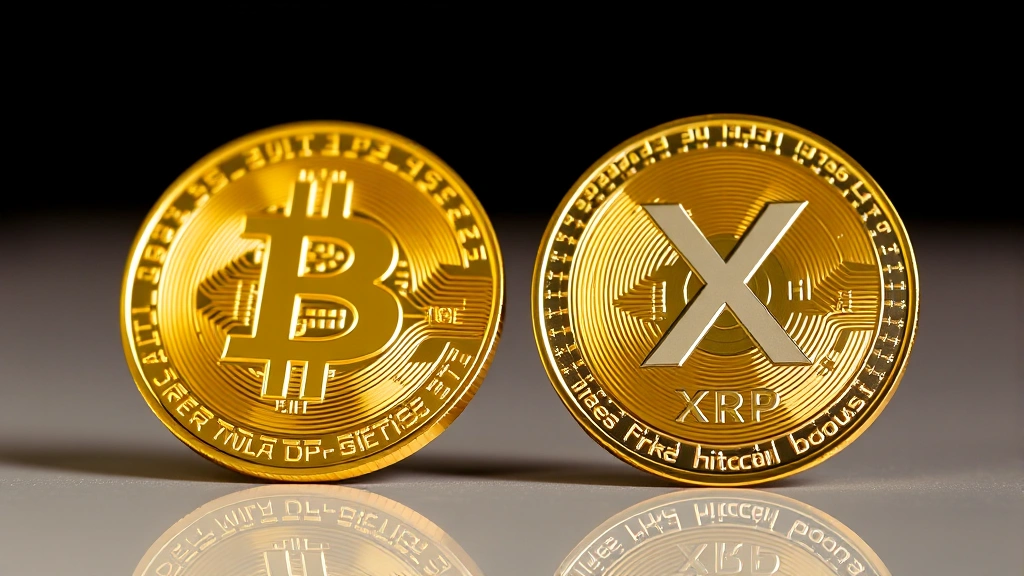
XRP vs Bitcoin: Which is Better? Expert Analysis
The cryptocurrency landscape has evolved dramatically since Bitcoin’s inception in 2009, introducing investors to diverse digital assets with distinct purposes and technological foundations. Among the most frequently compared cryptocurrencies are Bitcoin and XRP, each representing fundamentally different philosophies and use cases within the blockchain ecosystem. While Bitcoin established itself as digital gold and a store of value, XRP emerged as a bridge currency designed for international payments and financial settlements. Understanding the nuances between these two cryptocurrencies is essential for investors seeking to make informed decisions about their portfolio allocation.
The comparison between XRP and Bitcoin often becomes heated in crypto communities, yet the answer to “which is better” depends entirely on your investment goals, risk tolerance, and time horizon. Bitcoin dominates by market capitalization and brand recognition, while XRP offers technological advantages for specific financial use cases. This comprehensive analysis examines both cryptocurrencies across multiple dimensions, providing the insights needed to determine which asset aligns with your investment strategy.

Bitcoin: The Original Digital Asset
Bitcoin remains the undisputed leader in cryptocurrency, commanding approximately 50% of the total crypto market capitalization. Created by the pseudonymous Satoshi Nakamoto in 2009, Bitcoin introduced the world to blockchain technology and decentralized currency systems. Its primary function is to serve as a store of value and medium of exchange, operating independently from governmental or institutional control. The network’s security derives from its proof-of-work consensus mechanism, which requires miners to solve complex mathematical puzzles to validate transactions and secure the network.
The fixed supply cap of 21 million bitcoins creates inherent scarcity, a feature that distinguishes Bitcoin from traditional fiat currencies susceptible to inflation through monetary expansion. This scarcity principle has attracted institutional investors, corporations, and sovereign wealth funds seeking an alternative store of value. Bitcoin’s network effect—where value increases as more participants adopt the asset—has solidified its position as the flagship cryptocurrency. When considering how to buy Bitcoin, investors recognize they’re acquiring the most established and widely accepted digital asset in existence.
Bitcoin’s decentralized nature means no single entity controls the network, and transactions are immutable once recorded on the blockchain. This immutability provides security and transparency but comes at the cost of slower transaction processing compared to centralized payment systems. The network processes approximately 7 transactions per second, a limitation that has sparked ongoing debates about scalability solutions.

XRP: The Bridge Currency for Financial Institutions
XRP represents a fundamentally different approach to blockchain technology, designed specifically for financial institutions rather than individual users. Developed by Ripple Labs, XRP serves as a liquidity bridge in the Ripple network, enabling rapid cross-border payments between banks and financial service providers. Unlike Bitcoin’s decentralized ethos, Ripple maintains significant control over XRP’s development and distribution, creating a more centralized ecosystem optimized for institutional partnerships.
The Ripple network can process thousands of transactions per second, with settlement times measured in seconds rather than minutes or hours. This efficiency makes XRP particularly attractive for international remittances and correspondent banking, where speed and cost reduction directly impact profitability. Major financial institutions including SBI Group, Santander, and numerous others have explored or implemented Ripple’s technology for cross-border transactions.
XRP’s supply structure differs significantly from Bitcoin’s model. Ripple created 100 billion XRP tokens at inception, with the company controlling a substantial portion through escrow accounts. This centralized token distribution has drawn criticism from decentralization advocates, though it provides stability and reduces the likelihood of sudden supply shocks that could destabilize the network.
Technology and Consensus Mechanisms
The technological foundations of Bitcoin and XRP reflect their divergent objectives and philosophical approaches. Bitcoin employs proof-of-work consensus, where miners compete to solve cryptographic puzzles, consuming significant computational energy in the process. This energy-intensive approach ensures absolute security through distributed consensus but creates environmental concerns and operational costs that scale with network growth.
XRP utilizes a consensus mechanism called the Ripple Protocol Consensus Algorithm (RPCA), which operates differently from proof-of-work systems. Instead of mining, RPCA relies on a network of validators—primarily financial institutions—to confirm transactions. This approach dramatically reduces energy consumption and enables faster settlement times. However, it introduces counterparty risk, as validators must be trusted to act honestly, creating a more centralized security model than Bitcoin’s distributed mining network.
Bitcoin’s script language enables smart contracts and programmable transactions, though its functionality remains limited compared to platforms like Ethereum. XRP’s ledger also supports smart contracts through rippled’s amendment system, but its primary design focuses on payment settlement rather than general-purpose computation. For developers seeking insights into Bitcoin’s stability and technological trajectory, understanding these fundamental differences proves essential.
Transaction Speed and Scalability
Transaction speed represents one of the most striking differences between these cryptocurrencies. Bitcoin’s network confirms transactions in approximately 10 minutes on average, with users often waiting for multiple confirmations (30-60 minutes) to ensure finality. This speed limitation stems from Bitcoin’s design philosophy, which prioritizes security and decentralization over transaction throughput.
XRP settles transactions in 3-5 seconds, with finality achieved within this timeframe. This dramatic speed advantage makes XRP superior for applications requiring rapid settlement, particularly in the financial services sector where delays translate to operational inefficiencies and capital costs. Banks processing thousands of daily transactions benefit enormously from XRP’s speed, reducing liquidity requirements and operational overhead.
Scalability presents another critical dimension. Bitcoin’s current capacity reaches approximately 7 transactions per second under optimal conditions, though the Lightning Network—a second-layer solution—promises to dramatically increase throughput for micropayments. XRP’s design accommodates thousands of transactions per second natively, without requiring additional layers. However, Bitcoin’s development of layer-two solutions demonstrates the cryptocurrency’s ongoing evolution to address scalability limitations.
Understanding current Bitcoin price dynamics requires appreciating how technological improvements and network upgrades influence investor sentiment and adoption rates. Both cryptocurrencies continue evolving to address scalability challenges through different architectural approaches.
Market Adoption and Use Cases
Bitcoin has achieved far broader adoption across retail and institutional markets, with acceptance at major merchants, cryptocurrency exchanges, and payment processors worldwide. The asset functions as a store of value for individuals, institutions, and even governmental bodies. El Salvador’s adoption of Bitcoin as legal tender represented a watershed moment, demonstrating potential for sovereign-level adoption, though subsequent economic challenges have complicated this narrative.
XRP’s adoption concentrates within the financial services industry, where Ripple has cultivated partnerships with banks and remittance providers. While this institutional focus provides stability and clear use cases, it limits XRP’s appeal to retail investors and broader consumer applications. The regulatory clarity surrounding XRP’s utility as a bridge currency versus a security has evolved but remains somewhat ambiguous compared to Bitcoin’s well-established classification.
Real-world use cases differ substantially between these assets. Bitcoin serves as a hedge against inflation, a speculative investment vehicle, and an alternative to traditional banking in countries with unstable currencies or capital controls. XRP functions as infrastructure for financial institutions, reducing costs and settlement times for cross-border transactions. When evaluating whether to hold Bitcoin through market cycles, investors should consider how these divergent use cases influence long-term demand and adoption trajectories.
Regulatory Landscape
The regulatory environment surrounding these cryptocurrencies has diverged significantly, impacting their respective adoption and market dynamics. Bitcoin generally enjoys clearer regulatory classification across most jurisdictions. While regulatory frameworks continue evolving, Bitcoin’s status as a commodity or property is well-established in major markets including the United States, European Union, and most developed nations.
XRP has faced more regulatory uncertainty, particularly regarding its classification as a security versus a utility token. The U.S. Securities and Exchange Commission (SEC) filed a lawsuit against Ripple Labs in December 2020, alleging that XRP sales constituted unregistered securities offerings. This legal battle has created uncertainty around XRP’s regulatory status and affected its trading on certain U.S. exchanges. While Ripple has made progress in its legal defense, the ongoing litigation introduces regulatory risk that Bitcoin doesn’t face to the same degree.
For investors, these regulatory differences matter significantly. Bitcoin’s clearer regulatory status facilitates institutional adoption and traditional financial integration. XRP’s regulatory challenges may limit its accessibility through certain platforms and institutions, though they also present potential upside if favorable regulatory developments emerge. External regulatory guidance from bodies like the U.S. Securities and Exchange Commission continues shaping the landscape for both assets.
Price Performance and Volatility
Bitcoin’s price trajectory has demonstrated remarkable growth since its inception, rising from fractions of a cent to tens of thousands of dollars per coin. This appreciation has attracted investors seeking capital gains, though it comes with substantial volatility. Bitcoin experiences boom-and-bust cycles, with corrections exceeding 80% not uncommon during bear markets. Understanding how to protect investments during market downturns becomes essential for Bitcoin investors navigating these cycles.
XRP’s price performance has been more modest relative to Bitcoin, with significant volatility during the 2017-2018 bull market followed by years of relative stagnation. XRP reached its all-time high of approximately $3.84 in January 2018 but has experienced extended periods of underperformance compared to Bitcoin. This price disparity reflects investor sentiment regarding regulatory uncertainty and the concentration of XRP holdings among early investors and Ripple insiders.
Volatility in cryptocurrency markets remains substantially higher than traditional assets, though Bitcoin’s established market position and larger market capitalization provide somewhat greater stability compared to XRP. Both assets experience correlated price movements with the broader cryptocurrency market, though XRP shows greater sensitivity to Ripple-specific news and regulatory developments.
Investment Considerations
Choosing between Bitcoin and XRP depends on multiple factors including investment objectives, risk tolerance, time horizon, and portfolio diversification strategy. Bitcoin functions better as a long-term store of value and portfolio hedge against inflation and currency debasement. Its network effects, institutional adoption, and clear use case as digital gold position it as a core cryptocurrency holding for many investors.
XRP presents a more specialized investment case, appealing primarily to investors believing in the eventual mainstream adoption of Ripple’s technology by financial institutions. The potential for institutional partnerships and regulatory clarity could drive significant appreciation, but this outcome remains uncertain. XRP’s centralized nature and regulatory challenges present additional risks compared to Bitcoin’s decentralized architecture.
Portfolio construction might incorporate both assets, with Bitcoin serving as a core holding and XRP as a smaller speculative position. This approach balances exposure to the most established cryptocurrency with potential upside from Ripple’s institutional adoption thesis. Understanding how different asset classes correlate helps inform broader portfolio allocation decisions including cryptocurrency exposure.
Risk management becomes paramount when investing in either cryptocurrency. Both assets remain volatile and speculative, suitable only for investors who can afford to lose their investment. Proper diversification, secure storage solutions, and gradual position building represent best practices for cryptocurrency investors. The regulatory environment continues evolving, potentially affecting both assets’ long-term viability and adoption trajectories.
Transaction costs differ between these cryptocurrencies, with Bitcoin’s fees varying based on network congestion, typically ranging from a few dollars to over $50 per transaction during peak periods. XRP transaction costs remain minimal, measured in fractions of a cent, providing a clear advantage for frequent transactions or large-value transfers. For investors conducting regular transactions, XRP’s cost structure offers meaningful savings.
Environmental considerations increasingly influence investment decisions. Bitcoin’s proof-of-work consensus mechanism consumes substantial electricity, raising concerns among environmentally conscious investors. XRP’s consensus model requires far less energy, making it more attractive to those prioritizing sustainability. As environmental awareness grows among institutional investors, this difference may influence capital allocation toward more energy-efficient cryptocurrencies.
FAQ
Is Bitcoin or XRP a better investment?
Bitcoin offers better store-of-value characteristics and broader adoption, while XRP presents specialized institutional use cases. The answer depends on your investment thesis, risk tolerance, and timeline. Bitcoin suits long-term wealth preservation, while XRP appeals to those betting on institutional financial technology adoption.
Why is XRP more centralized than Bitcoin?
Ripple Labs controls a significant portion of XRP supply and maintains authority over network development. Bitcoin’s mining-based consensus distributes power among thousands of independent miners. This centralization allows XRP faster development and institutional partnerships but contradicts cryptocurrency’s decentralization philosophy.
Can XRP replace Bitcoin?
These cryptocurrencies serve different purposes, making replacement unlikely. Bitcoin functions as digital gold and value storage, while XRP targets financial settlement. They may coexist indefinitely, serving distinct market segments and use cases within the broader cryptocurrency ecosystem.
What are the main risks of investing in these cryptocurrencies?
Both assets face regulatory uncertainty, extreme volatility, technological obsolescence risks, and potential security vulnerabilities. Bitcoin’s energy consumption attracts regulatory scrutiny, while XRP’s SEC litigation creates legal uncertainty. Investors should only allocate capital they can afford to lose entirely.
How do transaction fees compare?
Bitcoin transaction fees range from dollars to tens of dollars depending on network congestion, while XRP fees cost fractions of a cent. For frequent transactions or large transfers, XRP’s minimal fees provide substantial cost advantages over Bitcoin’s fee structure.
Which cryptocurrency has better long-term prospects?
Bitcoin’s established network effects, institutional adoption, and store-of-value narrative suggest strong long-term prospects. XRP’s success depends on Ripple achieving mainstream financial institution adoption and favorable regulatory outcomes. Both present credible long-term opportunities within different market segments.


