
How Many Bitcoins Are Left to Mine? 2023-2024 Mining Statistics Update
The question of how many bitcoins are left to mine fascinates both cryptocurrency enthusiasts and investors worldwide. As of 2024, approximately 21 million bitcoins represent the absolute maximum supply hardcoded into Bitcoin’s protocol—a deliberate design choice by Satoshi Nakamoto that fundamentally distinguishes Bitcoin from fiat currencies. Currently, over 21.4 million bitcoins have already been mined, though this figure includes coins lost to wallet inaccessibility and addresses where private keys are permanently unavailable.
Understanding Bitcoin’s finite supply requires grasping the halving mechanism, mining difficulty adjustments, and the timeline for complete supply exhaustion. This comprehensive guide explores current mining statistics, remaining bitcoin quantities, and what this scarcity means for cryptocurrency adoption and long-term value propositions. The mathematics behind Bitcoin mining reveal fascinating insights into network security, economic incentives, and the future of digital currency.

Current Bitcoin Supply Status
As of early 2024, approximately 21.4 million bitcoins have been mined since the network’s inception in January 2009. This figure represents roughly 99.8% of the theoretical maximum supply, though the exact number fluctuates daily as new blocks are discovered approximately every ten minutes. The Bitcoin network maintains this consistent block discovery rate through automatic difficulty adjustments occurring every 2,016 blocks, approximately every two weeks.
The remaining unmined bitcoins number approximately 650,000-700,000 BTC, distributed across future blocks until the year 2140. Each new block currently rewards miners with 6.25 bitcoins, a reduction from the previous 12.5 BTC that occurred during the 2020 halving event. These rewards serve dual purposes: incentivizing miners to maintain network security and gradually releasing new supply into circulation according to a predetermined schedule.
Understanding bitcoin value in USD requires recognizing supply constraints as fundamental to price dynamics. The scarcity principle, combined with growing institutional adoption, creates unique economic conditions distinct from traditional commodities or currency systems. Mining pools now control significant portions of network hashpower, with entities like Foundry USA, AntPool, and Marathon Digital managing substantial mining operations.
Understanding the 21 Million Cap
Bitcoin’s 21 million coin limit represents a mathematical certainty embedded within the protocol itself, not merely a voluntary guideline or marketing promise. Satoshi Nakamoto designed this cap to prevent inflation and create genuine digital scarcity—a feature impossible with fiat currencies subject to unlimited printing by central banks. The halving mechanism ensures that the last bitcoin enters circulation around the year 2140, though for all practical purposes, 99% of bitcoins will exist by 2032.
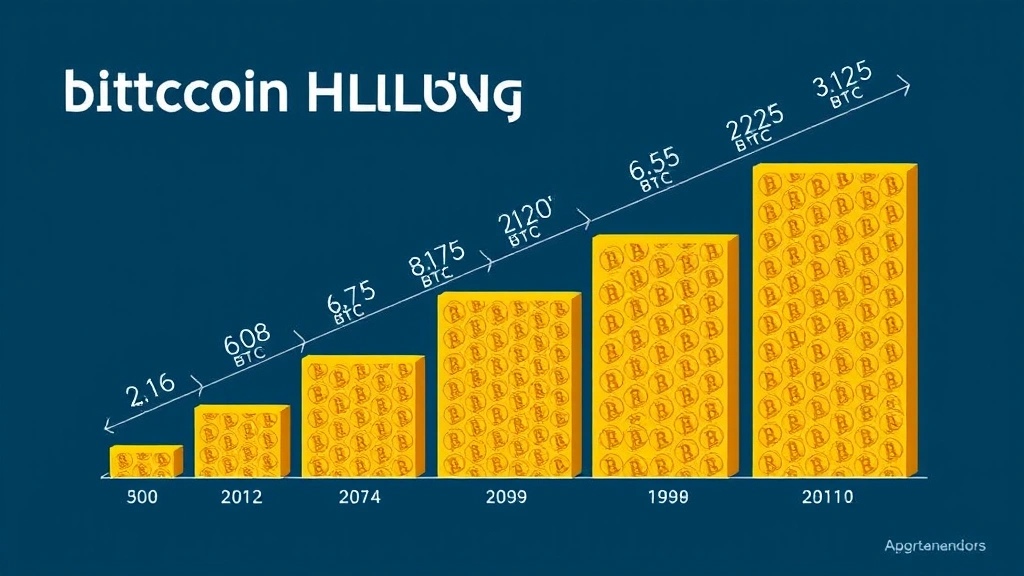
The supply schedule follows a geometric progression: starting with 50 BTC per block in 2009, the reward halves approximately every four years. This creates a predictable inflation schedule that diminishes over time:
- 2009-2012: 50 BTC per block (4,200,000 BTC total)
- 2012-2016: 25 BTC per block (2,100,000 BTC added)
- 2016-2020: 12.5 BTC per block (1,050,000 BTC added)
- 2020-2024: 6.25 BTC per block (525,000 BTC added)
- 2024-2028: 3.125 BTC per block (262,500 BTC added)
This diminishing issuance contrasts sharply with traditional monetary systems where central banks can increase money supply without mathematical constraints. The predictability of Bitcoin’s supply schedule allows investors to calculate exact future circulation precisely—an unprecedented feature in monetary history. Some critics argue this deflationary design discourages spending, while proponents view it as essential to Bitcoin’s value proposition as a store of wealth.
The 21 million cap also addresses philosophical questions about portfolio diversification in cryptocurrency. Since bitcoin supply is mathematically fixed, no inflation dilution occurs regardless of economic conditions. This property appeals to investors concerned about currency debasement in traditional financial systems.
The Halving Schedule Explained
Bitcoin halving events represent scheduled reductions in mining rewards, occurring approximately every four years or every 210,000 blocks. These events carry profound implications for mining economics, network security, and price dynamics. The most recent halving occurred in April 2024, reducing block rewards from 12.5 BTC to 6.25 BTC, subsequently halved again to 3.125 BTC in the April 2024 event.
The next halving is projected for April 2028, when rewards will decrease to 1.5625 BTC per block. Each halving event creates critical junctures in mining profitability, as equipment that remained profitable at higher reward levels may become economically unviable. This natural selection mechanism ensures only efficient mining operations survive long-term, improving network security through concentration of hashpower among well-capitalized entities.
Historical halving events demonstrate fascinating price patterns:
- 2012 First Halving: Bitcoin price increased from ~$5 to ~$650 within 12 months
- 2016 Second Halving: Price rose from ~$650 to ~$950 within 6 months
- 2020 Third Halving: Price surged from ~$9,000 to ~$65,000 within 12 months
- 2024 Fourth Halving: Price ranged between $62,000-$73,000 in following months
While halving events create supply shock conditions, actual price impacts remain debated among analysts. Some attribute post-halving rallies to reduced supply, while others argue these events are already priced into markets before occurrence. Regardless, halvings represent key metrics for evaluating bitcoin’s long-term trajectory and mining industry health.
Mining Difficulty and Network Hash Rate
Bitcoin’s mining difficulty adjusts automatically to maintain consistent 10-minute block intervals regardless of total network computational power. This elegant mechanism prevents difficulty from becoming obsolete as hardware improves, ensuring the network remains secure against attacks while preventing inflation acceleration.
The network hash rate—total computational power directed toward mining—has increased exponentially since Bitcoin’s inception. In 2009, a standard laptop could mine bitcoins profitably. By 2024, the network hash rate exceeds 600 exahashes per second (EH/s), requiring specialized ASIC hardware costing thousands of dollars per unit. This progression demonstrates how Bitcoin’s design incentivizes continuous hardware innovation and capital investment.
Current mining difficulty adjusts every 2,016 blocks based on previous block discovery times. If blocks are discovered faster than the 10-minute target, difficulty increases proportionally. Conversely, if discovery slows, difficulty decreases. This feedback mechanism ensures mining remains accessible to new participants while preventing network spam or security degradation.
The relationship between difficulty and profitability is inverse: as difficulty increases, mining becomes less profitable for existing hardware unless bitcoin price appreciates accordingly. This creates natural price discovery mechanisms where unprofitable mining operations cease, reducing hashpower until remaining miners achieve reasonable returns. The current difficulty level requires understanding technical analysis of mining profitability metrics and hardware efficiency ratios.
Timeline to Complete Bitcoin Extraction
The final bitcoin will theoretically be mined in the year 2140, though practical bitcoin extraction will essentially conclude by 2032 when 99% of supply has entered circulation. After 2140, no new bitcoins enter the system; instead, miners will rely entirely on transaction fees for compensation rather than block rewards.
The timeline breakdown reveals interesting milestones:
- 2024: Approximately 21.4 million BTC mined (99.8% of total)
- 2028: Block rewards halve to 1.5625 BTC, further reducing mining incentives
- 2032: Approximately 20.99 million BTC in circulation (99.99% of total)
- 2040: Block rewards drop to negligible levels (0.0390625 BTC)
- 2140: Final satoshi (0.00000001 BTC) theoretically enters circulation
This extended timeline creates challenges for long-term mining economics. As block rewards diminish, transaction fees must increase substantially to incentivize miners to maintain network security. Currently, transaction fees represent approximately 5-10% of total mining revenue; by 2050, fees will constitute nearly 100% of mining compensation. This transition represents Bitcoin’s greatest long-term challenge: maintaining sufficient mining incentives as supply becomes exhausted.
Lost Bitcoins and Circulation Reality
While 21.4 million bitcoins have been mined, the actual circulating supply is significantly lower due to permanent loss. Estimates suggest 2-3 million bitcoins are lost forever, held in wallets whose private keys are inaccessible. Common loss scenarios include:
- Forgotten Passwords: Users unable to recover wallet access after years
- Death Without Heir Knowledge: Bitcoins locked in wallets with unknown recovery phrases
- Discarded Hardware: Mining equipment or hard drives containing wallets sent to landfills
- Exchange Bankruptcies: Mt. Gox collapse and other failures resulted in permanent loss
- Satoshi’s Wallet: Approximately 1 million bitcoins from early mining remain untouched
Lost bitcoins effectively reduce circulating supply below theoretical maximums. Some argue this creates deflationary pressure benefiting remaining holders, while others view it as inefficient capital allocation. The exact quantity of lost bitcoins remains unknowable—sophisticated analysis using blockchain archaeology suggests losses between 2-3 million BTC, but certainty is impossible without private key recovery.
This reality impacts long-term bitcoin value propositions significantly. If 3 million bitcoins are permanently lost, the effective maximum supply approaches 18 million coins rather than 21 million. This further amplifies scarcity arguments and justifies premium valuations compared to alternative cryptocurrencies with larger circulating supplies.
Mining Economics in 2024
Modern bitcoin mining operates as a capital-intensive, energy-consuming industrial enterprise requiring sophisticated financial analysis. Mining profitability depends on three primary variables: hardware efficiency, electricity costs, and bitcoin price. Professional mining operations meticulously track these metrics, utilizing risk tolerance assessments to determine optimal operational scales.
Current mining economics:
- Hardware Costs: Antminer S19 Pro (~$2,000-3,500) generates approximately 110 TH/s
- Electricity Consumption: Modern ASIC miners require 0.08-0.10 joules per terahash
- Breakeven Price: Approximately $30,000-50,000 BTC depending on electricity rates
- Profitable Operations: Require electricity below $0.05 per kilowatt-hour
Large-scale mining operations benefit from economies of scale, accessing cheap hydroelectric power in regions like El Salvador, Iceland, and parts of China (despite regulatory restrictions). These operations maintain profit margins even during bear markets when smaller miners exit. Publicly traded mining companies like Marathon Digital, Core Scientific, and Riot Platforms report quarterly production metrics and operational efficiency improvements.
The transition toward renewable energy sources has accelerated among major miners, driven by both environmental concerns and economic efficiency. Hydroelectric, geothermal, and wind-powered facilities offer cheap, stable electricity crucial for sustained profitability. Some analysts estimate 50%+ of bitcoin mining now utilizes renewable energy sources, contradicting earlier criticism of bitcoin’s environmental impact.
Future Implications of Supply Scarcity
Bitcoin’s finite supply creates unique economic dynamics distinct from any previous monetary system. As mining rewards diminish and supply approaches maximum capacity, several critical implications emerge:
Price Appreciation Potential: Scarcity combined with growing adoption creates conditions for substantial long-term appreciation. Unlike fiat currencies subject to unlimited inflation, bitcoin’s fixed supply provides deflationary characteristics. This appeals to investors concerned about currency debasement and wealth erosion. Understanding bitcoin price predictions requires acknowledging supply constraints as fundamental to valuation models.
Transaction Fee Dynamics: Future mining profitability depends entirely on transaction fees rather than block rewards. This transition creates potential issues: insufficient fee revenue might discourage mining, reducing network security. Alternatively, higher fees might price out everyday users, limiting bitcoin’s utility as medium of exchange. This tension between security incentives and user accessibility remains unresolved.
Institutional Integration: Bitcoin’s fixed supply appeals to institutional investors seeking inflation hedges and portfolio diversification. Major corporations and investment funds increasingly allocate capital to bitcoin, treating it as digital gold. This institutional adoption accelerates as supply constraints become more apparent.
Regulatory Evolution: As bitcoin matures, regulatory frameworks clarify. Governments initially hostile to bitcoin gradually acknowledge its role in financial systems. Understanding regulatory developments requires following authoritative sources like CoinDesk and SEC guidance on cryptocurrency classification and taxation.
Alternative Cryptocurrency Competition: While bitcoin’s supply is fixed, alternative cryptocurrencies offer different monetary policies. Some competitors provide faster transaction speeds, lower fees, or different supply schedules. Bitcoin’s first-mover advantage and network effects remain dominant, but competitive pressures persist. Diversifying across multiple cryptocurrencies requires understanding portfolio diversification principles and risk management.
The journey toward complete bitcoin extraction represents one of monetary history’s most fascinating experiments. Whether bitcoin ultimately becomes digital gold, medium of exchange, or failed experiment remains uncertain. However, its fixed supply fundamentally distinguishes it from all previous monetary systems, creating unprecedented conditions for price discovery and economic incentives.


