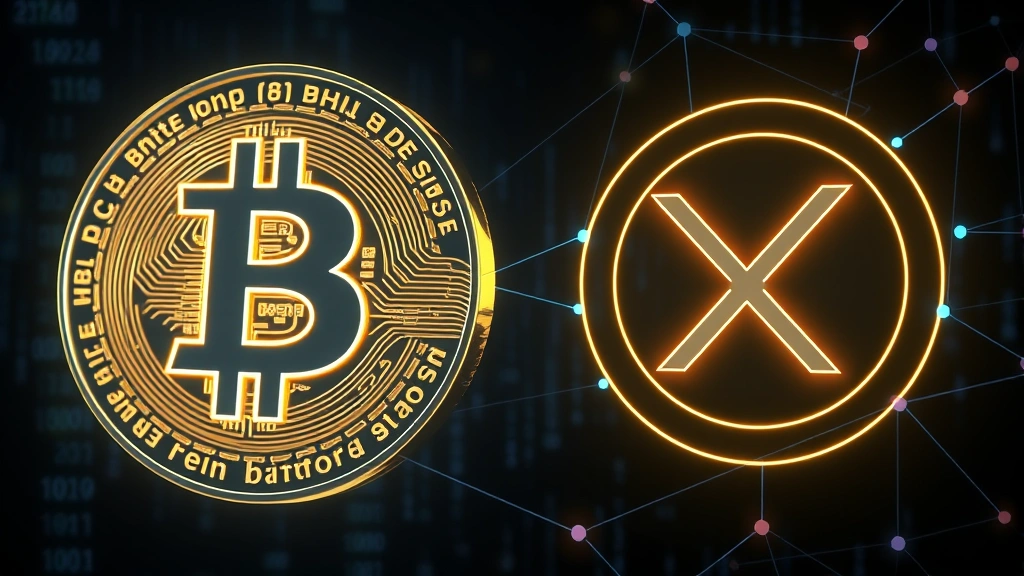
XRP vs Bitcoin: Investor Insights & Comparisons
The cryptocurrency market presents investors with countless opportunities, but two assets frequently dominate discussions: Bitcoin and XRP. While Bitcoin established itself as the first and most recognizable cryptocurrency, XRP emerged as a unique alternative with different technological foundations and use cases. Understanding the distinctions between these two digital assets is crucial for making informed investment decisions in today’s volatile market.
Both Bitcoin and XRP serve different purposes within the broader crypto ecosystem. Bitcoin functions primarily as a store of value and medium of exchange, whereas XRP was designed specifically to facilitate cross-border payments and liquidity for financial institutions. This fundamental difference in purpose creates distinct advantages and disadvantages for each asset, making the comparison more nuanced than simple price analysis. Investors must evaluate their personal risk tolerance, investment timeline, and financial goals before choosing between these two prominent cryptocurrencies.
Understanding Bitcoin: The Original Cryptocurrency
Bitcoin, created in 2009 by the pseudonymous Satoshi Nakamoto, revolutionized the financial world by introducing the first successful decentralized digital currency. Operating on a proof-of-work consensus mechanism, Bitcoin relies on a network of miners who validate transactions and secure the blockchain. This decentralized approach ensures that no single entity controls the network, providing unprecedented financial sovereignty to users worldwide.
The supply of Bitcoin is capped at 21 million coins, creating artificial scarcity that many investors believe supports long-term value appreciation. This fixed supply contrasts sharply with fiat currencies, which governments can print endlessly. The halving events that occur approximately every four years further reduce Bitcoin’s inflation rate, historically triggering significant price movements. Understanding Bitcoin’s economic model and supply mechanics is essential for evaluating its long-term investment potential.
Bitcoin’s transaction settlement time ranges from 10 minutes to several hours depending on network congestion and fee levels. While this may seem slow compared to traditional banking systems, it reflects Bitcoin’s prioritization of security and decentralization over speed. The network processes approximately 7 transactions per second, a limitation that has sparked ongoing debates about scalability solutions and Bitcoin’s role in the broader financial ecosystem.
What is XRP: Purpose and Technology
Ripple Labs created XRP in 2012 as a digital asset designed to facilitate rapid international payments and settlement between financial institutions. Unlike Bitcoin’s proof-of-work system, XRP operates on a consensus mechanism called the XRP Ledger, which relies on validators rather than miners. This fundamental architectural difference enables XRP to process transactions significantly faster and with lower energy consumption than Bitcoin.
XRP’s primary utility centers on solving the correspondent banking problem, where international transfers require multiple intermediaries and days to settle. By providing instant liquidity for cross-border transactions, XRP aims to reduce costs and settlement times for banks and payment providers. This institutional focus distinguishes XRP from Bitcoin’s consumer-oriented approach, creating different value propositions for various investor types.
The total supply of XRP is fixed at 100 billion coins, with the majority held by Ripple Labs in an escrow account. This centralized token distribution mechanism has generated controversy among cryptocurrency purists who argue that true decentralization requires no single entity holding significant reserves. However, proponents contend that Ripple’s controlled release schedule prevents market flooding and provides stability for institutional adoption.
Market Capitalization and Adoption
Bitcoin maintains the largest market capitalization in the cryptocurrency industry, consistently trading at values exceeding $400 billion to over $1 trillion depending on market conditions. This dominant position reflects Bitcoin’s first-mover advantage, widespread recognition, and acceptance as a store of value across institutional and retail investor bases. The extensive media coverage and cultural significance of Bitcoin create continuous demand from new market entrants.
XRP typically ranks as the third or fourth largest cryptocurrency by market capitalization, fluctuating between $20-50 billion depending on market sentiment and regulatory developments. While significantly smaller than Bitcoin, XRP’s market cap remains substantial, reflecting meaningful adoption among financial institutions and payment processors. Several major banks and payment networks have integrated or tested XRP technology, including partnerships with Ripple Labs.
Adoption metrics reveal stark differences between the two assets. Bitcoin is accepted at thousands of merchants worldwide and has become integrated into traditional finance through investment products like spot ETFs and futures contracts. XRP adoption remains more concentrated among institutional clients and financial service providers, limiting its utility as a consumer payment method. Understanding adoption patterns helps investors assess long-term viability and use case sustainability.
When considering investment strategies with limited capital, both Bitcoin and XRP present distinct entry points based on individual financial circumstances and risk profiles.

” alt=”Cryptocurrency blockchain network visualization with interconnected nodes and digital ledgers”/>
Technology and Speed Comparison
The technological architecture underlying Bitcoin and XRP creates fundamental differences in transaction speed, cost, and scalability. Bitcoin’s proof-of-work system requires significant computational resources to validate blocks, resulting in slower transaction finality but enhanced security through distributed consensus. Each block takes approximately 10 minutes to mine, and transactions typically require multiple confirmations before final settlement.
XRP’s consensus mechanism achieves transaction settlement in approximately 3-5 seconds, making it substantially faster than Bitcoin for payment purposes. The XRP Ledger’s validator network reaches consensus without requiring energy-intensive mining, reducing operational costs and environmental impact. This speed advantage makes XRP particularly suitable for time-sensitive international payments where settlement delays create financial friction.
Transaction costs represent another critical distinction. Bitcoin fees fluctuate based on network congestion, ranging from a few cents to several dollars per transaction during peak periods. XRP transactions typically cost fractions of a cent, making micropayments and high-volume transfers economically viable. For institutional clients processing millions of dollars in daily transfers, these cost differences compound significantly over time.
Scalability solutions under development for both networks may alter this comparison. Bitcoin’s Lightning Network enables off-chain transactions at scale, while various layer-two solutions are being explored. XRP’s developers continue optimizing the XRP Ledger to increase throughput without compromising security or decentralization.
Regulatory Landscape and Legal Status
Bitcoin’s regulatory status has gradually clarified across major jurisdictions, with most countries recognizing it as property or a commodity rather than currency. The SEC’s approval of Bitcoin spot ETFs in January 2024 marked a watershed moment, legitimizing Bitcoin investment within traditional financial frameworks. This regulatory clarity has encouraged institutional adoption and reduced legal uncertainty for investors.
XRP has faced more turbulent regulatory challenges, particularly in the United States. The SEC initiated legal action against Ripple Labs in December 2020, arguing that XRP sales constituted unregistered securities offerings. This prolonged litigation created significant uncertainty for XRP investors and exchanges, with several platforms delisting XRP during the lawsuit. While Ripple achieved a partial victory in July 2023, ongoing regulatory scrutiny remains a concern for XRP investors.
The different regulatory treatments reflect broader questions about how cryptocurrencies should be classified and governed. Bitcoin’s establishment as a commodity provides clearer legal footing, while XRP’s institutional focus raises questions about whether it qualifies as a security. Investors must recognize that regulatory developments can dramatically impact cryptocurrency valuations and accessibility, particularly for assets facing active legal challenges.
Understanding market dynamics during different regulatory environments helps investors prepare for potential volatility and policy changes.
Price Volatility and Risk Factors
Both Bitcoin and XRP exhibit significant price volatility, though the patterns and drivers differ. Bitcoin’s volatility stems from macroeconomic factors, institutional adoption rates, regulatory announcements, and technological developments. Major price movements often correlate with broader market sentiment, Federal Reserve policy decisions, and geopolitical events. Historical Bitcoin volatility has decreased as institutional adoption increased, but substantial price swings remain common.
XRP’s volatility often exceeds Bitcoin’s percentage movements, reflecting its smaller market capitalization and more concentrated investor base. Ripple company announcements, banking partnerships, and regulatory developments disproportionately impact XRP price action. The correlation between XRP and Bitcoin has strengthened during bull markets but diverges significantly during specific regulatory or adoption-related events.
Risk factors for Bitcoin investors include regulatory crackdowns on mining or trading, technological vulnerabilities discovered in the protocol, and macroeconomic shifts affecting speculative appetite for risky assets. Bitcoin’s established position provides some stability, but no investment is risk-free. The future price trajectory depends on numerous uncertain variables.
XRP investors face additional risks related to Ripple’s corporate decisions, regulatory outcomes for the company, and adoption success among financial institutions. The concentration of XRP holdings in Ripple’s escrow account creates potential supply shocks if large releases coincide with market weakness. Investors should carefully evaluate these specific risk factors before allocating capital to XRP.
Investment Strategies for Both Assets
Conservative investors typically favor Bitcoin as the more established and widely-recognized cryptocurrency with clearer regulatory status and broader institutional support. A dollar-cost averaging approach, purchasing fixed amounts at regular intervals, reduces timing risk and allows investors to benefit from long-term price appreciation while mitigating short-term volatility effects. This strategy suits investors with extended time horizons and moderate risk tolerance.
Aggressive investors may allocate portions of their cryptocurrency portfolio to XRP, seeking higher potential returns from an asset with more limited institutional adoption but significant upside if mainstream banking integration accelerates. However, this higher-risk approach requires thorough understanding of Ripple’s business model, competitive positioning, and regulatory challenges. Investors should never allocate more than they can afford to lose completely.
Diversification between Bitcoin and XRP can provide portfolio balance, as the assets respond differently to market catalysts and regulatory developments. A diversified cryptocurrency portfolio might include Bitcoin as a core holding with smaller XRP allocations for growth potential. The optimal allocation depends on individual risk tolerance, investment timeline, and financial goals.
For those interested in diversifying across multiple asset classes, cryptocurrency can represent one component of a broader investment strategy alongside traditional stocks, bonds, and real estate.
” alt=”Digital currency exchange platform interface showing trading activity and blockchain transactions”/>
Future Outlook and Predictions
Bitcoin’s future trajectory depends primarily on adoption trends, macroeconomic conditions, and technological developments. Many analysts expect continued institutional adoption as investment products proliferate and regulatory frameworks mature. However, competition from emerging blockchain technologies and central bank digital currencies could impact Bitcoin’s long-term dominance. The upcoming halving events in 2024 and beyond will influence Bitcoin’s inflation dynamics and investor expectations.
XRP’s future hinges significantly on Ripple’s ability to expand banking partnerships and achieve meaningful adoption for cross-border payments. If traditional financial institutions increasingly utilize XRP for settlements, significant value appreciation could follow. Conversely, if banks develop alternative solutions or regulatory headwinds intensify, XRP could face sustained pressure. The outcome remains uncertain, making XRP a higher-risk investment than Bitcoin.
Technological developments including layer-two scaling solutions, interoperability protocols, and central bank digital currencies will reshape the cryptocurrency landscape. Bitcoin’s position as the primary store of value appears relatively secure, while XRP’s niche in institutional payments remains contested. Investors should monitor these developments and adjust portfolios accordingly as new information emerges.
The broader cryptocurrency market continues evolving rapidly, with new technologies and use cases emerging constantly. Investors must maintain flexibility and willingness to reassess positions as market conditions change. Neither Bitcoin nor XRP represents a guaranteed investment, and both require ongoing research and monitoring.
FAQ
Is XRP or Bitcoin a better investment for beginners?
Bitcoin generally suits beginners better due to its established position, broader acceptance, clearer regulatory status, and extensive educational resources. Bitcoin’s larger market capitalization provides greater liquidity, making it easier to buy and sell. XRP requires deeper understanding of Ripple’s business model and regulatory challenges, making it more suitable for experienced investors. Beginners should start with Bitcoin and gradually explore other assets as their knowledge increases.
Can I hold both Bitcoin and XRP in the same portfolio?
Yes, holding both assets can provide diversification benefits since they respond differently to market catalysts. A common approach involves allocating 70-80% to Bitcoin and 20-30% to XRP, though optimal allocation depends on individual risk tolerance and investment goals. This diversification reduces concentration risk while maintaining exposure to both the primary cryptocurrency and a promising institutional payment solution.
What determines Bitcoin and XRP prices?
Bitcoin prices are influenced by macroeconomic factors, institutional adoption, regulatory announcements, and market sentiment toward risk assets. XRP prices depend additionally on Ripple company announcements, banking partnerships, regulatory developments specific to XRP, and overall cryptocurrency market sentiment. Both assets trade 24/7 across global markets, creating continuous price discovery without traditional market hours.
How do I buy Bitcoin and XRP safely?
Purchase Bitcoin and XRP through established cryptocurrency exchanges like Coinbase, Kraken, or Gemini that maintain strong security practices and regulatory compliance. Enable two-factor authentication, use strong passwords, and consider hardware wallets for long-term storage. Never share private keys or seed phrases, and verify website URLs before entering credentials. Start with small amounts while learning proper security practices.
What is the environmental impact of Bitcoin versus XRP?
Bitcoin’s proof-of-work mining consumes substantial electricity, generating environmental concerns that have prompted mining operations to shift toward renewable energy sources. XRP’s consensus mechanism requires minimal computational resources, making it significantly more energy-efficient. For environmentally-conscious investors, XRP presents a less problematic alternative, though Bitcoin mining’s environmental impact continues improving as renewable energy adoption increases.
Will regulatory changes affect Bitcoin and XRP differently?
Regulatory changes will likely impact both assets, but differently. Bitcoin faces potential restrictions on mining or trading in certain jurisdictions, though its commodity classification provides some protection. XRP faces greater regulatory risk due to its institutional focus and the ongoing questions about its security status. Investors should monitor regulatory developments in their home jurisdictions and globally, as these changes can significantly impact valuations and accessibility.


