
Top Bitcoin Miners 2023: Expert Picks
Bitcoin mining remains one of the most critical infrastructure components of the cryptocurrency ecosystem, determining network security and transaction validation. As we evaluate the landscape of best bitcoin miners in 2023, understanding which operations lead the industry becomes essential for investors, enthusiasts, and those considering entry into this competitive sector. The mining industry has undergone significant consolidation and technological advancement, with only the most efficient and well-capitalized operations maintaining profitability amid rising energy costs and increasing network difficulty.
This comprehensive guide examines the top-performing Bitcoin mining operations that dominated 2023, analyzing their hash rate contributions, operational efficiency, geographic advantages, and strategic positioning within the broader cryptocurrency market. Whether you’re researching mining investments, understanding network dynamics, or exploring how Bitcoin price prediction impacts mining profitability, this analysis provides the expertise needed to make informed decisions in this rapidly evolving sector.
What Defines a Top Bitcoin Miner
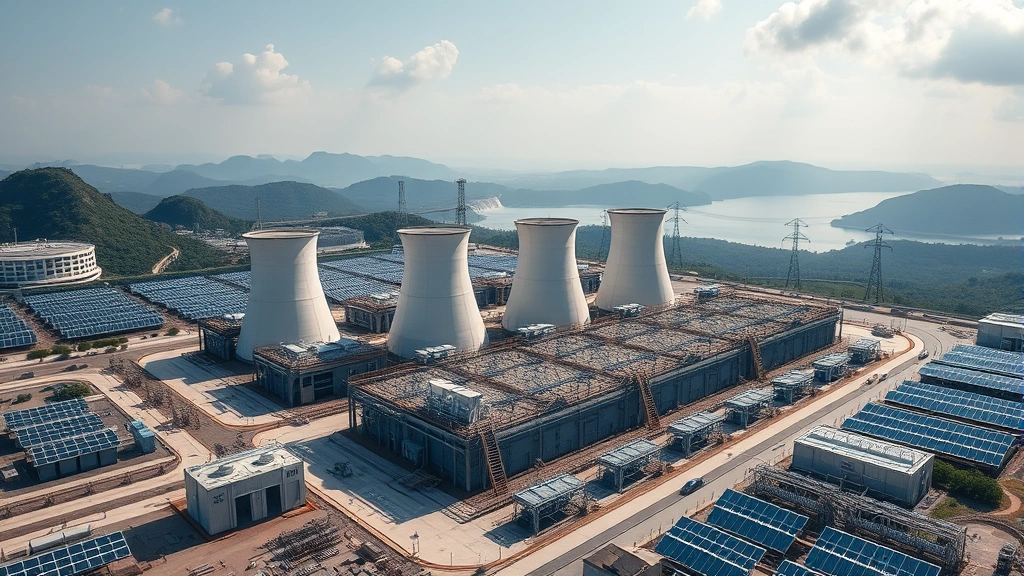
The criteria for identifying the best bitcoin miners extends far beyond simple hash rate measurements. Top-tier mining operations demonstrate exceptional engineering, strategic energy sourcing, financial stability, and technological innovation. These companies maintain competitive advantages through access to renewable energy sources, efficient cooling systems, next-generation ASIC hardware, and sophisticated operational management.
Hash rate represents the computational power a miner contributes to the network, measured in exahashes per second (EH/s). However, profitability depends on multiple interconnected factors including electricity costs, hardware efficiency (measured in joules per terahash), capital expenditure requirements, and operational overhead. The most successful miners achieve margins through vertical integration, securing long-term power contracts at below-market rates, and optimizing their infrastructure for maximum uptime and efficiency.
Geographic location fundamentally influences mining viability, with operations in regions offering abundant hydroelectric power, geothermal energy, or other low-cost renewable sources maintaining significant competitive advantages. Additionally, understanding how Bitcoin forecast 2025 projections affect mining economics helps operators plan capital allocation and expansion strategies effectively.
Marathon Digital Holdings: The American Leader
Marathon Digital Holdings emerged as North America’s dominant Bitcoin mining operation by 2023, commanding approximately 13-15% of the global hash rate at various points throughout the year. The company’s strategic acquisition of Beowulf Mining and subsequent consolidation of operations positioned Marathon as an industry heavyweight with substantial mining capacity across multiple facilities in the United States.
The company operates mining facilities in Texas, Montana, and other strategic locations, leveraging the region’s abundant natural gas resources and hydroelectric capacity. Marathon’s investment in next-generation ASIC miners and facility upgrades demonstrated commitment to maintaining technological leadership. Their vertically integrated approach, including direct relationships with hardware manufacturers, provides cost advantages unavailable to smaller competitors.
Marathon’s strategic positioning includes long-term power purchase agreements securing electricity at predictable rates, critical for weathering volatility in Bitcoin’s price. The company’s publicly traded status on NASDAQ provides capital market access for funding expansion initiatives. As Bitcoin continues climbing, Marathon’s operational leverage amplifies profitability gains, making it attractive to institutional investors seeking cryptocurrency sector exposure.
Riot Blockchain: Innovation and Scale
Riot Blockchain distinguished itself through aggressive capacity expansion and technological innovation throughout 2023. The company’s Whinstone facility in Texas represents one of the largest Bitcoin mining operations globally, with substantial hash rate contribution and continuous hardware upgrade cycles. Riot’s operational philosophy emphasizes scalability and efficiency improvements across their mining fleet.
The company’s strategic partnerships with equipment manufacturers and power providers enabled rapid deployment of new ASIC hardware as technology advanced. Riot’s investment in facility infrastructure, including advanced cooling systems and power distribution optimization, reduced operational costs and improved hash rate efficiency. Their commitment to transparency regarding operational metrics and financial performance strengthens investor confidence and competitive positioning.
Riot’s geographic concentration in Texas, while providing excellent power cost advantages, represents concentration risk requiring strategic consideration. However, the company’s diversification into multiple facility locations and continued expansion plans mitigate this vulnerability. Understanding broader market dynamics through Bitcoin options trading strategies helps investors evaluate Riot’s risk-return profile within their portfolio context.
Core Scientific: Operational Excellence
Core Scientific achieved prominence through exceptional operational management and energy efficiency optimization. The company’s data center expertise, derived from decades of managing large-scale computing infrastructure, translated into superior mining operations. Core Scientific’s facilities demonstrated some of the industry’s lowest power consumption metrics per unit of hash rate produced.
The company’s technology stack includes advanced monitoring systems, predictive maintenance protocols, and real-time optimization algorithms that maximize equipment performance while minimizing downtime. Core Scientific’s partnerships with major semiconductor manufacturers provided preferential access to next-generation ASIC hardware, sustaining competitive advantages. Their commitment to facility automation and AI-driven optimization positioned them among industry leaders in operational sophistication.
Core Scientific’s Chapter 11 bankruptcy filing in late 2023 highlighted mining industry vulnerabilities during extended bear markets, demonstrating that even operationally excellent companies face existential challenges when Bitcoin prices decline significantly. This cautionary tale underscores the importance of understanding mining economics and how price volatility affects operator viability, relevant to anyone researching cryptocurrency tokens and blockchain infrastructure investments.
Hut 8 Mining: Canadian Efficiency
Hut 8 Mining leveraged Canada’s abundant hydroelectric resources and favorable regulatory environment to establish itself as a leading North American mining operation. The company’s facilities in Alberta and other Canadian provinces benefit from among the lowest electricity costs globally, providing substantial operational advantages. Hut 8’s strategic focus on renewable energy alignment appeals to environmentally conscious investors and meets ESG criteria increasingly important to institutional capital.
The company’s operational discipline and conservative financial management enabled sustained profitability even during market downturns. Hut 8’s investment in facility upgrades and hardware optimization maintained competitive hash rate efficiency. Their transparent reporting of operational metrics and financial performance builds investor confidence and positions the company favorably within the competitive mining landscape.
Hut 8’s geographic diversification across multiple Canadian facilities and strategic U.S. operations reduces concentration risk while maintaining access to low-cost renewable power. The company’s commitment to sustainable mining practices aligns with evolving regulatory expectations and investor preferences. For those exploring investment opportunities with limited capital, Hut 8’s publicly traded shares provide accessible exposure to professional mining operations.
Bitfarms: Global Mining Operations
Bitfarms established itself as a globally diversified mining operation with facilities across multiple continents, reducing geographic and regulatory concentration risk. The company’s operations in Argentina, Paraguay, and Canada leverage regional advantages including abundant hydroelectric power and favorable regulatory frameworks. Bitfarms’ international presence provides resilience against regional policy changes or energy market disruptions.
The company’s operational model emphasizes efficiency improvements and capital discipline. Bitfarms’ investment in next-generation ASIC hardware and facility optimization maintained competitive hash rate metrics. Their strategic partnerships with power providers secured long-term electricity contracts at favorable rates, essential for mining profitability in volatile Bitcoin markets. Bitfarms’ transparent reporting and investor communication strengthen market positioning and access to capital markets funding.
Bitfarms’ global diversification strategy represents sophisticated risk management, distributing operational exposure across multiple jurisdictions with different regulatory, energy, and economic conditions. This approach provides insulation from localized disruptions that could impact single-jurisdiction operators. The company’s commitment to operational excellence and continuous improvement positions it favorably for long-term competitiveness in the evolving mining landscape.
Mining Economics and Profitability Factors
Bitcoin mining profitability depends on complex interactions between hardware costs, electricity expenses, network difficulty, and Bitcoin price. The best bitcoin miners maintain advantages through multiple channels: securing low-cost power, deploying efficient ASIC hardware, optimizing facility operations, and managing capital efficiently. Understanding these dynamics proves essential for evaluating mining company investments and industry viability.
Electricity represents 50-70% of mining operational costs, making power sourcing the primary profitability driver. Miners with access to renewable energy sources—hydroelectric, geothermal, or wind—maintain significant cost advantages over operators relying on conventional grid power. Strategic long-term power purchase agreements lock in favorable rates, protecting profitability during Bitcoin price volatility. The most sophisticated operators negotiate power contracts with escalation clauses protecting against inflation while maintaining below-market rates.
Hardware efficiency, measured in joules per terahash, determines how effectively miners convert electricity into hash rate. Next-generation ASIC miners achieve substantial efficiency improvements over previous generations, but capital costs for equipment refresh cycles remain substantial. Top mining operations maintain access to cutting-edge hardware through manufacturer relationships, pre-launch agreements, and significant capital allocation to equipment upgrades. Older, less efficient hardware becomes economically unviable when Bitcoin prices decline, forcing operators to mothball equipment or sell at losses.
Network difficulty increases as more hash rate joins the Bitcoin network, requiring proportionally more computational power to maintain constant block discovery rates. This difficulty adjustment mechanism ensures Bitcoin maintains approximately ten-minute block intervals regardless of total network hash rate. Miners must continuously invest in new equipment and facility expansion to maintain hash rate percentages as network difficulty increases. This arms race dynamic favors well-capitalized operators with access to capital and equipment, concentrating mining among largest players.
Bitcoin price volatility fundamentally impacts mining economics, determining revenue per block discovered. During extended bear markets, miners with high operational costs become unprofitable and shut down operations, reducing network hash rate and allowing remaining miners to operate more profitably. This boom-bust cycle creates opportunities for well-capitalized operators to accumulate hash rate at distressed prices while consolidating industry position. Understanding how Bitcoin price prediction models forecast future price movements helps miners and investors assess profitability sustainability.
Future Outlook for Bitcoin Mining
The Bitcoin mining industry faces significant structural changes that will reshape competitive dynamics through the remainder of the decade. Regulatory pressures regarding energy consumption, environmental impact, and operational practices will increase operational costs and complexity for all miners. Jurisdictions may implement carbon pricing, energy consumption taxes, or renewable energy mandates affecting mining operations’ profitability calculations. Forward-thinking miners already invest in environmental sustainability and regulatory compliance, positioning themselves favorably for evolving policy landscapes.
Technological advancement will continue improving ASIC efficiency, but diminishing returns suggest hardware improvements will slow compared to recent years. Moore’s Law-like dynamics in semiconductor manufacturing approach physical limits, meaning future hash rate growth depends increasingly on facility expansion rather than hardware efficiency gains. This shift favors large, well-capitalized operators capable of funding massive facility buildouts over smaller miners with limited capital access.
Bitcoin halving events, occurring every four years, reduce mining block rewards by 50%, fundamentally altering mining economics. The 2024 halving reduced rewards from 6.25 BTC to 3.125 BTC per block, immediately reducing mining revenue and forcing marginal operators to cease operations. Subsequent halvings in 2028 and beyond will continue this pressure, concentrating mining among lowest-cost operators. Miners must achieve exceptional operational efficiency and secure the lowest-cost power possible to survive future halving cycles.
The potential approval of Bitcoin spot exchange-traded funds (ETFs) and broader institutional adoption could drive significant price appreciation, improving mining profitability substantially. However, regulatory uncertainty regarding cryptocurrency classification, taxation, and banking relationships creates ongoing risks affecting mining company valuations and capital access. Miners must navigate complex regulatory environments while maintaining operational flexibility to adapt to changing policy landscapes.
Sustainability considerations will increasingly influence mining operations, with emphasis on renewable energy sources and carbon offset programs. Miners demonstrating commitment to environmental responsibility gain advantages in capital access, regulatory relationships, and investor sentiment. The industry’s transition toward renewable-powered operations represents both competitive challenge and opportunity, advantaging miners with access to hydroelectric, geothermal, or other clean energy sources.
FAQ
What is Bitcoin mining and why is it important?
Bitcoin mining involves using computational power to validate transactions and secure the Bitcoin network. Miners compete to solve complex mathematical puzzles, with winners receiving newly created Bitcoin and transaction fees. This process maintains Bitcoin’s decentralized security model and creates new currency supply according to predetermined schedules. Mining importance cannot be overstated—without miners, the Bitcoin network cannot function, making miners essential infrastructure for cryptocurrency operations.
How much does it cost to start a Bitcoin mining operation?
Initial Bitcoin mining investment ranges from thousands of dollars for small-scale home operations to hundreds of millions for industrial facilities. Home miners might invest $5,000-$15,000 in ASIC hardware and cooling systems. Commercial operations require millions in facility construction, power infrastructure development, and equipment purchases. Ongoing costs include electricity, maintenance, equipment replacement, and facility operations. The high capital requirements create barriers to entry, favoring established companies with access to substantial funding.
Which Bitcoin miners are most profitable?
The best bitcoin miners combine multiple profitability factors: lowest electricity costs through renewable energy access, most efficient ASIC hardware, superior operational management, and sufficient capital reserves to weather Bitcoin price volatility. Marathon Digital, Riot Blockchain, and Hut 8 consistently rank among the most profitable through these combined advantages. Profitability varies significantly based on Bitcoin price, network difficulty, and individual operational efficiency metrics.
Is Bitcoin mining still profitable in 2023-2024?
Mining profitability depends heavily on operational cost structure and Bitcoin price. Miners with electricity costs below $40,000-$50,000 per Bitcoin (accounting for hardware depreciation and operational overhead) remain profitable at current price levels. As Bitcoin price increases, profitability improves dramatically for all miners. However, marginal operators with high electricity costs or inefficient hardware face profitability challenges. The 2024 halving reduced profitability by approximately 50%, forcing marginal operators to cease operations or exit the industry.
What environmental impact does Bitcoin mining have?
Bitcoin mining consumes substantial electricity, with global network consumption estimated at 120-150 terawatt-hours annually. However, approximately 40-50% of mining power comes from renewable sources, primarily hydroelectric facilities. The industry’s environmental impact depends heavily on energy mix—miners using renewable power have minimal carbon footprint, while those using fossil fuels contribute to greenhouse gas emissions. Increasing regulatory pressure and investor preference for sustainable operations drive industry transition toward renewable energy sources.
How does Bitcoin halving affect mining profitability?
Bitcoin halving events reduce mining block rewards by 50%, immediately cutting mining revenue by half if Bitcoin price remains constant. Historically, Bitcoin price appreciation following halving events partially or fully compensates for reduced block rewards. However, halving creates profitability challenges for marginal miners, forcing them to cease operations and consolidating mining among lowest-cost operators. The 2024 halving reduced rewards from 6.25 BTC to 3.125 BTC, fundamentally altering mining economics.
What should investors consider when evaluating mining companies?
Key evaluation criteria include: hash rate contribution and growth trajectory, electricity cost and power contract terms, ASIC hardware efficiency and age, facility utilization and uptime metrics, capital structure and balance sheet strength, management team experience and track record, and regulatory compliance status. Investors should assess sensitivity to Bitcoin price changes, understanding that mining company valuations amplify Bitcoin price movements. Geographic diversification and renewable energy access provide competitive advantages and long-term sustainability.


