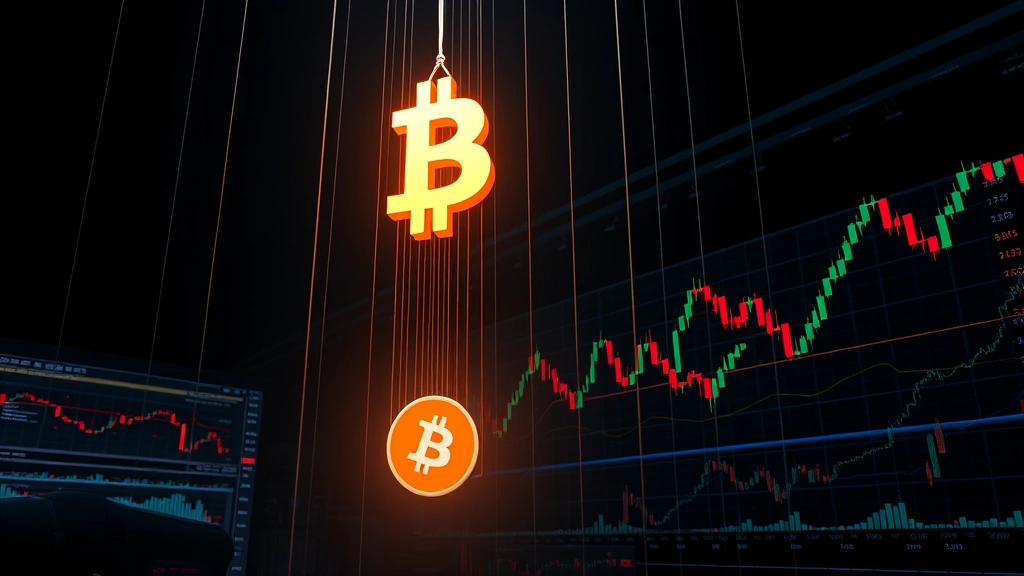
Bitcoin Puppets: Are They Impacting Markets?
The term “bitcoin puppets” has emerged in cryptocurrency discourse to describe large holders, institutional players, and influential figures who allegedly manipulate Bitcoin’s price movements for personal gain. These market actors, whether whale investors, trading firms, or prominent crypto personalities, are believed to pull the strings behind significant price swings that affect millions of retail investors worldwide. Understanding whether bitcoin puppets truly impact markets requires examining market mechanics, whale behavior, regulatory frameworks, and the psychological factors that drive trading decisions.
Bitcoin’s volatility has long been attributed to various factors—from macroeconomic conditions to technological developments. However, the concentration of Bitcoin holdings among a small percentage of addresses raises legitimate questions about centralized influence on price discovery. When a single entity controls millions of dollars worth of Bitcoin, their trading decisions can create cascading effects throughout the market. This article explores the reality behind bitcoin puppets, their mechanisms of influence, and what investors should know to protect their portfolios.

What Are Bitcoin Puppets?
Bitcoin puppets refer to the concept that large market participants—often called “whales”—control Bitcoin’s price movements like puppeteers controlling marionettes. These entities hold significant Bitcoin reserves and execute trades that influence market sentiment, volatility, and price direction. The term encompasses various actors: cryptocurrency exchanges holding customer funds, venture capital firms with massive crypto portfolios, early Bitcoin adopters with thousands of coins, and sophisticated trading operations using algorithmic strategies.
The puppet master narrative gained traction as Bitcoin’s market matured and wealth concentration became apparent. Data from blockchain analysis firms shows that a relatively small number of addresses control substantial portions of Bitcoin’s circulating supply. This concentration creates asymmetric information advantages and potential for coordinated price movements that retail investors cannot predict or counteract effectively.
What distinguishes bitcoin puppets from regular market participants is their scale of influence and ability to move markets with single transactions. When a whale moves 1,000 Bitcoin from a dormant wallet to an exchange, market participants interpret this as a potential sell signal, triggering panic selling. Conversely, large purchases by institutional players can spark buying frenzies. These interpretations, whether accurate or intentional, demonstrate how puppet masters indirectly control market psychology.

How Whale Wallets Influence Price Movement
Whale activity directly impacts Bitcoin’s price through several mechanisms. The most straightforward is supply and demand dynamics. When whales accumulate Bitcoin during bear markets, they reduce available supply for retail buyers, potentially creating upward pressure. During bull runs, whale selling increases supply, which can trigger corrections or crashes if the market lacks sufficient buying interest.
Large transactions on blockchain networks create visible signals that market participants monitor constantly. Services like blockchain.com and Glassnode track whale movements in real-time, publishing alerts when significant transfers occur. These alerts generate immediate market reactions as traders interpret whale behavior as predictive signals. If a whale moves Bitcoin to a known exchange wallet, traders assume a sale is imminent and sell preemptively, creating self-fulfilling prophecies.
Bitcoin puppets also influence markets through price discovery mechanisms. In traditional markets, price discovery relies on transparent order books and regulated exchanges. Bitcoin markets, while increasingly regulated, still feature significant unregulated trading venues where whales can execute large orders with minimal market impact visibility. This information asymmetry allows sophisticated traders to position themselves before major moves, profiting from retail investors who react afterward.
The phenomenon of spoofing and layering—placing and canceling large orders to create false price signals—has been documented on cryptocurrency exchanges. While regulators increasingly prosecute such behavior, the decentralized and global nature of crypto markets makes enforcement challenging. Bitcoin puppets operating on less-regulated exchanges can manipulate order books without immediate consequences, influencing price expectations across all trading venues.
Institutional Players and Market Manipulation
Institutional adoption of Bitcoin has transformed market dynamics, introducing both legitimacy and new manipulation vectors. When major corporations, pension funds, and investment firms enter Bitcoin markets, their trading volumes dwarf retail activity. A single institutional trade can move markets by several percentage points, giving these players puppet-like control over price movements.
Derivatives markets amplify institutional influence. Bitcoin futures, options, and perpetual swaps allow traders to control large Bitcoin exposures with minimal capital through leverage. An institution betting $100 million in Bitcoin futures can influence the same price discovery mechanisms as someone holding $100 million in actual Bitcoin. This leverage multiplies puppet master effects, enabling smaller players to exert outsized market influence.
The relationship between institutional Bitcoin adoption and market volatility presents a paradox. Institutional money was supposed to stabilize Bitcoin markets by introducing professional risk management and reducing retail-driven emotional trading. Instead, institutional players have demonstrated sophisticated manipulation strategies, including pump-and-dump schemes, coordinated trading, and information-based trading advantages. These activities suggest that bitcoin puppets have evolved from simple whale holders into complex institutional operations.
Cryptocurrency exchanges themselves function as puppet masters by controlling order matching, trade execution, and information flow. Exchanges can theoretically prioritize certain orders, delay execution, or provide market data advantages to preferred traders. While reputable exchanges implement safeguards against such practices, the centralized nature of exchange operations creates structural vulnerabilities to manipulation. Retail investors trading on exchanges have limited visibility into whether their orders receive fair treatment relative to institutional traders.
The Psychology Behind Puppet Masters
Understanding bitcoin puppet behavior requires examining the psychology and incentives driving large market participants. Whales and institutional players aren’t necessarily malicious; they’re responding to rational economic incentives. Maximizing profits through strategic trading—even if those strategies exploit retail investors’ psychological biases—aligns with fiduciary duties and profit maximization objectives.
The herding behavior that bitcoin puppets exploit is deeply rooted in human psychology. Retail investors fear missing out on gains (FOMO) and fear losing money (panic selling), making them predictable. Experienced traders and puppet masters profit by triggering these emotional responses through strategic transactions and information dissemination. A whale’s large purchase might signal confidence, triggering FOMO-driven buying that pushes prices higher, allowing the whale to sell at inflated prices.
Information asymmetry creates another psychological advantage for bitcoin puppets. Institutional traders have access to sophisticated analysis tools, market microstructure data, and on-chain analytics that retail investors lack. This information advantage allows puppet masters to predict retail behavior and position accordingly. When retail investors eventually receive the same information and react, puppet masters have already profited from the expected move.
Social media amplifies puppet master influence through coordinated messaging campaigns. Influential crypto figures with large followings can move markets through tweet sentiment, YouTube videos, or Discord messages. Some of these influencers function as unwitting puppet masters—their genuine enthusiasm drives retail buying that benefits their own portfolios. Others deliberately manipulate sentiment, making calls they don’t personally believe in to profit from predictable retail reactions.
Regulatory Response to Market Manipulation
Regulators worldwide have begun addressing bitcoin puppet manipulation through enforcement actions and rule-making. The U.S. Securities and Exchange Commission (SEC) and Commodity Futures Trading Commission (CFTC) have prosecuted crypto market manipulation cases, establishing legal precedents that apply to Bitcoin trading. The SEC has issued guidance on cryptocurrency market manipulation, making clear that traditional securities laws apply to crypto trading.
The challenge for regulators is distinguishing between legitimate trading and market manipulation. A large sell order that moves prices isn’t necessarily manipulative—it’s normal market function. Proving intent to manipulate requires demonstrating that traders deliberately executed transactions specifically to deceive other market participants. This burden of proof makes prosecution difficult, especially when traders can claim they were simply managing their portfolios.
International regulatory coordination remains incomplete, creating jurisdictional arbitrage opportunities for bitcoin puppets. A trader banned from U.S. exchanges can continue operating on unregulated overseas platforms. The global nature of cryptocurrency markets means that even well-intentioned regulatory efforts struggle to prevent all manipulation. Retail investors should recognize that regulatory protections in crypto remain weaker than in traditional financial markets.
CoinDesk and other crypto news outlets regularly report on regulatory developments affecting Bitcoin markets. Staying informed about regulatory changes helps investors understand shifting market dynamics and potential impacts on bitcoin puppet behavior. As regulation increases, some puppet master strategies become riskier and less profitable, potentially reducing their market influence.
Protecting Your Portfolio From Puppet Moves
While you cannot eliminate bitcoin puppet influence, understanding their tactics allows you to build more resilient investment strategies. The first step involves recognizing that Bitcoin’s price volatility stems from multiple sources, not just whale manipulation. Macroeconomic conditions, regulatory news, technological developments, and genuine supply-demand dynamics all drive prices. Bitcoin puppets operate within these broader market conditions rather than controlling them absolutely.
Implementing proper asset allocation strategies reduces vulnerability to puppet-driven volatility. Bitcoin should represent only a portion of your overall portfolio, sized according to your risk tolerance and investment objectives. If Bitcoin constitutes 50% of your portfolio, whale-driven 20% price swings devastate your overall returns. Conversely, Bitcoin as 5-10% of a diversified portfolio allows you to benefit from upside while limiting downside impact.
Adopt dollar cost averaging strategies to reduce the impact of price manipulation. Rather than deploying capital in lump sums vulnerable to whale moves, investing consistent amounts at regular intervals smooths your entry price and reduces timing risk. This approach protects you from buying at manipulated peaks or selling at manipulated lows.
Understand technical analysis indicators to identify potential whale moves before they occur. On-chain metrics like exchange inflows, transaction volume, and wallet concentration patterns signal when whales are accumulating or distributing. While these indicators aren’t foolproof, they provide edge over purely emotional trading. Glassnode and CryptoQuant offer sophisticated on-chain analytics accessible to retail investors.
Implement proper risk management through stop losses and position sizing. If you cannot afford a 30-50% Bitcoin drawdown without materially impacting your financial stability, your position size is too large. Smaller positions allow you to weather puppet-driven volatility without forced selling at losses. Conversely, if Bitcoin represents only a small portfolio portion, you can hold through volatility without emotional distress.
Avoid emotional reactions to whale moves and social media hype. The most damaging bitcoin puppet effect is psychological—triggering panic selling or FOMO buying at worst possible times. Develop a written investment plan specifying your Bitcoin allocation, your entry/exit criteria, and your time horizon. Execute this plan mechanically regardless of short-term price movements or influential figures making bold predictions. Discipline beats speculation against puppet masters with superior information and resources.
Diversifying your investment portfolio across multiple assets, geographies, and sectors provides insurance against concentrated Bitcoin risks. Even if bitcoin puppets control short-term price movements, a properly diversified portfolio captures long-term Bitcoin appreciation potential while limiting downside from manipulation or market crashes. This balanced approach acknowledges both Bitcoin’s legitimate investment merits and the real risks from market manipulation.
Consider using dollar-denominated stablecoins during periods of extreme puppet activity if you believe manipulation is creating unsustainable prices. Exiting to stablecoins preserves capital while you wait for clearer market conditions. This flexibility represents an advantage retail investors possess that large institutions lack—the ability to move quickly without moving markets themselves.
FAQ
Are bitcoin puppets real or just conspiracy theories?
Bitcoin puppets represent real market phenomena grounded in documented whale behavior and institutional trading practices. However, the extent of coordinated manipulation versus normal large-trader behavior remains debated. On-chain data clearly shows whale activity correlates with price movements, but proving intentional manipulation requires demonstrating deceptive intent. Most puppet master effects likely result from rational profit-seeking rather than coordinated conspiracies.
Can retail investors compete with bitcoin puppets?
Retail investors cannot compete with puppet masters on information advantages or capital scale, but they can compete on discipline and time horizon. Institutional traders optimize for short-term profits, making their strategies vulnerable to long-term trend changes. Retail investors with clear long-term strategies and emotional discipline can outperform traders playing short-term manipulation games.
How do I identify whale movements before they happen?
On-chain analysis platforms like Glassnode, CryptoQuant, and Nansen provide real-time whale movement alerts. Monitoring exchange inflows, wallet concentration metrics, and transaction patterns reveals accumulation/distribution phases before price moves. However, past whale behavior doesn’t guarantee future results—whale moves sometimes occur without preceding detectable signals.
Should I avoid Bitcoin because of puppet master manipulation?
Bitcoin’s long-term returns and technological significance exist independent of short-term manipulation. Rather than avoiding Bitcoin entirely, structure positions to be resilient to manipulation. Proper allocation, dollar cost averaging, and diversification allow you to participate in Bitcoin’s potential while limiting puppet-driven volatility impact on your overall financial situation.
What’s the difference between bitcoin puppets and normal market makers?
Market makers provide liquidity and reduce bid-ask spreads, benefiting all traders. Bitcoin puppets deliberately manipulate prices to profit from predictable retail reactions. The distinction lies in intent and impact—market makers improve price discovery, while puppets distort it. In practice, some large traders perform both functions simultaneously, making clear categorization difficult.


