
Is 2x Bitcoin ETF a Good Investment? Analyst Insights
Leveraged Bitcoin ETFs, particularly 2x Bitcoin ETFs, have emerged as increasingly popular investment vehicles in the cryptocurrency market. These financial instruments allow investors to gain amplified exposure to Bitcoin’s price movements without directly holding the cryptocurrency. However, the question of whether a 2x Bitcoin ETF represents a sound investment decision requires careful analysis of multiple factors, including market conditions, individual risk tolerance, and investment objectives.
A 2x Bitcoin ETF is designed to deliver twice the daily returns of Bitcoin. This means if Bitcoin increases by 1% in a single day, the 2x Bitcoin ETF aims to increase by approximately 2%. Conversely, if Bitcoin declines by 1%, the ETF would theoretically decline by 2%. While this amplified leverage can seem attractive during bullish market phases, it introduces significant complexity and risk that many retail investors may not fully appreciate. Understanding these mechanisms is essential before committing capital to leveraged cryptocurrency products.

Understanding 2x Bitcoin ETFs
A 2x Bitcoin ETF is a specialized investment product that uses derivatives, futures contracts, and other financial instruments to create leverage. Unlike traditional Bitcoin ETFs that track Bitcoin’s price on a 1:1 basis, leveraged ETFs multiply exposure using borrowed capital or sophisticated trading strategies. The “2x” designation means the fund aims to deliver returns equal to two times the daily performance of Bitcoin.
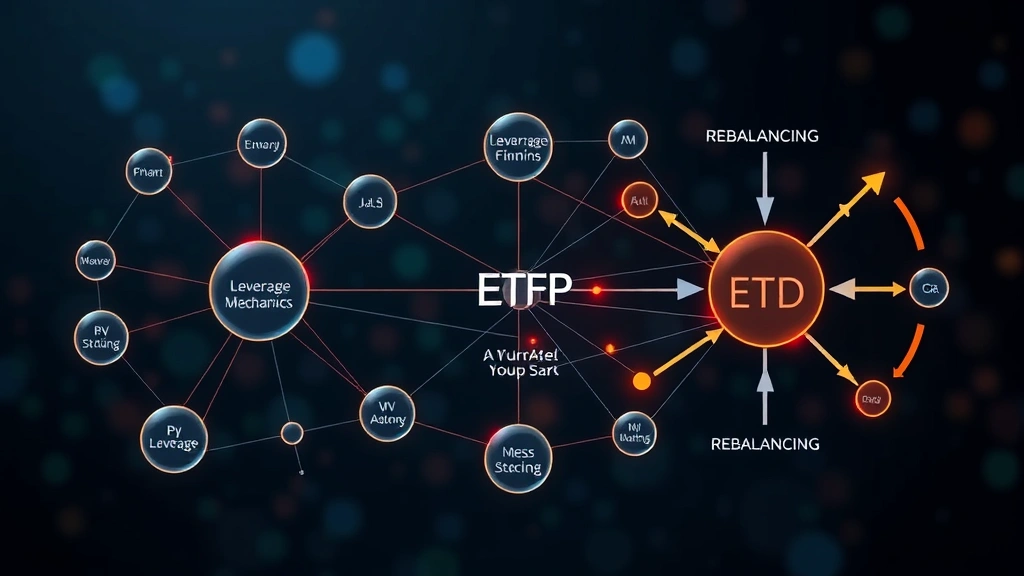
These products are typically structured as exchange-traded notes (ETNs) or leveraged ETFs that use daily rebalancing mechanisms. This rebalancing is crucial to understand because it means the ETF recalibrates its positions daily to maintain the 2x leverage ratio. This daily reset feature can lead to what investors call “decay” or “slippage” during volatile market conditions, where the fund’s long-term performance may diverge significantly from simply multiplying Bitcoin’s returns by two.
Several major financial institutions and investment platforms now offer 2x Bitcoin ETF products. These include both spot-based leveraged products and futures-based leveraged ETFs. Before investing, it’s important to understand whether you’re buying a futures-based product or a spot-based leveraged product, as they operate differently and carry distinct risk profiles.
How Leverage Works in Crypto ETFs
Leverage in cryptocurrency ETFs operates through borrowing mechanisms that amplify both gains and losses. When you invest in a 2x Bitcoin ETF, the fund manager essentially borrows capital to invest twice as much as the fund’s actual assets would allow. This borrowed capital is invested in Bitcoin futures contracts, derivatives, or other Bitcoin-tracking instruments.
The mechanics of daily rebalancing are particularly important. If Bitcoin rises 5% on Monday, the 2x ETF aims to rise 10%. However, if Bitcoin then falls 5% on Tuesday, the ETF doesn’t simply return to its Monday starting price. Instead, it falls 10%, creating a compounding effect. This mathematical reality means that in volatile, sideways markets, leveraged ETFs can experience significant value erosion even if Bitcoin’s price remains relatively stable over longer periods.
To better understand your investment approach, consider learning about how to set investment goals before allocating capital to leveraged products. Additionally, assessing your risk tolerance is essential, as leveraged products demand higher emotional discipline than traditional investments.
Funding costs represent another crucial component of leveraged ETF economics. When funds borrow capital to maintain leverage, they pay interest on those borrowed funds. In rising interest rate environments, these funding costs can significantly erode returns. Investors must account for these expenses when evaluating potential profitability.
Advantages of 2x Bitcoin ETFs
Despite their complexity and risks, 2x Bitcoin ETFs offer several genuine advantages for certain investors. The primary benefit is amplified upside exposure during bull markets. If you believe Bitcoin will appreciate significantly and want to maximize gains with a limited capital allocation, a 2x ETF can deliver doubled returns compared to a standard Bitcoin ETF or direct Bitcoin purchase.
Regulatory compliance and accessibility represent significant practical advantages. 2x Bitcoin ETFs trade on traditional stock exchanges and are regulated financial products, making them accessible through standard brokerage accounts. This eliminates the need to open cryptocurrency exchange accounts, manage private keys, or navigate the complexities of direct cryptocurrency custody.
Tax efficiency potential exists in certain jurisdictions. Depending on your location and tax situation, holding a 2x Bitcoin ETF within a tax-advantaged retirement account might offer benefits compared to direct Bitcoin holdings. Consult with a tax professional about your specific circumstances, as regulations vary significantly by country and region.
For investors who believe in Bitcoin’s long-term value proposition and want to understand the fundamentals, exploring why Bitcoin is valuable provides essential context for any leveraged investment decision. Additionally, reviewing current Bitcoin price predictions can inform your market timing considerations.
Ease of entry and exit is another practical advantage. Unlike derivatives trading or futures contracts, which require specialized accounts and significant margin requirements, purchasing a 2x Bitcoin ETF through a standard brokerage is straightforward. You can buy and sell shares during regular market hours with minimal friction.
Risks and Drawbacks
The most significant risk associated with 2x Bitcoin ETFs is amplified downside exposure. Just as leverage doubles gains during bull markets, it equally doubles losses during bear markets. A 50% decline in Bitcoin would theoretically result in a 100% loss in a 2x Bitcoin ETF, completely eliminating your investment. This mathematical reality means leveraged products are inherently unsuitable for investors who cannot afford to lose their entire investment.
Decay and volatility drag represent subtle but powerful wealth destroyers in leveraged ETF investing. During periods of high volatility, even if Bitcoin’s price returns to its starting point, a 2x Bitcoin ETF may have lost substantial value. This phenomenon occurs because losses on down days are doubled, while gains on up days are also doubled, creating a mathematical disadvantage in choppy markets.
Time decay is another critical consideration. Leveraged ETFs are designed for short-term trading, not buy-and-hold investing. The longer you hold a 2x Bitcoin ETF, the more likely it is that volatility decay will erode your returns, regardless of Bitcoin’s ultimate price direction. Financial research consistently shows that leveraged ETFs underperform their theoretical leveraged returns over extended holding periods.
Funding costs and expense ratios can be substantial. 2x Bitcoin ETFs typically charge higher expense ratios than traditional ETFs, often ranging from 0.5% to 1.5% annually or higher. Additionally, in high-interest-rate environments, the cost of maintaining leverage can significantly reduce net returns. During 2022-2023, these costs became particularly pronounced, cutting deeply into investor profits.
Regulatory risks also merit consideration. The regulatory landscape for leveraged cryptocurrency products continues evolving globally. Sudden regulatory changes could impact product availability, structure, or taxation, potentially disadvantaging current holders. Before investing, research the regulatory status of your specific 2x Bitcoin ETF in your jurisdiction.
For those new to cryptocurrency investing, Bitcoin for dummies provides foundational knowledge that will help contextualize leveraged products within the broader cryptocurrency ecosystem.
Comparing with Traditional Bitcoin Investments
When evaluating whether a 2x Bitcoin ETF is appropriate, comparing it against traditional Bitcoin investment vehicles is essential. A standard Bitcoin ETF or direct Bitcoin purchase offers simplicity and alignment with long-term value appreciation. These traditional approaches avoid the complexity of daily rebalancing, funding costs, and volatility decay.
Direct Bitcoin ownership through a secure wallet or custody solution provides maximum control and removes counterparty risks associated with ETF structures. However, this approach requires technical knowledge, security discipline, and the ability to manage private keys responsibly. For most retail investors, the learning curve and security burden make this option less practical.
Traditional Bitcoin ETFs that track Bitcoin on a 1:1 basis offer a middle ground. They provide regulatory compliance and ease of access while avoiding the mathematical disadvantages of leverage. These products are ideal for long-term investors with a multi-year investment horizon and conviction in Bitcoin’s value thesis.
To help determine what approach fits your situation, consider reading whether you should buy Bitcoin now, which explores different entry strategies and market conditions. Understanding current market sentiment and technical analysis can inform your decision about leverage appropriateness.
The key distinction is investment timeline. For holding periods of months or years, traditional Bitcoin investments outperform leveraged products. For tactical trading over days or weeks, 2x Bitcoin ETFs might offer advantages if used with discipline and proper risk management.
Market Conditions and Timing
The viability of 2x Bitcoin ETF investments depends heavily on market conditions and your ability to time entry and exit points effectively. During strong bull markets with sustained uptrends, leveraged products can deliver exceptional returns. The 2024-2025 period, characterized by Bitcoin appreciation and increased institutional adoption, created environments where 2x Bitcoin ETFs performed well for investors who entered and exited at appropriate times.
Conversely, during bear markets or high-volatility sideways trading, 2x Bitcoin ETFs typically destroy wealth through decay and funding costs. The 2022 cryptocurrency bear market demonstrated this clearly, with many leveraged products significantly underperforming traditional Bitcoin holdings despite Bitcoin’s eventual recovery.
Expert analysts emphasize that successful leveraged ETF investing requires active management and market timing skill. This isn’t a set-and-forget investment vehicle. Investors must monitor positions regularly, understand current market volatility levels, and be prepared to exit if conditions shift unfavorably. Many retail investors lack the expertise or discipline for this approach, making it unsuitable for their situations.
Volatility forecasting becomes crucial when considering 2x Bitcoin ETFs. In low-volatility environments, leverage becomes more attractive because decay is minimized. In high-volatility periods, leverage becomes dangerous because the mathematical compounding effects of daily rebalancing work against investors. Experienced traders monitor Bitcoin’s volatility index and other technical indicators before committing to leveraged positions.
Tax Implications
Tax treatment of 2x Bitcoin ETFs varies significantly by jurisdiction, making professional tax consultation essential. In many countries, leveraged ETFs are treated as ordinary securities, with gains taxed as capital gains. However, the frequent rebalancing that occurs within the fund structure can create unexpected tax consequences.
In the United States, investors must report all gains and losses from ETF transactions, and the daily rebalancing within leveraged funds can trigger substantial taxable events. Some sophisticated investors use leveraged products exclusively within tax-advantaged retirement accounts to minimize tax friction. This strategy is particularly relevant for investors in high-tax jurisdictions who have significant retirement account contribution capacity.
Wash sale rules may apply in certain jurisdictions when investors buy, sell, and repurchase similar positions within short timeframes. This can complicate tax planning for active leveraged ETF traders. Additionally, some jurisdictions treat cryptocurrency-related gains differently than traditional securities, adding another layer of complexity.
Currency considerations matter for international investors. If your home currency differs from the ETF’s base currency, foreign exchange fluctuations can significantly impact returns. Some leveraged Bitcoin ETFs are currency-hedged, while others are not, creating important distinctions for non-U.S. investors.
Expert Analyst Perspectives
Financial analysts and cryptocurrency experts hold diverse but generally cautious views regarding 2x Bitcoin ETFs for most investors. According to research from CoinDesk, a leading cryptocurrency news source, leveraged products are best suited for experienced traders with specific tactical objectives rather than general retail investors.
Analysts emphasize several recurring themes. First, leveraged products are tools for specific purposes—tactical short-term trading or hedging strategies—rather than core investment holdings. Attempting to build wealth through 2x Bitcoin ETFs over multi-year periods typically underperforms simple buy-and-hold Bitcoin strategies due to volatility decay and funding costs.
Second, investor behavior matters enormously. Many retail investors buy leveraged products at market peaks (when Bitcoin sentiment is most bullish) and sell during downturns (when panic dominates), crystallizing losses and missing subsequent recoveries. This behavioral pattern is particularly damaging with leveraged products because losses are amplified.
Third, interest rate environments significantly impact leveraged product viability. In low-rate environments, funding costs are minimal and leveraged products become more attractive. In high-rate environments, funding costs eat substantially into returns, reducing the appeal of leverage.
According to blockchain research firms and cryptocurrency analysts, the optimal use case for 2x Bitcoin ETFs involves sophisticated investors who use them for:
- Short-term tactical positions aligned with specific market outlooks lasting days to weeks
- Hedging strategies within broader diversified portfolios
- Trading around identified technical support and resistance levels
- Positions sized appropriately relative to overall portfolio risk tolerance
The consensus among professional investors is that 2x Bitcoin ETFs should represent only a small portion of a diversified cryptocurrency or overall investment portfolio. Using them as core holdings or for long-term wealth accumulation is generally discouraged by financial professionals.
For those evaluating their overall Bitcoin investment strategy, examining current perspectives on Bitcoin investment timing provides valuable context for deciding whether leverage is appropriate for your situation.
FAQ
What exactly is a 2x Bitcoin ETF?
A 2x Bitcoin ETF is a leveraged exchange-traded fund designed to deliver twice the daily returns of Bitcoin. If Bitcoin rises 1% in a day, the 2x ETF aims to rise 2%. It achieves this leverage through derivatives, futures contracts, and daily rebalancing mechanisms. These products are suitable primarily for short-term tactical trading rather than long-term investing.
How does daily rebalancing work in leveraged ETFs?
Each trading day, the fund manager adjusts the fund’s positions to maintain the 2x leverage ratio. If Bitcoin moves significantly, the fund buys or sells positions to reset leverage back to 2x. This daily rebalancing process, while maintaining the intended daily leverage, creates “volatility decay” where the fund’s long-term returns diverge from simply multiplying Bitcoin’s returns by two, particularly in choppy markets.
Is a 2x Bitcoin ETF suitable for long-term investing?
No. Financial experts consistently recommend against using 2x Bitcoin ETFs as long-term holdings. Volatility decay, funding costs, and daily rebalancing effects typically result in significant underperformance compared to traditional Bitcoin investments over periods longer than a few weeks. These products are designed for short-term tactical trading, not buy-and-hold strategies.
What are the main risks of 2x Bitcoin ETFs?
Key risks include: amplified downside exposure (100% loss if Bitcoin falls 50%), volatility decay in choppy markets, funding and borrowing costs that erode returns, regulatory risks, and the requirement for active management and market timing skill. These products are unsuitable for risk-averse investors or those who cannot afford to lose their entire investment.
How do 2x Bitcoin ETFs compare to regular Bitcoin ETFs?
Traditional Bitcoin ETFs track Bitcoin’s price on a 1:1 basis without leverage, avoiding volatility decay and funding cost issues. They’re suitable for long-term investing. 2x Bitcoin ETFs amplify returns and losses, involve daily rebalancing complexity, and carry higher costs. Choose traditional ETFs for buy-and-hold strategies and 2x ETFs only for short-term tactical trading with specific profit targets.
Can I use a 2x Bitcoin ETF in a retirement account?
Yes, 2x Bitcoin ETFs can typically be held in retirement accounts like IRAs or 401(k)s, depending on your brokerage’s policies. Some investors strategically use retirement accounts for leveraged products to minimize tax friction from frequent rebalancing. Consult your tax advisor about whether this strategy makes sense for your specific situation and jurisdiction.
What market conditions favor 2x Bitcoin ETFs?
2x Bitcoin ETFs perform best during sustained bull markets with strong uptrends and low volatility. Strong directional moves in one direction maximize leverage benefits while minimizing decay. High-volatility sideways markets and bear markets are particularly damaging to leveraged products. Monitor Bitcoin’s volatility metrics before investing.
How much of my portfolio should be allocated to 2x Bitcoin ETFs?
Professional advisors recommend that if you use 2x Bitcoin ETFs at all, they should represent only a small portion of your portfolio—typically no more than 1-5% depending on your risk tolerance and experience level. These should be tactical positions with specific exit plans, not core holdings. Most investors are better served by avoiding leveraged products entirely.


