
Bitcoin Regulations: Insights from Policy Experts
The regulatory landscape surrounding Bitcoin has evolved dramatically over the past decade, shifting from complete obscurity to the forefront of government policy discussions worldwide. As governments and financial institutions grapple with the implications of decentralized digital currencies, policy experts have emerged as crucial voices in shaping the future of cryptocurrency governance. Understanding their insights provides clarity on where Bitcoin regulations are headed and what stakeholders should expect in the coming years.
The Bitcoin Policy Institute and similar organizations have become instrumental in bridging the gap between the crypto community and regulatory bodies. These institutions conduct rigorous research, publish white papers, and engage with policymakers to ensure that regulations are informed by technical expertise rather than fear or misunderstanding. This article explores the key regulatory trends, expert perspectives, and implications for Bitcoin’s future as a financial asset and technological innovation.
Current State of Bitcoin Regulation
Bitcoin operates in a complex regulatory environment that varies significantly across jurisdictions. Unlike traditional financial instruments, Bitcoin’s decentralized nature presents unique challenges for regulators who are accustomed to monitoring centralized institutions. The current regulatory landscape can be characterized as fragmented, with some countries embracing cryptocurrency innovation while others impose strict restrictions or outright bans.
The United States, European Union, and other major economies have begun implementing comprehensive regulatory frameworks. The Financial Action Task Force (FATF), an intergovernmental organization focused on combating money laundering and terrorist financing, has issued recommendations that many countries are adopting. These guidelines require cryptocurrency exchanges and custodians to implement know-your-customer (KYC) and anti-money laundering (AML) protocols similar to traditional financial institutions.
Understanding what cryptocurrency is and its fundamental technology is essential for policymakers. Bitcoin, as the original and most established cryptocurrency, often serves as the benchmark for regulatory discussions. Its immutable ledger and transparent transaction history actually make it useful for compliance purposes, contrary to early misconceptions.
The Securities and Exchange Commission (SEC) in the United States has been particularly active, determining that certain cryptocurrency tokens may qualify as securities and therefore fall under existing securities laws. However, Bitcoin itself has generally been classified as a commodity rather than a security, which affects how it can be regulated and traded.
Key Policy Frameworks Around the World
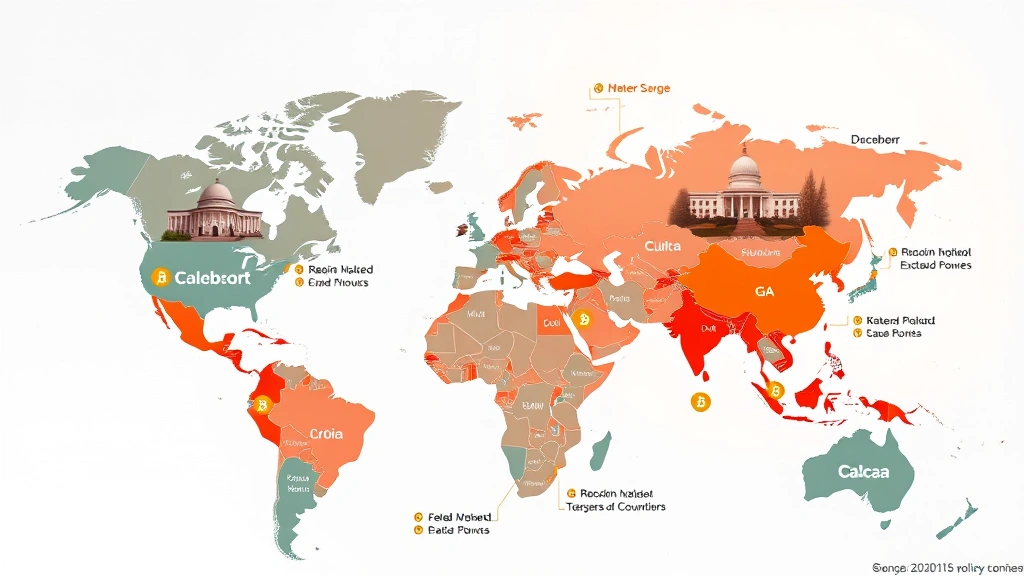
Different regions have adopted distinct approaches to Bitcoin regulation, reflecting their economic priorities and risk tolerance levels.
United States: The regulatory framework is fragmented across multiple agencies. The SEC oversees securities-related aspects, the Commodity Futures Trading Commission (CFTC) handles derivatives, the Financial Crimes Enforcement Network (FinCEN) addresses AML/KYC requirements, and state regulators oversee money transmission. This multi-agency approach creates complexity but also allows for nuanced regulation.
European Union: The Markets in Crypto-Assets Regulation (MiCA) represents one of the most comprehensive regulatory frameworks globally. It establishes clear definitions for crypto-assets, requires authorization for service providers, and implements consumer protection measures. The EU’s approach emphasizes innovation while maintaining financial stability.
United Kingdom: The Financial Conduct Authority (FCA) has implemented regulations requiring crypto service providers to register and comply with AML/KYC requirements. However, the UK maintains a relatively balanced approach that supports fintech innovation while protecting consumers.
Asia-Pacific Region: Countries like Singapore and Hong Kong have implemented progressive frameworks that attract cryptocurrency businesses, while others like China have taken a more restrictive stance. This divergence reflects different policy priorities and economic models.
The question of whether Bitcoin will crash is often influenced by regulatory announcements and policy changes. Major regulatory decisions can trigger significant price movements, demonstrating the interconnection between policy and market dynamics.
External Reference: The CoinDesk regulatory news section provides real-time updates on policy developments globally.
Expert Perspectives on Compliance
Policy experts emphasize that Bitcoin regulation is not about limiting innovation but rather creating a stable framework within which it can flourish. Several key themes emerge from expert discussions:
Consumer Protection: Experts stress that regulations should focus on protecting retail investors from fraud, manipulation, and excessive risk. This includes requirements for exchanges to maintain segregated customer assets and implement robust cybersecurity measures. The implementation of proper risk tolerance assessment for investors is increasingly viewed as essential.
Financial Stability: As Bitcoin and cryptocurrency markets grow larger, regulators worry about systemic risks. Experts recommend monitoring the interconnections between traditional finance and crypto markets to prevent contagion effects. This concern intensifies during periods of Bitcoin liquidation events that can trigger cascade effects.
Environmental Concerns: Bitcoin’s proof-of-work consensus mechanism consumes significant energy. Policy experts increasingly advocate for transparency in energy sourcing and incentives for renewable energy use. Some jurisdictions are considering regulations that restrict Bitcoin mining in areas with fossil fuel-dependent electricity grids.
Innovation Facilitation: Leading policy experts recognize that overly restrictive regulations can stifle innovation and push activity to unregulated jurisdictions. The challenge lies in finding the optimal regulatory balance that protects consumers while allowing technological advancement.
Cross-Border Cooperation: Experts emphasize that effective Bitcoin regulation requires international coordination. Since Bitcoin transactions are borderless, unilateral regulations can be circumvented easily. Organizations like the Financial Action Task Force play a crucial role in establishing common standards.
External Reference: The Financial Action Task Force official website provides guidance on cryptocurrency regulation standards.
Impact on Bitcoin Price and Adoption
Regulatory developments have profound effects on Bitcoin’s price and adoption rates. Positive regulatory news typically drives price increases, while restrictive announcements often trigger sell-offs. Understanding these dynamics is important for investors monitoring Bitcoin price movements.
Clear regulatory frameworks actually tend to accelerate institutional adoption. When institutional investors like pension funds and insurance companies can understand the regulatory environment, they feel more comfortable allocating capital to Bitcoin. Conversely, regulatory uncertainty creates hesitation among traditional finance participants.
The introduction of Bitcoin spot exchange-traded funds (ETFs) in various jurisdictions represents a watershed moment. These products allow retail investors to gain Bitcoin exposure through traditional brokerage accounts, which was only possible after regulators approved the products. This regulatory approval expanded the investor base significantly.
Interestingly, stricter regulations in one jurisdiction sometimes lead to increased adoption in more permissive regions. This regulatory arbitrage has led to the development of crypto hubs in jurisdictions with favorable policy environments. Countries like El Salvador, which adopted Bitcoin as legal tender, represent an alternative regulatory approach.
The relationship between regulation and adoption is not linear. Some studies suggest that moderate regulation increases adoption by providing consumer confidence, while excessive regulation can decrease adoption by increasing compliance costs.
Future Regulatory Trends
Based on expert analysis, several regulatory trends are likely to emerge in the coming years:
Central Bank Digital Currencies (CBDCs): As governments develop their own digital currencies, Bitcoin and other cryptocurrencies will face new competitive and regulatory pressures. CBDCs may coexist with Bitcoin while creating regulatory clarity about government-backed versus decentralized digital assets.
Stablecoin Regulation: Regulatory focus is intensifying on stablecoins, which are often used as trading pairs for Bitcoin. Stricter stablecoin regulations will likely emerge, potentially affecting Bitcoin trading liquidity.
Custody and Institutional Standards: Regulations will increasingly specify custody requirements and institutional standards for Bitcoin holdings. This will benefit established custodians and may exclude smaller market participants, leading to further consolidation.
Environmental Standards: Expect more jurisdictions to implement regulations requiring disclosure of energy sources for Bitcoin mining operations. Some may impose restrictions or taxes on high-carbon mining activities.
Tax Clarity: Governments are increasingly clarifying tax treatment of Bitcoin transactions. This trend toward tax clarity, while potentially reducing tax evasion, may also discourage some retail participation.
Decentralized Finance (DeFi) Regulation: As DeFi protocols become more interconnected with Bitcoin, regulators will seek to extend regulatory frameworks to decentralized platforms, which presents technical and jurisdictional challenges.
Comparing Bitcoin to traditional investments like bonds reveals that regulatory frameworks for digital assets are still nascent, though rapidly evolving.
External Reference: The SEC’s official filings database contains detailed information about Bitcoin-related regulatory decisions.

Risk Considerations for Investors
While regulatory clarity generally benefits Bitcoin markets, investors must remain aware of regulatory risks:
Regulatory Changes: New regulations can reduce Bitcoin’s utility or increase compliance costs for service providers, potentially affecting liquidity and spreads. Sudden regulatory shifts can trigger significant price volatility.
Jurisdiction Risk: Investors in restrictive jurisdictions face regulatory risk if governments tighten restrictions. Conversely, investors in permissive jurisdictions may face risks if regulations suddenly tighten.
Exchange Risk: Regulatory changes affecting exchanges can impact access to Bitcoin. Investors should diversify across multiple platforms and consider self-custody options.
Institutional Risk: As institutions enter Bitcoin markets, regulatory oversight of their activities will increase. This could affect how institutional positions are managed and liquidated during market stress.
Geopolitical Risk: International regulatory divergence creates opportunities for regulatory arbitrage but also increases geopolitical tensions around Bitcoin policy. Trade disputes between nations could spill over into cryptocurrency regulation.
Understanding your risk tolerance is essential when investing in Bitcoin, particularly given regulatory uncertainties. Conservative investors might prefer waiting for more established regulatory frameworks, while aggressive investors may see regulatory uncertainty as creating opportunities.
FAQ
What is the Bitcoin Policy Institute’s role in regulation?
The Bitcoin Policy Institute conducts research, publishes policy recommendations, and engages with governments to ensure informed cryptocurrency regulation. They advocate for evidence-based policy rather than restrictive approaches.
Is Bitcoin regulated as a commodity or security?
In most jurisdictions, Bitcoin is classified as a commodity rather than a security. However, other cryptocurrencies may be classified as securities depending on their characteristics and how they are offered.
How do international regulatory differences affect Bitcoin?
Regulatory differences create opportunities for regulatory arbitrage, where activity migrates to favorable jurisdictions. However, international coordination through organizations like the FATF is increasing, leading toward more harmonized standards.
Will Bitcoin regulation stifle innovation?
Experts debate this question. While excessive regulation can discourage innovation, appropriate regulation can actually accelerate adoption by providing consumer confidence and institutional participation.
How do regulatory changes affect Bitcoin price?
Regulatory announcements often trigger significant price movements. Positive regulatory news typically increases prices by signaling institutional adoption potential, while restrictive announcements trigger sell-offs.
What should investors know about regulatory risk?
Investors should monitor regulatory developments, understand their jurisdiction’s specific regulations, diversify across platforms, and maintain an appropriate risk tolerance level for their circumstances.


