
Bitcoin Dominance: TradingView Analysis Tips
Bitcoin dominance represents the percentage of the total cryptocurrency market capitalization held by Bitcoin. This metric is crucial for traders and investors seeking to understand market dynamics, altcoin strength, and overall cryptocurrency ecosystem health. On TradingView, analyzing Bitcoin dominance provides actionable insights into market cycles, trend reversals, and optimal entry/exit points for both Bitcoin and alternative cryptocurrencies.
Understanding how to read and interpret Bitcoin dominance charts on TradingView can significantly enhance your trading strategy. Whether you’re a day trader, swing trader, or long-term investor, mastering this analysis technique separates informed decision-makers from reactive traders. This comprehensive guide explores essential TradingView analysis tips specifically designed for Bitcoin dominance tracking and interpretation.
Understanding Bitcoin Dominance on TradingView
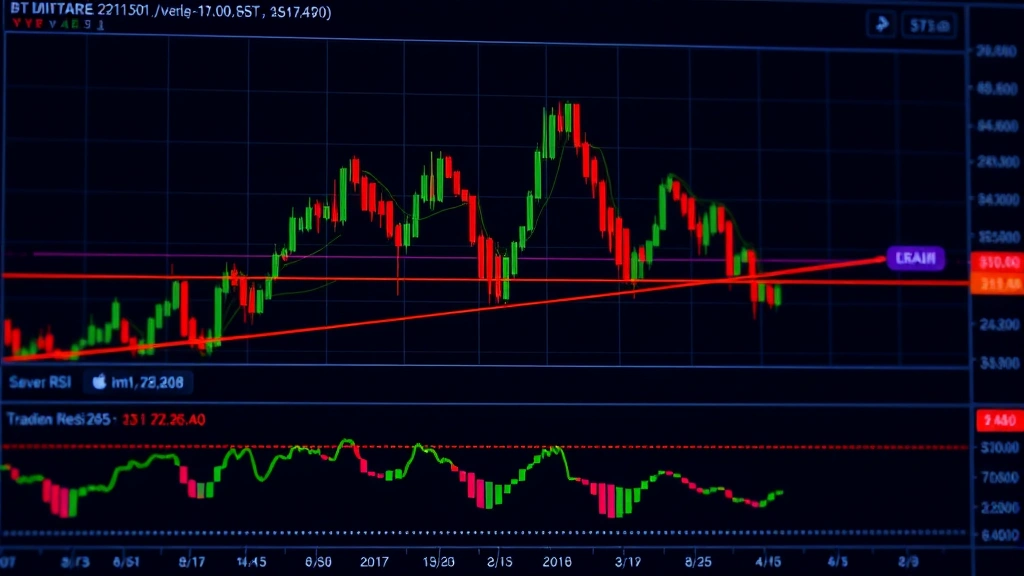
Bitcoin dominance is tracked using the symbol BTCDOM on TradingView, representing Bitcoin’s market share as a percentage of the total crypto market cap. This metric typically ranges between 35% and 75%, with significant implications for market sentiment and capital flow. When Bitcoin dominance rises, capital is flowing into Bitcoin, suggesting risk-off sentiment or Bitcoin strength. Conversely, declining dominance indicates capital rotation into alternative cryptocurrencies, often signaling altcoin season or increased risk appetite.
To access Bitcoin dominance on TradingView, navigate to the symbol search and enter BTCDOM. The platform displays dominance as a line chart, similar to traditional price charts, allowing traders to apply technical analysis tools effectively. Understanding the historical context of Bitcoin dominance helps traders recognize current market positions relative to previous cycles. Bitcoin dominance has historically peaked around 65-70% during bear markets and bottomed near 35-40% during altcoin rallies.
The relationship between Bitcoin dominance and overall market performance creates trading opportunities. When dominance breaks above resistance levels, Bitcoin typically outperforms altcoins. When dominance breaks below support, altcoins gain relative strength. This inverse relationship between Bitcoin dominance and altcoin performance is fundamental to cryptocurrency portfolio management and tactical trading decisions. Our guide on how to day trade Bitcoin provides complementary strategies for capitalizing on these movements.
Key Technical Indicators for Bitcoin Dominance
TradingView offers numerous technical indicators specifically useful for Bitcoin dominance analysis. The Relative Strength Index (RSI) applied to BTCDOM reveals overbought and oversold conditions, typically using 70 and 30 levels respectively. When Bitcoin dominance RSI approaches 70, dominance may be overextended, suggesting potential pullbacks or consolidation. RSI below 30 indicates oversold conditions, potentially signaling dominance bottoms and altcoin season emergence.
Moving averages provide excellent trend confirmation for Bitcoin dominance. The 50-day and 200-day exponential moving averages (EMAs) create a golden cross/death cross system on BTCDOM. A golden cross (50-EMA crossing above 200-EMA) suggests strengthening Bitcoin dominance trends, while death crosses indicate potential reversals toward altcoin strength. Many professional traders combine moving average crossovers with volume analysis for enhanced signal reliability.
The MACD (Moving Average Convergence Divergence) indicator helps identify momentum shifts in Bitcoin dominance. Bullish MACD divergences on BTCDOM charts signal strengthening dominance despite potential price pullbacks. Histogram expansion indicates accelerating momentum, while histogram compression suggests trend weakness. Volume analysis on BTCDOM is equally critical—increasing volume during dominance increases confirms trend strength, while decreasing volume suggests potential reversals.
Bollinger Bands applied to Bitcoin dominance identify volatility extremes and potential breakout points. When dominance price approaches upper Bollinger Bands, mean reversion becomes likely. Lower band touches often coincide with capitulation in altcoin weakness and potential reversal points. The band width itself indicates volatility periods, with narrow bands preceding significant breakouts in either direction.
Reading Price Action and Support Levels
Price action analysis on BTCDOM requires identifying key support and resistance levels where previous reversals occurred. Historical resistance levels around 65%, 70%, and 75% have proven significant during previous cycles. Support levels typically emerge at 40%, 45%, and 50%, representing critical areas where dominance buyers historically defend. Recognizing these zones helps traders anticipate potential reversals and position accordingly.
Candlestick patterns on BTCDOM charts provide early reversal signals. Double tops near dominance resistance levels often precede pullbacks, while double bottoms near support suggest trend reversals to strength. Engulfing patterns on BTCDOM indicate trend changes—bullish engulfing candles suggest dominance strength, while bearish engulfings suggest weakness. Head and shoulders patterns on dominance charts frequently signal major trend reversals affecting entire market cycles.
Trend line analysis on Bitcoin dominance charts helps traders visualize long-term trends and identify breakout opportunities. Drawing trend lines connecting previous highs (for downtrends) or lows (for uptrends) on BTCDOM creates visual frameworks for trading decisions. Breaks below downtrend lines suggest accelerating dominance declines, while breaks above uptrend lines confirm strengthening dominance trends. Combining trend lines with key moving averages creates multi-confirmation signals for high-probability trades.
Volume profile analysis on TradingView reveals dominant price levels where most Bitcoin dominance trading occurred. High volume nodes on dominance charts represent psychological price levels where traders congregate. Trading near these high volume nodes increases the probability of price rejection and reversal. Low volume gaps on dominance charts often become areas of rapid price movement during breakouts.
Altcoin Season Identification Strategies
Bitcoin dominance analysis directly identifies altcoin season timing. When BTCDOM falls below key support levels (typically 45-50%), altcoin season often emerges as capital rotates from Bitcoin to alternative cryptocurrencies. Traders can use dominance declines to anticipate altcoin rallies and position accordingly. Understanding Bitcoin liquidation map patterns alongside dominance trends provides additional context for market movements.
The divergence between Bitcoin price and Bitcoin dominance creates powerful trading signals. When Bitcoin price rises while dominance falls, altcoins are outperforming Bitcoin—classic altcoin season characteristics. Conversely, rising dominance with stable Bitcoin prices suggests capital is flowing from altcoins into Bitcoin, indicating potential altcoin weakness ahead. These divergences appear clearly on TradingView when charting Bitcoin price alongside BTCDOM.
Historical Bitcoin dominance cycles show recurring patterns worth studying. Dominance typically peaks during bear market bottoms and declines during bull markets as altcoins attract speculative capital. By analyzing previous dominance cycles on TradingView, traders can estimate current cycle positions and anticipate upcoming trend changes. The Bitcoin forecast 2025 incorporates dominance analysis for improved accuracy.
Multi-timeframe analysis on BTCDOM strengthens altcoin season identification. Weekly and monthly Bitcoin dominance charts reveal macro trends, while daily and 4-hour charts provide entry/exit timing. Confluence between multiple timeframes creates high-probability trading zones. When daily BTCDOM breaks below weekly support levels, altcoin season confirmation becomes stronger.
Advanced TradingView Features for Dominance Analysis
TradingView’s drawing tools enable sophisticated Bitcoin dominance analysis. Fibonacci retracement levels on BTCDOM charts identify potential support and resistance zones during corrections. The 38.2%, 50%, and 61.8% retracement levels frequently act as inflection points where dominance trends pause or reverse. Extending these levels beyond previous swing highs and lows creates extended projection levels for potential dominance targets.
Alerts on TradingView automate Bitcoin dominance monitoring. Setting alerts at critical support and resistance levels ensures traders receive notifications when dominance approaches key zones. Price alerts combined with indicator alerts (RSI overbought, MACD crossovers) create comprehensive monitoring systems. Many professional traders set alerts at multiple timeframes simultaneously for comprehensive market awareness.
TradingView’s comparison feature allows simultaneous analysis of Bitcoin dominance alongside other market metrics. Comparing BTCDOM with Bitcoin price, altcoin indices, or fear and greed indices reveals correlations and divergences. Comparing dominance across different timeframes on single charts creates visual clarity for multi-timeframe traders. These comparisons often reveal hidden divergences that single-chart analysis misses.
Custom indicators and scripts on TradingView extend dominance analysis capabilities. Creating custom oscillators that measure dominance momentum or strength relative to historical ranges provides additional insight. Some traders develop proprietary scripts that combine dominance with on-chain metrics, creating comprehensive analysis frameworks unavailable on standard platforms.
Risk Management and Trading Bitcoin Dominance
Bitcoin dominance trading requires disciplined risk management despite seemingly straightforward directional trends. Position sizing for dominance trades should account for volatility—dominance typically moves 1-3% daily, requiring appropriate leverage management. Many professional traders limit dominance position sizes to 2-5% of total capital per trade, preventing catastrophic losses during unexpected reversals.
Stop-loss placement on dominance trades should respect support and resistance levels rather than arbitrary percentages. Placing stops just below recent support levels (for long dominance positions) or above resistance (for short positions) ensures stops are triggered only during genuine breakdowns. Tight stops near entry points often get stopped out by normal volatility, while stops too far away risk excessive losses.
Take-profit levels on dominance trades should align with identified resistance and support zones. Scaling out profits at multiple levels reduces risk of giving back gains during pullbacks. Many traders exit 50% of positions at first resistance, 25% at second resistance, and trail stops on remaining positions. This approach balances profit-taking with trend participation.
Correlation analysis helps traders understand dominance trading risks relative to overall portfolio. Bitcoin dominance trades often move inversely to altcoin holdings, creating natural portfolio hedges. Understanding these correlations prevents accidental double-betting on market directions and improves overall portfolio construction. The BlackRock Bitcoin ETF 2025 predictions incorporate dominance considerations for institutional positioning.
Avoid over-trading Bitcoin dominance despite 24/7 market availability. The most profitable dominance trades often develop over weekly and monthly timeframes, not intraday. Focusing on higher timeframe trends reduces noise and improves decision-making quality. Many experienced traders limit dominance trades to 2-3 per month, emphasizing quality over quantity.
FAQ
What does Bitcoin dominance measure on TradingView?
Bitcoin dominance (BTCDOM) measures Bitcoin’s percentage share of total cryptocurrency market capitalization. On TradingView, it’s displayed as a percentage ranging typically between 35-75%. Rising dominance indicates capital flowing into Bitcoin, while declining dominance suggests capital rotation into altcoins. This metric helps traders identify market cycles and optimal trading opportunities across the cryptocurrency ecosystem.
How can I use RSI for Bitcoin dominance trading?
Apply RSI to the BTCDOM chart using standard settings (14-period). RSI above 70 indicates overbought dominance, suggesting potential pullbacks or consolidation. RSI below 30 signals oversold dominance, potentially indicating altcoin season emergence. Divergences between RSI and price provide powerful reversal signals—bullish divergences (price lower, RSI higher) suggest dominance strengthening, while bearish divergences indicate potential dominance weakness ahead.
What Bitcoin dominance levels should I watch?
Key Bitcoin dominance levels include 40%, 45%, 50%, 55%, 60%, 65%, and 70%. These round numbers frequently act as support and resistance zones. Historically, 50% represents the midpoint between extreme dominance and altcoin strength. Breaks below 45% often signal strong altcoin season, while dominance above 65% indicates Bitcoin-dominant markets. Individual analysis should incorporate previous cycle highs and lows for personalized level identification.
How do I identify altcoin season using Bitcoin dominance?
Altcoin season typically emerges when Bitcoin dominance falls below 50% and continues declining, especially when accompanied by rising altcoin prices despite stable Bitcoin prices. MACD crossovers on BTCDOM charts provide early signals—death crosses (MACD falling below signal line) on dominance suggest upcoming altcoin strength. Combining declining dominance with rising altcoin relative strength creates high-confidence altcoin season identification.
Should I trade Bitcoin dominance directly or use it for market context?
Both approaches have merit depending on trading style. Directional dominance traders profit from dominance movements using leverage and derivatives. Most traders, however, use dominance analysis as market context for Bitcoin and altcoin trading decisions. Understanding dominance trends helps time entries/exits more effectively and position sizing across cryptocurrency portfolios. The Trump Bitcoin reserve discussions highlight how macro factors influence dominance trends worth monitoring.
What timeframes should I use for Bitcoin dominance analysis?
Multi-timeframe analysis provides optimal results. Daily and 4-hour charts identify intermediate trends and trading opportunities. Weekly and monthly charts reveal macro cycles and long-term trend directions. Using daily charts for entry timing combined with weekly confirmation creates reliable trading signals. Many professional traders check monthly dominance trends before entering positions on lower timeframes, ensuring alignment with larger cycles.
How does Bitcoin dominance relate to market risk sentiment?
Bitcoin dominance serves as a market risk sentiment indicator. Rising dominance reflects risk-off sentiment as traders seek Bitcoin’s relative safety. Declining dominance indicates risk-on sentiment and increased appetite for altcoin speculation. During market uncertainty or bearish periods, dominance typically rises as capital concentrates in Bitcoin. Understanding this relationship helps traders anticipate sentiment shifts before they fully manifest in price action.


