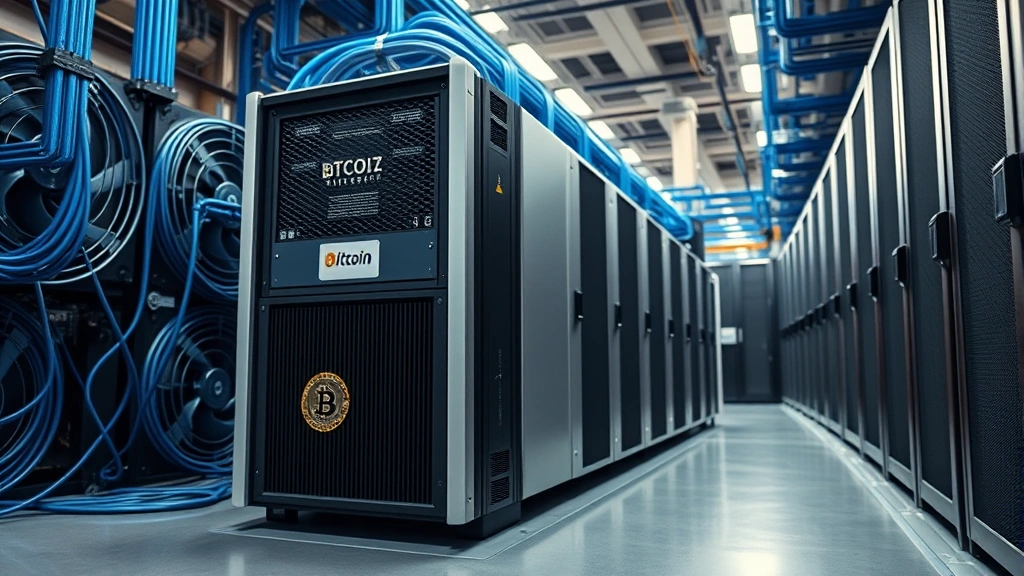
Avalon Mini 3: Is It Worth the Investment?
The Avalon Mini 3 represents one of the most accessible entry points into Bitcoin mining for individual investors and small-scale operators. As mining difficulty continues to rise and energy costs remain a critical concern, evaluating whether this ASIC miner justifies its investment requires a comprehensive analysis of its specifications, profitability potential, and operational costs. This guide examines the technical capabilities, real-world performance metrics, and financial considerations that determine whether the Avalon Mini 3 is a worthwhile addition to your crypto portfolio.
Bitcoin mining has evolved significantly since the early days when personal computers could generate meaningful rewards. Today, specialized hardware dominates the landscape, and the Avalon Mini 3 sits at the intersection of accessibility and performance. Understanding its capabilities relative to current network conditions, electricity expenses, and your investment timeline is essential before committing capital to this hardware.
What is the Avalon Mini 3?
The Avalon Mini 3 is an ASIC (Application-Specific Integrated Circuit) Bitcoin miner manufactured by Canaan, a leading cryptocurrency hardware producer. Unlike GPU miners or general-purpose processors, ASIC miners are engineered exclusively for solving the cryptographic puzzles required to validate Bitcoin transactions and earn block rewards. The Avalon Mini 3 targets individual miners and small operations seeking a balance between cost, power consumption, and hash rate output.
Canaan has built a reputation for producing reliable mining hardware, and the Mini 3 continues this tradition with improved efficiency compared to earlier generations. The device operates as a standalone unit that connects to a power supply and network connection, making it relatively straightforward for users with basic technical knowledge to deploy. Its compact form factor distinguishes it from larger industrial-grade miners, making it suitable for home-based or small office mining operations.
The primary appeal of the Avalon Mini 3 lies in its lower entry cost compared to flagship models like the Antminer S19 Pro or M30S+. For individuals exploring why Bitcoin prices fluctuate and the mining economics behind them, the Mini 3 offers a practical starting point without requiring massive capital expenditure or industrial-scale infrastructure.
Technical Specifications and Performance
The Avalon Mini 3 delivers approximately 100 TH/s (terahashes per second) of computing power, representing its hash rate—the speed at which it performs calculations to solve blockchain puzzles. This specification places it in the mid-range of consumer-accessible miners, below industrial behemoths but significantly more powerful than outdated or budget alternatives.
Hash rate directly correlates to your probability of earning block rewards. Higher hash rates increase the likelihood of your miner finding valid solutions before competing miners worldwide. However, raw hash rate alone doesn’t determine profitability—energy efficiency matters equally. The Avalon Mini 3 achieves approximately 0.098 W/GH (watts per gigahash), indicating reasonable power efficiency for its performance tier.
The device utilizes the latest semiconductor technology available at its release, incorporating advanced chip architecture that maximizes computational output per watt consumed. Its design emphasizes reliability, with multiple cooling solutions available depending on your deployment environment. The miner supports standard mining pool protocols, enabling participation in mining pools where thousands of miners combine computational resources to increase reward consistency.
Operating temperatures and noise levels are practical considerations for home-based operations. The Avalon Mini 3 generates moderate acoustic output compared to industrial miners, though it remains audible and may require dedicated space away from living areas. Proper ventilation is essential to maintain optimal operating temperatures and extend hardware lifespan.
Profitability Analysis
Calculating profitability requires understanding several interconnected variables: current Bitcoin price, mining difficulty, block rewards, hardware costs, and electricity expenses. As of current network conditions, Bitcoin mining yields 6.25 BTC per block (subject to halving events approximately every four years), distributed among all miners proportional to their hash rate contribution.
Mining difficulty adjusts every 2,016 blocks (approximately two weeks) based on total network hash rate. As more miners join the network or upgrade hardware, difficulty increases, reducing individual miner rewards. This dynamic creates a competitive environment where efficiency directly impacts profitability. The Avalon Mini 3’s reasonable power consumption positions it favorably within this competitive landscape, though it cannot match the efficiency of newest flagship models.
A simplified profitability calculation: If electricity costs $0.10 per kilowatt-hour (kWh) and the Avalon Mini 3 consumes approximately 1,200 watts, operating continuously generates roughly $28.80 in daily electricity costs. Current Bitcoin mining economics suggest daily revenue of $15-25 depending on difficulty and price—potentially resulting in negative profitability under these assumptions. However, if your electricity costs $0.05 per kWh or Bitcoin price increases significantly, profitability improves substantially.
Long-term profitability also depends on Bitcoin price movements and whether current valuations justify mining investments. Mining is fundamentally a bet on future Bitcoin appreciation combined with current operational efficiency. Many miners view block rewards as long-term holdings rather than immediate income, banking on price appreciation over months or years.
Profitability calculators available through CoinDesk and mining-specific websites provide real-time estimates using current difficulty and price data. These tools should inform your investment decision, though they cannot predict future variables with certainty. Conservative estimates accounting for difficulty increases and potential price volatility provide more realistic expectations than optimistic scenarios.
Energy Consumption and Operating Costs
The Avalon Mini 3’s approximately 1,200-watt power consumption represents its most significant ongoing operational expense. In regions with high electricity costs ($0.15+ per kWh), mining becomes economically challenging unless Bitcoin price increases substantially. Conversely, miners in areas with subsidized or renewable energy ($0.03-0.07 per kWh) enjoy significantly better margins.
Beyond direct electricity costs, consider cooling requirements, network connectivity, and infrastructure maintenance. Mining facilities require adequate ventilation to prevent thermal damage, potentially necessitating air conditioning or specialized cooling solutions. These auxiliary costs compound the primary power consumption expenses, particularly in warm climates or densely-packed mining operations.
Hardware depreciation represents another critical cost factor. ASIC miners become obsolete as new, more efficient models emerge—typically every 12-24 months. The Avalon Mini 3 may generate positive returns during its operational window, but eventual replacement becomes inevitable. Planning for hardware lifecycle costs ensures more accurate profitability projections than analyzing single-year returns alone.
Maintenance costs remain relatively minimal for properly ventilated, well-maintained equipment. However, power supply replacements, cooling system servicing, and potential repairs add to total cost of ownership. Budgeting 5-10% of hardware cost annually for maintenance and replacement components provides a safety margin.
Comparison with Competing Miners
The Avalon Mini 3 occupies a specific market segment between budget entry-level miners and premium industrial-grade equipment. The Antminer S9, now several generations old, offered similar hash rates but with worse power efficiency—making the Mini 3 a superior choice for contemporary mining. Newer Antminer models (S19, S19 Pro) deliver superior hash rates and efficiency but at significantly higher prices ($2,000-$4,000+ versus $500-$1,000 for the Mini 3).
For investors prioritizing capital efficiency and accepting lower hash rates, the Avalon Mini 3 offers better return on investment than premium models in certain scenarios. If electricity costs are high, the Mini 3’s lower absolute power consumption reduces losses compared to high-power flagship miners. Conversely, if electricity is inexpensive, purchasing the most efficient hardware possible maximizes profitability despite higher upfront costs.
GPU mining alternatives (using graphics cards for Ethereum or other cryptocurrencies) present a different risk-return profile. GPUs offer flexibility—they can switch between coins or applications—whereas ASIC miners are Bitcoin-specific. This specialization makes ASIC miners vulnerable to Bitcoin price crashes, but it also ensures focused optimization for the intended purpose.
The decision ultimately depends on your specific circumstances: available capital, local electricity costs, risk tolerance, and investment timeline. Comparing the Mini 3 to alternatives requires calculating break-even timeframes and potential returns under various Bitcoin price and difficulty scenarios.
Setup and Maintenance Requirements
Installing the Avalon Mini 3 requires basic technical competency but remains accessible to most individuals. The device connects to a power supply, Ethernet network, and a mining pool or node. Configuration involves accessing the miner’s web interface to input pool connection details and customize operating parameters. Most users can complete setup within 30 minutes to an hour with available online guides.
Choosing a mining pool is essential—solo mining with a Mini 3 provides negligible chances of earning rewards before hardware becomes obsolete. Major pools like Foundry USA, Antpool, and F2Pool distribute rewards fairly and transparently, charging 1-4% fees for their services. Pool selection affects both profitability and decentralization considerations for the broader Bitcoin network.
Ongoing maintenance involves monitoring temperature, hash rate, and power consumption. Most miners include monitoring software displaying real-time statistics accessible through web browsers. Regular firmware updates from Canaan optimize performance and address security vulnerabilities. Cleaning dust filters and ensuring adequate airflow prevents thermal throttling and extends operational lifespan.
Troubleshooting common issues—connection losses, reduced hash rates, power supply failures—requires basic networking knowledge and hardware diagnostics. Online communities and manufacturer support resources provide guidance for resolving problems. Planning for potential downtime ensures you maintain realistic profitability expectations.
Risk Factors and Considerations
Bitcoin mining investments carry substantial risks requiring careful consideration. Mining difficulty increases unpredictably, directly reducing profitability. If difficulty rises 50% while Bitcoin price remains flat, your mining revenue decreases proportionally. Historical data shows difficulty increasing 10-15% annually on average, though periods of rapid growth occur during bull markets.
Regulatory uncertainty presents another significant risk. SEC regulations and government policies toward cryptocurrency mining continue evolving. Some jurisdictions have banned or heavily taxed mining operations, while others offer incentives. Monitoring regulatory developments in your region is essential before committing capital to mining infrastructure.
Technology obsolescence happens quickly in the ASIC mining space. New hardware generations regularly outperform previous models by 20-30%, making older equipment unprofitable within 1-3 years. The Avalon Mini 3’s useful lifespan likely extends 18-36 months before newer alternatives render it uneconomical. Planning for equipment replacement ensures long-term mining viability.
Bitcoin price volatility fundamentally affects mining profitability. A 50% price decline immediately reduces mining rewards’ fiat value by half, potentially creating operational losses. Conversely, significant price appreciation improves returns dramatically. Bitcoin Rainbow Chart analysis provides historical perspective on price cycles, though past performance cannot guarantee future results.
Hardware supply chain disruptions, manufacturing defects, and power supply failures represent operational risks. Purchasing from authorized distributors with warranty coverage mitigates these concerns. Building redundancy into your mining setup—multiple units or backup power supplies—protects against single-point failures.
For investors considering capital gains implications and tax obligations from mining operations, consult with tax professionals familiar with cryptocurrency. Mining income is taxable in most jurisdictions, and proper documentation ensures compliance with regulations.
The Avalon Mini 3 represents a calculated risk suitable for investors with moderate capital, access to reasonable electricity costs, and patience for long-term returns. It is not a get-rich-quick scheme but rather a methodical approach to generating Bitcoin through computational work. Understanding these risk factors—difficulty increases, regulatory changes, technology obsolescence, and price volatility—provides realistic expectations for your investment.
Stress-testing your profitability assumptions against adverse scenarios improves decision-making. Ask yourself: What if Bitcoin price drops 30%? What if difficulty increases 25%? What if electricity costs rise 20%? If your mining operation remains profitable under these conditions, the investment likely offers acceptable risk-return characteristics.
Is the Avalon Mini 3 Worth Your Investment?
Determining whether the Avalon Mini 3 justifies investment depends entirely on your individual circumstances. For miners in regions with electricity costs below $0.08 per kWh, current profitability calculations suggest potential positive returns over 18-24 months. These miners benefit from the device’s reasonable efficiency and moderate capital requirements.
Investors in high-electricity-cost regions face significant headwinds. Unless Bitcoin price appreciates substantially or you have access to subsidized power sources, the Mini 3 may never achieve profitability. Carefully calculate break-even timeframes using your actual local electricity rates before committing funds.
Your investment horizon matters critically. If you can afford to hold mined Bitcoin for several years, short-term profitability matters less than long-term appreciation potential. Many successful miners view the Mini 3 as a Bitcoin accumulation tool rather than immediate income generation, betting on long-term price appreciation.
Cryptocurrency price predictions for 2025 and beyond remain speculative, but historical Bitcoin appreciation suggests long-term bullish potential. If you believe Bitcoin will substantially appreciate over 3-5 years, mining at current difficulty levels may prove wise despite short-term profitability challenges.
The Avalon Mini 3 offers legitimacy as a mining device from an established manufacturer with proven reliability. It avoids the scam risks associated with questionable mining contracts or unproven hardware. For serious miners ready to manage ongoing technical and operational requirements, the Mini 3 provides a genuine pathway to Bitcoin accumulation.
Consider starting with a single unit to test your operational capacity, electricity costs, and pool selection before expanding. This conservative approach limits initial losses while providing real-world data for scaling decisions. Many successful mining operations began with modest hardware and expanded after validating their profitability assumptions.
FAQ
How much does the Avalon Mini 3 cost?
Prices typically range from $500-$1,000 depending on retailer, availability, and market conditions. Purchasing from authorized distributors ensures warranty coverage and authenticity, though prices may be higher than gray market sources. Factor hardware cost into your profitability calculations as a critical variable affecting break-even timeframes.
What’s the daily mining reward with an Avalon Mini 3?
Daily rewards depend on current mining difficulty and Bitcoin price. At typical current conditions, expect $10-$25 daily in gross revenue before electricity costs. This varies significantly based on difficulty fluctuations and price movements. Use mining calculators with current network data for accurate estimates specific to your circumstances.
Can I mine other cryptocurrencies with the Avalon Mini 3?
No, the Avalon Mini 3 is an ASIC miner designed exclusively for Bitcoin. Its specialized hardware cannot efficiently mine other cryptocurrencies like Ethereum, Litecoin, or Dogecoin. This specialization provides optimization for Bitcoin but eliminates flexibility to switch coins during market changes.
How long will the Avalon Mini 3 remain profitable?
Profitability depends on Bitcoin price, difficulty, and your electricity costs—variables that change frequently. Most ASIC miners remain profitable for 18-36 months before newer hardware makes them uneconomical. Conservative planning assumes 2-year useful lifespan, though favorable conditions may extend profitability longer.
What’s the noise level of the Avalon Mini 3?
The Mini 3 generates approximately 75-80 decibels of noise during operation—comparable to a busy street or loud conversation. This makes it unsuitable for living spaces without soundproofing but acceptable for garage, basement, or dedicated mining facilities. Consider acoustic impacts when planning deployment locations.
How much electricity does the Avalon Mini 3 consume?
The device consumes approximately 1,200 watts during normal operation. Operating continuously costs roughly $0.29-$0.35 daily at typical US electricity rates ($0.10-$0.12 per kWh). Your actual costs depend entirely on local electricity pricing, making this the most variable expense in mining operations.
Is Bitcoin mining legal?
Bitcoin mining is legal in most jurisdictions but faces restrictions in some countries. Check your local regulations before investing—some regions require licensing, others tax mining income heavily, and a few ban it entirely. Regulatory landscapes continue evolving, so monitor developments in your area regularly.