Bitcoin mining has long captured the imagination of cryptocurrency enthusiasts, but one question persists: can you actually mine Bitcoin for free? The short answer is no—not entirely. However, understanding the nuances of Bitcoin mining costs, available methods, and realistic expectations is crucial before you invest time and resources into this endeavor. This comprehensive guide explores the technical realities, cost structures, and alternative approaches to acquiring Bitcoin without traditional mining.
The allure of free Bitcoin mining stems from the protocol’s design: miners validate transactions and secure the network in exchange for newly created coins and transaction fees. Yet the infrastructure, electricity, and computational power required have created significant barriers to entry for individual miners. Whether you’re a tech enthusiast or someone exploring cryptocurrency opportunities, understanding these dynamics will help you make informed decisions about your involvement in Bitcoin’s ecosystem.
The Reality of Free Bitcoin Mining
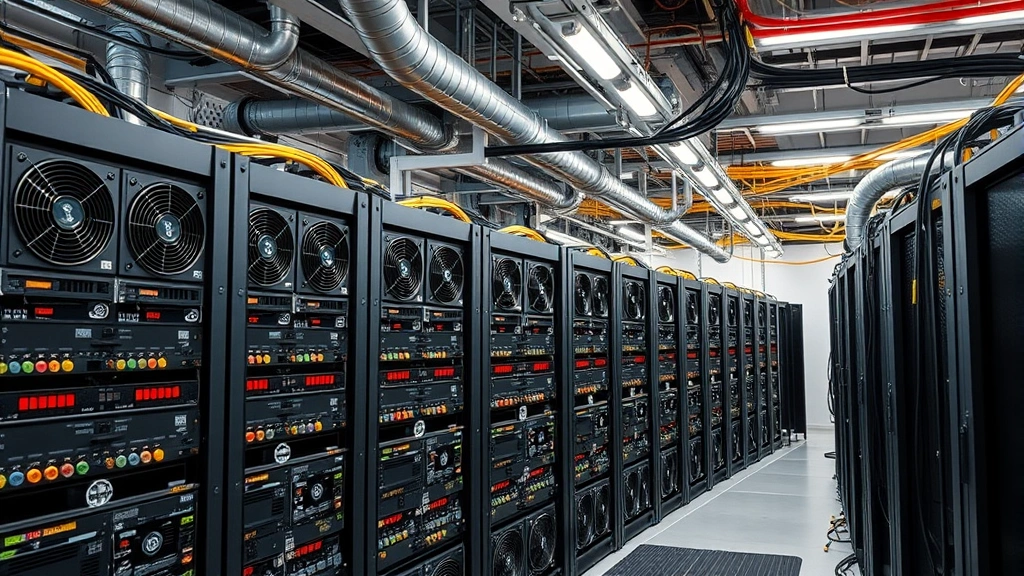
When discussing free Bitcoin mining, it’s important to clarify what “free” means in this context. While the Bitcoin protocol doesn’t charge fees to participate in mining, the operational costs are anything but free. Mining Bitcoin requires substantial electricity consumption, specialized hardware, cooling systems, and maintenance—all of which come with real financial obligations.
Bitcoin’s proof-of-work consensus mechanism requires miners to solve complex cryptographic puzzles. The difficulty of these puzzles adjusts approximately every two weeks to maintain a consistent block time of roughly 10 minutes. This means as more miners join the network, the difficulty increases, making it harder for individual miners to earn rewards. The first miner to solve the puzzle receives the current block reward plus transaction fees.
As of recent data, the block reward stands at 6.25 BTC per block (after the 2024 halving). However, earning this reward requires computational power that rivals small data centers. The probability of a solo miner successfully mining a block without industrial-scale operations is extraordinarily low—often measured in years or decades for average home miners.
Understanding what cryptocurrency fundamentally is helps contextualize why mining has become such an energy-intensive process. Bitcoin’s security depends on this computational work, making it difficult to achieve meaningful results without substantial investment.
Mining Costs and Profitability Analysis
The financial reality of Bitcoin mining centers on several key cost factors. The most significant expense is electricity. Bitcoin mining consumes enormous amounts of power—the entire Bitcoin network uses approximately 120-150 terawatt-hours of electricity annually, comparable to the consumption of some small countries.
For a home miner, electricity costs typically range from $0.05 to $0.25 per kilowatt-hour, depending on location. A modern ASIC (Application-Specific Integrated Circuit) miner like the Antminer S21 Pro draws approximately 3,410 watts and costs between $4,000-$6,000. Operating this device 24/7 for a month costs roughly $250-$750 in electricity alone, depending on your region.
Additional costs include:
- Hardware: ASIC miners range from $1,500 to $10,000+ for industrial-grade equipment
- Cooling systems: Specialized ventilation or air conditioning ($500-$2,000)
- Electrical infrastructure: Upgrades to handle increased power draw ($1,000-$5,000)
- Maintenance: Repairs, replacements, and regular upkeep
- Pool fees: Most miners join pools that charge 1-3% of earnings
To determine profitability, miners use the simple formula: Monthly Revenue – Monthly Costs = Profit. With Bitcoin’s price volatility and mining difficulty constantly changing, profitability calculators available online can provide estimates, though past performance doesn’t guarantee future results.
Learning how to calculate investment returns is essential for anyone considering mining as a financial venture. Most analyses show that only large-scale mining operations in regions with cheap electricity achieve consistent profitability.
Methods That Claim to Offer Free Mining
Several approaches claim to offer free or low-cost Bitcoin mining, but each comes with significant caveats and limitations:
Browser-based mining: Some websites offer JavaScript-based mining that runs in your browser. These systems use your computer’s processing power to mine cryptocurrency. However, browser mining is extremely inefficient—you’ll earn minimal amounts while consuming electricity and degrading your hardware. Many such services are scams that harvest data or install malware.
Mobile mining apps: Applications claiming to mine Bitcoin on smartphones are largely fraudulent or misleading. Mobile processors lack the capability for meaningful Bitcoin mining. Most such apps generate revenue through advertisements rather than actual mining, with promised rewards rarely materializing.
Faucets and rewards programs: Bitcoin faucets are websites that distribute small amounts of Bitcoin for completing tasks like watching ads or solving captchas. While technically free, the rewards are minimal—often fractions of a cent—and require significant time investment for negligible returns.
Referral programs: Some platforms offer Bitcoin rewards for referring friends. While not mining per se, these programs can generate small amounts of cryptocurrency without direct cost, though their sustainability varies.
Understanding the pros and cons of cryptocurrency investments helps contextualize why these “free” methods rarely deliver substantial value.
Cloud Mining and Rental Options
Cloud mining services promise a middle ground: you pay a company to mine Bitcoin on your behalf using their equipment and infrastructure. This eliminates the need to purchase expensive hardware and manage cooling systems. However, this convenience comes with trade-offs.
Cloud mining operates through several models:
- Leasing hash power: You rent mining hardware remotely and receive a share of mining rewards
- Mining contracts: You purchase contracts guaranteeing a certain amount of Bitcoin over a specified period
- Managed accounts: Companies operate mining equipment on your behalf, charging fees from profits
The critical issue with cloud mining is that legitimate operations maintain thin profit margins. If a company offers guaranteed high returns, it’s likely unsustainable or fraudulent. Many cloud mining schemes are pyramid schemes where early investors receive payouts from new investors’ deposits rather than actual mining proceeds.
Reputable cloud mining providers exist but typically offer modest returns that barely exceed electricity costs plus their operational fees. Before engaging with any cloud mining service, research their operational history, verify their mining pools, and check independent reviews from cryptocurrency communities.
For those considering broader cryptocurrency investment strategies, cloud mining is rarely the optimal approach compared to direct Bitcoin purchases or diversified portfolio approaches.
Alternative Ways to Earn Bitcoin
If free mining isn’t practical, several legitimate alternatives exist for acquiring Bitcoin without traditional mining:
Staking and yield farming: While not applicable to Bitcoin directly (which doesn’t use proof-of-stake), other cryptocurrencies offer staking rewards. You can then convert these to Bitcoin.
Freelancing and payments: Offer services online and accept Bitcoin as payment. Platforms like Upwork and Fiverr enable Bitcoin transactions with clients worldwide.
Employment compensation: Some employers offer Bitcoin as part of compensation packages. This provides genuine Bitcoin acquisition without direct mining costs.
Savings and dollar-cost averaging: Rather than mining, many investors purchase Bitcoin regularly through exchanges. This strategy removes technical complexity and provides more predictable results.
Cashback and rewards: Some financial services offer Bitcoin cashback on purchases. While modest, this accumulates over time without additional effort.
When evaluating these options, tracking your cryptocurrency portfolio helps monitor performance and optimize your acquisition strategy.
Technical Requirements for Home Mining
Should you decide to pursue home mining despite the challenges, understanding technical requirements is essential:
ASIC miners: These specialized processors are designed exclusively for Bitcoin mining. Unlike GPUs (graphics processors) that can mine various cryptocurrencies, ASICs are Bitcoin-specific and become obsolete as technology advances. Current models include the Antminer S21 Pro, WhatsMiner M60, and AvalonMiner A1566.
Mining software: Popular options include CGMiner, BFGMiner, and mining pool software. These programs connect your hardware to mining pools and manage the actual computational work.
Mining pools: Individual miners join pools with thousands of others, combining computational power to increase the probability of earning rewards. Major pools include Foundry USA, AntPool, and Stratum. Pool participation increases earning consistency compared to solo mining.
Networking and infrastructure: Reliable internet connection, stable power supply (ideally with backup systems), and proper ventilation are essential. Some miners use dedicated circuits with voltage regulators to optimize efficiency.
Monitoring and maintenance: Mining operations require ongoing monitoring to detect hardware failures, optimize settings, and manage overheating. Many miners use remote monitoring software to track performance.
Environmental and Practical Considerations
Bitcoin mining’s environmental impact has become increasingly significant. The network’s energy consumption raises concerns about carbon footprint, particularly in regions relying on fossil fuels for electricity generation. However, research from sources like CoinDesk indicates that mining is increasingly powered by renewable energy, with estimates suggesting 50-60% of mining uses renewable sources.
For individual miners, environmental considerations include:
- Electricity source: Mining with renewable energy (solar, hydroelectric, wind) significantly reduces environmental impact
- Hardware efficiency: Newer ASIC models offer better hash-per-watt ratios, reducing energy consumption
- Waste management: Hardware eventually becomes obsolete and requires responsible recycling
Practical considerations for home mining include noise generation—ASIC miners produce 70-80 decibels of sound, comparable to a vacuum cleaner. This makes them unsuitable for residential areas without soundproofing. Heat generation is another factor; mining equipment produces significant thermal output, requiring substantial cooling capacity.
Space requirements are often underestimated. A small mining operation might occupy a closet or spare room, while larger operations require dedicated spaces with proper ventilation and infrastructure.
For perspective on long-term cryptocurrency trends and market dynamics, understanding price predictions and market factors helps contextualize mining profitability over time.
FAQ
Is it possible to mine Bitcoin completely free?
No. While the Bitcoin protocol doesn’t charge fees to participate, mining requires electricity, hardware, and often internet connectivity—all with real costs. Browser mining and mobile apps claiming free mining are either fraudulent or generate such minimal rewards that the time investment is impractical.
How much can I realistically earn from home Bitcoin mining?
For most home miners in developed countries, monthly earnings rarely exceed $100-$300 after electricity costs. In regions with cheap electricity (under $0.05 per kWh), earnings might reach $500-$1,000 monthly. However, profitability depends on Bitcoin’s price, mining difficulty, and electricity costs—all variables that fluctuate significantly.
What’s the minimum investment needed to start mining Bitcoin?
Entry-level ASIC miners cost $1,500-$3,000 for equipment, with additional infrastructure costs of $500-$2,000 for cooling and electrical upgrades. Total minimum investment is typically $2,000-$5,000 before earning your first Bitcoin.
Are cloud mining services legitimate?
Some legitimate cloud mining services exist, but the industry has a poor reputation due to numerous scams. If you pursue cloud mining, thoroughly research the provider, verify their mining pool operations, and never invest more than you can afford to lose. Be skeptical of guaranteed returns.
How does mining difficulty affect profitability?
Mining difficulty adjusts every two weeks based on total network hash rate. As more miners join, difficulty increases, reducing individual earnings. This dynamic means that mining profitability can shift dramatically over months, making long-term planning challenging.
What’s the difference between solo mining and pool mining?
Solo mining means competing independently to find blocks and earn full rewards—but success is extremely rare for individual miners. Pool mining combines computational power with thousands of others, increasing consistent earnings but requiring a 1-3% fee. Pool mining is far more practical for most individuals.
Can I mine Bitcoin with a regular computer?
Technically yes, but profitability is essentially zero. Modern Bitcoin mining requires ASIC-specific hardware. Using a regular CPU or GPU would take years to earn fractions of a Bitcoin while consuming more in electricity than the Bitcoin’s value.
Is Bitcoin mining still worth it in 2024-2025?
For large-scale operations with access to cheap electricity and industrial equipment, yes. For individual home miners in developed countries with standard electricity rates, profitability is marginal or nonexistent. The industry has consolidated toward professional mining operations.
What external resources can help me evaluate mining opportunities?
Check blockchain.com for real-time mining data, consult Investopedia for comprehensive guides, and review Coinbase‘s educational resources on mining economics. Always cross-reference multiple sources before making investment decisions.


