
Unlock Bitcoin Mining Codes: Expert Tips Inside
Bitcoin mining simulators have become increasingly popular for enthusiasts looking to understand the complexities of cryptocurrency mining without significant financial investment. These digital tools allow users to experiment with mining strategies, learn about blockchain technology, and discover optimization techniques through interactive gameplay. Whether you’re a complete beginner or an experienced crypto investor, mining simulators offer valuable insights into how the Bitcoin network operates and what drives profitability in this competitive space.
The term “bitcoin mining simulator codes” refers to special cheat codes, optimization parameters, and strategic inputs that can enhance your simulation experience. Understanding these codes—along with the underlying mechanics they represent—can accelerate your learning curve and help you make informed decisions if you ever decide to venture into real mining operations. This comprehensive guide will explore legitimate strategies, simulator mechanics, and expert tips to maximize your virtual mining potential.
Understanding Bitcoin Mining Simulators
Bitcoin mining simulators are educational software applications designed to replicate the mining process in a controlled, risk-free environment. These platforms provide realistic representations of mining economics, including hash rate calculations, difficulty adjustments, and reward structures. Unlike actual mining, simulators allow you to experiment with different scenarios without spending thousands on specialized equipment or electricity costs.
The core mechanics of mining simulators revolve around several key concepts: hash power (computational ability), network difficulty (the challenge level), block rewards (cryptocurrency earned), and operational costs (electricity and maintenance). By manipulating these variables through simulator codes and settings, users can observe how different factors influence profitability. This educational approach helps miners understand why certain strategies work better than others and prepares them for real-world mining decisions.
Most reputable mining simulators are transparent about their algorithms and allow users to input custom parameters. This transparency ensures that the simulation remains educational rather than misleading. Some simulators even integrate real-time data from the Bitcoin network, making them more accurate representations of actual mining conditions. Understanding these fundamentals is essential before exploring specific codes and optimization techniques.
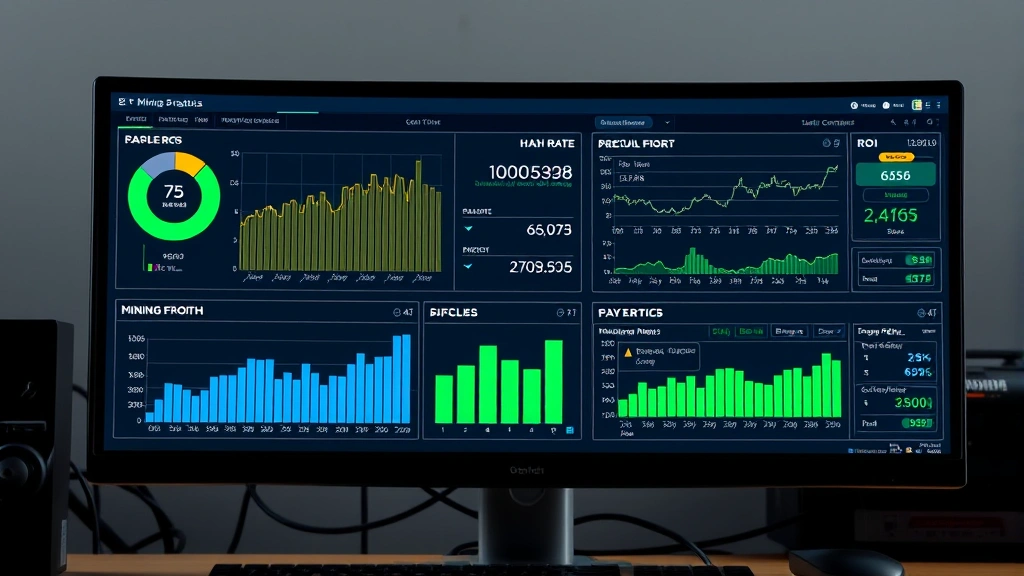
Popular Simulator Codes and Parameters
Mining simulator codes typically fall into several categories: difficulty multipliers, reward boosters, hardware accelerators, and economic parameters. These codes aren’t “cheats” in the traditional sense—rather, they’re configurable inputs that allow you to adjust simulation variables to match different real-world scenarios or explore hypothetical situations.
Difficulty Codes allow you to modify the network difficulty parameter, which directly affects how hard it is to find valid blocks. In real Bitcoin mining, difficulty adjusts every 2,016 blocks to maintain a consistent 10-minute block time. Simulator codes might include:
- DIFF_LOW: Reduces difficulty by 50% to simulate easier mining conditions
- DIFF_MEDIUM: Standard network difficulty based on current Bitcoin metrics
- DIFF_HIGH: Increases difficulty by 75% to simulate competitive conditions
- CUSTOM_DIFF: Allows manual input of specific difficulty values
Reward Parameters control block rewards and transaction fees. Bitcoin’s block reward halves approximately every four years, so simulators often include codes representing different halving epochs:
- REWARD_2024: Current block reward configuration
- REWARD_NEXT_HALVING: Simulates post-halving economics
- REWARD_HISTORICAL: Represents earlier Bitcoin eras with higher rewards
To maximize learning, combine these codes with your understanding of bitcoin cycle dynamics. Different difficulty and reward combinations simulate various points in Bitcoin’s market cycle, helping you understand how mining profitability fluctuates over time.
Optimization Strategies for Maximum Returns
Beyond basic simulator codes, successful miners employ sophisticated optimization strategies. The first consideration is understanding your total cost of ownership, which includes hardware, electricity, cooling, and maintenance. Most mining simulators allow you to input these costs, which then calculate your break-even point and profit margins.
Energy Efficiency Optimization: This is perhaps the single most important factor in mining profitability. Modern ASIC miners (specialized Bitcoin mining hardware) have varying energy efficiency ratings, typically measured in watts per terahash (W/TH). Lower W/TH ratings mean lower electricity costs for the same hash power. When using simulators, experiment with different efficiency tiers to understand how equipment selection impacts profitability.
Your location dramatically affects mining viability. Electricity costs vary globally—from as low as $0.02 per kilowatt-hour in some regions to over $0.15 in others. Use simulator codes to test your local electricity rates against different hardware configurations. This exercise reveals why mining operations cluster in areas with abundant renewable energy and cheap power.
Pool Mining vs. Solo Mining: Most individual miners join mining pools, where participants combine hash power to find blocks more frequently and share rewards proportionally. Simulators typically model pool mining with a small fee (usually 1-2%). Understanding bitcoin funding rates and other market dynamics can inform whether to prioritize mining or trading strategies in your simulator experiments.
Diversification strategies involve running multiple mining operations simultaneously with different hardware configurations or in different locations. Advanced simulators allow you to model these complex scenarios, revealing optimal portfolio allocations for mining operations.
Hardware Simulation and Equipment Selection
Hardware selection fundamentally determines mining economics. Modern Bitcoin mining relies exclusively on ASIC (Application-Specific Integrated Circuit) miners, specialized computers designed solely for Bitcoin mining. Simulators include databases of real hardware specifications, allowing accurate performance modeling.
Key hardware parameters to consider:
- Hash Rate: Measured in terahashes per second (TH/s), this represents computational power. Higher hash rates find blocks more frequently.
- Power Consumption: Measured in watts, this determines electricity costs. Lower consumption is better for profitability.
- Efficiency: The ratio of hash rate to power consumption (TH/W). This is the most critical efficiency metric.
- Upfront Cost: Hardware prices fluctuate based on market demand and availability. Simulators typically use historical or current pricing.
- Lifespan: ASIC miners typically remain profitable for 3-5 years before becoming obsolete as more efficient hardware emerges.
When selecting hardware in simulators, calculate your return on investment (ROI) timeline. If hardware costs $3,000 and generates $100 monthly profit, your ROI is 30 months. However, if difficulty increases or Bitcoin price falls, this timeline extends. Stress-testing your hardware selection against different market scenarios reveals robustness.
Current-generation miners like the Antminer S19 Pro or WhatsMiner M30S+ appear in most simulator databases. Comparing these against older models demonstrates how technological advancement affects profitability, providing valuable historical perspective on mining economics.
Energy Costs and Profitability Calculations
Energy represents 60-80% of mining operational costs, making electricity rates the dominant variable in profitability calculations. Understanding how to model energy costs accurately is crucial for realistic simulations.
Basic Profitability Formula:
Monthly Profit = (Hash Rate × Block Reward × Time) / Network Hash Rate – (Power Consumption × Hours × Electricity Rate)
This simplified formula illustrates how profitability depends on your hash rate relative to the entire network, the block reward, and your electricity costs. When difficulty increases, your share of block rewards decreases proportionally. When Bitcoin price rises, your revenue increases without affecting costs.
Simulators often include charts showing profitability across different electricity rates. These visualizations reveal critical thresholds—the maximum electricity cost at which mining remains profitable. For example, with current Bitcoin price and difficulty, mining might be profitable up to $0.10/kWh but unprofitable above $0.12/kWh. Understanding these breakeven points helps you evaluate real mining opportunities.
Advanced simulators incorporate dynamic electricity pricing models. Some regions offer cheaper electricity during off-peak hours. Modeling this variable allows you to calculate whether scheduling mining operations during specific hours improves overall profitability. This strategy becomes particularly valuable in regions with significant time-of-use rate variations.
Consider also the impact of DCA Bitcoin principles when modeling profitability. Rather than viewing mining purely as a cost-reduction exercise, some miners use dollar-cost averaging strategies, automatically selling a portion of mined Bitcoin while holding the remainder for long-term appreciation. Simulators that model these holding strategies provide more complete profitability pictures.
Advanced Techniques for Experienced Miners
Once you’ve mastered basic simulator mechanics, advanced techniques unlock deeper insights into mining optimization. These strategies require understanding not just individual variables, but how they interact within complex systems.
Difficulty Prediction Modeling: Bitcoin’s difficulty adjusts every 2,016 blocks (~14 days) to maintain consistent 10-minute block times. Advanced miners model difficulty trends, predicting whether difficulty will increase or decrease based on network hash rate changes. Simulators that include historical difficulty data allow you to backtest these predictions, refining your forecasting accuracy. Understanding why did bitcoin go up often correlates with hash rate increases, as higher prices incentivize more mining.
Multi-Pool Optimization: Rather than committing entirely to one mining pool, sophisticated operations distribute hash power across multiple pools. This strategy reduces variance in rewards and provides redundancy if one pool experiences issues. Advanced simulators model multiple simultaneous pool connections, allowing you to optimize reward distribution across different fee structures and payout schemes.
Hardware Upgrade Scheduling: Knowing when to upgrade equipment is critical for long-term profitability. Advanced simulations model how new hardware releases affect network difficulty and equipment profitability curves. By understanding these dynamics, you can time upgrades to maximize returns before older equipment becomes unprofitable.
Geographic Arbitrage: Large mining operations maintain facilities across multiple countries, exploiting electricity cost differences and regulatory variations. Advanced simulators allow modeling of geographically distributed operations, calculating optimal resource allocation across regions with different costs and conditions.
Understanding how to read cryptocurrency charts helps miners time equipment purchases and sales. Price movements often precede difficulty adjustments, creating windows for strategic hardware acquisition or liquidation.
Common Mistakes to Avoid
Mining simulators are valuable precisely because they allow you to fail safely. Learning from others’ mistakes accelerates your education. Several common errors undermine mining profitability:
Ignoring Electricity Costs: Beginners often focus exclusively on hardware specifications while underestimating electricity expenses. This mistake leads to unrealistic profitability projections. Always prioritize energy efficiency in your equipment selection, and verify local electricity rates before committing to simulations.
Overlooking Difficulty Increases: Miners frequently assume current difficulty will persist indefinitely. However, Bitcoin’s difficulty has increased dramatically over time. Realistic simulations must account for difficulty trends, preventing overoptimistic projections.
Neglecting Operational Costs: Beyond electricity, mining involves cooling systems, facility rent, equipment maintenance, and replacement. Comprehensive simulations include these costs, revealing that actual profitability often runs 20-30% lower than electricity-only calculations suggest.
Timing Market Peaks: Some miners attempt to time mining operations around Bitcoin price peaks, assuming they can predict price movements. This strategy rarely works. Instead, focus on cost optimization and consistent operations regardless of short-term price fluctuations. Understanding what is fundamental analysis helps you make longer-term mining decisions based on sustainable economics rather than price speculation.
Underestimating Hardware Obsolescence: ASIC miners become unprofitable as newer, more efficient hardware emerges. Planning for replacement cycles ensures your operation remains viable long-term. Simulators should model hardware lifespan, showing when upgrades become economically necessary.
Regulatory changes represent another often-overlooked risk. Some jurisdictions have implemented mining restrictions or special taxation. Advanced simulators include regulatory scenario modeling, showing how potential policy changes affect profitability.
FAQ
What are legitimate bitcoin mining simulator codes?
Legitimate simulator codes are configurable parameters that adjust difficulty, rewards, hardware specifications, and electricity rates. They’re not “cheats” but educational tools allowing you to model different mining scenarios. Reputable simulators like NiceHash, MiningRigRentals, and educational platforms from CoinDesk provide transparent parameter adjustment without misleading claims.
Can I use mining simulator experience to start real mining?
Yes, but with important caveats. Simulators teach fundamental concepts but cannot perfectly replicate real-world complexity. Real mining involves hardware acquisition, facility setup, maintenance, and regulatory compliance. Start with simulators to validate your understanding, then begin real mining with minimal initial investment before scaling operations.
Which simulator provides the most accurate modeling?
Different simulators excel at different aspects. NiceHash provides real-time profitability calculations, MiningRigRentals offers detailed hardware databases, and Blockchain.com‘s tools provide network data. Educational simulators prioritize transparency and learning over profit optimization. Combine multiple simulators to develop comprehensive understanding.
How often should I update my mining simulator parameters?
Update parameters weekly to reflect current difficulty, Bitcoin price, and hardware pricing. Significant changes (difficulty increases, major price movements, new hardware releases) warrant immediate updates. This practice ensures your simulations remain realistic and prevent decisions based on outdated information.
What’s the minimum investment to start mining?
In simulators, you can start with zero investment. For real mining, expect minimum $2,000-5,000 for entry-level ASIC hardware, plus facility costs. However, cloud mining and mining pools allow participation with minimal upfront investment, though with reduced profit margins.
How do mining simulator codes relate to actual Bitcoin mining?
Simulator codes model real Bitcoin network parameters. Difficulty codes represent actual network difficulty adjustments, reward codes reflect real block reward schedules, and hardware codes represent actual ASIC specifications. Understanding simulator mechanics directly translates to understanding real mining economics.


