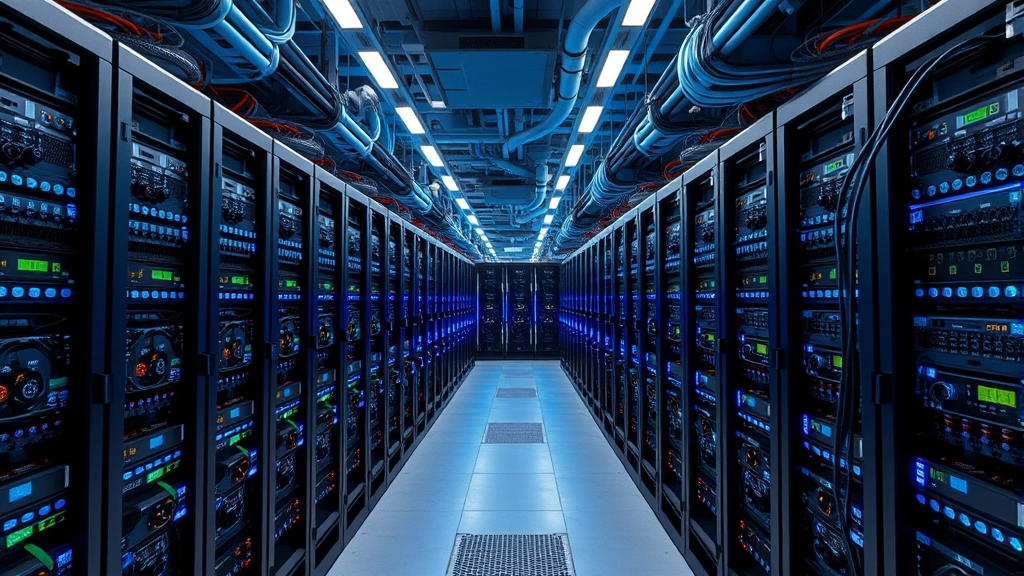
Daily Bitcoin Mining: What to Expect in 2023 and Beyond
Bitcoin mining remains one of the most discussed topics in the cryptocurrency ecosystem, with many enthusiasts wondering how much Bitcoin they can realistically mine in a single day. The answer isn’t straightforward, as it depends on numerous variables including hardware specifications, electricity costs, mining difficulty, and current Bitcoin prices. Understanding these factors is crucial for anyone considering entry into the mining space or evaluating whether mining aligns with their investment strategy.
The landscape of Bitcoin mining has evolved dramatically since Satoshi Nakamoto’s 2009 inception of the network. What once could be accomplished on personal computers now requires industrial-scale operations with specialized equipment. In 2023, daily Bitcoin mining outputs vary wildly depending on your operational scale, making it essential to understand the mechanics behind mining rewards and network difficulty adjustments.
Understanding Bitcoin Mining Fundamentals
Bitcoin mining is the process by which new bitcoins enter circulation and transactions are validated on the blockchain network. Miners compete to solve complex cryptographic puzzles, and the first to solve them gets to add a new block to the blockchain and receive a reward. This reward currently stands at 6.25 BTC per block (as of the 2020 halving), though this amount is programmed to decrease over time through halving events that occur approximately every four years.
The network generates a new block roughly every 10 minutes on average. This means that across the entire Bitcoin network, approximately 144 blocks are mined daily, distributing 900 BTC in total daily rewards to all miners combined. However, your individual share of these rewards depends entirely on your computational power relative to the total network hashrate.
The Bitcoin network’s difficulty adjusts every 2,016 blocks (approximately two weeks) to maintain this 10-minute average block time. As more miners join the network and computational power increases, difficulty rises proportionally. This self-adjusting mechanism ensures that Bitcoin’s monetary policy remains predictable regardless of how much hardware is deployed to mine it.

Hardware Requirements and Mining Equipment
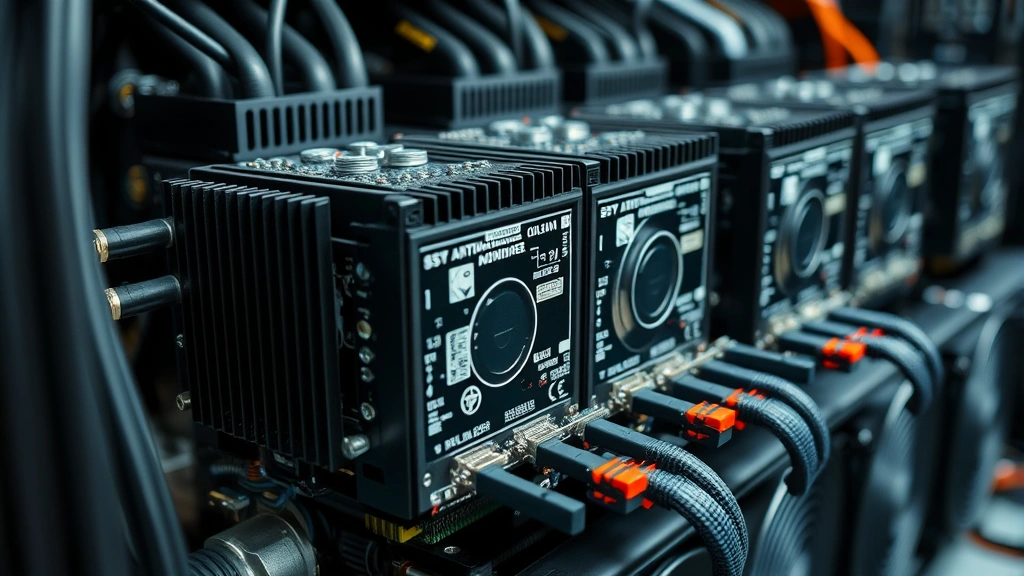
Mining Bitcoin in 2023 requires specialized hardware called ASICs (Application-Specific Integrated Circuits). Unlike earlier years when GPUs could compete, modern ASICs are purpose-built machines designed exclusively for Bitcoin mining. Popular models include the Antminer S19 Pro, Whatsminer M30S++, and AvalonMiner A1166 Pro, each with different hash rates and power consumption profiles.
An Antminer S19 Pro, for example, produces approximately 110 terahashes per second (TH/s) while consuming around 1,450 watts of electricity. To put this in perspective, the entire Bitcoin network operates at roughly 350-400 exahashes per second (EH/s) as of 2023. Your individual miner’s share of the network is calculated as: (Your Hash Rate / Total Network Hash Rate) × Daily BTC Rewards.
For a single S19 Pro operating alone:
- Hash rate: 110 TH/s or 0.00011 EH/s
- Network share: 0.00011 ÷ 375 = 0.0000002933% (approximately)
- Expected daily earnings: 0.0000002933 × 900 BTC = 0.00026 BTC per day
- USD value: Approximately $6-12 at current market prices
This calculation reveals why solo mining with consumer-grade equipment is rarely profitable. Most individual miners join mining pools to combine their computational power and share rewards more frequently and predictably.
Calculating Daily Bitcoin Mining Output
To calculate how much Bitcoin you can mine in a day, you need three pieces of information: your hardware’s hash rate, the current network difficulty, and the current block reward. The formula is:
Daily BTC = (Your Hash Rate / Network Hash Rate) × 144 blocks × 6.25 BTC
Let’s work through realistic scenarios. A miner with 1 PH/s (petahash per second) of computational power would earn:
- Network hash rate (2023): ~375 EH/s
- Your share: 1 PH/s ÷ 375,000 PH/s = 0.00267%
- Daily earnings: 0.00267 × 900 BTC = 0.024 BTC (approximately $600-800)
For a more substantial operation running 10 PH/s:
- Daily earnings: 0.267 × 900 BTC = 0.24 BTC (approximately $6,000-8,000)
- Monthly earnings: 7.2 BTC before expenses
- Annual earnings: 87.6 BTC before expenses
These figures demonstrate why Bitcoin mining has become increasingly concentrated among large-scale operations and mining pools. The economics strongly favor those who can operate at scale and negotiate favorable electricity rates.
When considering your potential returns, visit our guide on how much should I invest in Bitcoin to understand whether mining or direct purchase aligns better with your financial goals. Additionally, learning about Bitcoin DCA strategy can help you evaluate long-term accumulation approaches.
Electricity Costs and Profitability Analysis
Electricity represents the single largest operational expense in Bitcoin mining, often accounting for 50-80% of total costs. The profitability equation is straightforward: Revenue (BTC mined × price) minus Electricity Costs minus Equipment Depreciation minus Maintenance equals Profit.
An Antminer S19 Pro consuming 1,450 watts continuously costs:
- At $0.05/kWh: $0.058 per day
- At $0.10/kWh: $0.116 per day
- At $0.15/kWh: $0.174 per day
- At $0.20/kWh: $0.232 per day
Since a single S19 Pro mines approximately 0.00026 BTC daily (worth $6-12 at current prices), profitability depends critically on your electricity rate. Miners in regions with cheap hydroelectric power (Iceland, El Salvador, parts of Canada) enjoy significant advantages over those in expensive markets (Germany, Australia, California).
The break-even electricity price for Bitcoin mining varies with BTC’s price. When Bitcoin trades at $30,000, miners with average efficiency need electricity costs below approximately $0.08/kWh to remain profitable. During bear markets, only the most efficient operations with sub-$0.05/kWh electricity survive.
This economic reality explains why large mining operations have relocated to regions with abundant renewable energy sources. Companies like Riot Blockchain, Marathon Digital, and Hut 8 have invested heavily in facilities powered by hydroelectric, geothermal, or other low-cost energy sources to maximize profitability margins.
Mining Difficulty and Network Adjustments
Bitcoin’s difficulty adjustment mechanism is a crucial feature that directly impacts daily mining output. Every 2,016 blocks (approximately 14 days), the network recalculates difficulty to ensure blocks remain spaced 10 minutes apart. If more miners joined the network, difficulty increases proportionally, reducing each miner’s share of rewards.
This creates a challenging dynamic: as Bitcoin’s price rises and mining becomes more profitable, more miners deploy hardware, difficulty increases, and profitability decreases until reaching a new equilibrium. Conversely, when prices fall and mining becomes unprofitable, miners shut down equipment, difficulty decreases, and profitability improves for remaining miners.
The difficulty adjustment algorithm ensures that no matter how much total computational power exists on the network, approximately 900 BTC will be distributed daily. This predictability is fundamental to Bitcoin’s monetary policy but means that individual miners cannot increase their daily output by deploying more hardware—they can only maintain their percentage share of the network.
In 2023, Bitcoin’s difficulty reached all-time highs exceeding 50 trillion, reflecting the network’s maturity and the massive capital deployed by institutional mining operations. For individual miners, this means the barrier to meaningful daily Bitcoin production is extraordinarily high.
Solo Mining vs Pool Mining Strategies
Solo mining means operating independently and keeping 100% of block rewards when you successfully mine a block. However, with network difficulty at current levels, a single S19 Pro would statistically wait approximately 4,000 days (11 years) to find a block. This makes solo mining impractical for most individuals.
Mining pools solve this problem by combining computational power from thousands of miners. Pools like Foundry USA, AntPool, and F2Pool distribute rewards based on contributed hash power, allowing miners to receive daily or weekly payments proportional to their share. Pool operators typically charge 1-3% fees for coordination and infrastructure.
Pool mining provides several advantages:
- Frequent, predictable rewards instead of variance-based returns
- Access to professional infrastructure and optimization
- Lower barriers to entry with shared hardware costs
- Real-time monitoring and support
The trade-off is accepting slightly lower rewards due to pool fees and losing the possibility of finding a block solo (which would grant the full 6.25 BTC reward). For most miners, this trade-off is worthwhile given the impracticality of solo mining in the modern era.
When evaluating mining as an investment approach, consider comparing it against the Bitcoin bull run cycles and whether direct accumulation might outperform mining operations. Understanding what is asset allocation can help you determine whether mining should comprise part of your overall cryptocurrency strategy.
Environmental and Regulatory Considerations
Bitcoin mining’s energy consumption has attracted significant regulatory scrutiny and environmental criticism. The network consumes an estimated 100-150 terawatt-hours annually, comparable to some nations’ total electricity usage. However, research from the Bitcoin Mining Council indicates that approximately 40-50% of mining energy comes from renewable sources, a significantly higher percentage than the global energy grid.
Regulatory developments have become increasingly important for miners. The SEC’s proposed climate disclosure rules, the EU’s Markets in Crypto Assets Regulation (MiCA), and various national frameworks are creating new compliance requirements. Some jurisdictions have implemented mining bans or restrictions, including China’s 2021 ban that relocated significant mining operations to North America and Kazakhstan.
Environmental concerns have driven innovation toward more efficient hardware and renewable energy integration. Modern ASIC manufacturers continuously improve power efficiency (measured in joules per terahash), and mining operations increasingly prioritize renewable energy sources to reduce operational costs and environmental impact.
For miners, understanding these regulatory landscapes is essential. Choosing jurisdictions with clear, favorable regulatory frameworks and access to renewable energy can significantly impact long-term viability. Countries like El Salvador and Paraguay have actively courted Bitcoin miners with favorable policies and abundant hydroelectric resources.
Looking ahead to 2025 and beyond, reviewing Bitcoin price prediction May 2025 can help miners project future profitability. Additionally, improving your analytical skills through resources like how to read a stock chart – beginner’s guide can help you better understand market trends affecting mining economics.
FAQ
How much Bitcoin can one person mine in a day with a single ASIC miner?
A single modern ASIC miner like the Antminer S19 Pro typically mines 0.0002-0.0003 BTC daily, worth approximately $5-10 at current prices. This varies based on network difficulty and Bitcoin’s price. Solo mining is impractical, so most individual miners join pools to receive daily rewards.
Is Bitcoin mining profitable in 2023?
Profitability depends heavily on electricity costs and Bitcoin’s price. Operations with access to electricity below $0.06/kWh can remain profitable, but miners in expensive markets often operate at a loss. Large-scale operations and pools remain profitable due to economies of scale and negotiated power rates.
What’s the minimum investment to start Bitcoin mining?
Entry-level ASIC miners cost $1,000-3,000, though older models are cheaper. However, profitability requires considering ongoing electricity costs. Many newcomers start by joining mining pools with minimal investment, though returns are correspondingly small.
How does mining difficulty affect daily Bitcoin output?
As difficulty increases, your percentage share of daily rewards decreases proportionally, assuming your hash rate remains constant. The network maintains approximately 900 BTC daily distribution regardless of total difficulty, so individual miners receive smaller portions as more participants join.
Should I mine Bitcoin or buy it directly?
This depends on your electricity costs, capital availability, and technical expertise. In most cases, miners with electricity costs above $0.08/kWh would achieve better returns purchasing Bitcoin directly. However, miners with exceptional power rates or those seeking portfolio diversification may find mining worthwhile.
What are the main risks in Bitcoin mining?
Key risks include hardware obsolescence, electricity price volatility, Bitcoin price fluctuations, regulatory changes, and difficulty adjustments. Mining equipment becomes less profitable as technology improves, requiring regular hardware upgrades to remain competitive.
Can I mine Bitcoin without joining a pool?
Technically yes, but it’s impractical. Solo mining a block at current difficulty levels would take the average S19 Pro approximately 11 years of continuous operation. Pool mining provides daily or weekly payouts proportional to contributed hash power, making it the standard approach.
How do I choose a mining pool?
Consider factors including fee structure (typically 1-3%), payout frequency, pool size, and reputation. Larger pools offer more consistent payouts but may have higher variance. Research pools on blockchain explorers and mining communities before committing your hardware.


