Bitcoin Depot Stock: Investment Insights and Market Analysis
Bitcoin Depot Inc. (BTDP) represents a unique investment opportunity at the intersection of cryptocurrency adoption and traditional retail commerce. As a Bitcoin ATM operator and digital asset platform, the company has positioned itself to capitalize on growing consumer demand for accessible cryptocurrency transactions. Understanding Bitcoin Depot stock requires examining both the company’s business model and the broader cryptocurrency market dynamics that influence its valuation.
The cryptocurrency ATM industry has experienced significant growth over the past five years, with Bitcoin Depot emerging as one of the largest networks in North America. The company operates thousands of Bitcoin ATMs across multiple states, providing consumers with a convenient way to buy and sell cryptocurrencies without navigating complex exchange platforms. This accessibility-focused approach has created a distinct niche within the digital asset ecosystem, though investors must carefully evaluate the risks and opportunities associated with this emerging sector.
Understanding Bitcoin Depot’s Business Model
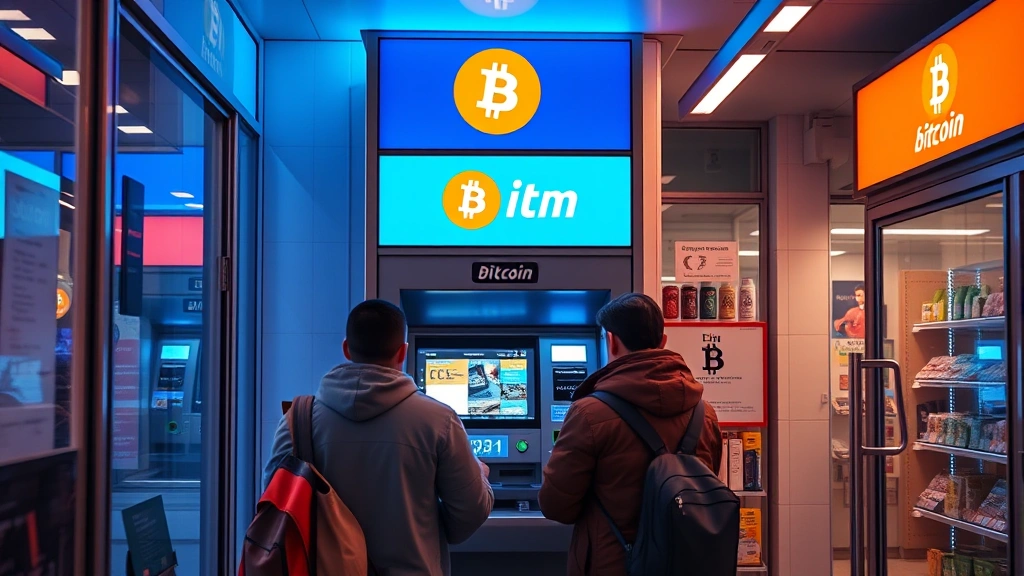
Bitcoin Depot operates primarily through a network of Bitcoin ATMs strategically located in convenience stores, grocery outlets, and retail locations across North America. The company generates revenue through transaction fees charged on both buy and sell operations, typically ranging from 7% to 15% depending on transaction size and market conditions. This fee-based model creates recurring revenue streams as customers use the machines for their cryptocurrency transactions.
The company also derives income from partnerships and integration fees from retailers who host their machines. By placing ATMs in high-traffic retail locations, Bitcoin Depot benefits from impulse purchases and regular customer visits. The accessibility provided by these machines appeals to individuals who prefer face-to-face transactions over online exchanges and those seeking to quickly acquire cryptocurrencies without extensive identity verification processes required by traditional platforms.
Beyond ATM operations, Bitcoin Depot has developed a mobile application and online platform that complements its physical presence. This omnichannel approach allows customers to initiate transactions through multiple touchpoints, increasing engagement and transaction frequency. The integration between physical and digital channels represents a strategic advantage in building customer loyalty and expanding market reach.
Financial Performance and Revenue Streams
Bitcoin Depot’s financial trajectory reflects the volatile nature of cryptocurrency markets and consumer spending patterns. Revenue is primarily driven by transaction volume and Bitcoin price movements, creating direct correlation between cryptocurrency market activity and company performance. During periods of high Bitcoin volatility and increased retail interest, transaction volumes typically spike, benefiting the company’s top line.
The company’s profitability depends on maintaining healthy transaction margins while managing operational costs associated with machine deployment, maintenance, and compliance. Operating expenses include customer acquisition costs, technology infrastructure, and regulatory compliance spending. As Bitcoin Depot scales its network, achieving operational efficiency becomes crucial for improving profit margins.
Transaction fees represent the most significant revenue source, with the company benefiting from both buyer and seller commissions on each transaction. Unlike mining operations or custody services, Bitcoin Depot’s model doesn’t require holding significant cryptocurrency reserves, reducing exposure to price fluctuations on the balance sheet. This structural advantage differentiates the company from other cryptocurrency-focused businesses.
Investors analyzing Bitcoin Depot stock should examine quarterly earnings reports, transaction volume trends, and average transaction values. These metrics provide insight into whether the company is successfully expanding its customer base and increasing transaction frequency. Declining metrics may signal market saturation or increased competition, while growth indicates successful market penetration.
Market Position and Competitive Landscape
Bitcoin Depot competes within a rapidly evolving cryptocurrency services market that includes established exchanges, fintech platforms, and other ATM operators. Major competitors include Coinbase, Kraken, and other cryptocurrency exchanges that offer digital asset trading through online platforms. Additionally, companies like Coinsource and Lamassu operate competing ATM networks in overlapping geographic markets.
The competitive advantage Bitcoin Depot possesses lies in its extensive physical retail network and brand recognition within the ATM operator space. For consumers seeking immediate, in-person cryptocurrency purchases, the company’s widespread machine availability provides convenience that online exchanges cannot replicate. This differentiation appeals to demographics less comfortable with digital-only platforms or those seeking anonymity in transactions.
However, the market faces pressure from traditional financial institutions entering the cryptocurrency space. Major banks and payment processors are increasingly offering cryptocurrency services, which could eventually cannibalize demand for standalone ATM services. Understanding how Bitcoin Depot differentiates itself in this competitive environment is essential for assessing long-term viability.
The company’s market position also depends on regulatory relationships and compliance reputation. Operating legally across multiple jurisdictions requires substantial compliance infrastructure, creating barriers to entry that protect established operators like Bitcoin Depot from new competitors. Strong regulatory standing becomes a competitive moat in the cryptocurrency services industry.
Bitcoin Price Correlation and Market Risks
Bitcoin Depot’s business performance exhibits strong correlation with Bitcoin price movements and overall cryptocurrency market sentiment. When Bitcoin experiences significant price increases, retail interest typically surges, driving higher transaction volumes through the company’s ATM network. Conversely, during bear markets or periods of declining interest, transaction volumes contract, directly impacting revenue.
This cyclical relationship means Bitcoin Depot stock valuations tend to follow cryptocurrency market cycles rather than traditional business fundamentals. Investors should understand that owning Bitcoin Depot stock differs from directly owning Bitcoin. While the company benefits from cryptocurrency adoption and price appreciation, it doesn’t provide direct exposure to price movements. The relationship is indirect, mediated through transaction volume changes.
Understanding Bitcoin price prediction trends becomes relevant for Bitcoin Depot investors, as future price movements will influence customer behavior and transaction activity. During periods when Bitcoin is expected to appreciate, customers are more likely to make purchases, increasing revenue. During anticipated downturns, transaction volumes may decline as customers reduce exposure.
The company also faces risks from regulatory actions targeting cryptocurrency adoption or imposing stricter compliance requirements on ATM operations. Changes in Know Your Customer (KYC) requirements, transaction limits, or reporting obligations could increase operational costs and reduce transaction volumes if customers find the process too burdensome.

Regulatory Environment and Compliance Challenges
Operating a cryptocurrency ATM network requires navigating complex and evolving regulatory frameworks across multiple jurisdictions. Bitcoin Depot must comply with FinCEN regulations, state money transmitter laws, and local ordinances governing ATM placement and operation. This regulatory burden creates significant compliance costs but also protects the company from less-compliant competitors.
The regulatory environment remains uncertain, with different states and countries adopting varying approaches to cryptocurrency regulation. Some jurisdictions have embraced crypto-friendly policies, while others have implemented restrictive regulations that limit or prohibit ATM operations. Bitcoin Depot’s ability to maintain compliance while expanding into new markets depends on its regulatory expertise and relationships with government agencies.
Recent regulatory trends suggest increased scrutiny on cryptocurrency transactions, particularly regarding anti-money laundering (AML) and combating the financing of terrorism (CFT) requirements. These regulations impose operational costs on Bitcoin Depot but also create barriers protecting the company from new competitors unable to meet compliance standards. Investors should monitor regulatory developments, as unfavorable changes could significantly impact the company’s growth prospects.
The company’s compliance reputation is crucial for maintaining banking relationships and operational licenses. Any regulatory violations or failed audits could result in severe penalties, license revocation, or operational restrictions that would devastate the business. This regulatory risk is often underestimated by retail investors but represents a significant threat to long-term viability.
Growth Prospects and Expansion Strategy
Bitcoin Depot’s growth strategy focuses on expanding its ATM network into new geographic markets and increasing transaction volumes in existing locations. The company pursues partnerships with retail chains to place machines in high-traffic locations, leveraging existing retail relationships to accelerate deployment. This retail-focused approach differs from competitors pursuing direct-to-consumer digital platforms.
International expansion represents a significant growth opportunity, as cryptocurrency adoption accelerates globally. Markets in Latin America, Asia, and Europe present substantial opportunities for ATM network expansion, particularly in regions with limited access to traditional banking services. However, international expansion introduces additional regulatory complexity and operational challenges that could impact execution.
The company’s digital platform expansion aims to complement physical ATM services by providing customers with additional transaction options. Developing a robust mobile application and web platform could attract customers less interested in physical ATM usage while creating additional revenue streams. Technology investment in this area could prove crucial for long-term competitiveness.
Product diversification beyond Bitcoin ATM services represents another growth avenue. Bitcoin Depot could potentially offer custody services, cryptocurrency lending, or other financial services that leverage its customer base and compliance infrastructure. Diversification would reduce dependence on ATM transaction volumes and provide more stable revenue streams.
Investment Considerations and Risk Factors
Investing in Bitcoin Depot stock requires careful consideration of both opportunities and risks unique to the cryptocurrency services sector. The stock represents exposure to cryptocurrency adoption trends without direct price exposure to Bitcoin itself. This characteristic appeals to investors seeking cryptocurrency market participation through traditional equity markets.
Key investment considerations include evaluating the company’s competitive position relative to established cryptocurrency exchanges and emerging fintech competitors. Investors should assess whether Bitcoin Depot’s retail-focused model can sustain competitive advantages as traditional financial institutions enter the cryptocurrency space. Analyzing portfolio management strategies can help investors properly weight Bitcoin Depot within their broader cryptocurrency exposure.
Understanding your risk tolerance is essential before investing in Bitcoin Depot stock. The company operates in an emerging industry with uncertain regulatory futures and faces competition from well-capitalized financial institutions. Investors should only allocate capital they can afford to lose, treating the investment as speculative rather than core portfolio holdings.
Valuation metrics for Bitcoin Depot should be compared against traditional financial services companies rather than technology stocks. The company’s valuation multiples depend on sustainable transaction volumes, which in turn depend on cryptocurrency market activity. During cryptocurrency bear markets, valuations typically contract significantly as investors reassess growth prospects.
Geographic concentration risk represents another consideration, as Bitcoin Depot’s current operations are primarily concentrated in North America. Over-reliance on specific markets exposes the company to local regulatory changes or economic conditions affecting cryptocurrency adoption in those regions. Successful international expansion could diversify this risk but introduces execution challenges.
The company’s technology platform represents both an opportunity and a risk. Investments in digital infrastructure and mobile applications could drive future growth, but technology development requires substantial capital and carries execution risks. Investors should monitor technology investments and their competitive positioning relative to established digital platforms.
Liquidity considerations affect Bitcoin Depot stock investments, as the company’s trading volume and market capitalization may be lower than large-cap cryptocurrency companies. This lower liquidity can result in wider bid-ask spreads and difficulty executing large positions without impacting price. Investors should verify adequate trading liquidity before committing substantial capital.

Understanding how to read cryptocurrency charts can help investors track Bitcoin Depot’s stock performance alongside broader cryptocurrency market trends. Identifying correlations between Bitcoin price movements and stock performance provides insight into the company’s sensitivity to cryptocurrency market cycles. Technical analysis of stock price patterns can reveal support and resistance levels important for entry and exit decisions.
The relationship between Bitcoin supply dynamics and long-term adoption trends affects Bitcoin Depot’s future growth potential. As Bitcoin supply becomes increasingly scarce, adoption may accelerate, driving increased demand for accessible purchase channels like Bitcoin Depot’s ATM network. Conversely, if adoption plateaus, growth prospects would diminish significantly.
For investors seeking alternative cryptocurrency exposure strategies, understanding advanced trading strategies like shorting can provide hedging opportunities if concerned about Bitcoin Depot’s downside risks. However, most retail investors should focus on proper position sizing and diversification rather than complex hedging strategies.
FAQ
What factors most influence Bitcoin Depot’s stock price?
Bitcoin Depot’s stock price is primarily influenced by Bitcoin price movements, cryptocurrency market sentiment, transaction volume trends, regulatory developments, and competitive positioning. During bull markets, the stock typically outperforms; during bear markets, it underperforms. Earnings reports showing transaction growth or decline significantly impact stock valuations.
How does Bitcoin Depot differ from cryptocurrency exchanges?
Bitcoin Depot operates physical ATM networks providing in-person transaction capabilities, while cryptocurrency exchanges like Coinbase and Kraken operate primarily digital platforms. Bitcoin Depot appeals to customers preferring face-to-face transactions and those seeking quick, convenient access without extensive online account setup. However, exchanges typically offer lower fees and more trading options.
What are the main regulatory risks for Bitcoin Depot?
Regulatory risks include stricter KYC requirements, transaction limits, money transmitter licensing challenges, AML compliance costs, and potential ATM operation bans in certain jurisdictions. Changes in federal or state cryptocurrency regulations could substantially impact the company’s operations and profitability.
Is Bitcoin Depot stock a good investment for cryptocurrency believers?
Bitcoin Depot stock provides indirect cryptocurrency exposure through a company benefiting from adoption trends rather than direct price exposure. For investors believing in long-term Bitcoin adoption, Bitcoin Depot stock could be attractive, but it carries company-specific and regulatory risks separate from cryptocurrency price movements. Investors should diversify rather than viewing it as a substitute for direct Bitcoin holdings.
How should investors monitor Bitcoin Depot’s performance?
Investors should track quarterly earnings reports, transaction volume data, average transaction values, geographic expansion metrics, and competitive developments. Comparing stock performance against Bitcoin price movements and cryptocurrency market indices reveals correlation strength. Following regulatory announcements and management guidance provides insight into future growth prospects.
What is Bitcoin Depot’s competitive advantage?
The primary competitive advantage is an extensive physical retail network providing convenient, in-person cryptocurrency access. Strong regulatory compliance and banking relationships create barriers protecting the company from new competitors. Brand recognition within the ATM operator space and retail partnerships provide network effects strengthening the competitive moat.


