
Can You Profit as a Bitcoin Solo Miner? Analyst View
Bitcoin solo mining represents one of the most challenging yet potentially rewarding paths in the cryptocurrency ecosystem. Unlike pool mining, where miners combine computational resources to share rewards, solo miners compete against the entire network independently. This approach demands substantial technical knowledge, significant capital investment, and unwavering patience. The question of profitability has become increasingly complex as Bitcoin’s network difficulty continues to surge and competition intensifies among industrial-scale mining operations.
The allure of solo mining lies in its promise: if you successfully validate a block, you receive the entire block reward without sharing it with anyone else. Currently, this reward stands at 6.25 BTC per block, translating to approximately $250,000 at current market valuations. However, the probability of a solo miner finding a block has diminished dramatically since Bitcoin’s early days. Understanding the real economics behind solo mining is essential before investing time and resources into this venture.
Understanding Bitcoin Solo Mining Mechanics
Bitcoin solo mining involves running a full node and mining software that attempts to solve complex cryptographic puzzles independently. When a miner solves a block, they broadcast it to the network, and if accepted, they claim the entire block reward plus transaction fees. This process requires continuous computational effort, with miners testing billions of hash combinations every second to find a valid block solution.
The mining process relies on the Proof of Work consensus mechanism, where miners must find a hash value below a specific target difficulty. The difficulty adjusts approximately every two weeks to maintain consistent block discovery times of roughly ten minutes. As more miners join the network and computing power increases, difficulty rises proportionally, making solo mining increasingly difficult for individual participants.
Your mining hardware continuously generates hashes, and the probability of finding a valid block depends entirely on your hash rate relative to the total network hash rate. If the network processes 500 exahashes per second and your equipment contributes one terahash per second, your chance of finding the next block remains infinitesimally small. This mathematical reality forms the foundation of the solo mining profitability question.
Understanding Bitcoin projection models helps miners anticipate future difficulty adjustments and reward valuations. Network metrics, difficulty trends, and hash rate distributions all influence long-term mining viability. Many analysts emphasize that solo miners must account for these variables when calculating potential returns.
The Economics of Solo Mining Today
The economics of solo mining have shifted dramatically since Bitcoin’s inception. In 2009, when the network was nascent, individuals could mine Bitcoin using standard CPUs and earn blocks regularly. Today, the landscape has transformed entirely. Industrial mining operations with hundreds of thousands of ASICs (Application-Specific Integrated Circuits) dominate the network, controlling the vast majority of hash rate.
The current network hash rate exceeds 600 exahashes per second, meaning the computational power required to compete meaningfully has become astronomical. A solo miner with a single $10,000 ASIC represents an infinitesimal fraction of this total capacity. The expected time to find a block for such a miner stretches into decades or centuries, depending on specific equipment and network conditions.
However, economics extend beyond pure probability. Consider electricity costs, hardware depreciation, and opportunity costs. A modern ASIC consumes 1,000-3,000 watts continuously. At $0.10 per kilowatt-hour, running such equipment costs $2.40-$7.20 daily, or $876-$2,628 annually. Over three years, electricity expenses alone could exceed $10,000, far exceeding potential returns for most solo miners.
The relationship between mining profitability and why Bitcoin is going up becomes apparent when examining historical mining economics. During bull markets, increased Bitcoin valuations can offset hardware and operational costs. However, bear markets can render even efficient mining operations unprofitable, particularly for solo miners with limited economies of scale.
Hardware Requirements and Costs
Serious Bitcoin mining demands specialized hardware that has evolved dramatically over Bitcoin’s history. Today, ASIC miners represent the only practical option for solo mining. These devices are engineered specifically for Bitcoin’s SHA-256 hashing algorithm and offer exponentially better performance than CPUs, GPUs, or older hardware.
Current-generation ASICs like the Antminer S19 Pro or similar models cost between $5,000-$15,000 per unit, depending on specifications and market availability. A single machine produces hash rates of 100-150 terahashes per second. To accumulate meaningful computational power, solo miners typically require multiple units, escalating initial capital requirements to $50,000-$500,000 or more.
Beyond hardware, solo miners need:
- Cooling infrastructure: Industrial-grade cooling systems to maintain optimal operating temperatures, costing $5,000-$50,000 depending on scale
- Electrical infrastructure: Dedicated circuits, transformers, and voltage regulators to handle power demands, requiring $10,000-$100,000+ in upgrades
- Physical space: Climate-controlled facilities with sufficient ventilation, either owned or rented at significant ongoing expense
- Network connectivity: Reliable, low-latency internet connections essential for competitive mining
- Security measures: Firewalls, monitoring systems, and backup power supplies protecting equipment and operations
Total initial investment for a viable solo mining operation typically ranges from $100,000-$1,000,000+, placing it beyond reach for most individuals. This capital requirement alone disqualifies solo mining for casual participants and explains why the industry has consolidated around well-funded operations.
Probability and Expected Returns
The mathematical reality of solo mining profitability rests on probability calculations. Bitcoin’s mining difficulty creates a predictable expected value for hash rate. The Bitcoin funding rates and difficulty metrics provide useful indicators for miners evaluating entry points and expected outcomes.
Expected block discovery time can be calculated using the formula: Expected Time = Network Difficulty / Your Hash Rate / Hashes per Second. For a solo miner with 100 terahashes per second against current network difficulty, expected time to block discovery exceeds 1,000 years. Even miners with 10 petahashes per second (100 times more powerful) face expected wait times of 10-50 years.
This probability distribution creates extreme variance. While average expected returns might be slightly positive after accounting for all costs, the variance is so high that individual miners will almost certainly experience either catastrophic losses or extreme windfall gains. The expected value becomes academically interesting but practically irrelevant for most participants.
Consider a scenario: A solo miner invests $200,000 in equipment and infrastructure. They operate profitably if they discover blocks worth more than their operational costs. With annual electricity and maintenance expenses of $30,000, they need to find approximately 0.12 blocks yearly (given current valuations) to break even. The probability of this occurring within five years remains extremely low, making this a high-risk, speculative venture rather than a sound investment strategy.
Comparing Pool Mining vs Solo Mining
Pool mining fundamentally transforms the mining equation by aggregating hash rates from thousands of participants. When any pool member finds a block, the reward distributes proportionally based on contributed computational power. This approach provides consistent, predictable returns rather than the all-or-nothing nature of solo mining.
A miner contributing 100 terahashes to a pool with 100 petahashes total would receive 0.1% of all blocks discovered by that pool. With pools discovering blocks approximately every 10-30 seconds, this miner would receive tiny, frequent payouts rather than waiting years for a single large reward. This regularity enables miners to cover operational costs continuously and plan finances realistically.
Pool mining introduces modest fees, typically 1-5% of earnings, but this cost is negligible compared to the probability advantage and income stability it provides. Most miners consider pool fees a worthwhile trade-off for eliminating variance and ensuring consistent returns. Understanding how to read cryptocurrency charts helps pool miners optimize their hardware decisions and entry timing.
The profitability comparison heavily favors pool mining for individual participants. While pool mining generates modest but consistent returns, solo mining typically produces zero returns for years, followed by either continued failure or a single massive payout. From an investment perspective, the certainty and consistency of pool mining makes it the rational choice for most miners.
Real-World Solo Mining Scenarios
Examining real-world solo mining scenarios reveals the practical challenges involved. Consider three distinct cases:
The Enthusiast Miner: Someone investing $50,000 in a small solo mining operation with 500 terahashes per second. Annual electricity costs total approximately $15,000. Expected time to discover a block exceeds 200 years. Even if this miner operates for five years, the probability of finding any block remains below 3%. Most likely outcome: $75,000 in total losses with zero block discoveries.
The Semi-Professional Operation: A miner investing $500,000 in 5 petahashes of capacity with $50,000 annual operational costs. Expected block discovery time drops to 20 years, with a 23% probability of finding at least one block within five years. If successful, a single block discovery generates $250,000 in gross revenue, providing positive returns. However, the majority of outcomes still result in net losses.
The Industrial-Scale Solo Miner: An operation with 100 petahashes and $1 million annual operating costs. Expected block discovery time falls to one year, with approximately 95% probability of finding blocks within a two-year period. This scale achieves genuine profitability potential, but requires capital and expertise comparable to pool operators.
These scenarios illustrate that solo mining viability requires either enormous scale or exceptional luck. The break-even point exists, but lies far beyond what most individual miners can achieve. Understanding whether now is a good time to buy Bitcoin helps miners time their equipment purchases, but timing alone cannot overcome fundamental probability disadvantages.
Risk Factors and Challenges
Beyond mathematical improbability, solo miners face numerous practical and technical challenges. Network difficulty increases approximately every two weeks as more hash rate joins the network. A solo miner’s relative position weakens continuously, extending expected block discovery times over time. Hardware depreciates rapidly, with cutting-edge ASICs becoming obsolete within 3-5 years as manufacturers release superior models.
Regulatory uncertainty presents another significant risk. Different jurisdictions regulate cryptocurrency mining differently, with some imposing special taxes, environmental restrictions, or outright bans. Miners operating in unfavorable regulatory environments face unexpected compliance costs or forced operational shutdowns. Understanding the broader what is cryptocurrency landscape helps miners evaluate long-term viability in their regions.
Technical risks include mining pool centralization concerns, protocol changes that could alter mining economics, and security vulnerabilities. While Bitcoin’s protocol has remained remarkably stable, future changes could theoretically render current mining equipment less efficient or obsolete. Hardware failures, power outages, and cooling system malfunctions threaten continuous operation and profitability.
Market volatility adds another layer of complexity. Bitcoin valuations fluctuate dramatically, affecting mining profitability calculations. A miner’s equipment might be profitable during bull markets but unprofitable during bear markets, even without operational changes. This volatility requires miners to maintain sufficient capital reserves to weather extended unprofitable periods.
Psychological and opportunity costs deserve consideration as well. Capital invested in mining equipment cannot be deployed in other investments, including direct Bitcoin purchases, alternative cryptocurrency ventures, or traditional assets. For most investors, purchasing Bitcoin directly offers superior risk-adjusted returns compared to solo mining.
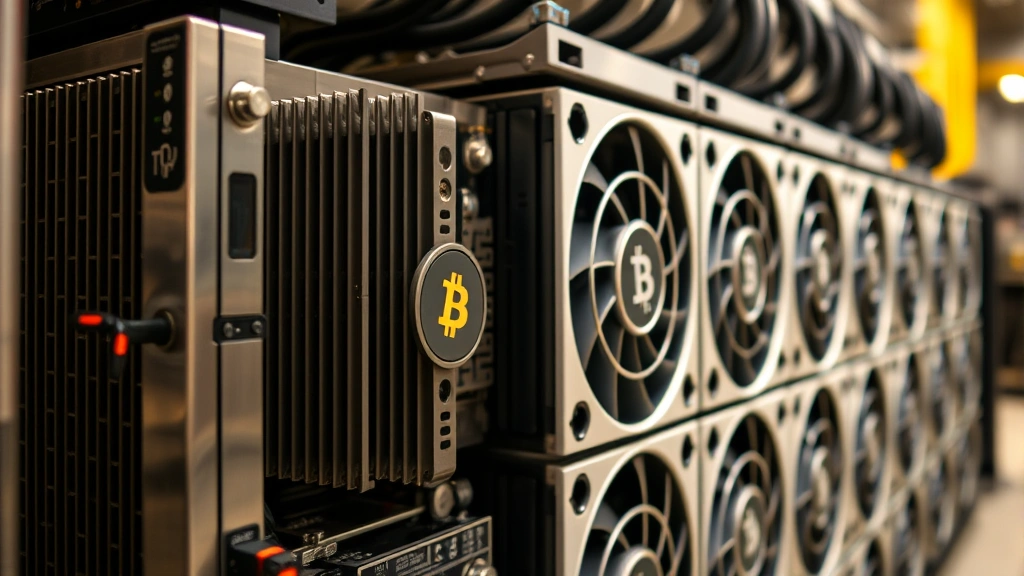
The concentration of mining power in large-scale operations creates barriers to entry that solo miners struggle to overcome. These industrial operations benefit from economies of scale, bulk hardware discounts, negotiated electricity rates, and optimized infrastructure. A solo miner cannot compete on these dimensions, making profitability increasingly unlikely as the industry matures.
When Solo Mining Makes Sense
Despite the challenges, solo mining remains viable in specific niche scenarios. Miners with access to exceptionally cheap electricity—through renewable energy sources, stranded power generation, or favorable regional rates—can achieve positive expected values even with modest hash rates. Some operators in Iceland, El Salvador, and other regions with abundant renewable energy have reported viable solo mining economics.
Hobbyist miners willing to accept speculative losses as entertainment or educational expenses represent another legitimate use case. Someone investing $10,000 in equipment to learn about Bitcoin mining, network architecture, and cryptographic systems might consider this money well-spent regardless of profitability. The knowledge gained and personal satisfaction derived could justify the expense.
Technologically sophisticated miners who can optimize hardware efficiency, reduce cooling costs, or develop software improvements might achieve advantages over typical operations. These specialists occasionally discover profitable niches, though such advantages typically erode as the broader mining community adopts similar optimizations.
Finally, Bitcoin believers with long time horizons and strong conviction might view solo mining as a speculative bet on Bitcoin’s future value. If Bitcoin’s price appreciates dramatically, a single block discovery could generate returns far exceeding all operational costs. This perspective transforms mining from an operational business into a leveraged speculation on Bitcoin appreciation.
FAQ
How much can a solo miner realistically earn?
Realistic earnings depend entirely on hash rate and luck. Most solo miners earn nothing for extended periods, then face either continued failure or sudden windfall gains. Expected value calculations suggest losses for the vast majority of participants, making unrealistic expectations the primary risk.
Is solo mining more profitable than pool mining?
No. Pool mining provides consistent, predictable returns that typically exceed solo mining’s expected value, even after accounting for pool fees. The income stability and certainty of pool mining make it the rational choice for profit-focused miners.
What equipment do I need to start solo mining?
You need an ASIC miner (costing $5,000-$15,000+), cooling infrastructure, electrical upgrades, and reliable internet connectivity. Total startup costs typically exceed $100,000 for a viable operation, with annual operating costs of $20,000-$100,000+.
How long until a solo miner finds a block?
Expected time depends on hash rate and network difficulty. A miner with 100 terahashes per second faces expected wait times exceeding 1,000 years. Even with 10 petahashes, expected times remain 10-50 years, making solo mining impractical for most individuals.
Can I solo mine with a GPU or CPU?
Technically yes, but practically no. GPU and CPU mining generate negligible hash rates compared to network difficulty, making profitability virtually impossible. ASIC miners are the only practical equipment for modern Bitcoin mining.
What’s the difference between solo mining and pool mining?
Solo mining means competing independently for entire block rewards, while pool mining combines resources with thousands of other miners and shares rewards proportionally. Pool mining provides consistent returns; solo mining provides all-or-nothing outcomes with extreme variance.
Is solo mining still profitable in 2024?
For the vast majority of participants, no. Industrial-scale operations dominate the network, and difficulty has increased to levels making individual mining impractical. Only miners with exceptional advantages—extremely cheap electricity, massive capital, or specialized technical expertise—achieve profitability.
Should I buy Bitcoin or mine it?
For most investors, purchasing Bitcoin directly offers superior risk-adjusted returns compared to mining. Direct purchases avoid hardware depreciation, electricity costs, and operational complexity while maintaining equivalent Bitcoin exposure. Mining makes sense only for those with specific advantages or speculative conviction.


