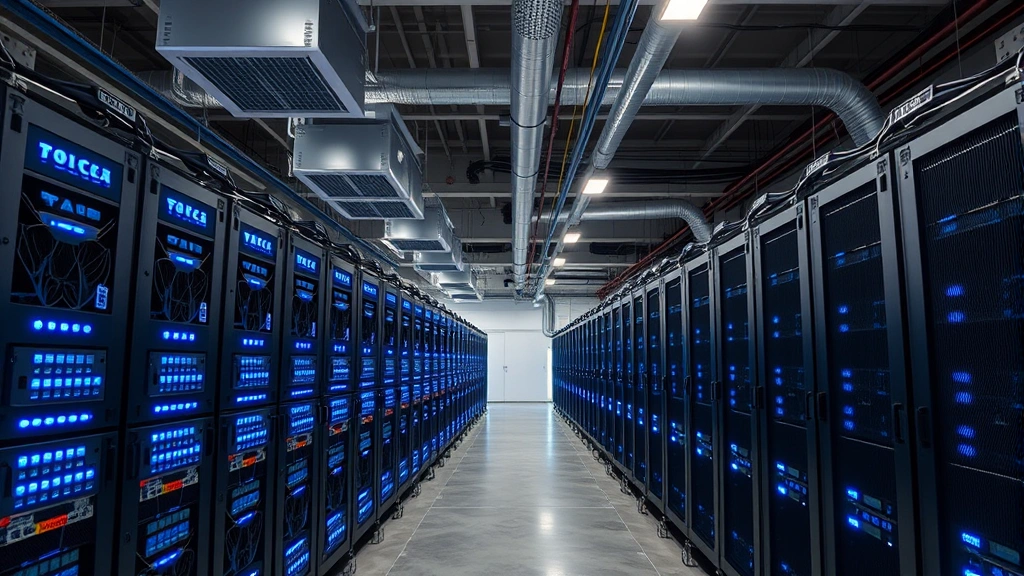
Bitcoin Mining Profits: FintechZoom Insights and Market Analysis
Bitcoin mining has evolved from a niche hobbyist activity into a sophisticated industrial operation that generates substantial profits for participants worldwide. According to recent data and analysis from leading fintech platforms, mining profitability depends on numerous factors including hardware efficiency, electricity costs, network difficulty, and Bitcoin’s market price. Understanding these dynamics is crucial for anyone considering entry into the mining sector or seeking to optimize existing operations.
FintechZoom and similar financial technology platforms provide real-time insights into mining economics, offering traders and investors comprehensive data on profitability metrics, equipment ROI calculations, and market trends. This article explores the current state of Bitcoin mining profits, examining the technical and financial factors that determine success in this competitive landscape.
Understanding Bitcoin Mining Fundamentals
Bitcoin mining is the process by which new bitcoins are created and transactions are validated on the blockchain network. Miners compete to solve complex mathematical puzzles, with the first to solve each puzzle earning the right to add a new block to the blockchain and receiving newly minted bitcoins plus transaction fees as rewards. This process, known as proof-of-work, secures the entire Bitcoin network.
To participate in mining, you need to understand what cryptocurrency fundamentally is and how blockchain technology operates. Mining serves two critical functions: it distributes new bitcoins into circulation and it validates all transactions occurring on the network. Currently, miners receive 6.25 bitcoins per block solved, though this reward halves approximately every four years through a mechanism called the halving event.
The mining process requires substantial computational power. Miners use specialized hardware called ASICs (Application-Specific Integrated Circuits) designed exclusively for Bitcoin mining. These devices represent significant capital investments, typically ranging from several thousand to tens of thousands of dollars for enterprise-grade equipment.
Mining Profitability Factors and Economics
Bitcoin mining profitability is determined by a straightforward equation: revenue minus costs equals profit. Revenue comes from block rewards and transaction fees, while costs include hardware depreciation, electricity consumption, facility operations, and maintenance. FintechZoom provides detailed profitability analyses that help miners understand their potential returns.
Several key variables influence mining economics:
- Bitcoin Price: Higher prices directly increase mining revenue. A $1,000 price increase can significantly impact annual profitability across mining operations.
- Block Reward: Currently 6.25 BTC per block, but this decreases with each halving event, reducing miner revenue unless offset by price appreciation or transaction fees.
- Network Difficulty: Increases as more miners join the network, requiring greater computational power to find blocks and reducing individual miner profitability.
- Electricity Costs: The single largest operating expense for miners, directly affecting profit margins.
- Hardware Efficiency: Measured in joules per terahash, newer ASIC models consume less electricity while delivering more computing power.
- Pool Fees: Mining pools charge fees (typically 1-4%) for coordinating mining efforts among participants.
Before investing in cryptocurrency mining, conduct thorough financial modeling. Many fintech platforms, including FintechZoom, offer mining calculators that input these variables to project potential returns. These tools prove invaluable for assessing investment viability before committing capital.
Hardware Requirements and Investment Costs
Mining hardware represents the largest upfront investment for aspiring miners. The most efficient current ASIC miners include the Antminer S19 Pro, Whatsminer M30S+, and Canaan Avalon A1166 Pro. These machines deliver exceptional hash rates but come with price tags between $5,000 and $15,000 per unit depending on market conditions and supplier.
Hardware selection depends on several factors:
- Hash Rate: Measured in terahashes per second (TH/s), higher rates mean faster problem-solving and more frequent block discoveries.
- Power Consumption: Measured in watts, directly impacts electricity costs. Modern miners achieve approximately 30-40 joules per terahash.
- Cost Per Hash: Dividing total hardware cost by hash rate provides a metric for comparing equipment value.
- Lifespan: ASIC miners typically remain profitable for 3-5 years before technological obsolescence.
- Resale Value: Older equipment retains some value, partially offsetting initial investment costs.
Many miners underestimate total hardware expenses. Beyond ASIC units, you need cooling systems, power supply units, network infrastructure, and facility modifications. A professional mining setup might require $50,000 to $500,000+ in total capital investment depending on scale.
Electricity Costs and Geographic Considerations
Electricity costs represent 50-80% of mining operational expenses, making geographic location critical for profitability. Miners congregate in regions with cheap electricity: Iceland leverages geothermal power, Kazakhstan offers low industrial rates, and parts of North America benefit from hydroelectric resources.
Electricity pricing varies dramatically:
- Residential Power: $0.10-$0.15 per kilowatt-hour in developed nations, making home mining unprofitable for most.
- Industrial Power: $0.03-$0.08 per kilowatt-hour in favorable locations, enabling profitable operations.
- Renewable Energy: Bitcoin miners increasingly utilize surplus renewable energy, sometimes at discounted rates.
- Seasonal Variations: Some regions offer lower rates during off-peak seasons, affecting annual profitability.
FintechZoom mining analyses frequently highlight electricity’s dominance in profitability calculations. A miner with $0.04/kWh electricity in Iceland may profit substantially where another with $0.12/kWh electricity in urban America loses money on identical hardware. When evaluating mining opportunities, always obtain guaranteed electricity rate quotes from providers.
Network Difficulty and Hash Rate Dynamics
Bitcoin’s network difficulty adjusts automatically every 2,016 blocks (approximately two weeks) to maintain a consistent 10-minute average block time. As more miners join the network, difficulty increases, requiring more computational power to discover blocks. This self-adjusting mechanism ensures Bitcoin’s security while preventing inflation acceleration.
Network difficulty has increased exponentially over Bitcoin’s history. In 2012, difficulty was approximately 3 million. By 2024, it exceeded 84 trillion, reflecting massive growth in mining participation. This difficulty increase directly reduces individual miner profitability unless Bitcoin’s price appreciates proportionally.
Hash rate, measured in exahashes per second (EH/s), represents total computational power securing the network. Currently, Bitcoin’s network hash rate exceeds 600 EH/s, distributed among thousands of miners worldwide. Individual miners’ share of block rewards decreases as total network hash rate grows, unless they proportionally increase their own hash rate contribution.
Understanding difficulty dynamics is essential for long-term mining planning. Many miners use FintechZoom’s difficulty prediction tools to forecast future profitability scenarios. If difficulty increases faster than Bitcoin’s price appreciation, individual mining profitability declines unless miners adopt more efficient hardware.
FintechZoom Mining Calculators and Tools
FintechZoom and similar platforms offer sophisticated mining profitability calculators that input real-time data to project returns. These tools typically require:
- Hardware specifications (hash rate and power consumption)
- Electricity rate ($/kWh)
- Pool fees (percentage)
- Current Bitcoin price
- Current network difficulty
The calculator outputs projected daily, monthly, and annual profits before and after expenses. These estimates prove invaluable for investment decision-making, though they assume constant variables. In reality, Bitcoin’s price fluctuates, difficulty increases, and hardware may require maintenance.
Professional mining operations use more advanced tools incorporating:
- Difficulty prediction algorithms based on historical trends
- Electricity cost projections accounting for seasonal variations
- Hardware depreciation schedules
- Tax implications analysis
- Break-even point calculations
When using FintechZoom mining tools, apply conservative assumptions. Assume difficulty increases, Bitcoin price may decline, and unforeseen maintenance costs arise. Stress-testing your mining model against pessimistic scenarios provides realistic expectations.
Risk Factors and Market Volatility
Bitcoin mining faces substantial risks that FintechZoom analyses must address. Understanding risk tolerance helps miners assess whether mining aligns with their investment profile.
Major mining risks include:
- Price Volatility: Bitcoin’s price fluctuates significantly, directly affecting mining revenue. A 50% price decline could render previously profitable operations unprofitable.
- Difficulty Increases: Network difficulty may grow faster than anticipated, reducing profitability beyond projections.
- Hardware Obsolescence: New ASIC generations outperform older equipment, potentially rendering investments obsolete faster than expected.
- Regulatory Changes: Government restrictions on mining or cryptocurrency could eliminate entire markets. China’s 2021 mining ban displaced massive operations worldwide.
- Electricity Rate Changes: Power suppliers may increase rates, directly impacting operating costs and profitability.
- Network Changes: Bitcoin protocol modifications could alter mining economics or eliminate proof-of-work entirely (though unlikely given community resistance).
- Operational Risks: Equipment failures, facility damage, or cyber attacks could disrupt operations and cause financial losses.
Successful miners diversify revenue streams, maintain emergency reserves, and continuously monitor market conditions. Understanding fundamental analysis helps miners assess long-term Bitcoin viability beyond short-term price movements.
Future Outlook for Mining Profitability
Bitcoin mining’s future profitability depends on several interrelated factors. The next halving event in 2028 will reduce block rewards to 3.125 bitcoins, requiring either significant Bitcoin price appreciation or increased transaction fees to maintain current profitability levels.
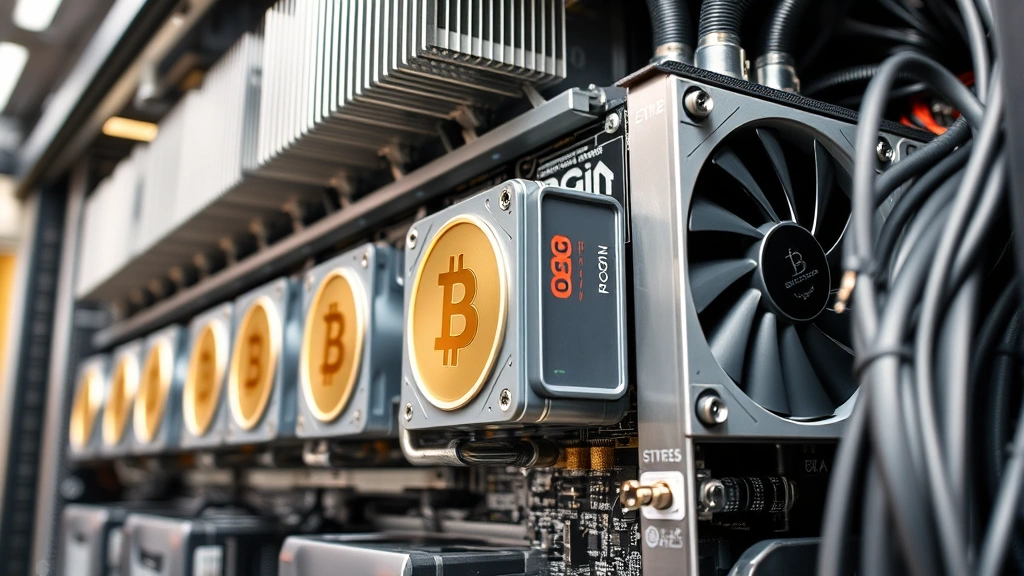
” alt=”Bitcoin mining facility with rows of ASIC miners operating under industrial lighting with cooling systems visible”/>
Several trends suggest long-term mining viability:
- Hardware Efficiency Improvements: ASIC manufacturers continue developing more efficient chips, improving joules-per-terahash metrics and reducing electricity costs.
- Renewable Energy Integration: Bitcoin miners increasingly utilize renewable energy sources, reducing environmental concerns and potentially securing cheaper power rates.
- Geographic Expansion: Mining operations expand into regions with abundant cheap electricity, from Central Asia to Latin America.
- Enterprise Adoption: Large institutions and corporations increasingly invest in mining, bringing operational expertise and capital efficiency.
- Transaction Fee Growth: As Bitcoin adoption increases, transaction fees may grow substantially, supplementing block reward revenue.
However, challenges persist. Climate concerns may drive regulatory restrictions. Competition intensifies as more entities enter mining. Bitcoin’s price remains unpredictable. Miners must continuously adapt, investing in newest hardware and optimizing operations to maintain profitability.
FintechZoom’s long-term mining analyses suggest that while individual miner profitability faces pressures, large-scale professional operations with access to cheap electricity and efficient hardware will likely remain profitable. Hobbyist miners and small operations face increasingly difficult economics.
When setting investment goals for mining ventures, establish realistic timelines and return expectations. Most mining investments require 2-4 year horizons to achieve meaningful ROI. Shorter timelines may not justify capital expenditure and operational complexity.
Consider diversifying your investment portfolio rather than concentrating entirely in mining. Mining provides operational leverage to Bitcoin’s price but introduces equipment risk and operational complexity that direct Bitcoin ownership avoids.
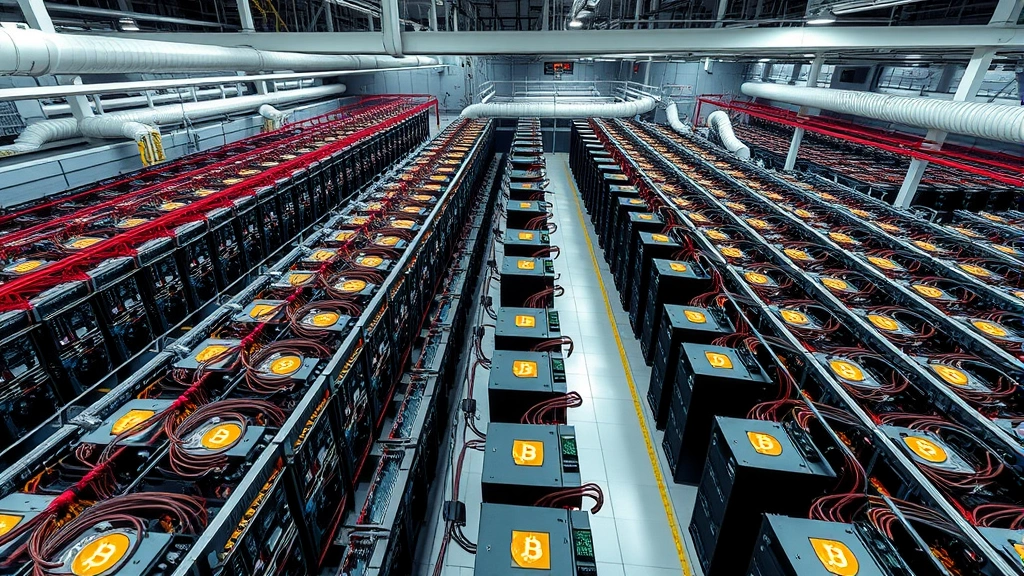
” alt=”Close-up of modern ASIC mining hardware with circuit boards, heat sinks, and cooling fans in a professional mining facility”/>
FintechZoom and similar platforms provide essential tools for mining decision-making. Use their calculators conservatively, monitor difficulty and price trends continuously, and maintain financial flexibility to adapt operations as market conditions evolve. Mining profitability remains achievable but requires careful planning, sufficient capital, access to cheap electricity, and realistic expectations about returns and risks.
FAQ
What is the current average Bitcoin mining profit per day?
Bitcoin mining daily profits vary dramatically based on hardware, electricity costs, and Bitcoin’s price. As of 2024, a modern Antminer S19 Pro in a region with $0.05/kWh electricity generates approximately $10-$15 daily profit before depreciation, while the same hardware in high-cost regions may lose money. FintechZoom calculators provide personalized estimates based on your specific parameters.
Is Bitcoin mining still profitable in 2024?
Yes, Bitcoin mining remains profitable for operations with access to cheap electricity and modern efficient hardware. However, profitability margins are narrower than in previous years due to increased difficulty and competition. Small-scale or hobbyist mining in regions with expensive electricity is generally unprofitable. Professional large-scale operations with optimized economics continue generating substantial returns.
How much does Bitcoin mining equipment cost?
Modern ASIC miners cost $5,000-$15,000 per unit. A small-scale mining operation (10-20 miners) requires $50,000-$300,000 in hardware alone. Professional large-scale facilities with hundreds of miners require millions in equipment investment plus substantial facility infrastructure costs. Budget should also include cooling systems, power supplies, networking equipment, and facility modifications.
What electricity rate makes mining profitable?
Mining profitability improves significantly below $0.06/kWh. At $0.04/kWh or less, modern hardware typically generates positive returns. At $0.08/kWh or higher, profitability becomes marginal or negative depending on Bitcoin’s price. FintechZoom analyses emphasize that electricity costs dominate profitability calculations, making geographic location critical for mining success.
How does Bitcoin’s price affect mining profitability?
Bitcoin’s price directly impacts mining revenue. Higher prices increase profits proportionally. A $5,000 price increase can double mining profitability for existing operations. Conversely, price declines reduce or eliminate profits. This price sensitivity means miners must understand Bitcoin’s long-term value proposition and maintain sufficient financial reserves to weather price downturns.
What is Bitcoin network difficulty and why does it matter?
Network difficulty measures the computational challenge required to mine Bitcoin blocks. It adjusts automatically every two weeks to maintain consistent block discovery rates. As more miners join the network, difficulty increases, requiring more computational power to earn block rewards. Difficulty increases directly reduce individual miner profitability unless total mining hash rate grows proportionally.
Should I join a mining pool or mine solo?
Most individual miners join pools, which coordinate efforts among participants and distribute rewards proportionally. Pools reduce variance in earnings, providing more consistent daily income. Pool fees typically range 1-4%. Solo mining offers higher rewards per block but with extreme variance—you might wait months between block discoveries. For most miners, pools provide better cash flow predictability despite slightly lower long-term returns.
What are the tax implications of Bitcoin mining?
Bitcoin mining generates taxable income at fair market value when coins are received. Ongoing mining expenses may be deductible. Regulatory treatment varies by jurisdiction. Consult tax professionals familiar with cryptocurrency mining to ensure proper compliance. FintechZoom and similar platforms often provide general tax guidance, but professional tax advice is essential for mining operations.
How do I evaluate mining operation ROI?
Calculate ROI by dividing total profit over the investment period by initial capital investment. Most mining operations require 2-4 years to achieve positive ROI. Account for hardware depreciation, difficulty increases, and price volatility in calculations. FintechZoom’s advanced tools help model various scenarios, but conservative assumptions provide more realistic expectations than optimistic projections.
What factors should I consider before starting a mining operation?
Evaluate electricity availability and rates, facility space and infrastructure requirements, local regulations and tax implications, startup capital availability, operational expertise, and risk tolerance. Conduct detailed financial modeling using FintechZoom calculators. Ensure adequate reserves for unexpected costs. Monitor difficulty and price trends continuously. Maintain flexibility to adapt or exit operations if conditions deteriorate.


