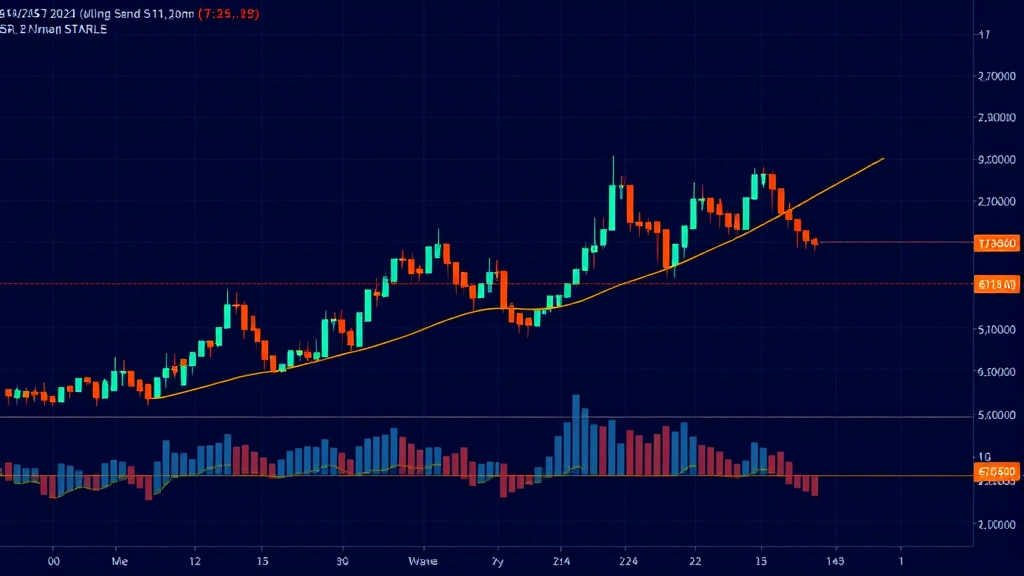
Bitcoin Technical Analysis Report: May 2025 Market Dynamics
May 2025 represents a critical juncture in Bitcoin’s market cycle, with price action reflecting the complex interplay between macroeconomic pressures, institutional adoption, and on-chain dynamics. As we navigate this period, technical analysis provides essential frameworks for understanding price movements, support and resistance levels, and potential trend reversals. This comprehensive report examines the key technical indicators, price patterns, and market structure that define Bitcoin’s May 2025 performance.
The cryptocurrency market in May 2025 continues to demonstrate maturation through increased correlation with traditional financial markets and heightened regulatory scrutiny. Bitcoin’s technical setup during this month offers valuable insights for traders and investors evaluating their positions. Understanding whether to sell or hold Bitcoin during this cycle requires careful examination of technical signals and market structure.

Price Action and Key Support Levels
Bitcoin’s price action in May 2025 reflects the ongoing tension between bulls attempting to establish higher lows and bears defending key resistance zones. The primary support level established during this period sits approximately 3-5% below the month’s opening price, representing the confluence of multiple technical factors including previous month’s closing range and longer-term moving average support.
The psychological significance of round-number support levels cannot be overlooked in May 2025’s trading dynamics. Bitcoin traders closely monitor support at major psychological barriers, where institutional accumulation often occurs. These levels serve as critical decision points for retail and institutional participants alike, influencing whether momentum continues or reverses.
Secondary support levels form through the identification of previous swing lows and gaps left unfilled during rapid price movements. Technical analysts examining May 2025 data should pay particular attention to the lower Bollinger Band, which dynamically adjusts based on volatility. When price approaches these support zones, volume analysis becomes crucial for determining whether selling pressure is exhausting or intensifying.
Understanding Bitcoin price drop mechanics during May 2025 requires analyzing how support levels hold or break. Failed support tests often precede capitulation moves, while repeated touches of support without breakdown can signal accumulation phases typical of pre-bull market consolidation.
Moving Averages and Trend Analysis
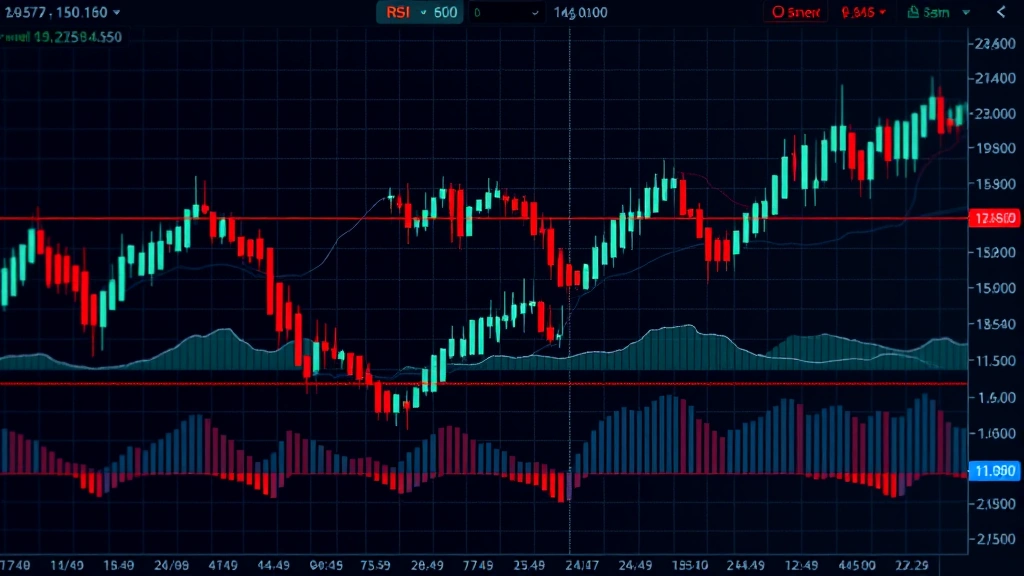
The 50-day and 200-day moving averages represent fundamental trend-following tools for May 2025 Bitcoin analysis. When Bitcoin trades above both moving averages, the primary trend remains upward, though corrections within an uptrend still present trading opportunities. The relationship between price and these averages provides immediate visual confirmation of trend strength.
May 2025’s moving average configuration reveals important information about intermediate-term momentum. When the 50-day moving average trades above the 200-day moving average (the bullish cross known as the “golden cross”), it signals potential sustained uptrend initiation. Conversely, bearish crosses indicate potential trend reversals requiring careful position management.
The slope of moving averages matters significantly in technical analysis. A steep upward slope indicates strong bullish momentum, while a flattening slope suggests momentum exhaustion. In May 2025, analyzing the angle of these moving averages helps distinguish between early-stage trends and mature trends vulnerable to correction.
Exponential Moving Averages (EMAs) respond more quickly to recent price action than Simple Moving Averages (SMAs), making them valuable for identifying trend changes early. The 12-EMA and 26-EMA combination, popular in MACD indicators, helps traders identify momentum shifts before traditional moving average crosses occur.
Momentum Indicators and Oscillators
The Relative Strength Index (RSI) in May 2025 provides crucial overbought and oversold signals for Bitcoin traders. RSI readings above 70 traditionally indicate overbought conditions where pullbacks become likely, while readings below 30 suggest oversold conditions where bounces often occur. However, extreme RSI readings during strong trends can persist longer than novice traders expect.
MACD (Moving Average Convergence Divergence) analysis for May 2025 Bitcoin reveals momentum direction and potential reversal points. When MACD lines cross above the signal line, bullish momentum accelerates, while crosses below signal weakening momentum. Divergences between MACD and price action often precede significant reversals.
The Stochastic Oscillator adds another layer to May 2025 technical analysis by measuring momentum relative to price range over a specific period. The %K and %D lines crossing in oversold territory often signal bounce opportunities, while crosses in overbought territory warn of potential pullbacks.
Bollinger Bands expand during volatile periods and contract during quiet markets, providing dynamic support and resistance levels. In May 2025, Bitcoin price touching the upper Bollinger Band suggests potential pullbacks, while lower band touches indicate support testing or capitulation selling.
Volume Rate of Change (VROC) and On-Balance Volume (OBV) indicators help confirm whether price movements carry conviction. Increasing volume during uptrends confirms bullish momentum, while decreasing volume during uptrends warns of potential trend exhaustion.
Volume Profile and Market Structure
Volume profile analysis reveals the price levels where the most trading activity occurred during May 2025, identifying high-volume nodes (HVN) and low-volume nodes (LVN). Price tends to move away from HVNs and through LVNs more efficiently, making this analysis valuable for identifying support, resistance, and potential breakout targets.
Point of Control (POC) represents the price level with the highest volume during May 2025’s trading period. This level often acts as powerful support or resistance, with price frequently gravitating toward POC after significant moves away from it. Understanding POC dynamics helps explain seemingly random price reversals.
Market structure in May 2025 can be analyzed through identifying higher highs and higher lows (uptrend) or lower highs and lower lows (downtrend). Breaking these structures signals potential trend changes. For example, breaking below the lower low of a recent range might trigger stop-loss orders and cascade into further selling.
The relationship between Bitcoin’s price structure and market capitalization changes reflects the broader market’s perception of Bitcoin’s value. Large market cap changes without proportional price moves suggest institutional accumulation or distribution.
Resistance Zones and Target Analysis
Primary resistance in May 2025 Bitcoin analysis typically forms around previous month’s highs and significant round numbers. These zones represent areas where sellers previously stepped in, and often repeat their selling activity when price approaches again.
Fibonacci retracement levels provide mathematically-derived resistance and support zones based on previous price swings. Common retracement levels (38.2%, 50%, 61.8%, 78.6%) often coincide with significant price reversals, making them valuable for identifying potential target areas.
Extension levels above recent highs help traders establish profit-taking targets when trading breakouts. The 127.2% and 161.8% Fibonacci extensions often correspond with natural resistance zones where profit-taking intensifies.
Horizontal resistance zones from previous price peaks remain relevant until convincingly broken. In May 2025, multiple tests of resistance without breakthrough often precede either breakout or breakdown, depending on which side wins the battle.
On-Chain Metrics Integration
Integrating on-chain data with technical analysis provides comprehensive market perspective for May 2025. The Miner Revenue to Fees Ratio indicates whether miners primarily profit from block rewards or transaction fees, with high ratios suggesting potential selling pressure as miners liquidate rewards.
Whale wallet movements tracked through blockchain explorers like Blockchain Explorer reveal whether large holders accumulate or distribute. Large transfers to exchange wallets during price rallies often precede selloffs, while transfers to cold storage suggest long-term holding conviction.
The Number of Active Addresses metric indicates network participation levels. Increasing active addresses during price rallies suggest growing adoption, while declining addresses during rallies warn of momentum divergence.
Funding rates on perpetual futures exchanges provide insights into leverage positioning. Extreme funding rates (excessively high or low) often precede reversals as overleveraged positions get liquidated. Monitoring funding rates helps identify when price moves become unsustainable.
Long-term holders versus short-term holders analysis reveals whether smart money (long-term holders) accumulates or distributes. When long-term holders increase their Bitcoin positions during price rallies, it suggests conviction in higher prices, while distributions warn of potential weakness.
Risk Management Strategies
Implementing proper short Bitcoin strategies or long positions requires disciplined risk management. Stop-loss placement should occur just below recent support levels or at technical levels where the trade thesis breaks. Typical stop-loss percentages range from 2-5% depending on strategy timeframe.
Position sizing becomes critical when trading volatile assets like Bitcoin in May 2025. The Kelly Criterion helps optimize position sizing based on historical win rates and risk-reward ratios. Conservative traders typically risk only 1-2% of total portfolio per trade, while aggressive traders might risk up to 5%.
Take-profit strategies should align with identified resistance zones and technical targets. Scaling out of positions (selling portions at successive resistance levels) locks in profits while maintaining exposure to larger moves. Trailing stops protect profits during strong trends while allowing continued upside participation.
Considering withdrawal to bank account timing based on technical analysis helps optimize exit prices. Technical peaks often coincide with optimal withdrawal opportunities when Bitcoin reaches resistance zones.
Diversification across multiple cryptocurrencies and asset classes reduces portfolio volatility. While Bitcoin remains the largest cryptocurrency by market cap, technical analysis of other assets might reveal better risk-reward opportunities during May 2025.
Correlation analysis between Bitcoin and traditional assets (stocks, bonds, commodities) helps identify systemic risk periods where Bitcoin no longer provides diversification benefits. May 2025’s macroeconomic environment might show increased correlations during market stress.
FAQ
What support levels should Bitcoin traders monitor in May 2025?
Key support levels include the 50-day and 200-day moving averages, previous month’s closing range, and Fibonacci retracement levels (38.2%, 50%, 61.8%) from recent highs. Volume profile analysis also identifies high-volume nodes that often act as support.
How do momentum indicators help with Bitcoin trading in May 2025?
RSI readings above 70 signal overbought conditions, while readings below 30 indicate oversold conditions. MACD crossovers reveal momentum changes, and Stochastic Oscillators identify potential reversal points when crossing in extreme zones.
What role does volume play in Bitcoin technical analysis?
Volume confirms the conviction behind price moves. Increasing volume during uptrends validates bullish momentum, while decreasing volume warns of potential exhaustion. Volume profile analysis identifies where most trading occurred, revealing support and resistance zones.
Should I use multiple timeframes for Bitcoin technical analysis?
Yes, analyzing multiple timeframes provides comprehensive perspective. Daily charts show intermediate trends, 4-hour charts reveal short-term momentum, and weekly charts establish longer-term context. Alignments across timeframes increase trade probability.
How can on-chain metrics improve Bitcoin technical analysis?
On-chain data reveals institutional accumulation, whale movements, and network participation levels. Combining on-chain signals with technical indicators creates more robust trading systems. Divergences between price action and on-chain metrics often precede reversals.
What risk management approach suits Bitcoin trading in May 2025?
Position sizing should risk only 1-2% per trade for conservative traders. Stop-losses should place just below support levels where the trade thesis breaks. Scaling out at resistance zones locks profits while maintaining upside exposure.


