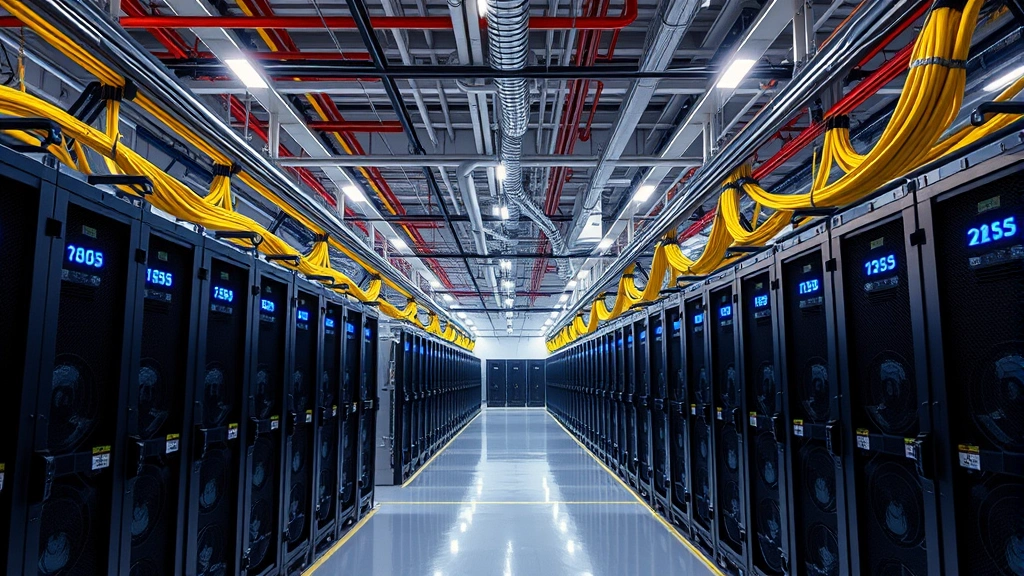
How to Start an EFT Bitcoin Farm: Pro Tips for Crypto Mining Success
Bitcoin farming has evolved significantly since the cryptocurrency’s inception, and today’s miners face a complex landscape of technical requirements, financial considerations, and regulatory challenges. Whether you’re exploring how to invest in cryptocurrency through mining operations or seeking alternative revenue streams in the digital asset space, understanding the fundamentals of Bitcoin farming is essential. An EFT Bitcoin farm—whether referring to efficient farming techniques or specialized equipment operations—represents a sophisticated approach to crypto mining that demands careful planning, substantial capital investment, and ongoing operational expertise.
The cryptocurrency mining industry has matured considerably, moving away from the days when hobbyists could profitably mine Bitcoin using personal computers. Today’s successful Bitcoin farming operations require industrial-scale equipment, access to cheap electricity, strategic location selection, and comprehensive knowledge of mining economics. This guide provides professional insights into launching and maintaining a profitable Bitcoin farm, addressing everything from hardware selection to risk management and regulatory compliance.
Understanding Bitcoin Mining Fundamentals
Bitcoin mining is the process by which transactions are verified and added to the blockchain while simultaneously creating new Bitcoin as a reward. Miners compete to solve complex mathematical puzzles, with the first to solve the puzzle earning the right to add the next block of transactions to the chain and receiving newly minted Bitcoin plus transaction fees. This process, known as proof-of-work, secures the entire Bitcoin network and maintains its decentralized nature.
The difficulty of these mathematical puzzles adjusts approximately every two weeks based on the total computing power of the network. As more miners join the network, difficulty increases, requiring more computational power to solve puzzles in the same timeframe. This self-adjusting mechanism ensures that blocks are added to the blockchain at a consistent rate regardless of network hash rate fluctuations. Understanding this dynamic is crucial for anyone planning a Bitcoin farming operation, as it directly impacts your equipment’s ongoing profitability.
Mining rewards consist of two components: block rewards (newly created Bitcoin) and transaction fees. Currently, the block reward is 6.25 Bitcoin per block, though this amount halves approximately every four years in an event called the halving. The next halving will significantly impact mining profitability, making it essential to factor this into your long-term planning. Before investing heavily in mining infrastructure, carefully assess your risk tolerance and understand how network changes could affect your operation’s viability.
Hardware Requirements and Equipment Selection
Successful Bitcoin farming requires specialized hardware known as ASICs (Application-Specific Integrated Circuits). Unlike general-purpose computers, ASICs are designed exclusively for Bitcoin mining, offering dramatically superior efficiency and hash power compared to GPUs or CPUs. Choosing the right ASIC miner is one of the most critical decisions you’ll make, as equipment costs typically represent 40-60% of your total startup investment.
Leading ASIC manufacturers include Bitmain (Antminer series), MicroBT (Whatsminer series), and Canaan (Avalon series). Current top-tier models like the Antminer S21 Pro deliver approximately 234 terahashes per second (TH/s) with power consumption around 3,550 watts. When evaluating equipment, focus on hash rate (computational power), power efficiency (watts per terahash), and durability. The most expensive miner isn’t always the best choice; instead, calculate the hash rate per dollar spent and power consumption per unit of hash rate.
Beyond individual miners, you’ll need supporting infrastructure: power supplies (redundant units recommended), cooling systems, monitoring equipment, and network connectivity. Industrial-grade cooling solutions are critical, as ASIC miners generate substantial heat. Options include immersion cooling, liquid cooling, or air cooling with specialized ventilation. Your choice depends on your facility’s design, local climate, and budget constraints. Additionally, invest in scalable infrastructure that allows future expansion without complete redesign.
Location and Electricity Cost Optimization
Electricity represents 70-80% of operating costs for most Bitcoin mining operations. This single factor often determines whether your farm succeeds or fails. Miners globally compete for access to the cheapest power sources, making location selection critically important. Ideal locations feature electricity costs below $0.04-0.05 per kilowatt-hour, though some operations in hydroelectric-rich regions operate at $0.01-0.03 per kWh.
Key regions with competitive electricity costs include Iceland (geothermal power), Paraguay (hydroelectric), El Salvador (geothermal and hydroelectric), and parts of North America with abundant renewable energy. However, geographic location also involves regulatory stability, infrastructure reliability, climate conditions, and tax implications. A location with extremely cheap electricity but unstable governance or unreliable power infrastructure may prove more costly than higher-cost alternatives in stable regions.
When evaluating potential locations, analyze not just current electricity rates but also historical pricing trends and future projections. Some regions offer time-of-use pricing, allowing miners to operate during off-peak hours when rates are lowest. Additionally, consider opportunities to pair mining operations with renewable energy projects, potentially qualifying for subsidies or favorable power contracts. Facilities near hydroelectric dams, geothermal plants, or solar farms often negotiate advantageous rates. Before committing to a location, secure written power agreements specifying rates, reliability guarantees, and contract duration.
Setting Up Your Mining Farm
Establishing a functional Bitcoin farm requires meticulous planning across multiple dimensions. Begin by securing an appropriate facility—warehouse space with robust electrical infrastructure, adequate cooling capacity, and sufficient square footage for your mining equipment. Most facilities require 3-5 kilowatts per 100 square feet of mining equipment, depending on your cooling solution and miner density.
Power distribution presents technical challenges requiring professional electricians. You’ll need transformers, switchgear, distribution panels, and uninterruptible power supplies (UPS) to protect against outages. Many facilities implement redundant power pathways, ensuring operations continue if primary circuits fail. Proper grounding and surge protection are essential, as power fluctuations can damage expensive ASIC equipment. Budget 15-25% of hardware costs for electrical infrastructure and installation.
Network connectivity is equally critical. Mining operations require stable, low-latency connections to mining pools. Most farms implement multiple internet connections from different providers, ensuring continued operation if one connection fails. Consider bandwidth requirements: a 100-miner facility might need 10-50 Mbps upstream bandwidth, though actual requirements depend on your mining pool and configuration.
Cooling system implementation depends on your climate and facility design. Air cooling works in cold climates but becomes expensive in warm regions. Immersion cooling—submerging miners in non-conductive liquid—offers superior efficiency but requires more sophisticated infrastructure and maintenance. Liquid cooling systems provide excellent efficiency but add complexity and cost. Choose based on your specific situation and long-term scalability plans.
Calculating Profitability and ROI
Understanding mining economics is essential before investing capital. The fundamental profitability equation considers hardware costs, electricity costs, mining difficulty, Bitcoin price, and mining pool fees. Professional miners use sophisticated calculators to model profitability under various scenarios.
Here’s a simplified example: A single Antminer S21 Pro costs approximately $3,500, consumes 3,550 watts, and produces roughly 0.00015 Bitcoin daily at current difficulty levels (assuming $0.05/kWh electricity). At $40,000 Bitcoin price, daily revenue would be approximately $6, with daily electricity costs around $4.26, yielding roughly $1.74 daily profit before pool fees and maintenance. This miner would require approximately 2,000 days (5.5 years) to achieve ROI—clearly unprofitable at current rates.
However, larger operations benefit from economies of scale. A 1,000-miner facility might negotiate $0.03/kWh electricity rates and achieve lower maintenance costs per unit. This same facility might achieve positive ROI in 2-3 years, particularly if Bitcoin prices increase. Use investment return calculations to model scenarios under different Bitcoin prices, difficulty assumptions, and electricity costs.
Several online calculators help estimate profitability, but build your own models incorporating your specific circumstances. CoinDesk’s mining profitability tools and blockchain explorer data provide real-time difficulty and reward information. Factor in all costs: equipment, electricity, cooling, labor, facility rent, maintenance, and pool fees (typically 1-3%). Conservative estimates assume Bitcoin price remains flat and difficulty increases 10-15% annually, though actual results may vary significantly.
Risk Management Strategies
Bitcoin mining involves substantial risks requiring comprehensive management strategies. Equipment becomes obsolete as newer models emerge with superior efficiency. A miner profitable today might become unprofitable in 18-24 months as network difficulty increases and more efficient equipment enters the market. Plan equipment replacement cycles and budget accordingly.
Price volatility significantly impacts profitability. Bitcoin’s price fluctuations mean your daily revenue can swing dramatically. Some miners hedge by converting Bitcoin to stablecoins immediately, while others hold for long-term appreciation. Establish a disciplined strategy before beginning operations, and protect investments during market volatility. Consider selling a portion of mined Bitcoin regularly to cover operational costs and reduce portfolio risk.
Regulatory risk presents another significant concern. Governments worldwide are developing cryptocurrency regulations, and some jurisdictions have restricted or banned mining operations. Research your region’s regulatory environment thoroughly, maintain compliance documentation, and establish relationships with local authorities. Join industry associations advocating for reasonable mining regulations.
Operational risks include equipment failure, power outages, cooling system malfunctions, and theft. Implement redundancy across critical systems, maintain spare equipment, and secure your facility against theft. Insurance for mining equipment and business interruption coverage protects against catastrophic losses. Regular maintenance prevents equipment failure—establish preventive maintenance schedules and monitor equipment health continuously.
Regulatory Compliance and Legal Considerations
Bitcoin mining’s regulatory landscape varies dramatically by jurisdiction. Some countries actively support mining, while others restrict or prohibit it entirely. Before establishing a mining operation, thoroughly research local regulations regarding cryptocurrency activities, energy usage, environmental impact, and business licensing.
Tax obligations typically require reporting mining income at fair market value when received. Many jurisdictions treat mined Bitcoin as ordinary income, taxable at income tax rates. Some countries also impose capital gains taxes when you eventually sell or trade mined Bitcoin. Maintain meticulous records of mining activity, equipment costs, electricity expenses, and all Bitcoin transactions. Consult with accountants experienced in cryptocurrency taxation to ensure compliance and optimize your tax position.
Environmental regulations increasingly affect mining operations. Some jurisdictions mandate carbon offset programs or require demonstrating sustainable energy usage. The Bitcoin industry has made significant progress toward renewable energy adoption, with major mining operations increasingly powered by hydroelectric, geothermal, or solar sources. Positioning your operation as environmentally responsible creates regulatory goodwill and appeals to ESG-conscious investors.
Electrical code compliance is critical. Your facility must meet all building codes, electrical codes, and safety standards. Professional electricians should design your power infrastructure, and local authorities should inspect installations before operation. Improper electrical systems create fire hazards and equipment damage risks.
Obtain appropriate business licenses and permits for operating a mining facility. Some jurisdictions require specific mining operation permits, while others treat mining as standard commercial activity. Engage with local government early in your planning process to understand all requirements. Maintaining positive relationships with regulators protects your long-term operational continuity.

FAQ
What is an EFT Bitcoin farm?
An EFT Bitcoin farm refers to efficient, professional-scale Bitcoin mining operations utilizing specialized equipment and optimized processes. While “EFT” could mean various things in context, it typically emphasizes efficiency, scalability, and technical sophistication compared to casual mining approaches. Professional Bitcoin farms employ industrial-grade ASICs, optimize electricity costs, implement advanced cooling systems, and apply sophisticated operational management.
How much capital do I need to start a Bitcoin farm?
Startup costs vary dramatically based on scale. A small 10-miner facility might require $40,000-60,000 in equipment plus facility and infrastructure costs. Mid-scale operations (100-500 miners) typically require $500,000-2,000,000, while industrial-scale farms (1,000+ miners) demand $2,000,000-10,000,000+. Factor in facility acquisition or leasing, electrical infrastructure, cooling systems, and working capital for operating expenses before achieving positive cash flow.
How long does it take to achieve ROI on a Bitcoin farm?
ROI timelines depend on equipment costs, electricity rates, Bitcoin price, and network difficulty. Under favorable conditions (cheap electricity, efficient equipment, rising Bitcoin prices), some operations achieve ROI in 18-30 months. However, unfavorable conditions might extend ROI to 4-5+ years or result in permanent losses. Conservative planning assumes 2-3 years minimum for well-optimized operations, though results vary significantly based on circumstances.
What’s the best location for Bitcoin mining?
Ideal locations feature electricity costs below $0.04-0.05/kWh, stable governance, reliable infrastructure, and favorable regulatory environments. Top regions include Iceland (geothermal), Paraguay (hydroelectric), El Salvador, and parts of North America with abundant renewable energy. However, “best” depends on your specific circumstances—a location with cheap electricity but unstable governance might prove riskier than higher-cost alternatives in stable regions.
Can I mine Bitcoin profitably with GPUs or CPUs?
Bitcoin mining with GPUs or CPUs is essentially unprofitable today. ASICs are 1,000,000+ times more efficient at Bitcoin mining than general-purpose processors. While GPUs remain viable for mining other cryptocurrencies, Bitcoin mining requires ASIC equipment. Anyone suggesting otherwise is either misinformed or attempting to manipulate you into purchasing unsuitable equipment.
What happens during Bitcoin halving events?
Approximately every four years, Bitcoin’s block reward halves (next halving reduces rewards from 6.25 to 3.125 Bitcoin per block). This directly reduces mining rewards, immediately impacting profitability. Many inefficient miners become unprofitable during halvings, exiting the market and reducing network difficulty for remaining miners. Plan your operations with halving events in mind, ensuring your setup remains profitable at reduced reward levels.
Should I join a mining pool or solo mine?
Solo mining means competing alone against the entire network for block rewards—extremely unlikely to generate consistent income for individual operations. Mining pools combine hash power from multiple miners, sharing block rewards proportionally. Pools charge 1-3% fees but provide consistent, predictable income. Nearly all professional operations use mining pools for this reason.
How do I secure my mining operation against theft and attacks?
Implement comprehensive security: secure facilities with access controls, surveillance systems, and security personnel. Protect network infrastructure with firewalls, DDoS protection, and monitoring. Secure mined Bitcoin using hardware wallets and offline storage rather than keeping coins on internet-connected systems. Maintain insurance coverage for equipment and business interruption. Regular security audits identify vulnerabilities before exploitation.
Starting a profitable Bitcoin farm requires substantial capital investment, technical expertise, and careful planning. Success depends on optimizing electricity costs, selecting efficient equipment, choosing stable jurisdictions, and maintaining disciplined operations. While Bitcoin mining can be profitable under favorable conditions, it’s far from guaranteed. Thoroughly research your specific circumstances, model profitability conservatively, and understand the risks before committing significant capital. The cryptocurrency mining industry continues evolving rapidly—staying informed about technological developments, regulatory changes, and market conditions is essential for long-term success. Consider consulting with experienced mining operators and industry experts before launching your operation.


