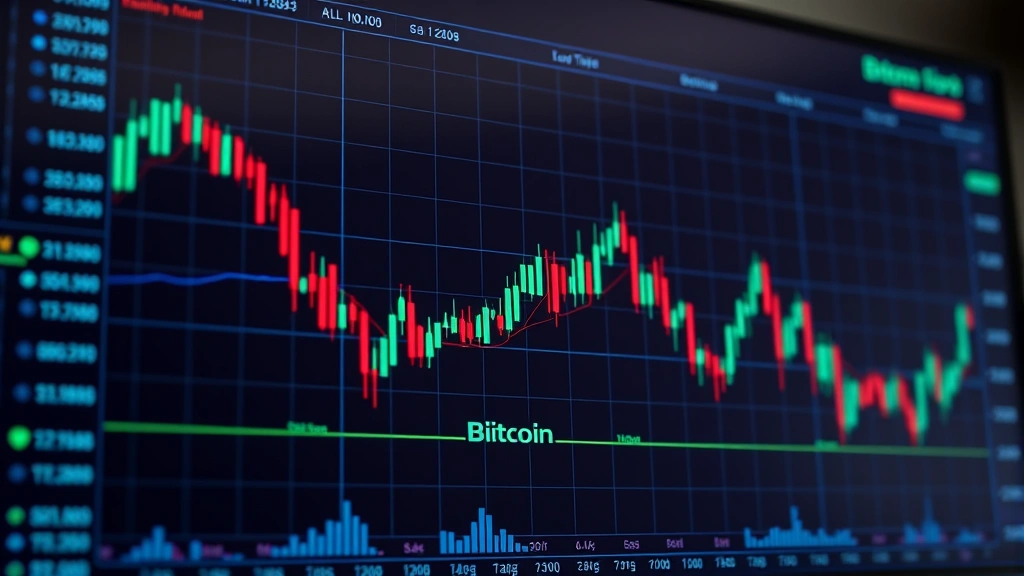
Bitcoin Price Today: FintechZoom Analysis and Market Insights
Bitcoin continues to dominate cryptocurrency markets as the world’s leading digital asset, with real-time price tracking becoming essential for investors and traders worldwide. FintechZoom and similar financial platforms provide comprehensive analysis of Bitcoin’s daily movements, helping market participants make informed decisions. Understanding current price dynamics, technical indicators, and market sentiment requires access to reliable data sources and expert commentary that decode the complex factors influencing Bitcoin’s valuation.
The cryptocurrency landscape evolves rapidly, and Bitcoin’s price reflects broader trends in institutional adoption, regulatory developments, macroeconomic conditions, and technological innovations within the blockchain ecosystem. Whether you’re a seasoned trader monitoring intraday volatility or a long-term investor assessing portfolio positioning, staying informed about Bitcoin’s current valuation and the factors driving price action is crucial for successful participation in digital asset markets.
Understanding Bitcoin Price Movements Today
Bitcoin’s price movements represent one of the most closely watched metrics in financial markets, reflecting the collective sentiment of millions of traders and investors across global exchanges. Daily price fluctuations can be significant, with Bitcoin experiencing swings of several percentage points within hours due to breaking news, regulatory announcements, or shifts in macroeconomic conditions. Understanding what drives these movements requires examining both technical factors specific to cryptocurrency markets and broader economic indicators that influence investor risk appetite.
The price you see on platforms like FintechZoom represents an aggregation of trades occurring across hundreds of cryptocurrency exchanges simultaneously. This distributed price discovery mechanism means Bitcoin’s valuation is determined by genuine market forces rather than any single entity, contributing to its credibility as a store of value. However, price variations exist between exchanges due to liquidity differences, geographic factors, and local regulatory environments, making it important to understand which data sources your chosen platform utilizes.
Daily price analysis involves examining opening prices, closing prices, intraday highs and lows, and trading volume to construct a comprehensive picture of market activity. These metrics help investors identify support and resistance levels, recognize emerging trends, and assess whether current price levels represent buying or selling opportunities. Bitcoin’s volatility compared to traditional assets means that even small percentage moves can represent substantial dollar value changes, particularly for large portfolio positions.
How FintechZoom Tracks Bitcoin Valuation
FintechZoom operates as a financial information platform providing real-time and historical data on cryptocurrency prices, market trends, and analysis. The platform aggregates data from multiple exchanges and sources to deliver comprehensive Bitcoin price information alongside contextual analysis from financial experts. Understanding how such platforms function helps investors evaluate data reliability and make sense of the information presented when monitoring Bitcoin’s current valuation.
Real-time price feeds on FintechZoom update continuously throughout market hours, reflecting trades executed across major exchanges like Coinbase, Kraken, Binance, and others. The platform typically displays current price in multiple fiat currencies, allowing international investors to assess Bitcoin’s value relative to their home currencies. Historical price data enables users to examine longer-term trends, calculate returns on investments made at specific past dates, and identify seasonal patterns or cyclical behaviors in Bitcoin’s pricing.
Beyond simple price quotes, comprehensive financial platforms provide technical charting tools, moving averages, relative strength indicators, and other analytical features that help traders identify potential entry and exit points. Educational content explaining market dynamics, expert commentary on price movements, and news aggregation create an ecosystem where investors can develop informed perspectives on Bitcoin’s direction. When evaluating any price tracking platform, consider data accuracy, update frequency, breadth of analytical tools, and quality of accompanying commentary.
FintechZoom’s analysis often contextualizes Bitcoin’s price within broader cryptocurrency market movements, examining how Bitcoin’s market capitalization dominance compares to altcoins and analyzing correlation patterns between Bitcoin and traditional assets. This contextual analysis helps investors understand whether Bitcoin is moving in isolation or as part of broader market trends affecting risk assets generally. Understanding what is cryptocurrency provides foundational knowledge for interpreting such analysis effectively.
Key Factors Influencing Bitcoin Price
Bitcoin’s price responds to numerous factors spanning technology, regulation, macroeconomics, and market psychology. Major price movements typically correlate with significant developments in one or more of these domains. Regulatory announcements from major jurisdictions can trigger substantial price swings as they affect Bitcoin’s legal status and institutional adoption prospects. Positive regulatory clarity often supports price appreciation, while restrictive regulations may create downward pressure.
Macroeconomic conditions significantly influence Bitcoin’s price, particularly investor perception of Bitcoin as a hedge against inflation or currency devaluation. During periods of rising interest rates and strong economic growth, traditional investments like stocks and bonds may attract capital away from speculative assets like Bitcoin. Conversely, when central banks maintain accommodative policies or inflation concerns dominate economic discourse, Bitcoin often attracts increased demand as an alternative store of value. Understanding these relationships requires monitoring how to invest in cryptocurrency within broader portfolio contexts.
Institutional adoption represents another powerful price driver, as major corporations, pension funds, and investment firms allocating capital to Bitcoin increase demand and legitimize the asset class. Bitcoin’s scarcity—limited to 21 million coins—creates structural supply constraints that support price appreciation when demand increases. Halving events, occurring approximately every four years, reduce Bitcoin’s mining reward and have historically preceded substantial price increases as supply growth slows.
Network developments and technological upgrades affecting Bitcoin’s functionality and scalability influence investor sentiment about its long-term viability. Security breaches or vulnerabilities at major exchanges can temporarily depress prices as investors worry about asset safety. Competitive pressures from alternative cryptocurrencies or central bank digital currencies may also influence Bitcoin’s price as investors reassess its unique value proposition.

Technical Analysis and Price Indicators
Technical analysis examines historical price and volume data to identify patterns and potential future price movements. Bitcoin traders extensively employ technical analysis tools including moving averages, which smooth price data to reveal underlying trends by calculating average prices over specific time periods. A 50-day moving average shows medium-term trends, while 200-day moving averages indicate longer-term direction, with prices above these averages generally suggesting uptrends and prices below suggesting downtrends.
The Relative Strength Index (RSI) measures momentum by comparing magnitude of recent gains to recent losses, with values above 70 suggesting overbought conditions where price corrections may occur, and values below 30 suggesting oversold conditions where bounces may develop. Bollinger Bands create upper and lower price boundaries based on standard deviation calculations, helping traders identify volatility extremes and potential reversal points. MACD (Moving Average Convergence Divergence) identifies trend direction and momentum strength by examining relationships between moving averages.
Support and resistance levels represent price points where buying or selling pressure has historically concentrated, causing price reversals or accelerations. Identifying these levels helps traders anticipate where Bitcoin’s price may encounter obstacles or find footing during declines. Volume analysis examines trading activity accompanying price movements, with increasing volume during price advances generally confirming trend strength, while declining volume during price increases may suggest weakening momentum.
Fibonacci retracements help traders identify likely pullback levels during price corrections, based on mathematical ratios derived from the Fibonacci sequence. Head and shoulders patterns, double tops and bottoms, and triangles represent chart patterns that technical analysts interpret as predictive of future price movements. However, it’s important to recognize that technical analysis represents probability assessment rather than certainty, and past price patterns don’t guarantee future results, particularly in cryptocurrency markets characterized by evolving dynamics and novel catalysts.
Market Sentiment and Trading Volume
Market sentiment—the collective psychological state of investors regarding Bitcoin’s direction—significantly influences price movements independent of fundamental factors. When sentiment turns positive, investors demonstrate increased willingness to accumulate Bitcoin, driving demand and prices higher. Conversely, negative sentiment creates selling pressure as investors reduce exposure, often triggering additional selling as stop-loss orders activate and momentum traders follow the trend.
Trading volume provides crucial context for price movements, as high-volume price advances or declines carry greater significance than low-volume moves. A price increase accompanied by increasing volume suggests broad-based buying interest and likely trend continuation, while price advances on declining volume may indicate weakening momentum and vulnerability to reversals. Understanding volume patterns helps distinguish genuine trend developments from false moves that may quickly reverse.
Fear and Greed indices attempt to quantify market sentiment by analyzing social media activity, price momentum, volatility, and other indicators. Extreme readings in either direction often precede contrarian moves, as excessive fear may represent capitulation creating buying opportunities, while excessive greed may indicate complacency preceding corrections. Social media sentiment analysis examines Twitter, Reddit, and other platforms where cryptocurrency communities congregate, providing real-time glimpses into investor psychology.
Market cycles in cryptocurrency often feature periods of euphoria where prices advance rapidly on diminishing skepticism, followed by corrections where pessimism overwhelms and prices decline sharply. Understanding these cycles helps investors maintain emotional discipline and avoid the psychological traps of buying during euphoria and selling during despair. Examining what is risk tolerance becomes essential when navigating these emotionally charged market environments.
Investment Strategies Based on Price Data
Bitcoin price analysis informs multiple investment approaches suited to different investor profiles, time horizons, and risk tolerances. Buy-and-hold investors focus on long-term price appreciation, accumulating Bitcoin over time regardless of short-term fluctuations, often employing dollar-cost averaging to reduce timing risk. This approach suits investors believing in Bitcoin’s long-term value proposition who can tolerate significant interim volatility without emotional distress or forced selling during downturns.
Day traders and swing traders utilize technical analysis and price action patterns to capture shorter-term price movements, entering and exiting positions within days or weeks. These approaches require active monitoring, disciplined execution, and acceptance of transaction costs and taxes on frequent trades. Swing trading attempts to capture intermediate-term moves lasting weeks to months, requiring less intensive monitoring than day trading while still involving regular trading activity.
Momentum strategies involve buying Bitcoin when price advances are accelerating and selling as momentum weakens, attempting to ride trends while limiting losses when reversals occur. Contrarian strategies involve buying when sentiment becomes excessively negative and prices reach extremes, betting on sentiment normalization and subsequent price recovery. Mean-reversion strategies assume Bitcoin prices oscillate around fundamental value levels, with extremes eventually reversing toward averages.
Before implementing any strategy, investors should clearly understand their investment objectives, time horizon, and capital preservation requirements. How to set investment goals provides essential framework for aligning Bitcoin exposure with broader financial objectives. Position sizing becomes critical—allocating only capital you can afford to lose entirely to Bitcoin and cryptocurrency investments, since extreme volatility could otherwise devastate financial security.
Best cryptocurrency portfolio trackers help investors monitor their Bitcoin holdings alongside other investments, calculating returns, tracking tax implications, and assessing overall portfolio performance. These tools prove invaluable for maintaining discipline and objectively evaluating whether current allocations align with intended strategy.
Risk Management in Bitcoin Trading
Bitcoin’s volatility demands rigorous risk management to preserve capital and maintain emotional equilibrium during inevitable downturns. Stop-loss orders automatically sell Bitcoin positions when prices decline to predetermined levels, limiting losses and removing emotional decision-making during stressful market conditions. Setting stop-losses below support levels or at percentages matching your loss tolerance helps prevent catastrophic losses while allowing positions room to fluctuate within normal ranges.
Position sizing represents perhaps the most crucial risk management tool, determining how much capital to allocate to Bitcoin relative to total portfolio value. Conservative investors might limit cryptocurrency exposure to 5% of total assets, while aggressive investors might allocate 20-30%, with individual risk tolerance and financial circumstances dictating appropriate levels. Regardless of allocation percentage, diversification across multiple cryptocurrencies and asset classes protects against concentrated risk in any single investment.
Take-profit orders lock in gains at predetermined price levels, preventing the psychological trap of watching profits evaporate as prices reverse. Trailing stop-loss orders automatically adjust as prices advance, protecting profits while allowing positions to run during extended rallies. Dollar-cost averaging through regular Bitcoin purchases over extended periods reduces impact of price timing errors and helps manage the emotional stress of watching large lump-sum investments immediately decline in value.
Investors should avoid leverage and margin trading until extensively experienced, as borrowed capital amplifies both gains and losses, creating risks of forced liquidation during volatile moves. Secure storage of Bitcoin in hardware wallets or reputable custodians protects against exchange hacking and theft, while maintaining backup recovery phrases ensures access to holdings even if devices fail. Understanding what is a cryptocurrency token helps investors appreciate security and custody considerations specific to digital assets.

Keeping detailed records of all Bitcoin purchases, sales, and holdings supports accurate tax reporting and enables objective performance evaluation. Emotional discipline—avoiding panic selling during crashes and euphoric buying during rallies—represents the most important risk management tool, requiring predetermined rules and strict adherence regardless of market conditions.
FAQ
What does Bitcoin price on FintechZoom represent?
FintechZoom’s Bitcoin price represents an aggregated valuation from multiple cryptocurrency exchanges, updated in real-time to reflect current market conditions. The platform displays Bitcoin’s price in various fiat currencies and provides historical data, charts, and analytical tools to help investors understand price movements and market dynamics.
How frequently does Bitcoin’s price update on FintechZoom?
Bitcoin prices update continuously throughout the day on FintechZoom, reflecting trades executed across major exchanges. Updates typically occur multiple times per minute during active trading hours, ensuring users access near-real-time price information for decision-making.
Why does Bitcoin’s price vary between different exchanges?
Bitcoin’s price varies between exchanges due to differences in liquidity, user bases, geographic locations, and local regulatory environments. Arbitrage traders exploit these price differences, gradually narrowing spreads, but temporary variations persist due to market inefficiencies and trading delays.
Can technical analysis accurately predict Bitcoin’s price movements?
Technical analysis provides probability assessments and identifies potential support and resistance levels, but cannot guarantee future price movements. Bitcoin’s rapidly evolving market structure, novel catalysts, and psychological factors make prediction inherently uncertain, requiring risk management acknowledging analysis limitations.
What’s the best time to buy Bitcoin based on price analysis?
Rather than timing individual purchases perfectly, dollar-cost averaging through regular Bitcoin acquisitions over extended periods typically outperforms attempts to identify optimal entry points. This approach reduces impact of price timing errors and maintains discipline during volatile market conditions.
How much Bitcoin should I allocate in my investment portfolio?
Bitcoin allocation depends on your financial situation, risk tolerance, investment timeline, and overall portfolio objectives. Conservative investors might allocate 5% of assets to cryptocurrency, while aggressive investors might allocate 20-30%, with individual circumstances dictating appropriate exposure levels.
Is Bitcoin price information on FintechZoom reliable for trading decisions?
FintechZoom provides reliable price data aggregated from reputable sources, suitable for informed decision-making. However, combining price information with fundamental analysis, risk assessment, and disciplined strategy implementation produces better outcomes than price data alone.


