Bitcoin Mining Time: Beginner’s Breakdown
Bitcoin mining is one of the most misunderstood aspects of cryptocurrency. Many newcomers ask: “How long does it take to mine a bitcoin?” The answer isn’t straightforward because it depends on numerous variables including your hardware, electricity costs, network difficulty, and mining pool participation. Understanding these factors is essential before you invest time and resources into mining operations.
In this comprehensive guide, we’ll break down the mechanics of bitcoin mining, explain the timeline for acquiring a complete bitcoin, and help you determine whether mining is a viable income strategy in today’s competitive landscape. Whether you’re considering solo mining or joining a mining pool, this guide will equip you with the knowledge needed to make informed decisions about your mining journey.
What Is Bitcoin Mining and How Does It Work
Bitcoin mining is the process by which new bitcoins are created and transactions are validated on the blockchain. Miners use specialized computers to solve complex mathematical puzzles. When a miner successfully solves a puzzle, they add a new block to the blockchain and receive a reward in newly minted bitcoins plus transaction fees.
The mining process involves several key steps. First, pending transactions are collected into a memory pool. Miners then select these transactions and bundle them into a candidate block. To validate this block, miners must solve a cryptographic puzzle known as a proof-of-work problem. This puzzle requires computational effort to solve but is easy for others to verify.
The puzzle difficulty adjusts automatically every 2,016 blocks (approximately every two weeks) to maintain an average block time of 10 minutes. This adjustment is crucial because it ensures the network produces blocks at a consistent rate regardless of total mining power. As more miners join the network, difficulty increases; as miners leave, difficulty decreases.
Currently, the block reward is 6.25 BTC per block, though this halves approximately every four years in an event called the Bitcoin halving. The most recent halving occurred in April 2024, reducing rewards from 12.5 BTC to 6.25 BTC. Understanding these mechanics is essential for calculating how long it takes to mine a bitcoin.
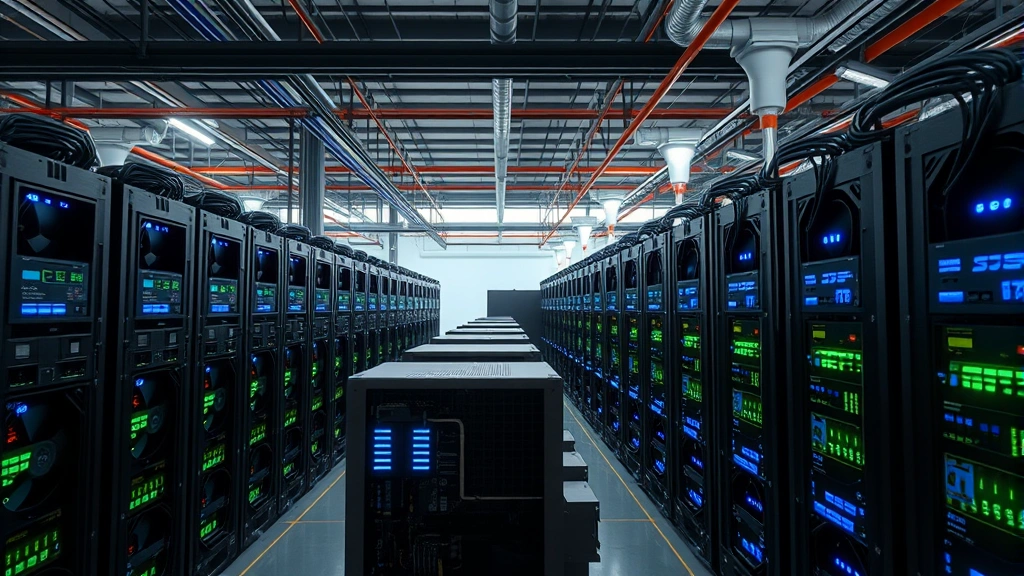
Network Difficulty and Mining Time
Network difficulty is the primary factor determining mining time. It represents how hard it is to find a valid hash that meets the network’s criteria. Higher difficulty means more computational work is required, translating directly to longer mining times.
As of 2024, Bitcoin’s network difficulty sits at historically high levels, exceeding 84 trillion. This enormous number reflects the massive computational power dedicated to Bitcoin mining globally. To put this in perspective, in the early days of Bitcoin when difficulty was near 1, a standard computer could mine a block. Today, you’d need specialized ASIC (Application-Specific Integrated Circuit) miners working for years to accomplish the same feat.
The relationship between difficulty and mining time is inversely proportional to your hash rate. If you operate mining hardware with 100 terahashes per second (TH/s) on a network with current difficulty, your expected time to find a block solo would be measured in centuries. This mathematical reality is why solo mining has become impractical for individual miners.
To understand this better, consider that the entire Bitcoin network currently processes approximately 500 exahashes per second (EH/s). An individual ASIC miner like the Antminer S19 Pro produces roughly 110 TH/s. Your share of network hash rate would be incredibly small, making the probability of finding a block before the next difficulty adjustment virtually zero.
Hardware Requirements for Mining
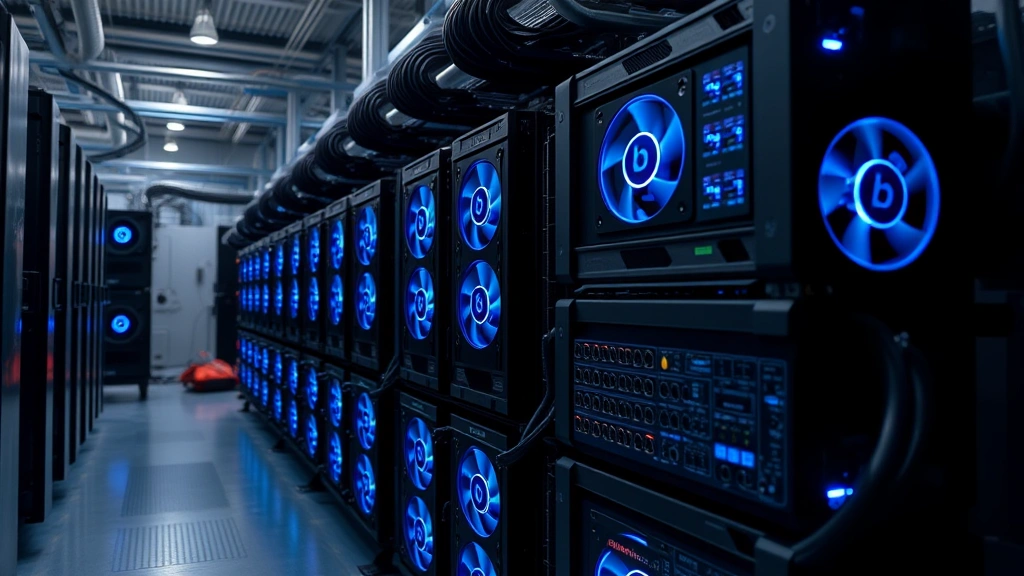
Modern Bitcoin mining requires specialized hardware called ASICs. These chips are designed exclusively for Bitcoin mining and vastly outperform general-purpose computers like GPUs or CPUs.
Top ASIC Miners Include:
- Antminer S19 Pro Max: Produces 140 TH/s, consumes 3,250 watts, costs approximately $5,000-$7,000
- Antminer S19 Pro: Produces 110 TH/s, consumes 1,920 watts, costs around $3,000-$4,500
- MicroBT Whatsminer M50S: Produces 138 TH/s, consumes 3,276 watts, priced similarly to S19 Pro Max
- Canaan AvalonMiner 1246: Produces 90 TH/s, consumes 3,420 watts, more affordable entry option
The relationship between hardware cost and mining output is critical for profitability analysis. A more powerful miner produces more hashes but also consumes more electricity. Your break-even point depends entirely on your local electricity rates and bitcoin price.
For example, in regions with cheap electricity (under $0.05 per kilowatt-hour), running an S19 Pro Max might generate positive returns. In expensive regions (over $0.15 per kWh), the same miner would operate at a loss. This is why professional mining operations cluster in areas with geothermal, hydroelectric, or otherwise abundant cheap energy sources like Iceland, El Salvador, and parts of Kazakhstan.
Solo Mining vs Mining Pools
The choice between solo mining and pool mining fundamentally affects your timeline for acquiring bitcoin.
Solo Mining: You keep 100% of block rewards but face astronomical odds of finding a block. With current difficulty, a solo miner with an S19 Pro would have a 0.0000001% chance of finding a block in any given 10-minute period. Mathematically, you might wait decades or longer before successfully mining a single block. This approach is impractical unless you control significant hash rate (multiple petahashes per second).
Mining Pools: You combine computational power with thousands of other miners. When the pool finds a block, the reward is distributed among participants based on contributed hash rate. This dramatically reduces variance and provides consistent, predictable income.
Popular mining pools include Slush Pool, Antpool, and Foundry USA. Pool mining introduces a small fee (typically 1-2% of rewards) but provides reliable, steady returns.
With pool mining and an S19 Pro (110 TH/s), you’d earn approximately 0.003 BTC monthly based on current difficulty and assuming $0.10/kWh electricity costs. At this rate, accumulating one full bitcoin would take roughly 330 months or 27.5 years. However, this calculation assumes static difficulty and bitcoin price—both variables that change constantly.
Calculating Your Personal Mining Timeline
To calculate your personal mining timeline, you need several variables:
Essential Variables:
- Hash rate of your mining hardware (measured in TH/s)
- Power consumption of your miner (measured in watts)
- Your local electricity rate (cost per kilowatt-hour)
- Current Bitcoin network difficulty
- Current block reward (6.25 BTC as of 2024)
- Mining pool fees (if applicable)
Here’s a practical example: Suppose you operate one Antminer S19 Pro (110 TH/s, 1,920W) with electricity costing $0.10/kWh. The daily electricity cost would be: 1.92 kW × 24 hours × $0.10 = $4.61 per day.
At current network difficulty, your expected monthly mining output would be approximately 0.003 BTC (before pool fees). With a 1.5% pool fee, you’d receive 0.00295 BTC monthly. At a $40,000 bitcoin price, this equals $118 in monthly revenue against $138 in monthly electricity costs—resulting in a loss.
However, if Bitcoin price increases to $80,000 (as suggested by various bitcoin price prediction models), that same 0.00295 BTC would generate $236 monthly, creating profitability. This demonstrates why bitcoin price movements significantly impact mining profitability.
Multiple online mining calculators like ASIC Miner Value and WhatToMine can automate these calculations. Simply input your hardware specifications and electricity rate to receive estimated daily and monthly returns.
Profitability Considerations
Understanding profitability requires looking beyond simple revenue calculations. Several factors determine whether mining generates positive returns.
Bitcoin Price Impact: As noted in JPMorgan’s bitcoin 2025 prediction, price volatility directly affects mining profitability. A miner earning 0.003 BTC monthly faces different profitability scenarios depending on whether bitcoin trades at $30,000 or $100,000. Some miners hold accumulated bitcoins, betting on appreciation, while others immediately convert to fiat currency to cover electricity costs.
Hardware Depreciation: ASIC miners typically remain profitable for 3-5 years before becoming obsolete as newer, more efficient models emerge. Your hardware investment must be recouped within this timeframe. A $5,000 miner depreciating to near-zero value over 4 years adds $1,250 in annual costs to your electricity expenses.
Network Difficulty Increases: As more miners join the network, difficulty increases, reducing individual mining rewards. If difficulty doubles, your mining output halves proportionally. This long-term trend means early calculations may overestimate future returns.
Electricity Cost Volatility: Mining profitability is extremely sensitive to electricity rates. A 50% increase in per-kilowatt costs could eliminate profitability entirely. Miners in regions with volatile energy markets face significant risk.
Operational Costs: Beyond electricity, consider cooling systems, maintenance, replacement parts, and facility rent if operating at scale. These secondary costs can substantially impact overall profitability.
Environmental and Cost Factors
Bitcoin mining’s environmental impact has become increasingly important to understand, especially when evaluating whether mining aligns with your values and risk tolerance.
Bitcoin mining currently consumes approximately 120 terawatt-hours of electricity annually—roughly 0.4% of global electricity consumption. While this percentage seems small, it’s substantial enough to merit consideration. The environmental impact depends entirely on your electricity source. Mining powered by renewable energy (hydroelectric, geothermal, wind, solar) carries minimal environmental cost. Mining powered by coal-generated electricity carries significant environmental burden.
Many modern mining operations deliberately locate in regions with abundant renewable energy. Iceland, for example, has become a mining hub due to its geothermal energy abundance. Similarly, Texas has attracted miners due to its wind power capacity and deregulated electricity market. El Salvador’s decision to embrace Bitcoin has driven mining operations powered by volcanic geothermal energy.
Regarding concerns about Bitcoin market crashes, miners should understand that hardware investment risk exists independently of mining viability. If you purchase expensive ASIC equipment and Bitcoin subsequently crashes, your hardware becomes worthless or barely profitable. This hardware risk is separate from electricity cost risk.
For cost-conscious miners, consider that joining a mining pool rather than purchasing hardware offers an alternative path. You could allocate capital toward dollar cost averaging bitcoin purchases instead, which provides more predictable exposure without hardware risk or operational complexity.
Bitcoin Halving and Long-Term Mining Outlook
The Bitcoin halving cycle significantly impacts mining timelines and profitability. Halving events occur approximately every four years, cutting block rewards in half.
Timeline of halving events:
- 2012: Block reward reduced from 50 BTC to 25 BTC
- 2016: Block reward reduced from 25 BTC to 12.5 BTC
- 2020: Block reward reduced from 12.5 BTC to 6.25 BTC
- 2024: Block reward reduced from 12.5 BTC to 6.25 BTC
- 2028: Block reward expected to reduce to 3.125 BTC (approximate)
Each halving reduces mining rewards by 50%, effectively doubling the time required to accumulate the same amount of bitcoin. A miner earning 0.003 BTC monthly today will earn only 0.0015 BTC monthly after the next halving (assuming constant difficulty).
Historically, Bitcoin price has appreciated significantly after halving events, sometimes offsetting the reduced block rewards. However, this pattern isn’t guaranteed. Mining profitability depends on whether price appreciation matches or exceeds the halving reduction.
Looking forward, Bitcoin’s final halving will occur around the year 2140, when the block subsidy approaches zero. At that point, miners will rely entirely on transaction fees for compensation. This long-term structural shift means mining economics will fundamentally change as Bitcoin matures.
FAQ
How long does it take to mine 1 Bitcoin with one ASIC miner?
With a modern ASIC miner like the S19 Pro and current network difficulty, solo mining would take centuries. Through pool mining, you’d accumulate 1 BTC in roughly 20-40 years depending on electricity costs and bitcoin price. Most miners operate multiple machines or use pools to achieve faster accumulation.
Can I still mine Bitcoin profitably in 2024?
Profitability depends on electricity costs, hardware investment, and bitcoin price. In regions with cheap electricity (under $0.05/kWh), mining can be profitable. In expensive regions (over $0.15/kWh), mining typically generates losses. Always calculate your specific break-even point before investing.
What’s the difference between solo mining and pool mining?
Solo mining means you keep 100% of block rewards but face virtually impossible odds of finding a block. Pool mining combines your hash rate with others, providing consistent smaller rewards with 1-2% fees. Pool mining is practical for individual miners; solo mining requires massive computational resources.
Does mining damage my computer?
ASIC miners are specialized hardware designed specifically for mining and won’t damage standard computers. However, running an ASIC continuously generates significant heat and requires proper cooling infrastructure. Overheating can reduce miner lifespan, typically to 3-5 years of profitable operation.
How does network difficulty affect mining time?
Higher difficulty means more computational work is required to find valid blocks. As difficulty increases, your mining output decreases proportionally. Difficulty adjusts every two weeks based on total network hash rate, making long-term mining predictions difficult.
Should I mine or buy Bitcoin directly?
This depends on your situation. Mining provides exposure to Bitcoin while potentially generating operational income. Direct purchase offers simplicity and avoids hardware risk. Many investors use dollar cost averaging to purchase Bitcoin regularly rather than mining. Consider your technical expertise, available capital, and risk tolerance when deciding.
What happens to my mining rewards after the next halving?
The next Bitcoin halving will reduce block rewards from 6.25 BTC to 3.125 BTC, cutting mining income in half. Your mining timeline to accumulate 1 BTC will double unless difficulty adjusts downward or bitcoin price increases significantly.