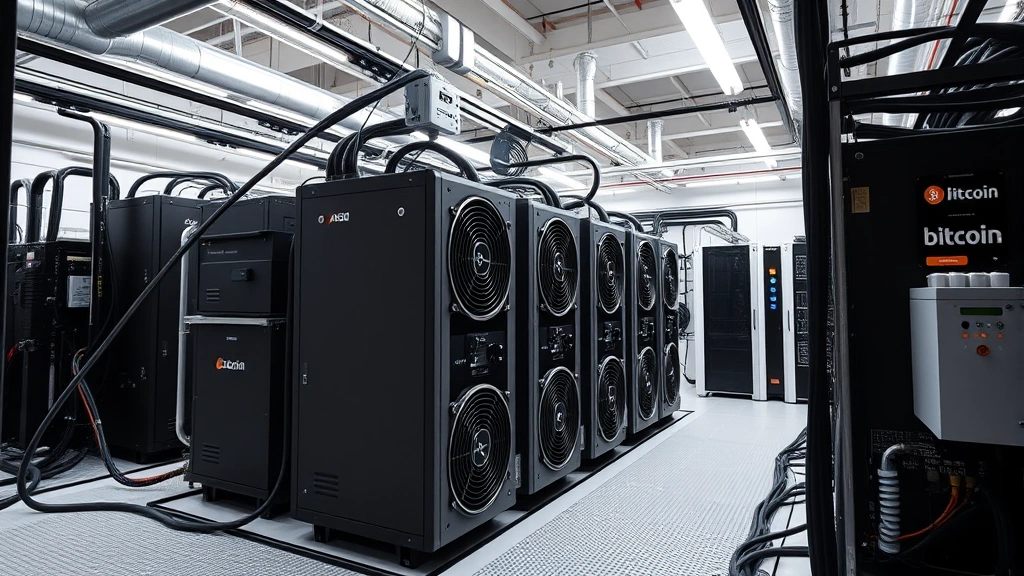
Bitcoin Mining Time? Expert Breakdown
Bitcoin mining is one of the most commonly misunderstood aspects of cryptocurrency. When people ask “how long does it take to mine a bitcoin,” they’re often expecting a simple answer. The reality is far more nuanced. The time required to mine a single bitcoin depends on numerous variables including hardware power, network difficulty, electricity costs, and mining pool participation. Understanding these factors is essential for anyone considering entry into bitcoin mining or simply wanting to comprehend how the world’s largest cryptocurrency secures its network.
In this comprehensive guide, we’ll break down exactly what determines mining time, explore the current landscape of bitcoin mining, and help you understand whether mining remains a viable pursuit in today’s competitive environment. Whether you’re a curious enthusiast or considering a mining operation, this expert analysis will provide the clarity you need.
What is Bitcoin Mining and How It Works
Bitcoin mining is the process by which new bitcoins are created and transactions are validated on the blockchain. Miners use specialized computers to solve complex mathematical puzzles, and the first to solve each puzzle gets to add a new block to the blockchain and receive a reward in bitcoin. This process is fundamental to Bitcoin’s security and decentralization.
The mining process involves several key steps. First, pending transactions are collected into a memory pool. Miners then bundle these transactions into a candidate block and begin attempting to find a valid solution to the block’s hash puzzle. This requires trying billions of different hash combinations until one meets the network’s difficulty requirements. Once a valid hash is found, the block is broadcast to the network, other nodes verify it, and the miner receives their reward—currently 6.25 BTC per block (following the 2024 halving).
The beauty of this system is that it’s probabilistic rather than deterministic. No miner knows exactly when they’ll find the next valid block; it’s a matter of computational power and luck. This randomness ensures that no single entity can easily predict or control when blocks will be found, maintaining the network’s integrity.
Hardware Requirements and Mining Speed
The type of hardware you use directly determines your mining speed and, consequently, how long it takes to mine a bitcoin. Bitcoin mining has evolved significantly since its inception in 2009, and the hardware requirements have become increasingly specialized.
ASIC Miners: Application-Specific Integrated Circuit (ASIC) miners are purpose-built machines designed solely for bitcoin mining. These are the industry standard for serious miners. Modern ASIC miners like the Antminer S21 Pro or MicroBT Whatsminer M53S+ have hash rates ranging from 200 to 336 terahashes per second (TH/s). At these speeds, a single ASIC miner might theoretically mine one bitcoin in anywhere from several months to over a year, depending on network conditions.
GPU Mining: Graphics Processing Units can technically mine bitcoin, but they’re dramatically less efficient than ASICs. A high-end GPU like an NVIDIA RTX 4090 produces around 100-150 megahashes per second (MH/s)—millions of times slower than a modern ASIC. Mining bitcoin with GPUs is economically unfeasible today, though some miners use them for alternative cryptocurrencies.
CPU Mining: Central Processing Unit mining is essentially obsolete for bitcoin. A modern CPU might produce only 10-50 MH/s, making it virtually impossible to compete in the current mining ecosystem. The electricity costs would far exceed any potential rewards.
The investment in hardware is substantial. A top-tier ASIC miner costs $5,000-$15,000, and most serious mining operations use multiple units. When considering whether to start mining, the initial capital investment and ongoing electricity expenses are critical factors in your profitability calculations.
Network Difficulty and Its Impact
Perhaps the most important variable affecting mining time is network difficulty. The Bitcoin network automatically adjusts difficulty every 2,016 blocks (approximately every two weeks) to maintain an average block time of 10 minutes. This means that regardless of how much total computing power is directed at mining, the network aims to produce one new block every 10 minutes on average.
When more miners join the network or upgrade to faster hardware, the difficulty increases. When miners leave or turn off their equipment, difficulty decreases. This self-adjusting mechanism is crucial to Bitcoin’s stability and predictability. It’s also why the answer to “how long does it take to mine a bitcoin” is never simply a function of your hardware alone.
Current network difficulty is at historic highs, having surpassed 84 trillion in recent months. This reflects the massive amount of computational power dedicated to bitcoin mining globally. As difficulty increases, individual miners receive proportionally smaller rewards for their computational effort, even if they maintain the same hardware.
You can monitor current difficulty and projections on blockchain explorers. The relationship between your hash rate and total network hash rate determines your probability of finding blocks. If you control 0.001% of the network’s hash power, you’ll theoretically earn 0.001% of all mining rewards over time.
Mining Pools vs Solo Mining
The decision between solo mining and pool mining dramatically affects your timeline for mining bitcoin.
Solo Mining: When mining solo, you keep 100% of block rewards you find, but you must solve the entire puzzle yourself. With current difficulty levels, a solo miner with a single ASIC might wait months or years before finding a block. The variance is enormous—you could get lucky and find one quickly, or go years without success. For individual miners, solo mining is typically impractical due to this unpredictability.
Pool Mining: Most miners join mining pools where they combine their computational power with other miners. When the pool finds a block, the reward is distributed among all participants based on their contributed hash power. Instead of waiting months for one block, a pool miner receives small, regular payouts. For example, a miner contributing 1 TH/s to a major pool might receive payouts every few days or weeks, depending on the pool’s luck and size.
Major mining pools include Foundry USA, AntPool, and F2Pool. Pool mining introduces a small fee (typically 0.5-2%), but the consistent income stream and reduced variance make it more practical for individual miners. When miners talk about realistic timeframes for mining bitcoin, they’re almost always discussing pool mining.
Real-World Mining Timeline Examples
Let’s examine concrete scenarios to illustrate actual mining timelines.
Scenario 1: Single ASIC Miner (200 TH/s) In a mining pool with current network conditions, a single S21 Pro miner with 200 TH/s hash rate might contribute approximately 0.00002% of the network’s total hash power. This miner would expect to receive pool payouts totaling roughly 0.01-0.02 BTC per month, depending on pool luck. To accumulate one full bitcoin at this rate would take 50-100 months, or approximately 4-8 years. However, this calculation assumes network difficulty remains constant, which it won’t.
Scenario 2: Mining Farm (50 TH/s) A small mining operation with 50 ASICs producing 50 TH/s total might generate 0.25-0.5 BTC per month through pool mining. At this rate, mining one bitcoin would take 2-4 months. However, the electricity costs for running 50 miners could be $2,000-$5,000 monthly, which significantly impacts profitability.
Scenario 3: Enterprise Operation (10 PH/s) Large-scale mining farms with petahash-level hash rates might mine several bitcoins daily. At this scale, the question shifts from “how long to mine one bitcoin” to “what’s the ROI on our mining infrastructure investment.”
These examples demonstrate why profitability varies so dramatically across different mining scenarios. The relationship between your hash rate, network difficulty, and electricity costs determines whether mining is viable for you.
Profitability Considerations
Mining profitability is determined by a deceptively simple formula: revenue from bitcoin rewards minus electricity costs and hardware depreciation. However, calculating this accurately requires considering multiple variables.
Electricity Costs: This is typically the largest ongoing expense. Modern ASIC miners consume 3,000-5,000 watts of electricity. At $0.10 per kilowatt-hour (US average), running a single miner costs approximately $720-$1,200 monthly. In regions with cheaper electricity like Iceland, Paraguay, or parts of Texas, costs might be 50-70% lower. In expensive regions like California or Europe, costs could be 2-3x higher.
Bitcoin Price Impact: Mining profitability is directly tied to bitcoin price movements. When BTC is worth $30,000, mining is far less profitable than when it’s $70,000. This creates cycles where mining becomes unprofitable during bear markets, causing less efficient miners to shut down and reducing network difficulty.
Hardware Depreciation: ASIC miners typically have a useful lifespan of 3-5 years before becoming obsolete or too inefficient to operate profitably. A $10,000 miner depreciates significantly over time, representing a real cost to miners.
Mining Difficulty Trajectory: As discussed, network difficulty increases over time. This means your mining rewards decline relative to your computational investment unless you continuously upgrade to faster hardware. Understanding bitcoin price predictions can help contextualize long-term mining viability.
Many miners use online calculators to estimate profitability, inputting their hardware specifications, electricity costs, and current network conditions. However, these calculations are only as good as their assumptions about future difficulty and bitcoin price.
Future of Bitcoin Mining
The future of bitcoin mining is shaped by several emerging trends and technological developments.
Efficiency Improvements: Each generation of ASIC miners produces slightly better efficiency (hash rate per watt). As this continues, mining may become more accessible to miners in regions with higher electricity costs. However, improved efficiency also means the network’s total energy consumption may stabilize even as hash rate increases.
Renewable Energy Integration: An increasing percentage of bitcoin mining is powered by renewable energy sources. Miners are establishing operations in geothermal regions like Iceland, hydroelectric regions like Paraguay, and areas with abundant wind or solar resources. This trend may improve mining’s environmental profile and reduce long-term electricity cost pressures.
Bitcoin Halving Cycles: Bitcoin’s supply is halved approximately every four years. The most recent halving in April 2024 reduced block rewards from 12.5 BTC to 6.25 BTC. Future halvings will continue reducing miner rewards, potentially making less efficient operations unprofitable unless bitcoin price increases proportionally. This creates natural cycles in mining profitability and network participation.
Institutional Adoption: Large-scale mining operations continue to consolidate the industry. Public companies like Marathon Digital and Riot Blockchain are major players, bringing professional management and capital efficiency to mining. This trend may make it increasingly difficult for small individual miners to compete profitably.
Understanding these trends helps contextualize whether mining remains a viable personal investment or if it’s primarily an institutional-scale operation. For those considering whether to hold bitcoin versus mining it, the economics often favor simply purchasing bitcoin directly during bear markets.
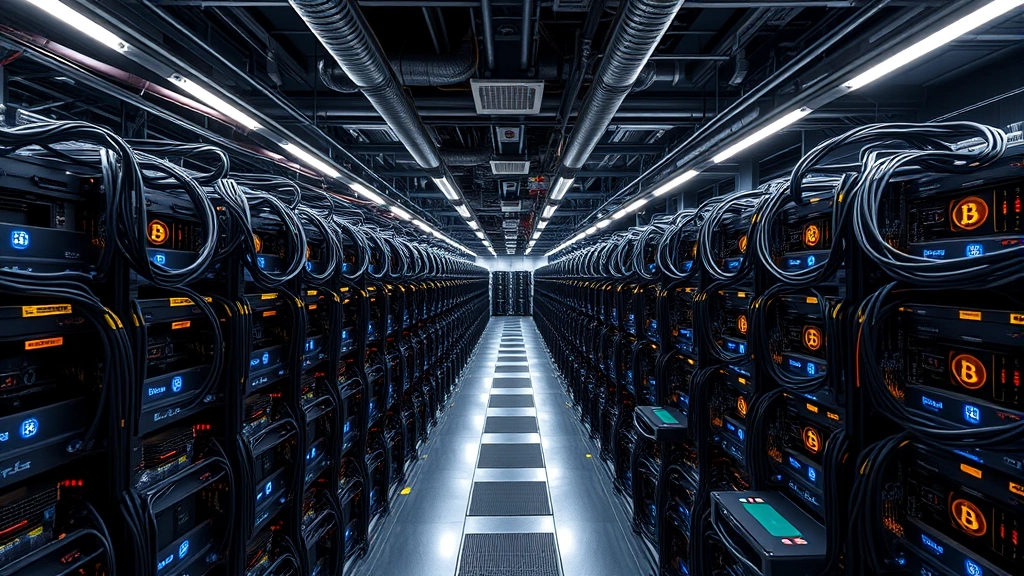
The path forward for bitcoin mining will likely involve consolidation at larger scales, continued efficiency improvements, and increasing geographic concentration in regions with abundant renewable energy. Individual miners will need to carefully evaluate whether their specific circumstances—electricity costs, capital availability, and technical expertise—make mining economically sensible.
For those interested in broader cryptocurrency market dynamics, understanding cryptocurrency price predictions for 2025 is essential context for mining investment decisions. Mining profitability is inextricably linked to the value of the bitcoin being mined.
FAQ
How long does it take to mine 1 bitcoin with one ASIC miner?
With a modern ASIC miner like the Antminer S21 Pro and participating in a mining pool, you’d typically accumulate one full bitcoin through pool payouts over 4-8 years, assuming current network difficulty and bitcoin price remain relatively stable. Solo mining would take much longer—potentially decades.
Can I mine bitcoin profitably from home?
Home mining profitability depends heavily on your local electricity costs. In regions with cheap electricity (under $0.08/kWh), small-scale home mining might be marginally profitable. In expensive regions (over $0.15/kWh), home mining is almost certainly unprofitable. You’d also need to consider noise levels, cooling requirements, and internet bandwidth.
What’s the minimum investment to start mining bitcoin?
A single modern ASIC miner costs $5,000-$15,000. However, you should budget for infrastructure costs (power supplies, cooling, network equipment) and have sufficient capital to operate for several months before seeing returns. Most experts recommend a minimum investment of $10,000-$20,000 for any serious home mining operation.
Does bitcoin mining difficulty ever decrease?
Yes, network difficulty decreases when total mining hash power declines. This typically occurs during bear markets when mining becomes unprofitable for marginal operations. Difficulty decreased notably in 2022 when bitcoin prices crashed and many miners shut down operations.
Is GPU mining still viable for bitcoin?
GPU mining bitcoin is not economically viable. ASICs are millions of times more efficient. GPUs remain useful for mining alternative cryptocurrencies like Ethereum-based tokens, but not for bitcoin.
How is mining difficulty determined?
Bitcoin’s network automatically adjusts difficulty every 2,016 blocks to maintain a 10-minute average block time. If more computing power joins the network, difficulty increases. If less power is available, difficulty decreases. This self-adjusting mechanism is built into Bitcoin’s consensus rules.
What’s the difference between mining and buying bitcoin directly?
Mining requires significant capital investment in hardware and ongoing electricity costs, plus technical knowledge. Buying bitcoin directly requires only capital and an exchange account. During bear markets, buying bitcoin is often more profitable than mining it, since you’re acquiring bitcoin at discounted prices rather than spending electricity costs to produce it.


